Religious trusts · Local SEO
Be the temple, dharmashala or school a visitor finds on the map and can trust.
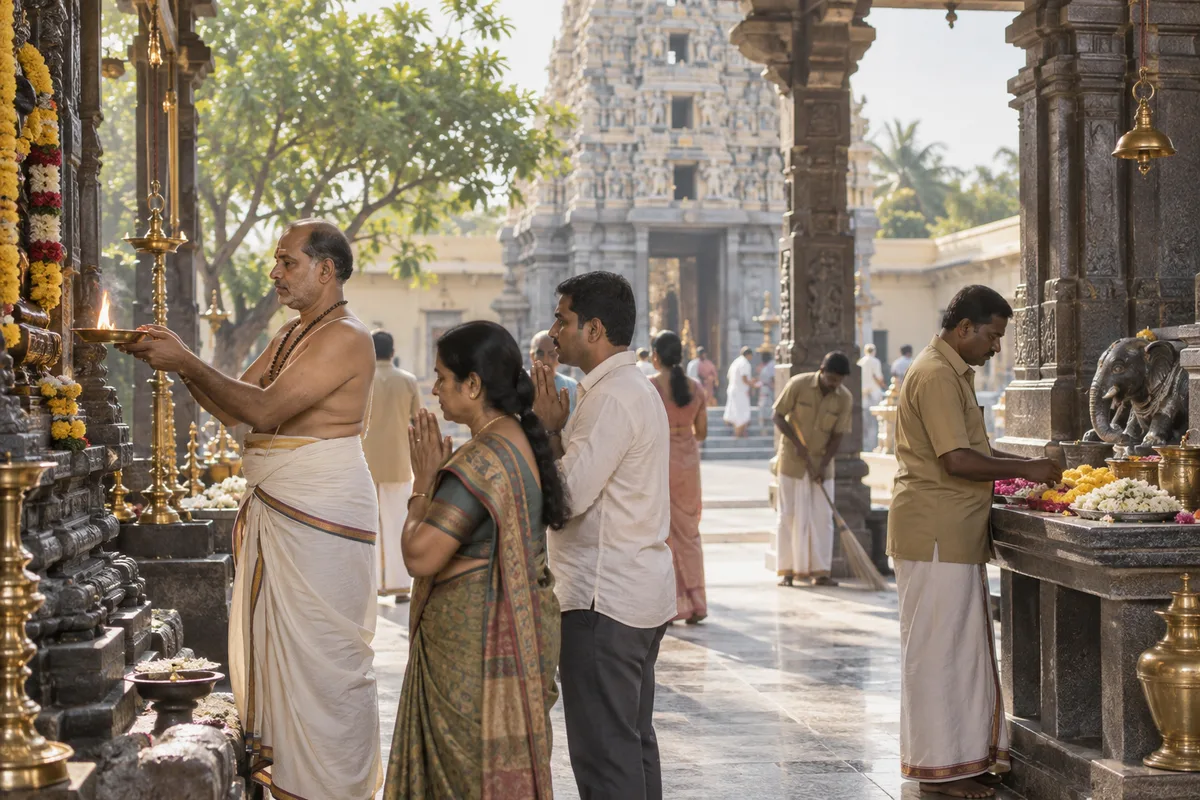
Local SEO for a religious trust is the upkeep of its map listing so a devotee, pilgrim or parent who searches near the town finds correct timings, a working phone number and honest photographs. GullySales works on the listing, the questions asked through it and the reviews left on it.
Scope, fee, reporting and term are agreed in writing after we have read your brief and spoken to you.
What local SEO means
Local SEO is the work of making your business show up for searches that name your town or locality, such as a service plus an area name. GullySales sets up locality pages, local citations and map listings so nearby customers find you before a competitor across town.
Last updated 18 Oct 2026.
For religious trusts
Where it usually goes wrong, and what we would do.
“The map listing is the front door for a visitor”
A family travelling to a pilgrim town opens the map and taps the nearest name. Wrong timings, a closed-today notice that was never removed or a phone number that rings in an office nobody attends send them to another institution.
“Anyone can edit a listing that no one owns”
A trust that never claimed its listing finds visitors have suggested a wrong name, a wrong gate or a wrong day. Until a trustee or volunteer holds the login, those errors stand, and a visitor reads them as the trust's own.
“One trust, several places on the map”
A temple, a dharmashala and a school run by one body need separate listings with their own hours and contacts. A visitor looking for a room should not land on the school office, and a parent should not reach the temple desk.
“Reviews are written by people the trust never meets”
A pilgrim who waited for a room or a visitor who found the queue confusing posts a review the same evening. The trust that replies politely and corrects the facts shows the next reader that someone is listening.
What we do
What we deliver for religious trusts.
Every deliverable, what it covers for you, and the result it is there to produce. Nothing here is an extra.
A claimed listing for each place the trust runs
Separate listings for the temple, the rest house and the school or hostel, each under a login held by a named trustee and a backup.
Result: Each place on the map shows its own contacts and hours.
Hours, festival closures and special days entered in time
Regular timings and the changes for festivals, with a note on who updates them before each date.
Result: A visitor sees a correct timing on a festival day.
Photographs of the premises with permission
Photographs of the building, the approach and the facilities taken with the trust's approval, with no worshippers shown without consent.
Result: The listing shows what a visitor will find at the gate.
Replies to reviews written in the trust's voice
A reply for each review that thanks the writer, corrects a fact where needed and gives a name to contact, in a courteous and factual tone.
Result: A complaint on the map has a public, polite answer beside it.
Calls and direction requests read from the listing
The listing's own count of calls, website taps and direction requests, set against the baseline noted before the work started.
Result: Trustees see whether the map brings visitors to the door.
How the result is measured
- Map pack ranking
- Local search visibility
- Enquiries by locality
Recorded as a baseline before work starts, so every later report has an honest comparison.
Who it is for
This is written for these religious trusts.
- Temple trusts that manage one or more shrines
- Dharmashala and pilgrim rest-house trusts
- Trusts running schools, hostels or vedic pathshalas
- Goshala and cow-care trusts
- Samaj and community trusts of a caste or linguistic group
- Mutt and peetham trusts with branch centres
- Church and diocesan welfare trusts
- Dargah and mosque committees running schools and relief work
- Gurdwara management committees with langar and educational work
- Jain sangh and Parsi anjuman trusts running housing and hospitals
How it works
How the local SEO work runs
The work itself, in order. How an engagement starts, from your brief to a written scope, is set out on our method page.
- 1
Audit every listing
We check the Google Business Profile and directory listings for every branch against what should actually be shown.
- 2
Complete and correct
Profiles are filled in fully and inconsistent details are corrected across every directory found.
- 3
Build location pages
Each branch gets a page written for its own area, not a copy of the head office page with the address changed.
- 4
Set up review handling
A simple process for requesting and responding to reviews is put in place with whoever is closest to the customer.
- 5
Report and adjust
Map actions and enquiries per branch are recorded, and the branches falling behind come first in the next round of work.
Where this fits
Three pieces of sales work, in this order.
This work sits inside sales process design, at stage 1, prospecting and lead generation. The audit comes before it, and sales management keeps it running.
Step 1
Sales audit
Find where deals are being lost and what to fix first.
Start here if you cannot say where orders are lost.
Step 2 · you are here
Sales process design
One written way to sell, from first enquiry to repeat order.
Start here if every salesperson sells differently.
Step 3
Sales management
A target, a review routine and someone who owns the number.
Start here if the team has targets and no routine.
FAQ
Questions owners ask before they call.
Not here? More answers, or ask on WhatsApp.
Who should hold the login to the trust's listing?
Should the listing show donation details?
How much does it cost?
How long is the contract?
How soon will we see results?
Who will actually do the work?
What do you need from us?
What if we are not happy with the work?
More for religious trusts
Everything else we would do for you.
Closest to this: search and visibility
Also for religious trusts
Or start from the overview: sales and marketing for religious trusts.
Your next practical step
Tell us what you are trying to grow, and we will read it before we call.
Eight short steps, mostly taps. Skip anything you would rather answer on the call.