Religious trusts · Buyer persona
Know the five kinds of giver before the trust writes its next appeal.
A buyer persona for a religious trust is a written picture of a type of donor or devotee: what they care about, who they trust and what they check before giving. GullySales builds these from the trust's own records and from conversations with the trustees, never from guesswork.
Scope, fee, reporting and term are agreed in writing after we have read your brief and spoken to you.
What buyer persona means
A buyer persona is a plain description of the kind of customer who actually buys from you. It includes what they search, what worries them and who else they ask before deciding. GullySales builds this from real enquiries and past sales rather than a generic template, then uses it to write every page and advert.
Last updated 18 Oct 2026.
For religious trusts
Where it usually goes wrong, and what we would do.
“The elder who gave to the first building”
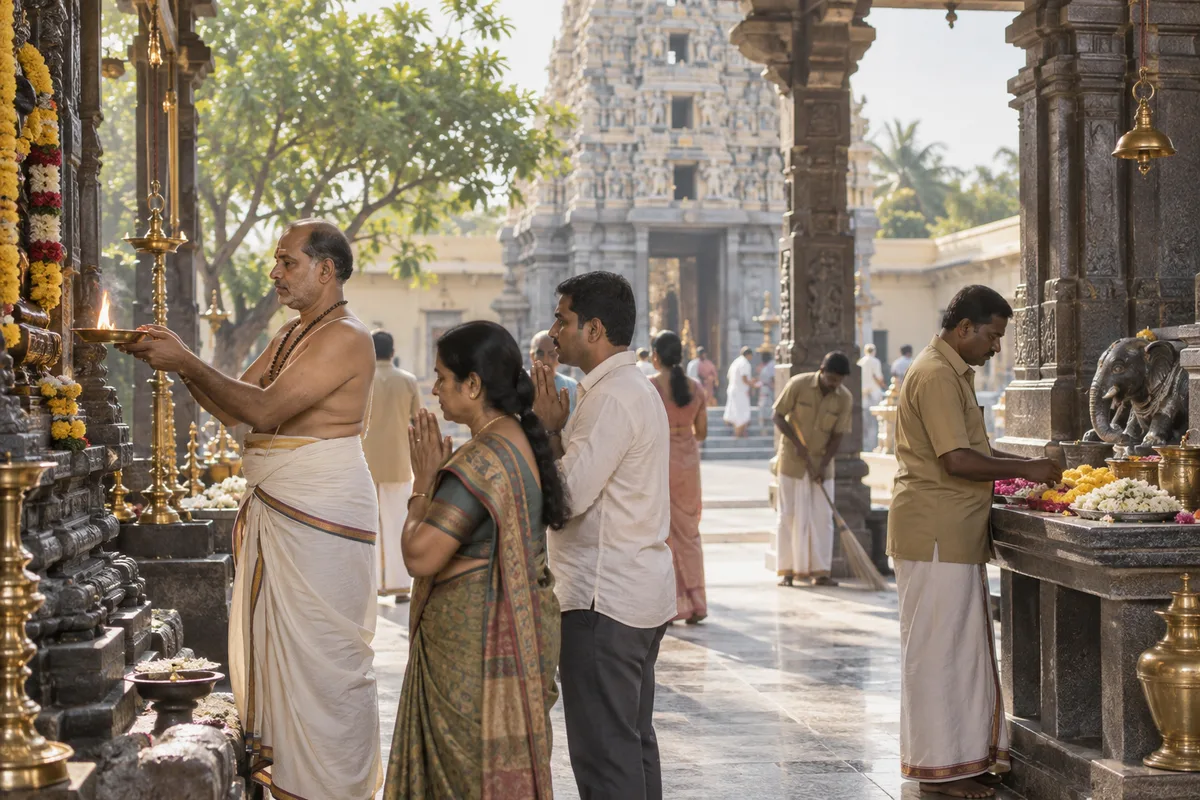
This donor remembers the founders and gives for continuity. A call or a visit from a trustee they know counts for more than a message, and a printed note on the project is read where a link is ignored.
“The business family that backs a hall or a wing”
They weigh a large gift at home over several conversations, and they ask about the plan, the committee and the accounts. A short proposal, a visit to the site and a named trustee as the single contact fit how they decide.
“The relative abroad who gives from distance”
They want a safe way to give, a document the trust issues and news of the work. They rely on cousins at home for trust, so a page that answers their questions without a cousin in between saves the family embarrassment.
“The young volunteer who gives time before money”
A student or young professional joins a seva day, a camp or a festival, and the first ask to them is a role. If the trust records them and thanks them, they become donors later and bring friends of their own.
What we do
What we deliver for religious trusts.
Every deliverable, what it covers for you, and the result it is there to produce. Nothing here is an extra.
Persona sheets for each type of giver
One page per type of donor, with their concerns, the person they trust in the trust and the questions they ask before giving.
Result: Trustees can say which type of giver a message is for.
A mapping of the donor register to personas
Each donor on the trust's list tagged with the persona that fits, from what the record shows of their gifts and links.
Result: The list is sorted by who the person is, not only by amount.
A message set for each persona
An opening message, a follow-up and a thank-you for each type, written in the wording that persona uses.
Result: Each type of giver hears from the trust in a way that fits.
A short interview with trustees and past donors
Conversations that ask what moved a donor to give, what nearly stopped them and who they spoke to first.
Result: The personas rest on what donors said and not on assumption.
A review of the personas against the gifts
A check at agreed points of whether the personas still match who actually gave, with changes noted.
Result: The sheets stay true as the donors change.
How the result is measured
- Enquiry match to persona
- Conversion rate by persona
- Content aligned to persona
Recorded as a baseline before work starts, so every later report has an honest comparison.
Who it is for
This is written for these religious trusts.
- Temple trusts that manage one or more shrines
- Dharmashala and pilgrim rest-house trusts
- Trusts running schools, hostels or vedic pathshalas
- Goshala and cow-care trusts
- Samaj and community trusts of a caste or linguistic group
- Mutt and peetham trusts with branch centres
- Church and diocesan welfare trusts
- Dargah and mosque committees running schools and relief work
- Gurdwara management committees with langar and educational work
- Jain sangh and Parsi anjuman trusts running housing and hospitals
How it works
How the buyer persona work runs
The work itself, in order. How an engagement starts, from your brief to a written scope, is set out on our method page.
- 1
Understand the current view
We start with how your team currently describes the customer, since the gap between belief and reality is often the finding itself.
- 2
Audit past enquiries and sales
We look at recent enquiries and closed deals to see who actually bought, not who was assumed to buy.
- 3
Interview customers and staff
Short, structured conversations surface the real language, worries and triggers behind a purchase.
- 4
Build the personas
Findings are written into short, usable persona documents rather than a long report.
- 5
Apply to your marketing
We show exactly where each persona should change a page, an ad or a script you already have.
Where this fits
Three pieces of sales work, in this order.
This work sits inside sales process design, at stage 0, foundation. The audit comes before it, and sales management keeps it running.
Step 1
Sales audit
Find where deals are being lost and what to fix first.
Start here if you cannot say where orders are lost.
Step 2 · you are here
Sales process design
One written way to sell, from first enquiry to repeat order.
Start here if every salesperson sells differently.
Step 3
Sales management
A target, a review routine and someone who owns the number.
Start here if the team has targets and no routine.
FAQ
Questions owners ask before they call.
Not here? More answers, or ask on WhatsApp.
Do we need personas for a small trust?
Is it right to classify devotees as types?
How much does it cost?
How long is the contract?
How soon will we see results?
Who will actually do the work?
What do you need from us?
What if we are not happy with the work?
More for religious trusts
Everything else we would do for you.
Closest to this: strategy and research
Also for religious trusts
Or start from the overview: sales and marketing for religious trusts.
Your next practical step
Tell us what you are trying to grow, and we will read it before we call.
Eight short steps, mostly taps. Skip anything you would rather answer on the call.