Temples · Digital marketing
Give the temple one plan for search, WhatsApp and social posts, run by its own office.
Digital marketing for a temple is the joined-up use of the website, the map listing, WhatsApp and social posts to tell devotees what is happening and how to take part. It stays factual and respectful, and it follows the temple's own calendar. GullySales works on the plan and the routine so the trust is not guessing what to post next.
Scope, fee, reporting and term are agreed in writing after we have read your brief and spoken to you.
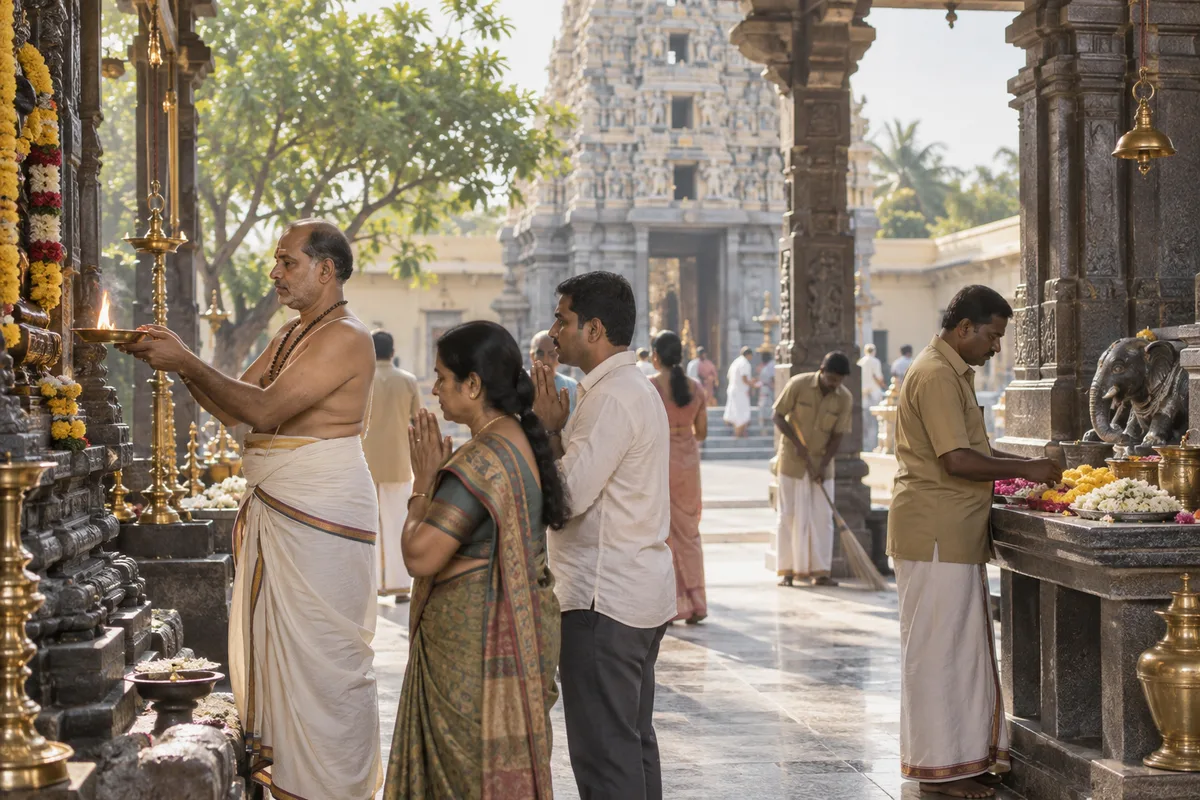
What digital marketing means
Digital marketing is the combined work of search, social media, advertising and website channels running together rather than as separate projects with separate people. GullySales runs these as one connected system so a change in one channel, such as a new offer, is reflected everywhere at once.
Last updated 5 Oct 2026.
For temples
Where it usually goes wrong, and what we would do.
“The calendar decides the content”
A temple already knows what is coming: the festival, the monthly special pooja, the day for each seva. A digital plan starts from that list and works backwards, so the notices go out when devotees begin planning, not after the date has passed.
“Each channel has a different job”
The website holds the full detail, the map shows timings, WhatsApp carries reminders to those who asked for them and social posts show the temple's life. Putting the same long text on all four wastes the office's time and tires devotees.
“Photographs need consent and care”
Pictures of the sanctum, the procession and the crowd raise questions about permission and propriety. Agree with the trust what may be shown, avoid close images of devotees without consent, and keep the caption factual.
“Paid reach is a late step”
Boosting a post will not repair a profile with the wrong timings or a booking page that fails on a phone. Settle the free basics first, and add paid reach only when the trust has a specific event to fill and someone to reply.
What we do
What we deliver for temples.
Every deliverable, what it covers for you, and the result it is there to produce. Nothing here is an extra.
A festival-led annual plan
A calendar for the year that lists each utsavam and seva, the channel for each notice and the person at the temple who approves it.
Result: The trust can see what is posted, where and by whom.
A channel guide
A one-page note setting out what belongs on the website, the map, WhatsApp and social posts.
Result: The office does not repeat itself across channels.
Photo and caption rules
A short list of what may be photographed, what needs written consent and how captions are worded.
Result: Posts follow a rule the trust has agreed in advance.
A shared content sheet
A simple sheet where drafts are written, approved by the trust and marked as posted.
Result: Nothing goes out without an office-bearer's approval.
A review of what devotees respond to
A look at which notices drew enquiries, using the source labels on links and the office's own record.
Result: The trust can drop what does not draw devotees and repeat what does.
How the result is measured
- Enquiries across channels
- Cost per enquiry overall
- Channel mix by contribution
Recorded as a baseline before work starts, so every later report has an honest comparison.
Who it is for
This is written for these temples.
- Ancient and heritage temples with high pilgrim footfall
- Neighbourhood and community temples
- Temple trusts managing more than one shrine
- Shrines with a strong NRI devotee base overseas
- A temple known for one festival or utsavam
- Temples running annadanam and community welfare programmes
How it works
From your first message to the first report.
No open-ended retainer. Every step gives you something in writing.
First
Your brief
You tell us what you need in a few short steps: your business, what you want, where enquiries come from and how they are handled.
After the brief
A conversation and a written scope
We read it, then talk with whoever handles your enquiries. If you want our help, the scope, the fee and the reporting come in writing, and nothing starts before you have read them.
Before work starts
Baseline recorded
The numbers this work is meant to move, such as enquiries, quotations, orders, visits or renewals, written down so every later report has an honest comparison.
After the baseline
The first fix goes live
The fix we agreed to start with is put in place and measured against the baseline, whether that is a reply, a follow-up, a page, a listing or the handover between marketing and sales.
As agreed
Report against the baseline
What moved, what did not, and what changes next, in plain words. How often you get it is set in writing before work starts.
At renewal
Renew on the numbers
The term ends and you decide whether to continue from the results. The length is agreed in writing before anything starts.
How the digital marketing work runs
- 1
Understand the objective
We agree the one thing this campaign needs to achieve before choosing any channel.
- 2
Audit available channels
We assess which channels are realistic to run well within the budget and timeline.
- 3
Strategise the central idea
One message and offer is developed that will work across every planned channel.
- 4
Implement across channels
Each channel receives its own adapted version, launched on a shared timeline.
- 5
Measure as one campaign
Results from every channel are combined into a single report against the original objective.
Why us
Why owners pick GullySales over an agency.
Marketing and sales, as one job
Most agencies stop at the enquiry. We also fix what happens after it: the reply, the follow-up, the quote and the CRM.
The person on the first call does the work
No account managers in between. You are never handed to someone you have not met.
A baseline before anything starts
Your numbers are written down on day one, so every later report compares against something honest.
The fee in writing, split three ways
Our time, your media spend and production on separate lines. You always see what goes to us.
No guarantees we cannot keep
The term is agreed in writing and never a default twelve months. We never promise a ranking or a lead count, because nobody controls those.
One office, and we say so
Nagarbhavi, Bengaluru. We work across India by call and WhatsApp and travel when a session needs to be in person.
#257, 3rd floor, Sri Nanjundeshwara Complex, Nagarbhavi 8th Block, Outer Ring Road. How we work.
Your brief
Tell us what you need, and we will read it before we call.
Eight short steps about your business, what you want and who decides. Most questions are a tap, and you can skip any you would rather answer on the call.
FAQ
Questions owners ask before they call.
Not here? More answers, or ask on WhatsApp.
Is it appropriate for a temple to use social media?
Who should post for the temple?
Can we run paid promotion for donations?
How much does it cost?
How long is the contract?
How soon will we see results?
Who will actually do the work?
What do you need from us?
What if we are not happy with the work?
From the blog
Further reading for temples.
 5 min read · 22 May 2026Fundraising event or webinar: how to plan one a small NGO can affordA small NGO can run a fundraising event or webinar without a large budget if it has one narrow goal, one speaker who is a beneficiary or field worker, and a follow-up list ready before the day.
- 5 min read · 12 Oct 2026Tax receipts, FCRA and registrations: how an NGO should present credentials without overclaimingDonors look for registrations before they give. This post shows how to state what you hold in plain words, what to avoid implying, and how to get your adviser to confirm the wording.
- 5 min read · 14 Sept 2026Website for an NGO: the pages donors look for before they giveA first-time donor checks your website before paying. This post lists the pages and details they look for, in the order they look, and what a small NGO can leave out.
More for temples
Everything else we would do for you.
Closest to this: strategy and research
Also for temples
Or start from the overview: sales and marketing for temples.
Your next practical step
Tell us what you are trying to grow, and we will read it before we call.
Eight short steps, mostly taps. Skip anything you would rather answer on the call.