Fertilizer dealers · Lead generation
Find the farmers in your area who are not yet buying from your counter.
Lead generation for a fertiliser dealer is the work of finding growers within reach of the shop who buy inputs somewhere else, and turning them into names on your register. GullySales works on where those farmers can find you, how their details are captured, and who in the shop calls them.
Scope, fee, reporting and term are agreed in writing after we have read your brief and spoken to you.
What lead generation means
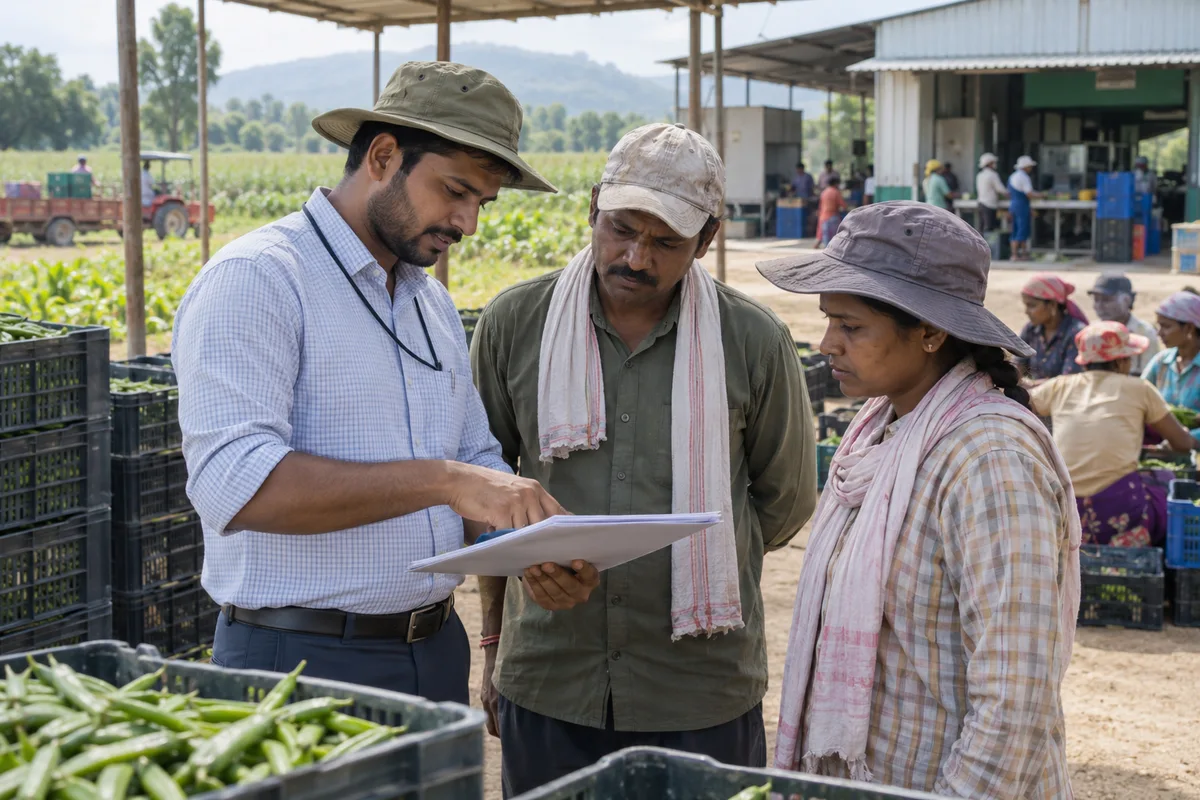
Lead generation is the combined work of every channel that brings in a new enquiry, whether from search, adverts, referrals or a stall at an exhibition. GullySales runs these channels together and reports the number of enquiries each one produced, not the activity behind it.
Last updated 18 Oct 2026.
For fertilizer dealers
Where it usually goes wrong, and what we would do.
“The farmer who walks past you is already someone's customer”
A grower who buys on credit from another shop will not switch because of a board. Leads come from the farmer who has a dispute over a dose, a stock-out or a dues statement, and you need to be the shop they think of next.
“Seed and pesticide companies hold names you never see”
Company representatives run field days and distribute leaflets in your villages. The farmers who attend are warm leads, yet their names stay with the company unless your shop is in the room with a sign-in sheet.
“A phone number on a wall is a lead you cannot follow up”
Painted walls and tractor stickers bring calls, but nobody writes down who called or which crop they grow. Without a village and crop beside each number, the next call has nothing to build on.
“Neighbour recommendation is the strongest source and the least recorded”
A farmer sends a neighbour to your counter, and you never learn who sent whom. Noting the referrer on the register lets you thank the right person and find the next village that is open to you.
What we do
What we deliver for fertilizer dealers.
Every deliverable, what it covers for you, and the result it is there to produce. Nothing here is an extra.
A lead capture sheet for the counter
One page that records name, village, crop and the question asked, filled in whenever a new face visits or calls.
Result: Every new farmer who enters the shop has a line in the register.
A Google listing that invites a call or message
Phone, WhatsApp link, shop photographs and product names set so a farmer searching on a phone can reach you in one tap.
Result: A search for your shop name shows a number that rings at the counter.
Field day and meeting sign-in kit
A sign-in sheet with village, crop and area, agreed with the company representative before the event.
Result: The names from the event sit in your register, not only in the company file.
Referral notes on the register
A column for who sent the farmer, with a short thank-you message you can send.
Result: You can see which farmers bring others to the shop.
A village map of reach
The villages you serve today set against the ones within delivery distance that have no farmer in your register.
Result: A list of villages to visit before the next sowing.
How the result is measured
- Enquiries generated
- Cost per enquiry
- Enquiries by source
Recorded as a baseline before work starts, so every later report has an honest comparison.
Who it is for
This is written for these fertilizer dealers.
- Fertiliser and seed retail shops in mandi towns
- Village-level input dealers
- Cooperative society and PACS outlets
- Large multi-product agri input stores
- Organic and bio-input stores
- Dealers who also sell pesticides and farm tools
- Wholesale fertiliser stockists supplying village dealers
- Dealers attached to FPOs and farmer groups
How it works
How the lead generation work runs
The work itself, in order. How an engagement starts, from your brief to a written scope, is set out on our method page.
- 1
Understand your capacity
We agree how many enquiries your sales team can actually handle well, so the system is not built to overwhelm it.
- 2
Audit current sources
We check what already brings in enquiries today, even informally, before adding anything new.
- 3
Strategise the channel mix
Content, search and paid channels are chosen based on where your buyers already look.
- 4
Implement capture and follow-up
Pages, forms and a follow-up process are built and connected end to end.
- 5
Measure and optimise
We track enquiry volume and quality and adjust the channel mix to match.
Where this fits
Three pieces of sales work, in this order.
This work sits inside sales process design, at stage 1, prospecting and lead generation. The audit comes before it, and sales management keeps it running.
Step 1
Sales audit
Find where deals are being lost and what to fix first.
Start here if you cannot say where orders are lost.
Step 2 · you are here
Sales process design
One written way to sell, from first enquiry to repeat order.
Start here if every salesperson sells differently.
Step 3
Sales management
A target, a review routine and someone who owns the number.
Start here if the team has targets and no routine.
FAQ
Questions owners ask before they call.
Not here? More answers, or ask on WhatsApp.
Where do new farmer leads come from for a small shop?
Should we buy farmer phone lists?
Can you promise a number of new farmers?
How much does it cost?
How long is the contract?
How soon will we see results?
Who will actually do the work?
What do you need from us?
What if we are not happy with the work?
More for fertilizer dealers
Everything else we would do for you.
Closest to this: leads and follow-up
Also for fertilizer dealers
Or start from the overview: sales and marketing for fertilizer dealers.
Your next practical step
Tell us what you are trying to grow, and we will read it before we call.
Eight short steps, mostly taps. Skip anything you would rather answer on the call.