Limestone mining companies · Content marketing
Write the guide a plant's quality head would otherwise have to piece together alone.
Content marketing for a limestone mine means writing explanations of grades, testing and supply that a plant buyer reads while deciding on a source. GullySales works on guides, sample explainers and comparison notes drawn from your lab and dispatch records.
Scope, fee, reporting and term are agreed in writing after we have read your brief and spoken to you.
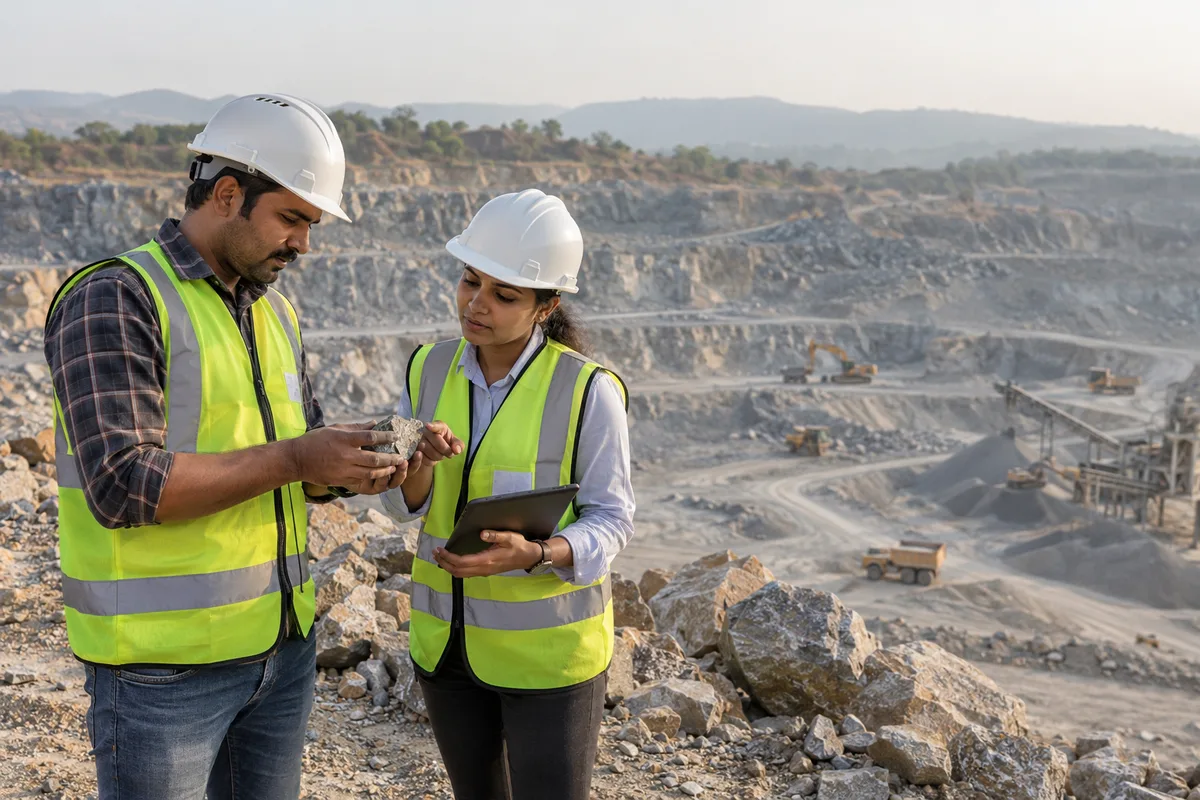
What content marketing means
Content marketing is writing articles, guides and pages that answer the questions buyers search before they are ready to enquire. This makes your business visible and trusted before the first call. GullySales plans this content from the first conversation onward, choosing topics that match real search demand rather than guesses.
Also for limestone mining companies
Sales and marketing for limestone mining companies, the overview.
Last updated 18 Oct 2026.
For limestone mining companies
Where it usually goes wrong, and what we would do.
“Buyers read to reduce risk”
A new furnace line or kiln run means the plant is changing something it depends on. The purchase head wants to understand what to ask a mine and what a good answer looks like. A guide that explains this earns attention before any pitch.
“Each industry reads limestone differently”
A cement maker watches calcium and silica, a lime kiln watches lump size and burn behaviour, a glass unit watches iron. One article for all of them satisfies none. Content works when it is written for one reader at a time.
“Lab language needs translating, not simplifying”
A purchase head may not read a chemistry sheet the way a quality head does. A good piece explains which numbers matter for the process and why, while keeping the figures exact. Pair each figure with a plain line on what it does in the buyer's process.
“Old content decays quietly”
A guide that quotes last year's range after the pit has moved to a new bench misleads. Pieces need a named owner at the mine who checks them against current reports. A review date written on each piece shows the buyer the information is maintained.
What we do
What we deliver for limestone mining companies.
Every deliverable, what it covers for you, and the result it is there to produce. Nothing here is an extra.
A buyer guide for each industry
Questions to ask a limestone supplier, written for cement, steel, lime, chemical or sugar buyers.
Result: Each reader gets a guide in the terms of their own plant.
A how-we-test explainer
Sampling point, preparation, tests run and how a lot is recorded.
Result: A buyer understands how your numbers are produced.
A trial lot explainer
What a trial consignment contains, what the plant should test and how results are shared.
Result: Plants know what to expect before they request a truck.
A freight and delivered-cost note
How delivered cost is built up, with an example worked from your own rates.
Result: A far buyer sees the logic before dismissing the price.
A content review sheet
A list of each piece, its source reports and the person who rechecks it.
Result: Every article can be traced to a report and an owner.
How the result is measured
- Pages published
- Organic traffic
- Enquiries from content pages
Recorded as a baseline before work starts, so every later report has an honest comparison.
Who it is for
This is written for these limestone mining companies.
- Cement-grade limestone mines
- Steel-grade and flux limestone mines
- Chemical and soda-ash grade limestone mines
- Limestone for lime kilns and quicklime makers
- Limestone for sugar, paper and glass units
- Mines supplying agricultural lime and soil conditioners
- Captive mines selling surplus to other plants
- Mines with a crushing and screening plant
How it works
How the content marketing work runs
The work itself, in order. How an engagement starts, from your brief to a written scope, is set out on our method page.
- 1
Confirm the plan
Topics and formats for the coming month are confirmed against the content strategy.
- 2
Produce and review
Content is written or filmed, then reviewed by someone who knows your trade before it goes out.
- 3
Publish and distribute
Finished content is published to the site and pushed through the channels your buyers actually use.
- 4
Track enquiries
Enquiries are traced back to content where a direct line exists, and reported honestly where it does not.
- 5
Report and adjust
We report results and adjust the next topics based on what actually worked.
Where this fits
Three pieces of sales work, in this order.
This work sits inside sales process design, at stage 0, foundation. The audit comes before it, and sales management keeps it running.
Step 1
Sales audit
Find where deals are being lost and what to fix first.
Start here if you cannot say where orders are lost.
Step 2 · you are here
Sales process design
One written way to sell, from first enquiry to repeat order.
Start here if every salesperson sells differently.
Step 3
Sales management
A target, a review routine and someone who owns the number.
Start here if the team has targets and no routine.
FAQ
Questions owners ask before they call.
Not here? More answers, or ask on WhatsApp.
Who should write the technical pieces?
How many pieces does a mine need?
How much does it cost?
How long is the contract?
How soon will we see results?
Who will actually do the work?
What do you need from us?
What if we are not happy with the work?
More for limestone mining companies
Everything else we would do for you.
Closest to this: content and social
Also for limestone mining companies
Or start from the overview: sales and marketing for limestone mining companies.
Your next practical step
Tell us what you are trying to grow, and we will read it before we call.
Eight short steps, mostly taps. Skip anything you would rather answer on the call.