Farm equipment and tractor dealers · Lead generation
Count every farmer who asks, whether by call, walk-in or message.
Lead generation for a tractor dealer is the work of bringing in enquiries for tractors, implements, used machines and parts, and recording where each came from. The sources are mixed, from a village call to a hoarding number to a manufacturer's lead list. GullySales sets up each source so that every farmer who asks is written down and answered.
Scope, fee, reporting and term are agreed in writing after we have read your brief and spoken to you.
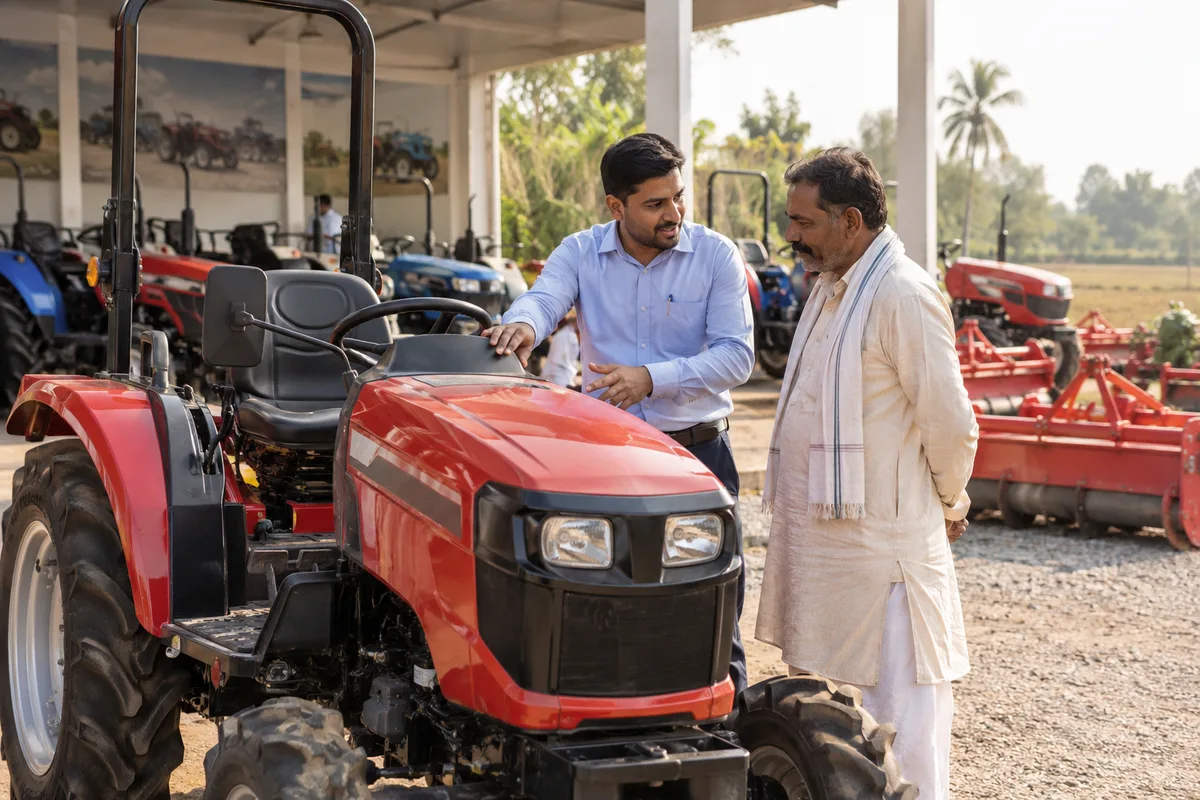
What lead generation means
Lead generation is the combined work of every channel that brings in a new enquiry, whether from search, adverts, referrals or a stall at an exhibition. GullySales runs these channels together and reports the number of enquiries each one produced, not the activity behind it.
Also for farm equipment and tractor dealers
- CRM for farm equipment and tractor dealers
- Follow-up systems for farm equipment dealers
- SEO for farm equipment and tractor dealers
- Local SEO for farm equipment and tractor dealers
- WhatsApp marketing for farm equipment and tractor dealers
- Sales process for farm equipment and tractor dealers
- Referral marketing for farm equipment and tractor dealers
- Website for farm equipment and tractor dealers
Sales and marketing for farm equipment and tractor dealers, the overview.
Last updated 11 Oct 2026.
For farm equipment and tractor dealers
Where it usually goes wrong, and what we would do.
“The manufacturer's lead list is not yours”
Leads passed on by the company are shared with other dealers nearby, and the farmer has often heard from three of you already. A first call that sounds like the third gets nowhere.
“Walk-ins and phone calls vanish by evening”
The man who stood in the showroom for twenty minutes, and the one who rang from the field, are remembered for a day. After that, they are only a village name.
“An ad that pays for clicks from the wrong state”
A video that reaches farmers across a whole state brings calls from places you do not deliver to. The sales team spends the week turning them down.
What we do
What we deliver for farm equipment and tractor dealers.
Every deliverable, what it covers for you, and the result it is there to produce. Nothing here is an extra.
Source list with a code for each
Showroom walk-in, village demonstration, manufacturer lead, hoarding number, WhatsApp, Business Profile call, IndiaMART and referral, each with its own tracking.
Result: You know where enquiries come from instead of guessing.
Dedicated number or QR for each campaign
One WhatsApp number or call line for the hoarding, one for the video, one for the demonstration, all routed to the same sales desk.
Result: A call can be traced to the activity that caused it.
Lead form with village, crop and plan
A short form or a WhatsApp prompt asking only for name, village, crop, the machine wanted and when they plan to buy.
Result: The sales team knows whom to ring first.
Reply routine for each source
Who answers a missed call, who rings back a WhatsApp enquiry and who handles a manufacturer lead, with the order and what to say.
Result: No enquiry is left to whoever happens to see it.
Targeted video and search campaigns
Short video in the district language and search advertising for model names, limited to the taluks you deliver to, with spend agreed in writing.
Result: The enquiries that arrive come from farmers your team can reach.
Enquiry report by source
Enquiries, demonstrations and deliveries by source against the baseline, with the cost of media spend recorded separately.
Result: The owner sees which source brought deliveries and which brought only calls.
How the result is measured
- Enquiries generated
- Cost per enquiry
- Enquiries by source
Recorded as a baseline before work starts, so every later report has an honest comparison.
Where enquiries come from
Where a tractor dealer's enquiries come from, what to write down for each, and how to answer.
- Showroom walk-in
- Note name, village, crop, model looked at and whether they came with a family member who will pay. Offer a test drive before they leave and record the date for the next call.
- Phone call from the hoarding or a video
- Ask where they saw the number, note the village and call back in their own language if the line drops. A missed call ranks as an enquiry and is returned the same day.
- WhatsApp message with a photo
- Farmers send a picture of an old tractor or a field. Reply with a question on crop and acreage, save the contact with the village in the name, and move the talk to a call if it gets long.
- Manufacturer or finance company lead
- Log the source, ring the farmer the same day and say you got the details through the company. Report back which became sales so you can see whether the source deserves your time.
- Village demonstration or service camp
- Take a sheet or a phone form for every person who comes. Write down the crop, the machine tried and when they plan to buy, and ring the next week before they forget.
- Referral from an owner or a mechanic
- Record who sent the farmer and tell the referrer once the sale is done. A farmer who came through a neighbour trusts you from the first call, so give the farmer a named person to ask for.
Who it is for
This is written for these farm equipment and tractor dealers.
- Authorised dealers of a tractor brand
- Implement and attachment dealers
- Combine harvester and paddy transplanter dealers
- Used and pre-owned tractor dealers
- Power tiller and mini tractor dealers
- Drip and sprinkler irrigation equipment sellers
- Spare parts and workshop-led dealers
- Custom hiring centre operators
Not for
It is not the right fit if.
- Nobody can ring back a farmer who has asked about a model, so more enquiries would pile up unanswered in the same diary.
- You plan to buy a list of farmer numbers. Such lists carry people who never asked for a call, and they will not buy a tractor from a stranger.
- You sell in districts where you cannot deliver or service the machine, so enquiries from there would cost a call and end in a refusal.
How it works
How the lead generation work runs
The work itself, in order. How an engagement starts, from your brief to a written scope, is set out on our method page.
- 1
Understand your capacity
We ask how many enquiries your team can answer well, who answers after hours, and what a good enquiry looks like. Without this, the system fills a funnel nobody is watching.
- 2
Audit current sources
We read your call log, WhatsApp chats, enquiry sheet and platform dashboards. The baseline is recorded: enquiries by source, reply time, conversion and cost per order.
- 3
Strategise the channel mix
Search and maps are chosen for people ready to buy, ads for people who are not yet looking, and content and referrals for trust.
- 4
Implement capture and follow-up
Pages, forms, tags, the lead record and the first-reply message are built and tested end to end. We submit test enquiries ourselves before any media money is spent.
- 5
Measure and optimise
Enquiries are traced to source and judged by what became orders, not by volume alone. Channels that fill the sheet with poor enquiries are cut back. How often you are reported to is agreed in writing.
Where this fits
Three pieces of sales work, in this order.
This work sits inside sales process design, at stage 1, prospecting and lead generation. The audit comes before it, and sales management keeps it running.
Step 1
Sales audit
Find where deals are being lost and what to fix first.
Start here if you cannot say where orders are lost.
Step 2 · you are here
Sales process design
One written way to sell, from first enquiry to repeat order.
Start here if every salesperson sells differently.
Step 3
Sales management
A target, a review routine and someone who owns the number.
Start here if the team has targets and no routine.
FAQ
Questions owners ask before they call.
Not here? More answers, or ask on WhatsApp.
Should we buy farmer data lists?
How do we handle leads that the manufacturer passes to us?
What counts as a qualified lead for a tractor?
Do village demonstrations count as lead generation?
How much does it cost?
How long is the contract?
How soon will we see results?
Who will actually do the work?
What do you need from us?
What if we are not happy with the work?
From the blog
Further reading for farm equipment and tractor dealers.
 6 min read · 20 Jul 2026Seasonal and event-linked demand: planning for peaks and quiet monthsHow a specialist trade with busy and slow months can read its own year from past bookings, then time outreach and capacity ahead of each peak instead of after it.
 6 min read · 16 Jun 2026Annual maintenance contracts: how a specialist trade turns a job into recurring workAn annual maintenance contract works when it offers scheduled visits with a clear scope after the job and a recorded due date. This post covers what to offer, when to offer it and how to track renewals.
 6 min read · 17 Mar 2026Handling price haggling in a trade where every job differsWhen no two jobs are alike, a price cut without a scope change teaches buyers to haggle. How to anchor on scope, what to offer instead of a discount, and exact words for the call.
More for farm equipment and tractor dealers
Everything else we would do for you.
Closest to this: leads and follow-up
Also for farm equipment and tractor dealers
- SEO for farm equipment and tractor dealers
- Local SEO for farm equipment and tractor dealers
- WhatsApp marketing for farm equipment and tractor dealers
- Sales process for farm equipment and tractor dealers
- Referral marketing for farm equipment and tractor dealers
- Website for farm equipment and tractor dealers
Or start from the overview: sales and marketing for farm equipment and tractor dealers.
Your next practical step
Tell us what you are trying to grow, and we will read it before we call.
Eight short steps, mostly taps. Skip anything you would rather answer on the call.