Farm equipment and tractor dealers · Sales process
Walk every farmer from the first call to the delivery day by the same steps.
A sales process for a tractor dealer is the fixed order of steps from the first enquiry to delivery and the first service, with a clear person and a written note at each. GullySales maps the steps your team already follows, finds the one where farmers drop out, and writes the routine down in the dealership's own words.
Scope, fee, reporting and term are agreed in writing after we have read your brief and spoken to you.
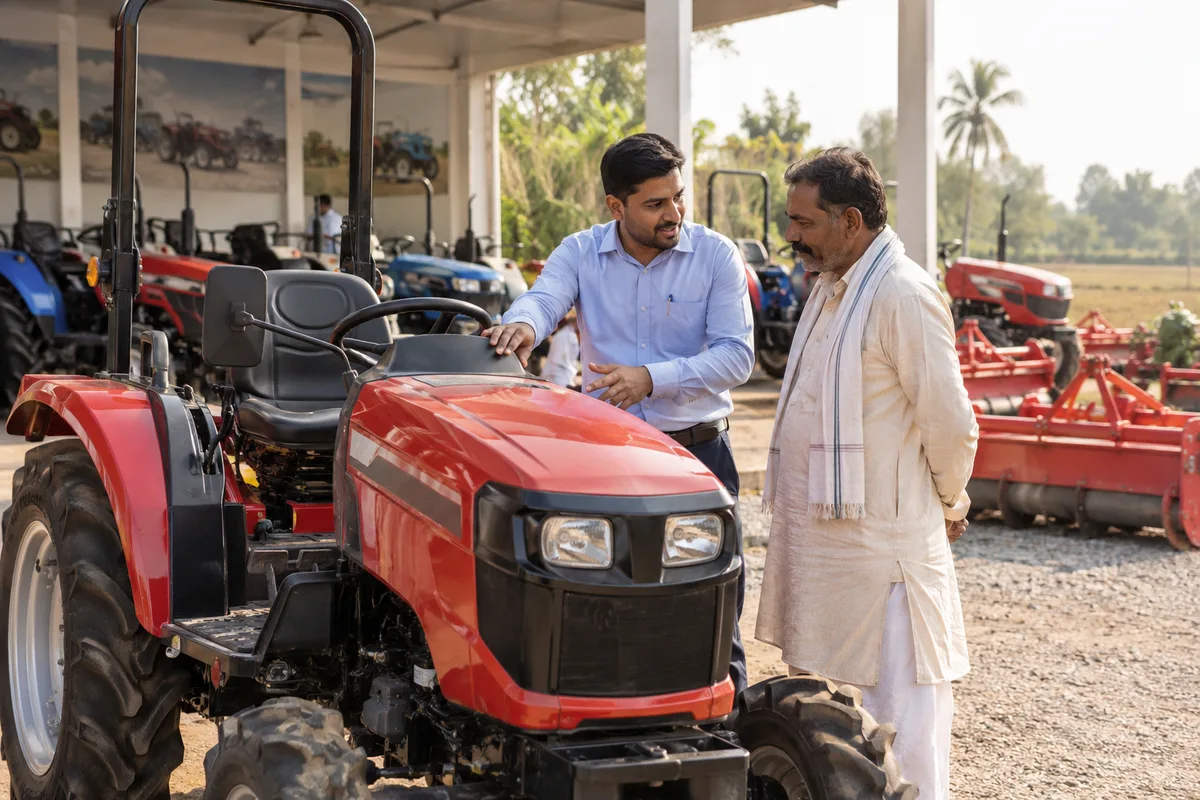
What sales process means
A sales process is the fixed sequence of steps, such as enquiry, site visit, quote and order, that every deal is expected to pass through in the same order. GullySales writes this sequence down for your business and checks that every salesperson actually follows it.
Also for farm equipment and tractor dealers
- SEO for farm equipment and tractor dealers
- Local SEO for farm equipment and tractor dealers
- Lead generation for farm equipment and tractor dealers
- WhatsApp marketing for farm equipment and tractor dealers
- CRM for farm equipment and tractor dealers
- Referral marketing for farm equipment and tractor dealers
- Website for farm equipment and tractor dealers
- Reputation management for farm equipment and tractor dealers
Sales and marketing for farm equipment and tractor dealers, the overview.
Last updated 11 Oct 2026.
For farm equipment and tractor dealers
Where it usually goes wrong, and what we would do.
“The price comes before the need is known”
A farmer asks the rate on the phone, the salesman quotes it, and both of them hang up. Nobody asked the acreage, the crop or how they intend to pay.
“Finance is the step where deals die”
A farmer who loves the machine can lose it to a missing land record or a guarantor who has not signed. The sale needs a person assigned to that file, not a hope that it moves.
“Delivery is treated as the end”
After the tractor leaves, nobody rings for the first free service or asks which implement they need next. The next sale sits with that first week.
What we do
What we deliver for farm equipment and tractor dealers.
Every deliverable, what it covers for you, and the result it is there to produce. Nothing here is an extra.
A written sequence of steps for the dealership
From enquiry to delivery and first service, in the order your team actually follows, with the name of the person who owns each step. For example, a dealer finds that finance files sit with whoever is free, and names one executive per file.
Result: A new salesman has a written order of steps to follow.
Questions to ask before a price
Crop, acreage, the machine owned, the work it must do and how they will pay, asked in a fixed order in the farmer's language.
Result: The quote fits the farmer, not the first model named.
Demonstration routine
How a test drive or field demonstration is booked, what implement goes on, who rides along and what is written down afterwards.
Result: A demonstration ends with a next step and a date.
Quote and finance pack
A one-page quote with the on-road extras, an accessory list and a finance checklist given to the farmer in the same sitting.
Result: The farmer leaves with a figure and a list of what to bring.
Delivery and handover checklist
RC, insurance, the free service coupons, the first service date and the contact of the workshop supervisor, handed over on delivery day.
Result: The farmer knows who to call on the first problem.
Lost-sale reasons
A short note on why each farmer did not buy: price, finance, a rival model, timing or a family decision.
Result: You learn why you lose, not only how many.
How the result is measured
- Deals following the process
- Time spent at each step
- Drop-off rate by step
Recorded as a baseline before work starts, so every later report has an honest comparison.
Steps of a sale
The steps of a tractor sale in the order a dealership walks them, and what to write at each.
- Enquiry
- Log the name, village, source and machine asked about before the call ends. Reply the same day, in the language used, and do not quote a price before the next step.
- Need and crop
- Ask the acreage, the main crop, the implements they already own and the work the tractor must do. Write the answers down. They decide the horsepower more than the price does.
- Demonstration or visit
- Fix a day for a test drive or a field demonstration, with the right implement hitched. Note who attended, as the one who decides is often not the one who came.
- Quote and finance file
- Give a written quote with on-road costs and the list of finance documents, and name the executive who will hold the file. Record the date it goes to the bank or finance company.
- Follow-up and close
- Ring the day after the quote and again when the file is sanctioned. For a farmer who says they will think, ask what is left to decide and mark the date to call, not a vague later.
- Delivery and first service
- Hand over the papers, the service booklet and the workshop contact on delivery day. Book the first service in the farmer's presence, so the sale does not end at the gate.
Who it is for
This is written for these farm equipment and tractor dealers.
- Authorised dealers of a tractor brand
- Implement and attachment dealers
- Combine harvester and paddy transplanter dealers
- Used and pre-owned tractor dealers
- Power tiller and mini tractor dealers
- Drip and sprinkler irrigation equipment sellers
- Spare parts and workshop-led dealers
- Custom hiring centre operators
Not for
It is not the right fit if.
- The owner decides every price alone and will not let the process change that, so written steps would be ignored at the moment they matter.
- The sales desk has no time to write a line after each call, in which case start with one note and one date, not a full set of stages.
- You sell only a few machines in a season, and a simple checklist for each sale would do more than a long sequence.
How it works
How the sales process work runs
The work itself, in order. How an engagement starts, from your brief to a written scope, is set out on our method page.
- 1
Study current deal flow
We trace how deals actually move today, comparing across reps and outcomes.
- 2
Define the stages
Clear stages and criteria are designed to match how deals genuinely progress and close.
- 3
Configure the CRM
The process is built into your CRM so it is enforced structurally, not just documented.
- 4
Train the team
Reps are trained on the new process and why each stage exists.
- 5
Review adoption
We check after rollout whether the process is being followed and adjust where it is not.
Where this fits
Three pieces of sales work, in this order.
This work sits inside sales process design, at stage 1, prospecting and lead generation. The audit comes before it, and sales management keeps it running.
Step 1
Sales audit
Find where deals are being lost and what to fix first.
Start here if you cannot say where orders are lost.
Step 2 · you are here
Sales process design
One written way to sell, from first enquiry to repeat order.
Start here if every salesperson sells differently.
Step 3
Sales management
A target, a review routine and someone who owns the number.
Start here if the team has targets and no routine.
FAQ
Questions owners ask before they call.
Not here? More answers, or ask on WhatsApp.
What if our salesmen will not write notes after a call?
How is selling a used tractor different from selling a new one?
When should the price be quoted?
How do we handle a farmer who only asks for the discount?
What do we write down at each step?
Can the process change with the season?
How long is the contract?
How soon will we see results?
Who will actually do the work?
What do you need from us?
From the blog
Further reading for farm equipment and tractor dealers.
 6 min read · 20 Jul 2026Seasonal and event-linked demand: planning for peaks and quiet monthsHow a specialist trade with busy and slow months can read its own year from past bookings, then time outreach and capacity ahead of each peak instead of after it.
 6 min read · 16 Jun 2026Annual maintenance contracts: how a specialist trade turns a job into recurring workAn annual maintenance contract works when it offers scheduled visits with a clear scope after the job and a recorded due date. This post covers what to offer, when to offer it and how to track renewals.
 6 min read · 17 Mar 2026Handling price haggling in a trade where every job differsWhen no two jobs are alike, a price cut without a scope change teaches buyers to haggle. How to anchor on scope, what to offer instead of a discount, and exact words for the call.
More for farm equipment and tractor dealers
Everything else we would do for you.
- SEO for farm equipment and tractor dealers
- Local SEO for farm equipment and tractor dealers
- Lead generation for farm equipment and tractor dealers
- WhatsApp marketing for farm equipment and tractor dealers
- CRM for farm equipment and tractor dealers
- Referral marketing for farm equipment and tractor dealers
Or start from the overview: sales and marketing for farm equipment and tractor dealers.
Your next practical step
Tell us what you are trying to grow, and we will read it before we call.
Eight short steps, mostly taps. Skip anything you would rather answer on the call.