Farm equipment and tractor dealers · Local SEO
Show up on the map where the farmers of your taluk are standing.
Local SEO for a tractor dealer is the work of appearing on Google Maps and in local results when a farmer or a mechanic searches for a showroom, a workshop or spares nearby. The ranking depends on your profile, your category and your reviews. GullySales sets up the showroom, the workshop and any branch properly and keeps the details the same everywhere.
Scope, fee, reporting and term are agreed in writing after we have read your brief and spoken to you.
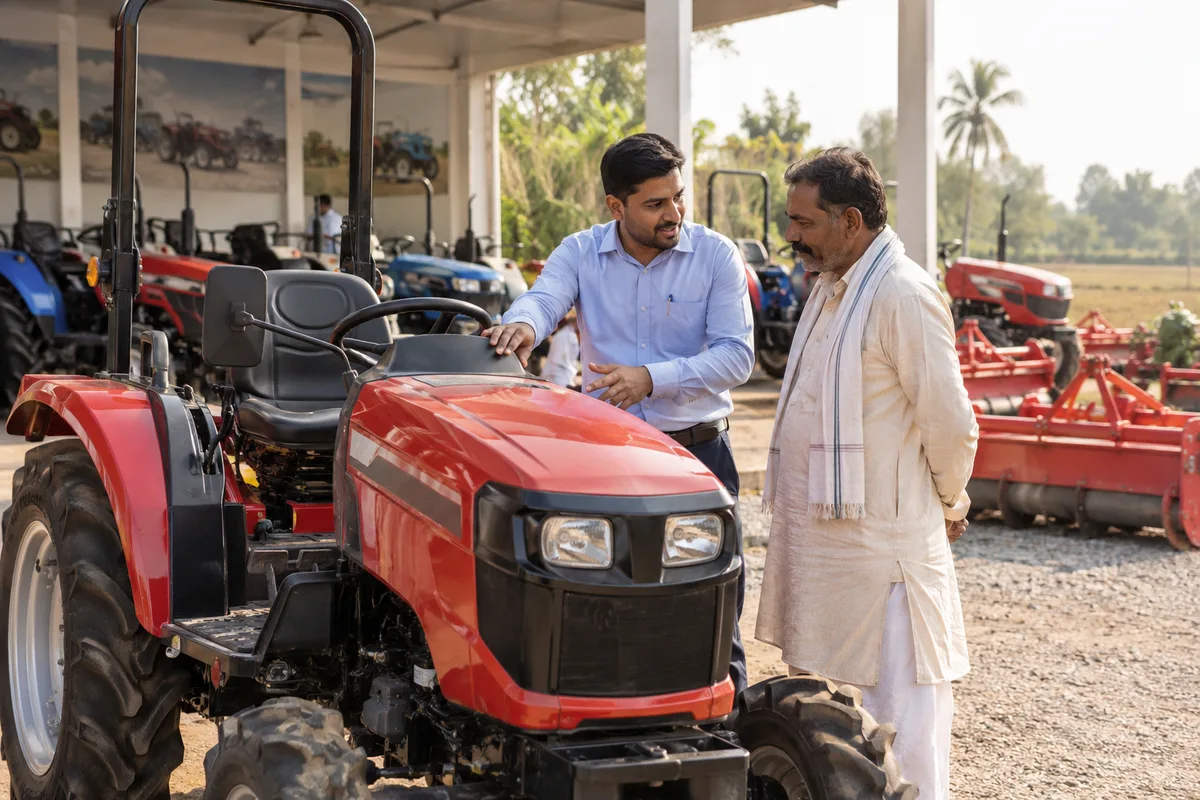
What local SEO means
Local SEO is the work of making your business show up for searches that name your town or locality, such as a service plus an area name. GullySales sets up locality pages, local citations and map listings so nearby customers find you before a competitor across town.
Also for farm equipment and tractor dealers
- SEO for farm equipment and tractor dealers
- Website for farm equipment and tractor dealers
- Lead generation for farm equipment and tractor dealers
- WhatsApp marketing for farm equipment and tractor dealers
- CRM for farm equipment and tractor dealers
- Sales process for farm equipment and tractor dealers
- Referral marketing for farm equipment and tractor dealers
- Reputation management for farm equipment and tractor dealers
Sales and marketing for farm equipment and tractor dealers, the overview.
Last updated 11 Oct 2026.
For farm equipment and tractor dealers
Where it usually goes wrong, and what we would do.
“Maps show the nearest dealer, not the best one”
A farmer on the highway searches tractor showroom near me and gets whoever is closest and best described. A better dealer fifteen kilometres away is not on the first screen.
“One address, three businesses”
The showroom, the spares counter and the workshop often share a gate. Listed as one entry, a mechanic looking for a part and a farmer looking for a tractor both land on the wrong page.
“Old listings send farmers to the wrong place”
A dealership that moved to the bypass road still has a JustDial entry with the old address and a phone no one answers. A farmer follows it and does not come back.
What we do
What we deliver for farm equipment and tractor dealers.
Every deliverable, what it covers for you, and the result it is there to produce. Nothing here is an extra.
Business Profile for showroom and workshop
The right category for each, the brands you are authorised for, photographs of the yard, the workshop bay and the signboard, and the days you are staffed.
Result: Both the buyer and the mechanic find the right door.
Service-area setup for the villages you cover
The taluks and villages where your team delivers and holds camps, stated plainly in the profile and on the website.
Result: A farmer outside the town sees that you serve their area.
Listing clean-up across directories
Your name, address and phone checked on JustDial, IndiaMART, Sulekha and the manufacturer's dealer locator, with old and duplicate entries corrected or claimed.
Result: Every listing gives the same address and a phone that rings.
Photographs of stock, delivery and workshop
Recent photographs of tractors in the yard, a delivery day with the customer's consent, the spares shelf and the service bay.
Result: The profile looks like a working dealership and not a signboard.
Question and answer entries on the profile
The questions farmers ask by phone, such as whether you arrange finance and whether the workshop works on Sunday, answered on the profile itself.
Result: The profile answers the call before it is made.
Local visibility report
Calls, direction requests and profile views against the baseline, with a note on which listings send real enquiries.
Result: You see which entry earns its place.
How the result is measured
- Map pack ranking
- Local search visibility
- Enquiries by locality
Recorded as a baseline before work starts, so every later report has an honest comparison.
What Google weighs here
What Google Maps weighs when a farmer searches for a tractor showroom or workshop nearby.
- Relevance of the category you chose
- Pick tractor dealer for the showroom and tractor repair shop for the workshop, if Google allows. A wrong category sends spare-parts buyers to a showroom that does not sell parts.
- Distance from the farmer's phone
- You cannot move closer, but you can list the villages you serve and state where deliveries go. A farmer at the next taluk head then sees you as a nearby option.
- Prominence from reviews and mentions
- Reviews by owners who bought and serviced with you, replies in the farmer's language and a listing on the manufacturer's dealer page all raise how well known you look to Google.
- JustDial, IndiaMART and Sulekha entries
- Claim each one and check the address, phone and working hours against the showroom board. An old listing with a dead number costs you a farmer who tried it first.
- Name, address and phone match
- Write the dealership name exactly as the signboard and GST invoice show it, with the same address lines. Mixed spellings of the name make Google doubt that two listings are one business.
- Photographs and staffed hours
- Add tractors in the yard, the workshop bay and the spares shelf, and state the days you are open during harvest. A farmer who drives in on a closed Sunday does not return.
Who it is for
This is written for these farm equipment and tractor dealers.
- Authorised dealers of a tractor brand
- Implement and attachment dealers
- Combine harvester and paddy transplanter dealers
- Used and pre-owned tractor dealers
- Power tiller and mini tractor dealers
- Drip and sprinkler irrigation equipment sellers
- Spare parts and workshop-led dealers
- Custom hiring centre operators
Not for
It is not the right fit if.
- Your showroom, workshop and spares counter share one address and nobody has decided how each is to be listed, so a profile would confuse the farmer who searches for one of them.
- Your name, address and phone differ across old directories, which means the first job is to correct those, not to add new entries.
- You have no one to answer a map call or a question posted on the profile, and an unanswered question tells the next farmer that nobody is there.
How it works
How the local SEO work runs
The work itself, in order. How an engagement starts, from your brief to a written scope, is set out on our method page.
- 1
Write down what is true
Each branch's real address, signboard name, phone, hours and owning Google account go into one record you sign off. Every later listing is copied from it.
- 2
Search as your buyer does
We search each branch on a phone from points around it, in your buyers' words, and note who appears with what reviews and photos.
- 3
Fix the profile first
Ownership first, then name, address, pin, phone, hours and business type. Google can suspend a profile with extra words in its name or an address that is not a real premises.
- 4
Build the branch pages and match the listings
Each real branch gets its own page, and the other listings are changed to agree with it. We write none for towns without a branch, because Google treats near-identical pages as doorway pages.
- 5
Ask, reply and measure
We agree with each branch who asks for reviews, when and how. Results are set against the baseline recorded before work began, and the branch that is behind gets the next round.
Where this fits
Three pieces of sales work, in this order.
This work sits inside sales process design, at stage 1, prospecting and lead generation. The audit comes before it, and sales management keeps it running.
Step 1
Sales audit
Find where deals are being lost and what to fix first.
Start here if you cannot say where orders are lost.
Step 2 · you are here
Sales process design
One written way to sell, from first enquiry to repeat order.
Start here if every salesperson sells differently.
Step 3
Sales management
A target, a review routine and someone who owns the number.
Start here if the team has targets and no routine.
FAQ
Questions owners ask before they call.
Not here? More answers, or ask on WhatsApp.
Can the showroom and the workshop have separate profiles?
Our dealership sits outside the town on the highway. Does that hurt us?
A competitor listed a fake dealership near ours. What can we do?
We have branches in two towns. How should they appear?
How much does it cost?
How long is the contract?
How soon will we see results?
Who will actually do the work?
What do you need from us?
What if we are not happy with the work?
From the blog
Further reading for farm equipment and tractor dealers.
 6 min read · 20 Jul 2026Seasonal and event-linked demand: planning for peaks and quiet monthsHow a specialist trade with busy and slow months can read its own year from past bookings, then time outreach and capacity ahead of each peak instead of after it.
 6 min read · 16 Jun 2026Annual maintenance contracts: how a specialist trade turns a job into recurring workAn annual maintenance contract works when it offers scheduled visits with a clear scope after the job and a recorded due date. This post covers what to offer, when to offer it and how to track renewals.
 6 min read · 17 Mar 2026Handling price haggling in a trade where every job differsWhen no two jobs are alike, a price cut without a scope change teaches buyers to haggle. How to anchor on scope, what to offer instead of a discount, and exact words for the call.
More for farm equipment and tractor dealers
Everything else we would do for you.
Closest to this: search and visibility
Also for farm equipment and tractor dealers
- Lead generation for farm equipment and tractor dealers
- WhatsApp marketing for farm equipment and tractor dealers
- CRM for farm equipment and tractor dealers
- Sales process for farm equipment and tractor dealers
- Referral marketing for farm equipment and tractor dealers
- Reputation management for farm equipment and tractor dealers
Or start from the overview: sales and marketing for farm equipment and tractor dealers.
Your next practical step
Tell us what you are trying to grow, and we will read it before we call.
Eight short steps, mostly taps. Skip anything you would rather answer on the call.