Farm equipment and tractor dealers · Referral marketing
Make the farmer who is happy with the tractor the reason a neighbour calls you.
Referral marketing for a tractor dealer is the work of turning a satisfied owner, a mechanic or an input shop into a steady source of introductions. Farmers trust other farmers more than any advertisement. GullySales designs the thank-you, the record and the follow-up so that referrals are asked for properly and counted.
Scope, fee, reporting and term are agreed in writing after we have read your brief and spoken to you.
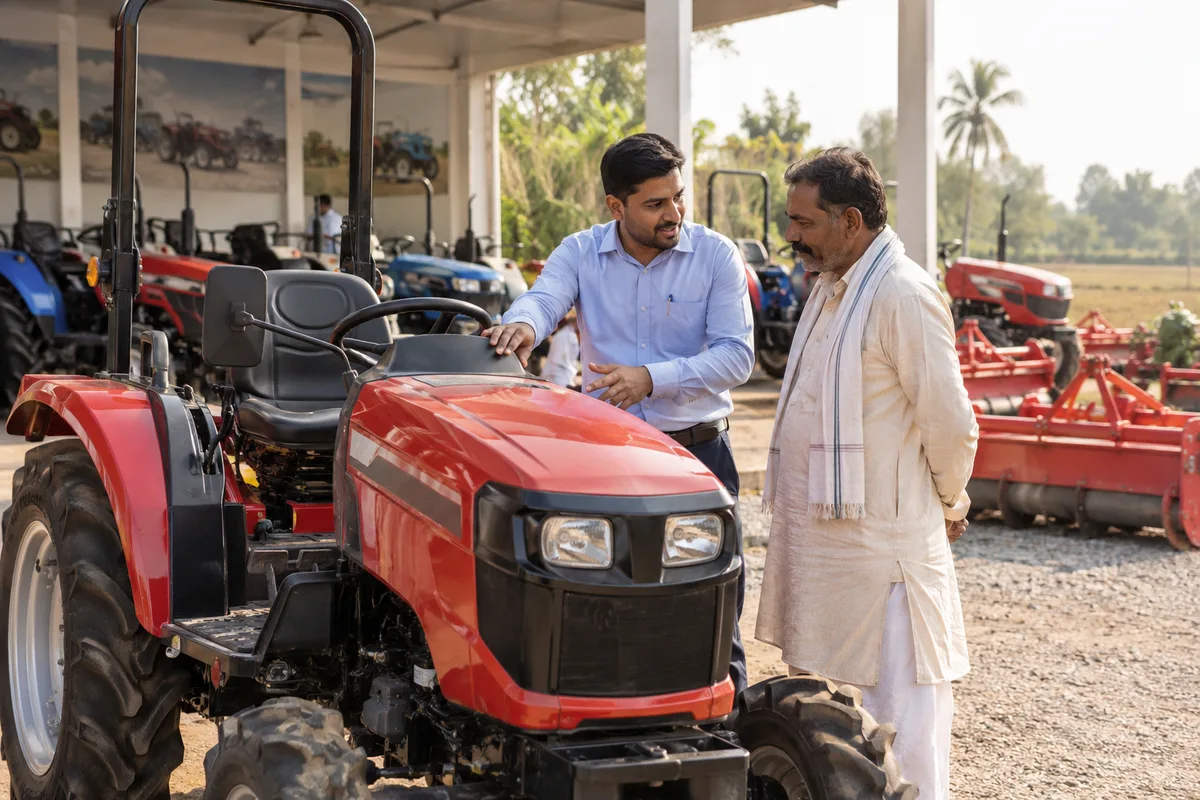
What referral marketing means
Referral marketing is asking an existing customer to recommend you to someone they know, usually with a reward for both sides. It differs from a loyalty scheme because it brings in a new customer rather than a repeat purchase. GullySales builds the ask and the reward into a point where a customer is already satisfied.
Also for farm equipment and tractor dealers
- Customer retention for farm equipment and tractor dealers
- SEO for farm equipment and tractor dealers
- Local SEO for farm equipment and tractor dealers
- Lead generation for farm equipment and tractor dealers
- WhatsApp marketing for farm equipment and tractor dealers
- CRM for farm equipment and tractor dealers
- Sales process for farm equipment and tractor dealers
- Website for farm equipment and tractor dealers
Sales and marketing for farm equipment and tractor dealers, the overview.
Last updated 11 Oct 2026.
For farm equipment and tractor dealers
Where it usually goes wrong, and what we would do.
“Referrals happen but nobody writes them down”
The sale that came because a neighbour said so is logged as a walk-in. Without the neighbour's name there is nobody to thank and nobody to ask again.
“The mechanic is paid by the spares shop, not by you”
A village mechanic recommends the dealer whose parts are trusted, and whose workshop speaks politely to mechanics. A dealer who ignores them loses a steady referrer.
“An open commission breeds bad advice”
A promised cash payment on every sale makes an intermediary push a tractor that does not suit the farmer. The next farmer hears about it too.
What we do
What we deliver for farm equipment and tractor dealers.
Every deliverable, what it covers for you, and the result it is there to produce. Nothing here is an extra.
List of referral sources for the territory
Past owners, mechanics, input shops, society secretaries and bank staff, named and rated by how many farmers each has sent.
Result: You know whom to look after before the season.
Referral line on every enquiry
A field on the register that asks who sent the farmer, filled in at the first call and checked at the delivery.
Result: Every referral is credited to a named person.
Thank-you routine for referrers
A call or a visit from the owner or manager once a referred farmer takes delivery, plus a small token that is agreed in advance.
Result: The referrer feels remembered, and sends another.
Introduction message for owners to forward
A short WhatsApp message with a photo of the delivered tractor, the dealership name and a number, that an owner can send to a neighbour once they have consented.
Result: An owner can recommend you in one tap.
Handling of mechanics and input shops
A fair, written way of working with village mechanics and shops that does not push a machine on a farmer who does not need it.
Result: The people who advise farmers stay on your side.
Referral count by source
Referred enquiries, deliveries and referrers listed against the baseline, with no number invented where the record is empty.
Result: You see which relationships bring in tractors.
How the result is measured
- Referrals received
- Referral conversion rate
- Cost per referred customer
Recorded as a baseline before work starts, so every later report has an honest comparison.
How referrals work in this trade
The people who send farmers to a tractor dealer, what prompts each, and how to thank them.
- Tractor owners after delivery
- Ask at delivery or at the first free service. Give the owner a photo of the tractor for the family group. Record the owner's name against any enquiry that mentions them, and thank them once the neighbour buys.
- Village mechanics
- Supply the mechanic genuine parts on fair terms, invite them to the camp and call them before you call their customers. Never go around the mechanic to a farmer they advise, as they will stop sending anyone.
- Agri-input shop owners
- Leave visiting cards and a model sheet, and tell them when you have a rotavator ready. Credit them on the register and thank them in person, not through a salesman.
- Cooperative society secretaries
- The secretary knows who is planning a purchase. Offer a demonstration for the members and let the secretary announce it. Keep the society's name in the source field so you can see what it brings.
- Bank and finance staff
- Staff may send a farmer to a dealer they find easy to work with. Hand over complete files and be honest on delays. Do not pay an employee of a lender for referrals, as the lender's own rules decide that.
- What never to do
- Do not promise a cash reward you cannot afford, do not push a machine on a farmer who does not need it, and do not use a farmer's name or photograph without clear permission.
Who it is for
This is written for these farm equipment and tractor dealers.
- Authorised dealers of a tractor brand
- Implement and attachment dealers
- Combine harvester and paddy transplanter dealers
- Used and pre-owned tractor dealers
- Power tiller and mini tractor dealers
- Drip and sprinkler irrigation equipment sellers
- Spare parts and workshop-led dealers
- Custom hiring centre operators
Not for
It is not the right fit if.
- You have not recorded where past buyers came from, so you cannot tell which owners or mechanics already send you farmers.
- You plan an open commission to anyone who brings a buyer, which pays for pushy advice and can damage the dealership's name with the farmer.
- Your after-sale service is slow to respond, and a farmer who is let down will not recommend you to a neighbour.
How it works
How the referral marketing work runs
The work itself, in order. How an engagement starts, from your brief to a written scope, is set out on our method page.
- 1
Read the margin and the relationship
We work out what a new customer is worth and what you can pay to get one, then check whether customers know others like themselves.
- 2
Find the referrals you already get
Your invoices, call notes and WhatsApp threads show who already sends people to you, and who they are. That sets the starting point and the first people to ask.
- 3
Write the offer and the rules
The reward, the definition of a valid referral and the payout steps are agreed in writing before anything is shown to customers.
- 4
Build the share path and the record
The message, the link or code and the referral sheet are built. Your team tests a referral end to end, from forward to reward.
- 5
Start with your best customers, then widen
The first asks go to people who have already praised you. What they say about the offer decides what changes before it reaches the wider base.
Where this fits
Three pieces of sales work, in this order.
This work sits inside sales process design, at stage 7, after the sale. The audit comes before it, and sales management keeps it running.
Step 1
Sales audit
Find where deals are being lost and what to fix first.
Start here if you cannot say where orders are lost.
Step 2 · you are here
Sales process design
One written way to sell, from first enquiry to repeat order.
Start here if every salesperson sells differently.
Step 3
Sales management
A target, a review routine and someone who owns the number.
Start here if the team has targets and no routine.
FAQ
Questions owners ask before they call.
Not here? More answers, or ask on WhatsApp.
Should we pay a commission to those who bring a buyer?
How do we ask an owner without it sounding like a favour?
Is it fine to use a happy owner's photo and name?
What should we never do?
How much does it cost?
How long is the contract?
How soon will we see results?
Who will actually do the work?
What do you need from us?
From the blog
Further reading for farm equipment and tractor dealers.
 6 min read · 20 Jul 2026Seasonal and event-linked demand: planning for peaks and quiet monthsHow a specialist trade with busy and slow months can read its own year from past bookings, then time outreach and capacity ahead of each peak instead of after it.
 6 min read · 16 Jun 2026Annual maintenance contracts: how a specialist trade turns a job into recurring workAn annual maintenance contract works when it offers scheduled visits with a clear scope after the job and a recorded due date. This post covers what to offer, when to offer it and how to track renewals.
 6 min read · 17 Mar 2026Handling price haggling in a trade where every job differsWhen no two jobs are alike, a price cut without a scope change teaches buyers to haggle. How to anchor on scope, what to offer instead of a discount, and exact words for the call.
More for farm equipment and tractor dealers
Everything else we would do for you.
Closest to this: customers after the sale
Also for farm equipment and tractor dealers
Or start from the overview: sales and marketing for farm equipment and tractor dealers.
Your next practical step
Tell us what you are trying to grow, and we will read it before we call.
Eight short steps, mostly taps. Skip anything you would rather answer on the call.