Mineral trading companies · CRM
Hold every mine, plant, grade and last rate in one record the firm owns.
A CRM for a mineral trader is a shared record of suppliers, buyers, lots and quotes, so that the knowledge does not live in one phone. GullySales works on the fields, the set-up in a tool your team will open and the habit of updating it.
Scope, fee, reporting and term are agreed in writing after we have read your brief and spoken to you.
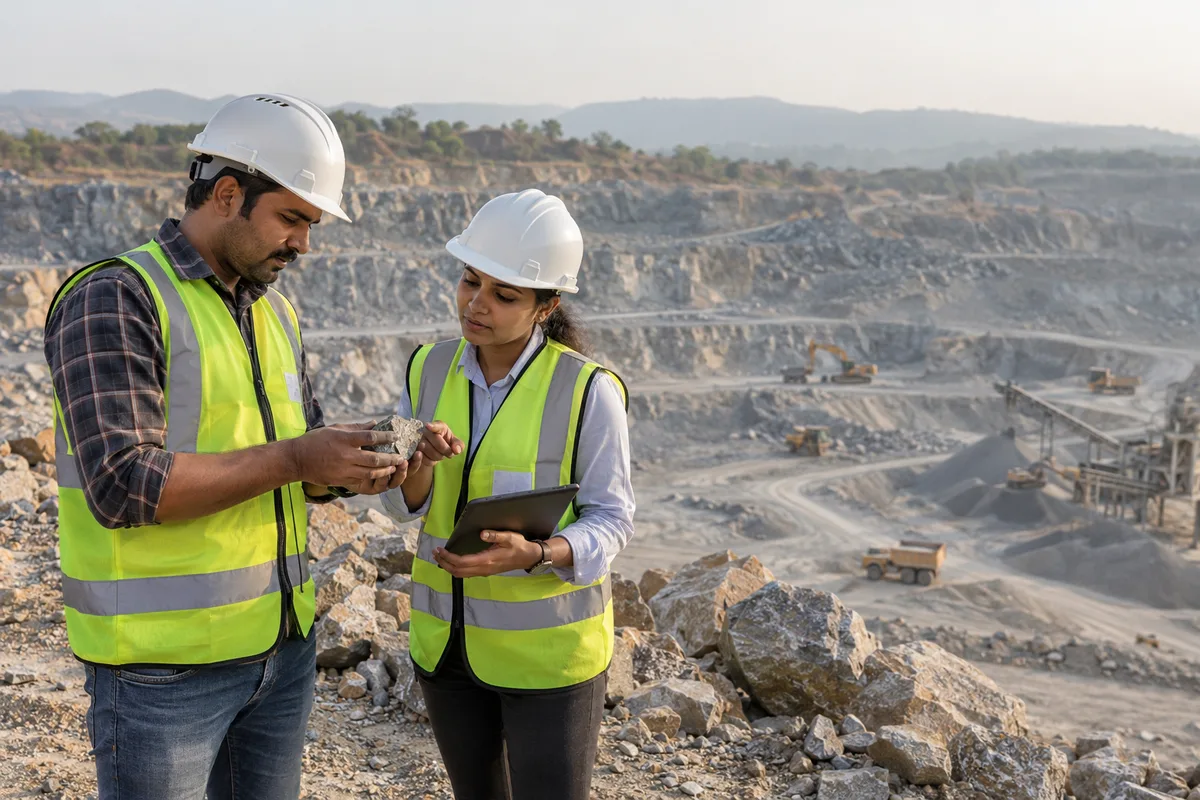
What CRM means
A CRM is the record where every enquiry, call and quote is kept against a customer, replacing separate notebooks, spreadsheets and memory. GullySales sets up or cleans an existing CRM and reports from it by enquiry outcome rather than by activity logged.
Also for mineral trading companies
- Lead generation for mineral trading companies
- Follow-up systems for mineral traders
- SEO for mineral trading companies
- Social media marketing for mineral traders
- Content marketing for mineral trading companies
- Buyer personas for mineral traders
- WhatsApp marketing for mineral traders
- Digital marketing for mineral trading companies
Sales and marketing for mineral trading companies, the overview.
Last updated 18 Oct 2026.
For mineral trading companies
Where it usually goes wrong, and what we would do.
“The chat history is the database”
Grades, rates and promises sit in WhatsApp threads that only one person can search. When that person is away or leaves, the firm cannot find what it quoted, to whom or when.
“Supplier and buyer records need to link”
A lot connects one mine to one plant. A CRM that holds only customers cannot tell you which supplier fed which buyer, nor which mines have stock that a waiting buyer needs.
“Rate history has value”
The last rate quoted to a plant is the first thing a salesperson needs before ringing back. Without it, the call opens with a guess and the buyer notices.
“A tool nobody opens is a cost”
A CRM filled in for a month and dropped is common. The record has to be short enough to update at the yard gate or after a call, or the team returns to chats.
What we do
What we deliver for mineral trading companies.
Every deliverable, what it covers for you, and the result it is there to produce. Nothing here is an extra.
Field design
A short list of fields for suppliers, buyers, lots and quotes: grade, quantity, loading point, destination, rate, validity and payment terms.
Result: Each field has a reason and an owner, and nothing extra is asked of the team.
Set-up in a tool you will use
The records built in a CRM suited to a small trading desk, with access limited by role.
Result: Your team logs in and finds its suppliers and buyers.
Import from chats and notebooks
Existing names and rates moved from WhatsApp, Excel and notebooks, with duplicates resolved.
Result: One list replaces the scattered ones, and the old sources are checked against it.
Open quote view
A saved view of quotes sent and not yet confirmed, sorted by buyer and grade.
Result: Anyone in the firm can see what is pending.
Short training and a rule for updates
A walk-through with the team and a plain rule for what is entered after each call.
Result: The team knows what to enter and when.
How the result is measured
- Enquiries logged in the CRM
- Data completeness
- Reports generated from CRM data
Recorded as a baseline before work starts, so every later report has an honest comparison.
Fields worth keeping
Fields a mineral trader's record needs for mines, plants, grades and rates.
- Grade, size and quantity per lot
- Filled from each quote and confirmation by the desk. It lets you match a lot offered by a mine to the plants that asked for it.
- Last rate quoted and date
- Filled when a rate goes out. The history shows how a buyer reacts to movement, and stops a stale figure being repeated.
- Supplier linked to each buyer lot
- Filled at confirmation. Joins the two lists so a payment delay on one side can be read against the other.
- Payment terms and days outstanding
- Filled by accounts. Shows which plants stretch credit and strain working capital.
- Delivery point and transport mode
- Filled at quote. A repeat buyer gets the same terms without a hunt through chats.
Who it is for
This is written for these mineral trading companies.
- Iron ore and manganese traders serving steel and ferroalloy plants
- Coal and coke traders for industry
- Limestone, dolomite and silica traders
- Bauxite and other ore traders
- Industrial mineral traders buying from several mines
- Aggregate and sand traders supplying infrastructure projects
- Commission agents and brokers working between mines and plants
- Traders who also export part of what they buy
Not for
It is not the right fit if.
- Your supplier and buyer details are with the owner alone, who will not share them with the desk
- Chats are the record and no one has agreed to enter lots in one place
- You trade a handful of lots a year and a ledger already holds each one
How it works
How the CRM work runs
The work itself, in order. How an engagement starts, from your brief to a written scope, is set out on our method page.
- 1
Map the sales process
We sit with the people who sell and write down how a deal moves from enquiry to payment, including where it stalls.
- 2
Agree stages, fields and owners
Each stage gets a name your team already uses and a proof that the deal has left it. We agree which fields are required at which stage, and who may change what.
- 3
Build on a copy
Pipeline, fields and views are built on a trial copy where the CRM offers one, or in a separate pipeline where the plan allows. Live work stays untouched.
- 4
Connect channels, then switch on automations
Channels are connected first. Each automation is then switched on separately, so a misfiring rule is easy to find.
- 5
Test with real deals
The people who will use the CRM run open deals through it. Gaps are fixed before the whole team switches over.
- 6
Switch over and trim
Once real use shows which fields stay empty and which stages nobody uses, those are cut and the handover record is updated.
Where this fits
Three pieces of sales work, in this order.
This work sits inside sales management. A target, a review routine and someone who owns the number.
Step 1
Sales audit
Find where deals are being lost and what to fix first.
Start here if you cannot say where orders are lost.
Step 2
Sales process design
One written way to sell, from first enquiry to repeat order.
Start here if every salesperson sells differently.
Step 3 · you are here
Sales management
A target, a review routine and someone who owns the number.
Start here if the team has targets and no routine.
FAQ
Questions owners ask before they call.
Not here? More answers, or ask on WhatsApp.
Will the CRM expose our supplier list to others?
Do we need an expensive system?
What if the team keeps using WhatsApp?
What is the first thing to put into the CRM?
How much does it cost?
How long is the contract?
How soon will we see results?
Who will actually do the work?
What do you need from us?
What if we are not happy with the work?
More for mineral trading companies
Everything else we would do for you.
Closest to this: leads and follow-up
Also for mineral trading companies
Or start from the overview: sales and marketing for mineral trading companies.
Your next practical step
Tell us what you are trying to grow, and we will read it before we call.
Eight short steps, mostly taps. Skip anything you would rather answer on the call.