Waste management and recycling companies · Social media
Show the pickup, the plant and the segregation talk where committees look.
Social media marketing for a waste company is the steady posting of real collections, plant visits and segregation lessons on the pages a committee member or facility manager checks before calling. GullySales plans the posts, the photographs and the replies, and reads which ones bring proposal requests.
Scope, fee, reporting and term are agreed in writing after we have read your brief and spoken to you.
What social media means
Social media is the ongoing posting your business does on platforms such as Instagram, Facebook and LinkedIn to stay visible to customers and prospects between purchases. GullySales plans a posting calendar, writes captions and designs the images so the page looks active and answers what a visitor would ask.
Also for waste management and recycling companies
- Content marketing for waste management and recycling companies
- SEO for waste management and recycling companies
- local SEO for waste management and recycling companies
- lead generation for waste management and recycling companies
- WhatsApp marketing for waste management and recycling companies
- CRM for waste management and recycling companies
- a sales process for waste management and recycling companies
- referral marketing for waste management and recycling companies
Sales and marketing for waste management and recycling companies, the overview.
Last updated 11 Oct 2026.
For waste management and recycling companies
Where it usually goes wrong, and what we would do.
“Stock images of leaves say nothing about your vehicles”
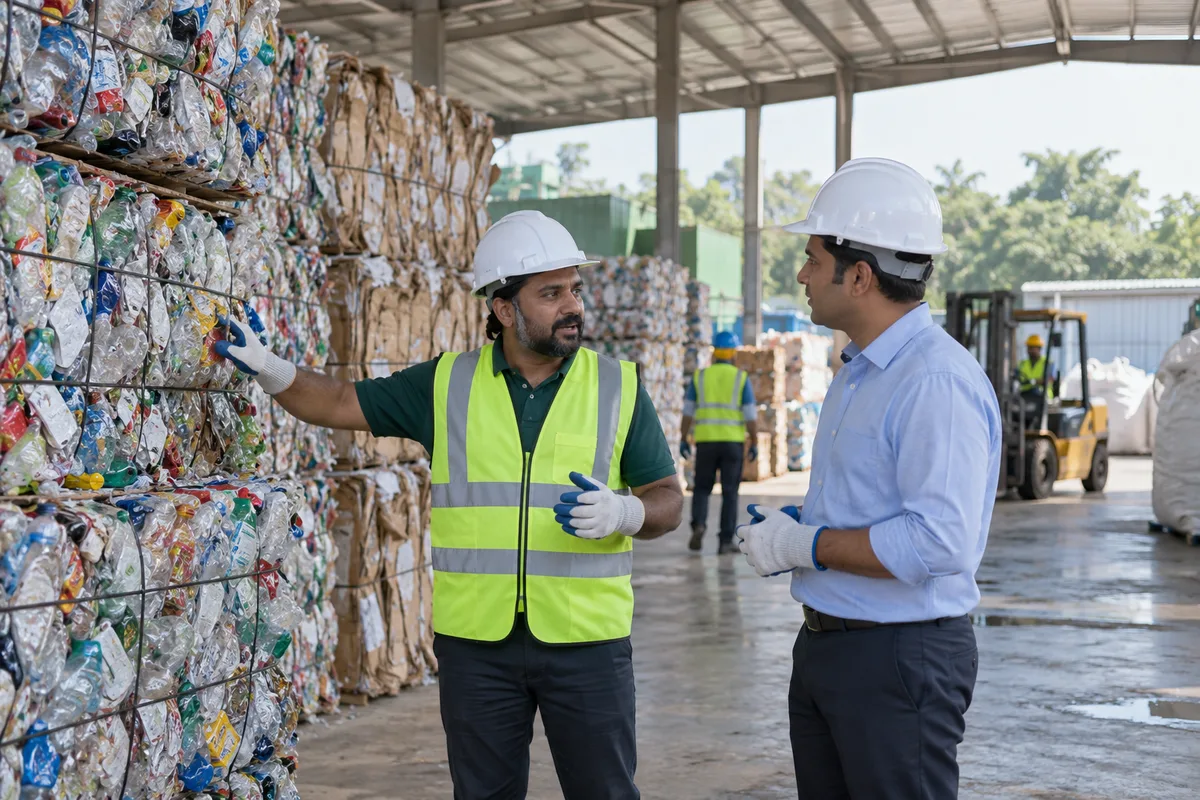
A secretary who checks your page wants to see a truck at a gate, a crew in uniform and a sorted bin area. Generic green graphics make the company look like a name without an operation behind it.
“The page goes quiet between campaigns”
A profile with a post from a festival and nothing since looks abandoned. Committees read silence as a vendor that may also go quiet on pickups, so a thin page costs trust before any call.
“Posts preach to residents who are not buyers”
Long messages about saving the planet draw likes from households but no proposal requests. The buyer is the committee, the facility head or the plant manager, and the post should speak to their job.
“Faces appear without permission”
Crew members, residents and children turn up in photographs with nobody having agreed. A complaint about that does more damage than a month of good posts can repair.
What we do
What we deliver for waste management and recycling companies.
Every deliverable, what it covers for you, and the result it is there to produce. Nothing here is an extra.
A page set-up for each platform you use
Profile photograph, description, service areas, a link to the proposal form and a pinned post that explains what you collect.
Result: A visitor learns what you do in one look.
A bank of real photographs
A routine for taking pictures of vehicles, bins, the plant and segregation sessions, with consent noted for each person shown.
Result: Posts use your own operation, not stock images.
A plan of post types
Pickup in progress, a segregation tip, a plant visit, a client milestone and a question a committee asked, rotated so the page does not repeat itself.
Result: The page has a clear shape for the team to follow.
A reply routine for comments and messages
Who answers a comment, how a complaint moves to a private chat and how a proposal request reaches the sales sheet.
Result: No comment sits unanswered.
Short videos for committees
A walk through a segregation area or a collection round, with a spoken line in the local language where suited.
Result: A committee sees the service before the call.
Reporting on posts that bring enquiries
Profile visits, messages and proposal requests linked to the post that prompted them, set against the baseline.
Result: You see which posts bring proposals, not only likes.
How the result is measured
- Posts published
- Engagement rate
- Enquiries from social profiles
Recorded as a baseline before work starts, so every later report has an honest comparison.
Posts and pieces to plan
Posts that a committee, a chef or a plant head would stop to read.
- A collection route start to finish
- A short video from the bin point to the unloading yard. Needs your own vehicle and no resident's face without permission.
- Segregation talk at a society
- A photograph of the briefing with the notice board visible. Get the committee's consent before posting the venue.
- What goes in which bin
- A carousel with plain drawings of dry, wet and sanitary waste. The proof is the colour code you actually supply.
- The plant or the processing yard
- A walkthrough of where the waste goes. Show what is true on site and say rules differ by state.
- Answer to a committee question
- One post answering what a secretary asked, such as pickup time or missed-day handling. It shows you listen.
Who it is for
This is written for these waste management and recycling companies.
- Wet waste collection and composting companies
- Dry waste and plastic recyclers
- Scrap dealers and organised kabadiwala networks
- E-waste collectors and recyclers
- Construction and demolition waste handlers
- Industrial and factory waste managers
- Paper, cardboard and packaging waste recyclers
- Battery, tyre and used oil collectors
- Society and apartment waste management vendors
Not for
It is not the right fit if.
- You have no one to take photographs at sites or ask permission, and unlabelled stock pictures say nothing about your vehicles.
- Nobody can reply to comments from residents, and a society will read silence as a missed pickup.
How it works
How the social media work runs
The work itself, in order. How an engagement starts, from your brief to a written scope, is set out on our method page.
- 1
Confirm audience, platforms and access
We note which platforms your buyers use and check that the pages sit under your own business accounts, with you as owner and us as added roles.
- 2
Review the current presence
We read the existing pages, the posts that drew replies and the gaps in posting.
- 3
Build the calendar
Themes, formats and dates are set out for your approval, with space for offers and news.
- 4
Create, approve and publish
Posts are made, approved by you and scheduled. Replies to the public are handled in your voice.
- 5
Record enquiries and adjust
Enquiries are logged against the post or platform where they began, and the mix changes to follow what brings them.
Where this fits
Three pieces of sales work, in this order.
This work sits inside sales process design, at stage 0, foundation. The audit comes before it, and sales management keeps it running.
Step 1
Sales audit
Find where deals are being lost and what to fix first.
Start here if you cannot say where orders are lost.
Step 2 · you are here
Sales process design
One written way to sell, from first enquiry to repeat order.
Start here if every salesperson sells differently.
Step 3
Sales management
A target, a review routine and someone who owns the number.
Start here if the team has targets and no routine.
FAQ
Questions owners ask before they call.
Not here? More answers, or ask on WhatsApp.
Which platform matters for a waste company?
Can we post photographs from client sites?
Should we run paid posts?
Can a waste company post photographs of a client's building?
How much does it cost?
How long is the contract?
How soon will we see results?
Who will actually do the work?
What do you need from us?
What if we are not happy with the work?
More for waste management and recycling companies
Everything else we would do for you.
Closest to this: content and social
Also for waste management and recycling companies
- SEO for waste management and recycling companies
- local SEO for waste management and recycling companies
- lead generation for waste management and recycling companies
- WhatsApp marketing for waste management and recycling companies
- CRM for waste management and recycling companies
- a sales process for waste management and recycling companies
Or start from the overview: sales and marketing for waste management and recycling companies.
Your next practical step
Tell us what you are trying to grow, and we will read it before we call.
Eight short steps, mostly taps. Skip anything you would rather answer on the call.