Water testing laboratories · Content marketing
Write the page the quality manager forwards to the purchase team.
Content marketing for a water testing laboratory means publishing the guides and explainers that buyers read before they pick a lab. GullySales works on topics drawn from real enquiries, written so your own chemist can check every line.
Scope, fee, reporting and term are agreed in writing after we have read your brief and spoken to you.
What content marketing means
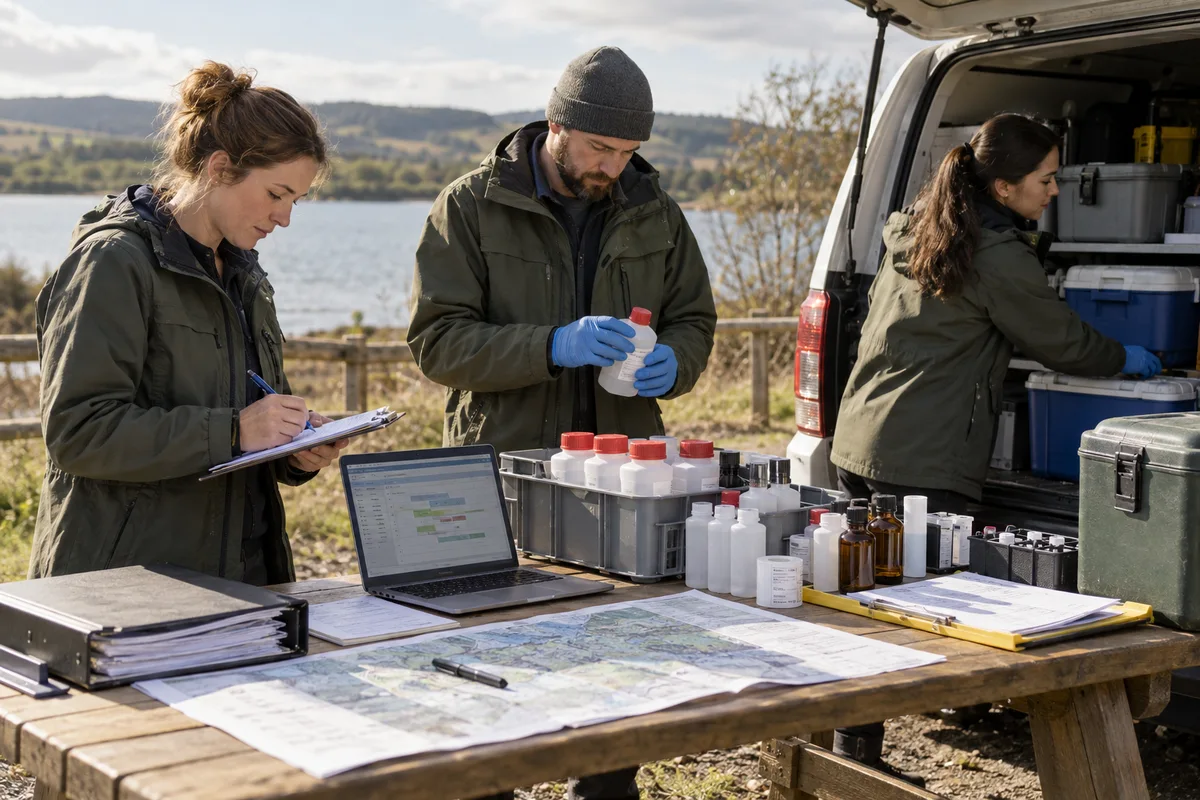
Content marketing is writing articles, guides and pages that answer the questions buyers search before they are ready to enquire. This makes your business visible and trusted before the first call. GullySales plans this content from the first conversation onward, choosing topics that match real search demand rather than guesses.
Also for water testing laboratories
- Social media marketing for water testing laboratories
- Lead generation for water testing laboratories
- SEO for water testing laboratories
- Local SEO for water testing laboratories
- Buyer personas for water testing laboratories
- CRM for water testing laboratories
- Follow-up systems for water testing laboratories
- WhatsApp marketing for water testing laboratories
Sales and marketing for water testing laboratories, the overview.
Last updated 18 Oct 2026.
For water testing laboratories
Where it usually goes wrong, and what we would do.
“Every enquiry is a content brief”
The questions the front desk answers again and again are the topics buyers search for. What does a drinking water report include, which bottle to use, why does a borewell sample differ from tap water. Each one deserves a written answer.
“Technical writing needs a technical reviewer”
A guide that misstates a parameter damages trust with exactly the readers you want. Your lab head should read and approve each piece, and the page should say who reviewed it and when.
“A guide has to end in a next step”
A reader who has learned how to collect a sample should find a booking link right there. Content that informs without an invitation keeps the reader on the page but does not bring the bottle to the lab.
What we do
What we deliver for water testing laboratories.
Every deliverable, what it covers for you, and the result it is there to produce. Nothing here is an extra.
A list of topics drawn from your enquiries
Questions from the front desk and the collector sorted by buyer type and by test.
Result: You have a topic list built from real questions.
Guides for each sample type
How to collect, label and send a drinking, borewell, effluent or pool water sample.
Result: Each guide can be sent in reply to a query.
A glossary of report terms
Plain explanations of the parameters a client sees on a report, reviewed by your lab head.
Result: Buyers read the report without calling to ask.
Case notes without client names
Descriptions of the kind of job handled, such as outlet sampling for a plant, with no names or values shared.
Result: Plant buyers see the kind of work you do.
An update log for each page
Each guide carries its review date and the name of the reviewer.
Result: Readers can see that the page is maintained.
How the result is measured
- Pages published
- Organic traffic
- Enquiries from content pages
Recorded as a baseline before work starts, so every later report has an honest comparison.
Posts and pieces to plan
Write the guides that the enquiries you already receive ask for.
- What a full drinking water test covers
- A guide listing the parameter groups in each package, checked by the lab head against the package as sold.
- How a society should plan sampling
- A piece for secretaries on which taps, tank and sump to sample. Proof: a sampling-point diagram drawn by your collector.
- Reading a packaged water report
- A walk-through for plant owners of the columns in a report. Proof: a masked report shared with the client's permission.
- Borewell water before you buy a plot
- An explainer for buyers with the container to use and where to draw the sample. Photographs of a borewell sample being drawn.
- Outlet sampling for effluent
- A technical note for EHS heads on the sampling point and report format, with the accreditation scope placed beside it.
Who it is for
This is written for these water testing laboratories.
- Drinking water testing for households and housing societies
- Testing for packaged drinking water and mineral water plants
- Borewell and groundwater testing for farms and builders
- Hotel, hospital and school drinking water compliance testing
- Industrial effluent and boiler water testing laboratories
- Swimming pool and cooling tower water testing
- Construction water testing for concrete and curing
- NABL-accredited labs and non-accredited local labs
Not for
It is not the right fit if.
- Your technical head cannot review pieces before they go live, and a wrong parameter in a lab guide does more harm than silence.
- You have recorded no enquiries yet, so nothing tells you which questions buyers actually ask.
How it works
How the content marketing work runs
The work itself, in order. How an engagement starts, from your brief to a written scope, is set out on our method page.
- 1
Agree the plan
Topics and formats come from the content strategy and the buyer-question list. The volume goes into the written scope, agreed with you, not into a number quoted on a call.
- 2
Brief and draft
Each piece starts from its one-page brief and a short conversation with your technical person, recorded if they allow it, so the draft uses their words.
- 3
Check the facts
Your person marks the draft for accuracy and we correct it. Regulated subjects also go to your own adviser, because restrictions on claims apply to articles as much as to advertisements.
- 4
Publish and distribute
The piece goes live on your site, then out through the channels where your buyers already are.
- 5
Read the enquiries and adjust
Results are reported against the baseline recorded before work began. Topics that brought readers but no enquiries are changed or dropped. How often you are reported to is agreed in writing.
Where this fits
Three pieces of sales work, in this order.
This work sits inside sales process design, at stage 0, foundation. The audit comes before it, and sales management keeps it running.
Step 1
Sales audit
Find where deals are being lost and what to fix first.
Start here if you cannot say where orders are lost.
Step 2 · you are here
Sales process design
One written way to sell, from first enquiry to repeat order.
Start here if every salesperson sells differently.
Step 3
Sales management
A target, a review routine and someone who owns the number.
Start here if the team has targets and no routine.
FAQ
Questions owners ask before they call.
Not here? More answers, or ask on WhatsApp.
How do we avoid giving advice on limits?
Who writes the technical content?
How long should a guide be?
Can we copy tables from a standard into our guides?
How much does it cost?
How long is the contract?
Who will actually do the work?
What do you need from us?
What if we are not happy with the work?
More for water testing laboratories
Everything else we would do for you.
Closest to this: content and social
Also for water testing laboratories
Or start from the overview: sales and marketing for water testing laboratories.
Your next practical step
Tell us what you are trying to grow, and we will read it before we call.
Eight short steps, mostly taps. Skip anything you would rather answer on the call.