Water testing laboratories · Social media
Post what the sample showed, not that the lab exists.
Social media marketing for a water testing laboratory is the use of posts and groups to keep the lab in mind before a water problem strikes. GullySales works on what to post, where to share it and how a comment turns into a booking.
Scope, fee, reporting and term are agreed in writing after we have read your brief and spoken to you.
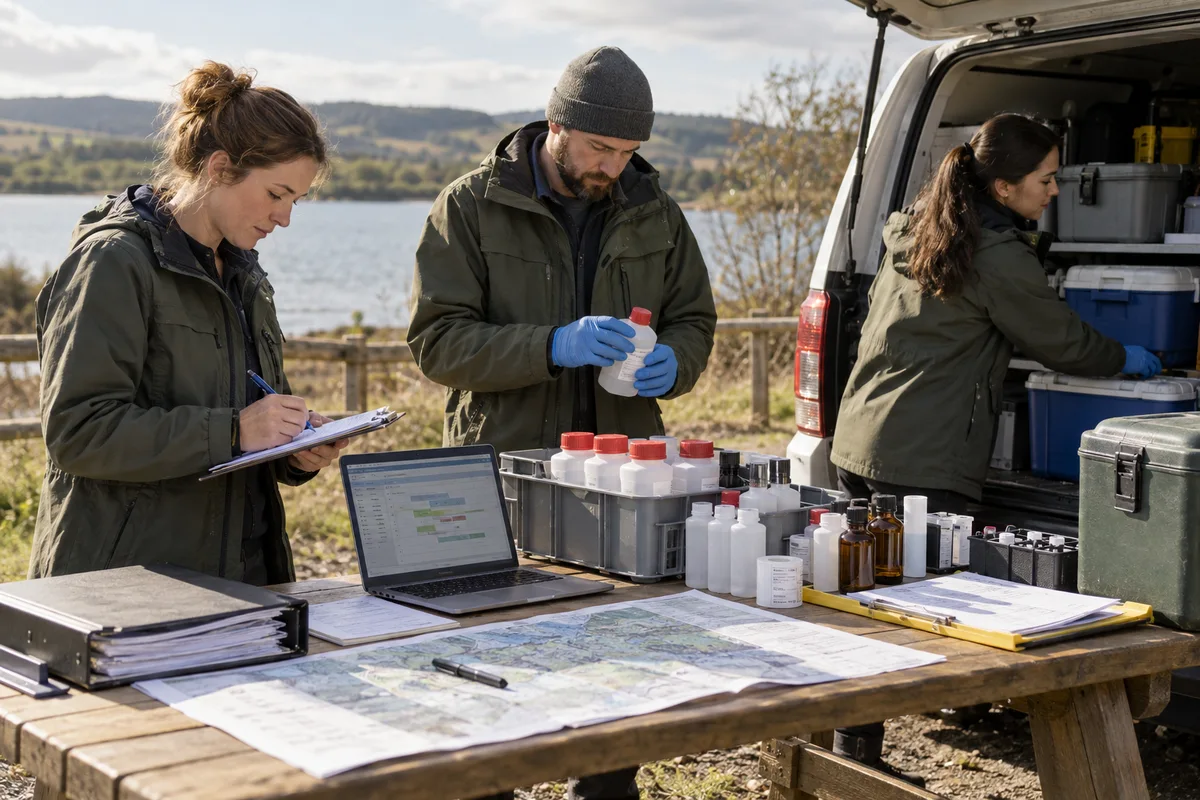
What social media means
Social media is the ongoing posting your business does on platforms such as Instagram, Facebook and LinkedIn to stay visible to customers and prospects between purchases. GullySales plans a posting calendar, writes captions and designs the images so the page looks active and answers what a visitor would ask.
Also for water testing laboratories
- Content marketing for water testing laboratories
- Lead generation for water testing laboratories
- SEO for water testing laboratories
- Local SEO for water testing laboratories
- Buyer personas for water testing laboratories
- CRM for water testing laboratories
- Follow-up systems for water testing laboratories
- WhatsApp marketing for water testing laboratories
Sales and marketing for water testing laboratories, the overview.
Last updated 18 Oct 2026.
For water testing laboratories
Where it usually goes wrong, and what we would do.
“Nobody follows a lab for fun”
A society member joins a post because it explains why water turned cloudy or what a report column means. Posts about the lab's anniversary or a new instrument do not help a buyer decide, so explainers and sample collection tips are worth the effort.
“The audience sits in groups, not feeds”
Residents talk about water in society groups and neighbourhood pages. Plant managers and EHS officers talk in professional networks. One post written for all of them reaches none, so the channel decides the tone.
“A post that cannot book is a dead end”
A reader who finds the post useful has nowhere to go if there is no booking link or WhatsApp button. The post, the page it links to and the collection form should read as one path.
What we do
What we deliver for water testing laboratories.
Every deliverable, what it covers for you, and the result it is there to produce. Nothing here is an extra.
A post set for each type of buyer
Explainers for societies, parameter notes for plants and collection guides for households, each in the voice of that reader.
Result: Each audience gets something written for them.
A short guide to filling a sample bottle
A graphic or short video showing how to collect and label a sample, shared across channels.
Result: Fewer badly collected bottles reach the lab.
Posts that explain a report
A walk through a sample report, with the parameter names and what a reader should check, using dummy values.
Result: A buyer sees what they will receive before booking.
A booking link in every post
A WhatsApp button or form link attached to each post so interest becomes a request.
Result: You can count enquiries that came from each post.
A calendar tied to the seasons of water complaints
Posts planned around the times societies raise water concerns, written ahead.
Result: The page is active when buyers are looking.
How the result is measured
- Posts published
- Engagement rate
- Enquiries from social profiles
Recorded as a baseline before work starts, so every later report has an honest comparison.
Posts and pieces to plan
Each post should teach one thing about a sample and end in a booking.
- How to fill a sample bottle
- A short video of rinsing, filling and labelling at a real tap. The proof is your own collector doing it.
- Brown or smelly tap water: what to test
- A post for society groups naming the package and the container. Proof: a sample report with client details removed.
- What a drinking water report looks like
- An annotated image of a masked report page. Needs the client's permission if any site detail remains.
- A morning with the collector
- A reel of the route from booking to the bottle reaching the lab. Photographs need the site's permission.
- Packaged water plant testing explained
- A carousel for plant owners listing the report items a licence file asks for, checked by the lab head before it goes live.
Who it is for
This is written for these water testing laboratories.
- Drinking water testing for households and housing societies
- Testing for packaged drinking water and mineral water plants
- Borewell and groundwater testing for farms and builders
- Hotel, hospital and school drinking water compliance testing
- Industrial effluent and boiler water testing laboratories
- Swimming pool and cooling tower water testing
- Construction water testing for concrete and curing
- NABL-accredited labs and non-accredited local labs
Not for
It is not the right fit if.
- No one can reply to comments and messages from a post on the same day, so interest would go cold under it.
- You cannot get a site's permission to show its tap, plant or report, and a post without real material turns into a stock-photo advert.
How it works
How the social media work runs
The work itself, in order. How an engagement starts, from your brief to a written scope, is set out on our method page.
- 1
Confirm audience, platforms and access
We note which platforms your buyers use and check that the pages sit under your own business accounts, with you as owner and us as added roles.
- 2
Review the current presence
We read the existing pages, the posts that drew replies and the gaps in posting.
- 3
Build the calendar
Themes, formats and dates are set out for your approval, with space for offers and news.
- 4
Create, approve and publish
Posts are made, approved by you and scheduled. Replies to the public are handled in your voice.
- 5
Record enquiries and adjust
Enquiries are logged against the post or platform where they began, and the mix changes to follow what brings them.
Where this fits
Three pieces of sales work, in this order.
This work sits inside sales process design, at stage 0, foundation. The audit comes before it, and sales management keeps it running.
Step 1
Sales audit
Find where deals are being lost and what to fix first.
Start here if you cannot say where orders are lost.
Step 2 · you are here
Sales process design
One written way to sell, from first enquiry to repeat order.
Start here if every salesperson sells differently.
Step 3
Sales management
A target, a review routine and someone who owns the number.
Start here if the team has targets and no routine.
FAQ
Questions owners ask before they call.
Not here? More answers, or ask on WhatsApp.
Which platform matters most for a lab?
Can we post sample results from clients?
Should we post about a contamination event in an area?
What do we do with a comment asking only for the price?
How long is the contract?
Who will actually do the work?
What do you need from us?
What if we are not happy with the work?
More for water testing laboratories
Everything else we would do for you.
Closest to this: content and social
Also for water testing laboratories
Or start from the overview: sales and marketing for water testing laboratories.
Your next practical step
Tell us what you are trying to grow, and we will read it before we call.
Eight short steps, mostly taps. Skip anything you would rather answer on the call.