Commercial solar EPC companies · Social media
Show the roof, the inverter room and the commissioning day so buyers trust the crew.
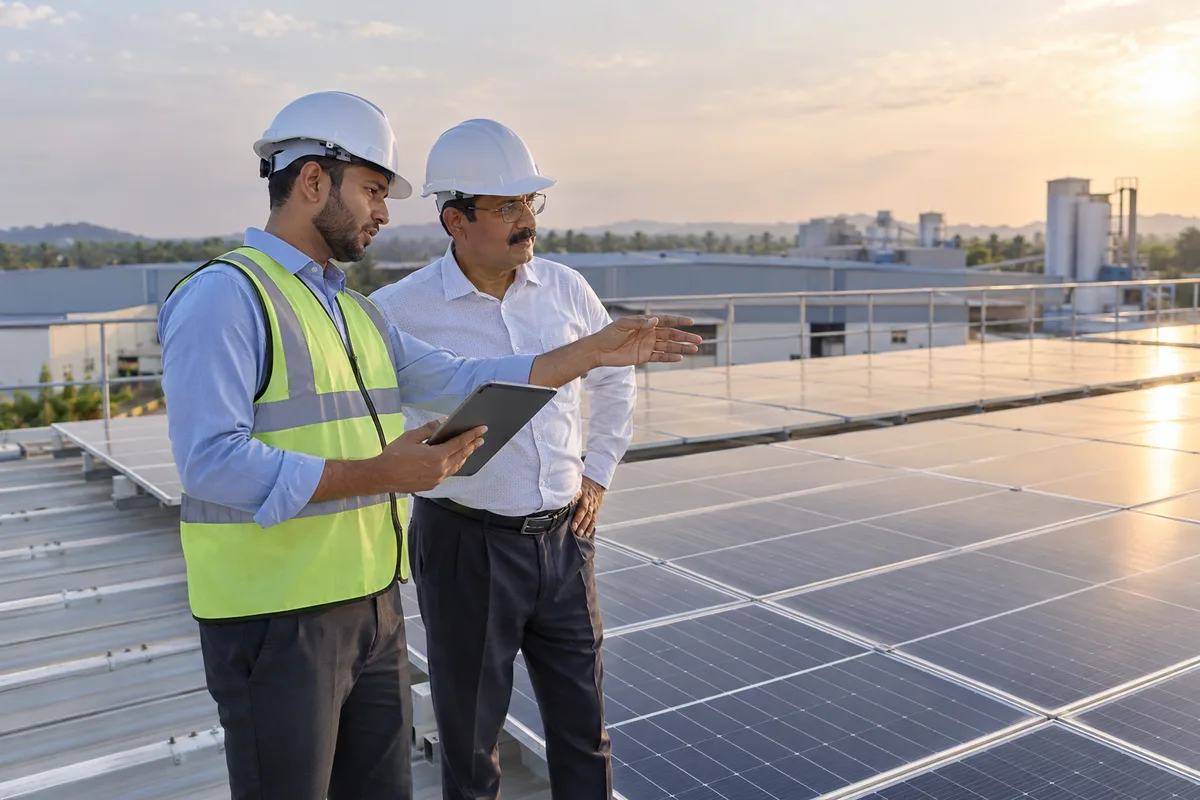
Social media marketing for a commercial solar EPC company is the steady public record of installed roofs, site practice and engineers at work, kept where factory owners, plant heads and consultants already look. GullySales plans what is worth posting from your sites, sets the posting routine and ties each channel to the enquiry record.
Scope, fee, reporting and term are agreed in writing after we have read your brief and spoken to you.
What social media means
Social media is the ongoing posting your business does on platforms such as Instagram, Facebook and LinkedIn to stay visible to customers and prospects between purchases. GullySales plans a posting calendar, writes captions and designs the images so the page looks active and answers what a visitor would ask.
Also for commercial solar EPC companies
- Content marketing for commercial solar EPC companies
- SEO for commercial solar EPC companies
- Lead generation for commercial solar EPC companies
- Google Ads for commercial solar EPC companies
- Email marketing for commercial solar EPC companies
- Buyer persona for commercial solar EPC companies
- Sales process for commercial solar EPC companies
- Website development for commercial solar EPC companies
Sales and marketing for commercial solar EPC companies, the overview.
Last updated 6 Oct 2026.
For commercial solar EPC companies
Where it usually goes wrong, and what we would do.
“The buyer checks the company page before agreeing to a survey”
A plant head who has your proposal open often has your LinkedIn page open beside it. If the last post is a festival greeting, the page says little about whether the company actually builds roofs. A feed of real sites answers the question before anyone asks it.
“Site photographs are the strongest material and the least used”
Crews photograph structure erection, cable trays and commissioning for the handover pack, then the pictures stay in a folder. A clean photograph of a finished roof, with the plant name, the owner's permission and the capacity in kWp, does more work than a design graphic of a panel.
“A post that explains a decision gets read by the finance head”
Why the structure was chosen for a sheet roof, why the inverter room sits where it does, what the owner asked before signing. Posts that explain a choice give a finance head and a consultant something to quote when they argue for you internally.
“Posting without a record means nobody knows what it brought”
A comment from a consultant, a message from an owner's nephew, a connection request from a procurement manager. If these are not written into the enquiry record with the post that prompted them, the channel looks idle at the next budget meeting.
What we do
What we deliver for commercial solar EPC companies.
Every deliverable, what it covers for you, and the result it is there to produce. Nothing here is an extra.
A site-photograph routine for the crews
A short checklist of the shots to take at survey, erection and commissioning, who uploads them, and where they are stored with the owner's permission note.
Result: Every finished roof leaves a usable set of pictures and a record of who agreed to show it.
Channel plan for LinkedIn and YouTube
A decision on where each type of material goes: roof walk-throughs and commissioning clips on YouTube, project notes and engineer profiles on LinkedIn.
Result: The team knows which channel gets which material and who is responsible for it.
A bank of post formats built on your own work
Formats such as roof before and after, a design choice explained, a safety practice on site, and a handover day, each with a fixed layout.
Result: Anyone on the team can draft a post from a site visit without starting from a blank page.
Owner permission wording
A plain written request for approval to show a plant, its name and its generation figures, with the right to withdraw.
Result: No site is shown without a written yes on file.
An enquiry tag for social sources
A field in the enquiry record that notes when a lead came from a post, a profile view or a message.
Result: You can open the record and see which posts were followed by a real conversation.
How the result is measured
- Posts published
- Engagement rate
- Enquiries from social profiles
Recorded as a baseline before work starts, so every later report has an honest comparison.
Posts and pieces to plan
Plan these posts from roofs you have already commissioned.
- Panel layout on a factory roof
- A photograph from the edge of the roof with the shed type in the caption, shown with the plant owner's permission. A plant head sees a roof like theirs.
- The inverter room on commissioning day
- A shot of the cabling and labelling in the inverter room, which a facilities manager reads as the sign of a careful crew.
- What a structural check looked at
- A post explaining what the engineer inspected on a roof before panels went up, with no promise of approval, aimed at the owner worried about the shed.
- Electricity bill, read line by line
- A diagram of a sample bill showing where demand and energy charges sit, so a finance head sees how you begin a proposal.
- A school or hospital campus installed
- A short note on an institution's roof, with the permission of its management, showing how the works were planned around the working day.
- Operations walk-through for a running plant
- A short clip of an engineer cleaning and inspecting a plant, which tells a buyer who looks after the system after handover.
Who it is for
This is written for these commercial solar EPC companies.
- Rooftop EPC specialists for factories and industrial units
- Warehouse, cold storage and logistics park rooftop installers
- Campus installers for schools, colleges and hospitals
- Pay-per-unit (OPEX) rooftop developers
- Open access and group captive solar developers
- Ground-mount and solar carport contractors
- Government and public sector tender EPC companies
- Operations and maintenance firms adding new installations
Not for
It is not the right fit if.
- No client has agreed to let you show their plant, so the page would have to fall back on stock images that a plant head ignores
- Your company page has no one to answer a message from a buyer who found a post, so interest would fade
- You are looking for subsidy-seeking homeowners, whom a company page about factory rooftops will not reach
How it works
How the social media work runs
The work itself, in order. How an engagement starts, from your brief to a written scope, is set out on our method page.
- 1
Confirm audience, platforms and access
We note which platforms your buyers use and check that the pages sit under your own business accounts, with you as owner and us as added roles.
- 2
Review the current presence
We read the existing pages, the posts that drew replies and the gaps in posting.
- 3
Build the calendar
Themes, formats and dates are set out for your approval, with space for offers and news.
- 4
Create, approve and publish
Posts are made, approved by you and scheduled. Replies to the public are handled in your voice.
- 5
Record enquiries and adjust
Enquiries are logged against the post or platform where they began, and the mix changes to follow what brings them.
Where this fits
Three pieces of sales work, in this order.
This work sits inside sales process design, at stage 0, foundation. The audit comes before it, and sales management keeps it running.
Step 1
Sales audit
Find where deals are being lost and what to fix first.
Start here if you cannot say where orders are lost.
Step 2 · you are here
Sales process design
One written way to sell, from first enquiry to repeat order.
Start here if every salesperson sells differently.
Step 3
Sales management
A target, a review routine and someone who owns the number.
Start here if the team has targets and no routine.
FAQ
Questions owners ask before they call.
Not here? More answers, or ask on WhatsApp.
Should a solar EPC company be on Instagram as well?
Can we post a client's plant without asking?
Who should run the page, the sales team or the engineers?
What should a commercial solar firm never show on a feed?
How long is the contract?
How soon will we see results?
Who will actually do the work?
What do you need from us?
What if we are not happy with the work?
From the blog
Further reading for commercial solar EPC companies.
 6 min read · 6 Oct 2026Why power buyers hire the firm that explained the billHomes, societies and factories rarely plan to buy solar, a generator or an audit. This post shows how each buyer chooses between energy and utilities firms, and what the winner did first.
 6 min read · 6 Oct 2026What a factory finance head asks before rooftop solarA rooftop solar order is held up by the finance head, not the promoter. The questions that come at the proposal stage, and how an EPC company can answer them in the buyer's own bill terms.
More for commercial solar EPC companies
Everything else we would do for you.
Closest to this: content and social
Also for commercial solar EPC companies
Or start from the overview: sales and marketing for commercial solar EPC companies.
Your next practical step
Tell us what you are trying to grow, and we will read it before we call.
Eight short steps, mostly taps. Skip anything you would rather answer on the call.