Bakeries · Sales strategy
Decide whether the counter, the order book or the cafe supply is the one to grow.
Sales strategy for a bakery is the choice of which route to grow on: the walk-in counter, the cake ordered ahead, the corporate and wedding order, or supplying cafes by the tray. GullySales works out which one your kitchen and your cash can carry, then puts a person and a routine behind it.
Scope, fee, reporting and term are agreed in writing after we have read your brief and spoken to you.
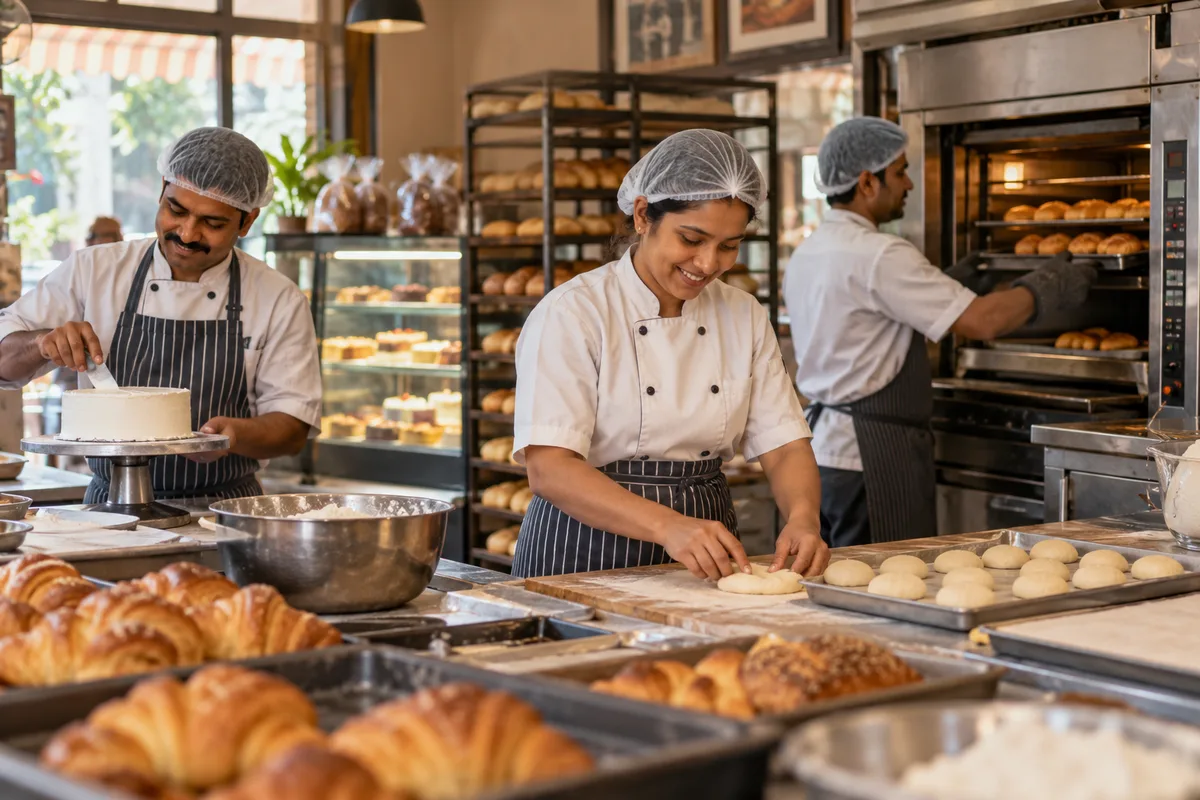
What sales strategy means
Sales strategy is deciding which customers to chase, through which channel and at what price, instead of every salesperson working their own way. GullySales sets this plan against your actual pipeline and the deals you have won and lost so far.
Last updated 5 Oct 2026. Rules for this trade differ by state and professional body, and they change. We describe restrictions in general terms, so check the current position with your own council or adviser before you publish anything.
For bakeries
Where it usually goes wrong, and what we would do.
“The counter is capped by the shutter and the shelf”
Footfall grows only as fast as the street does, and whatever is unsold at nine at night is a loss. A bakery selling only across the counter has bet the business on who walks past.
“The order book carries the margin, and it needs a person”
A birthday cake booked three days ahead is priced, paid for and baked to a number. But somebody has to answer that message during the evening rush, and at the counter nobody does.
“One office and one wedding can beat a month of counter sales”
A festival hamper order from a company down the road, or a dessert table for a wedding, is one negotiation for a large number. Nobody is selling it, because everyone is baking.
What we do
What we deliver for bakeries.
Every deliverable, what it covers for you, and the result it is there to produce. Nothing here is an extra.
Last year's takings separated by route
Counter sales, cakes ordered ahead, corporate and wedding orders and wholesale supply pulled apart out of one till, so the argument starts from your own book.
Result: The route you thought was carrying the shop is either proved or it is not.
One route chosen, with the reasoning written down
A decision on which route gets the kitchen's spare hours and the year's marketing money, argued against the other three rather than assumed.
Result: The team stops chasing every kind of order at once.
A named person on the order book
One person answerable for order enquiries, quoting and confirming, with counter staff handing over instead of replying between customers.
Result: The evening cake enquiry stops waiting for a gap in the queue.
A bulk price sheet for offices and hampers
Rates by quantity for hampers, snack boxes and dessert tables, with your advance and delivery terms written beside them.
Result: A company asking for fifty boxes gets a number without the owner being called.
A wholesale round of the cafes on your side of town
Cafes, tea shops and office pantries inside your delivery run listed out, with a sample tray, a rate card and somebody who visits them.
Result: The ovens have work before the counter opens.
The wedding route opened through the people who plan them
An approach to decorators, caterers and planners who get asked for a dessert table, instead of waiting for the family to find you.
Result: The wedding order arrives through somebody the family already trusts.
The order book read against the baseline
Orders by route, average value and how many customers came back, set against the baseline recorded before work started.
Result: You can see whether the route you picked is actually growing.
How the result is measured
- Win rate
- Average deal size
- Pipeline coverage against target
Recorded as a baseline before work starts, so every later report has an honest comparison.
Choices a sales strategy makes
Settle these choices from your till, your WhatsApp chats and your order book.
- Which cake to sell ahead first
- Go through last year's pre-orders and find the cake people booked again: the eggless birthday cake, the photo cake or the theme cake. Lead the order book with that one, not the design that is hardest to bake.
- How a WhatsApp message becomes a booked cake
- Write the steps once: flavour and weight, message on the cake, pickup or delivery, advance paid, confirmation sent. Check recent chats for orders that stopped at the price and never reached an advance.
- Who takes cake orders during the evening rush
- Look at when order messages arrive. If most land while the counter is busiest, give the order phone to one person who is not billing, so a customer is not waiting behind the bread queue.
- What to say no to in festival weeks
- Use last Diwali and Christmas to find the day the kitchen was full. Set the order cut-off before that day and decline custom designs that week, rather than accept orders the oven cannot bake properly.
- Which wholesale accounts to stop supplying
- List each cafe and office pantry with what it takes, what it pays and how late it pays. Stop the round to any account that needs an evening batch at a wholesale rate or keeps sending back unsold trays.
Who it is for
This is written for these bakeries.
- Neighbourhood bakeries and cake shops
- Home-based and cloud bakeries
- Bakery and confectionery chains
- Bread and artisan bakeries
- Wedding and event cake specialists
- Bakeries supplying cafes and hotels
How it works
From your first message to the first report.
No open-ended retainer. Every step gives you something in writing.
First
Your brief
You tell us what you need in a few short steps: your business, what you want, where enquiries come from and how they are handled.
After the brief
A conversation and a written scope
We read it, then talk with whoever handles your enquiries. If you want our help, the scope, the fee and the reporting come in writing, and nothing starts before you have read them.
Before work starts
Baseline recorded
The numbers this work is meant to move, such as enquiries, quotations, orders, visits or renewals, written down so every later report has an honest comparison.
After the baseline
The first fix goes live
The fix we agreed to start with is put in place and measured against the baseline, whether that is a reply, a follow-up, a page, a listing or the handover between marketing and sales.
As agreed
Report against the baseline
What moved, what did not, and what changes next, in plain words. How often you get it is set in writing before work starts.
At renewal
Renew on the numbers
The term ends and you decide whether to continue from the results. The length is agreed in writing before anything starts.
How the sales strategy work runs
- 1
Review the current approach
We study how the business currently targets customers, sells and prices its offer.
- 2
Assess the market
Segments, channels and competitors are reviewed against where genuine opportunity sits.
- 3
Develop the strategy
Clear direction is set on where to focus and how to reach it.
- 4
Document and present
The strategy is written up and presented, with a plain explanation of the reasoning.
- 5
Plan implementation
A practical roadmap for the first steps is agreed before the engagement closes.
Why us
Why owners pick GullySales over an agency.
Marketing and sales, as one job
Most agencies stop at the enquiry. We also fix what happens after it: the reply, the follow-up, the quote and the CRM.
The person on the first call does the work
No account managers in between. You are never handed to someone you have not met.
A baseline before anything starts
Your numbers are written down on day one, so every later report compares against something honest.
The fee in writing, split three ways
Our time, your media spend and production on separate lines. You always see what goes to us.
No guarantees we cannot keep
The term is agreed in writing and never a default twelve months. We never promise a ranking or a lead count, because nobody controls those.
One office, and we say so
Nagarbhavi, Bengaluru. We work across India by call and WhatsApp and travel when a session needs to be in person.
#257, 3rd floor, Sri Nanjundeshwara Complex, Nagarbhavi 8th Block, Outer Ring Road. How we work.
Your brief
Tell us what you need, and we will read it before we call.
Eight short steps about your business, what you want and who decides. Most questions are a tap, and you can skip any you would rather answer on the call.
FAQ
Questions owners ask before they call.
Not here? More answers, or ask on WhatsApp.
We do a bit of everything. Is that wrong?
Is supplying cafes worth the rate they pay?
I bake and I sell. Can I hand the selling to someone without losing my regulars?
Should we take more wedding orders in the season or protect the daily counter?
How much does it cost?
How long is the contract?
How soon will we see results?
Who will actually do the work?
What do you need from us?
What if we are not happy with the work?
From the blog
Further reading for bakeries.
 6 min read · 8 Jul 2026Email marketing tips for cafes and baristasEmail marketing tips for baristas and cafe owners: most customers never gave you an address, so the list is small. Here is what is worth sending to it, and what is not.
 6 min read · 25 Jun 2026How to increase cafe sales: fill the quiet hours and raise the billCafe sales grow in four ways: more visits from regulars, a higher bill per table, busier quiet hours, and new customers from Maps. Work on them in that order.
 6 min read · 9 Jun 2026How to increase bakery sales beyond the walk-in counterTake custom cake orders properly on WhatsApp, be found on Maps for birthday cakes, sell to offices in bulk, and bring regulars back with a reason to visit.
More for bakeries
Everything else we would do for you.
Or start from the overview: sales and marketing for bakeries.
Your next practical step
Tell us what you are trying to grow, and we will read it before we call.
Eight short steps, mostly taps. Skip anything you would rather answer on the call.