Men's clothing stores · Digital marketing
Put the shop where the buyer looks first, then make the phone worth ringing.
Digital marketing for a men's clothing store is the combined work of Maps, search, social media, ads and messaging that brings buyers to the counter. GullySales works on choosing which of these suits your shop and tying each to a count of enquiries.
Scope, fee, reporting and term are agreed in writing after we have read your brief and spoken to you.
What digital marketing means
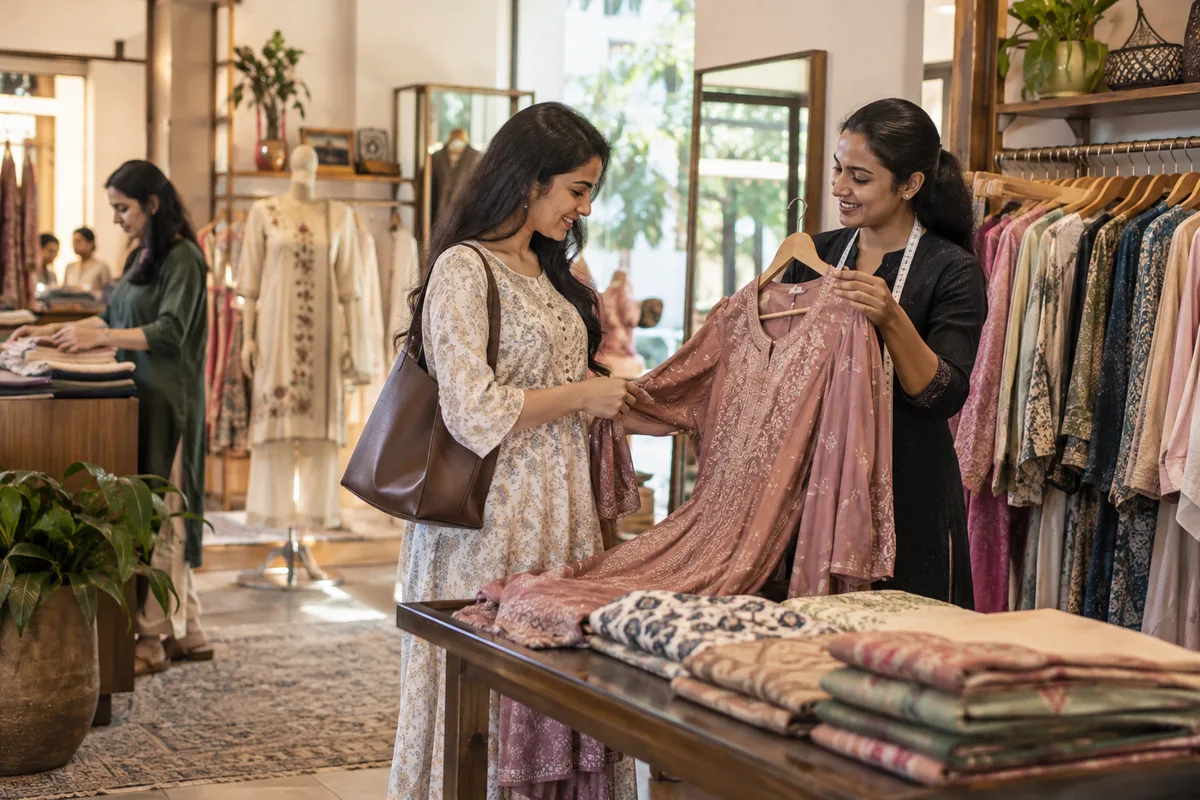
Digital marketing is the combined work of search, social media, advertising and website channels running together rather than as separate projects with separate people. GullySales runs these as one connected system so a change in one channel, such as a new offer, is reflected everywhere at once.
Also for men's clothing stores
- Buyer personas for men's clothing stores
- Lead generation for men's clothing stores
- SEO for men's clothing stores
- Local SEO for men's clothing stores
- Social media marketing for men's clothing stores
- Content marketing for men's clothing stores
- CRM for men's clothing stores
- Follow-up systems for men's clothing stores
Sales and marketing for men's clothing stores, the overview.
Last updated 18 Oct 2026.
For men's clothing stores
Where it usually goes wrong, and what we would do.
“Channels are chosen by habit, not by buyer”
Shops take up whatever is fashionable, then drop it. The better question is where your buyers look when they need a shirt or a suit. For a walk-in shop the answer starts with Maps and WhatsApp.
“Spending without counting hides waste”
An ad that brings clicks but no calls looks busy and earns nothing. Each rupee spent should be matched to an enquiry, a visit or a bill, even if the match is rough.
“Seasons decide the plan”
Wedding season, festivals, college reopening and appraisal months each bring a different buyer. A marketing plan fixed on one message all year misses the moments when buyers are ready.
“Digital cannot fix an empty rack”
If the sizes buyers ask for are missing or the shop is hard to reach, ads bring visitors who leave. Marketing works best when the shop floor and the record of customer asks match.
What we do
What we deliver for men's clothing stores.
Every deliverable, what it covers for you, and the result it is there to produce. Nothing here is an extra.
A channel plan for your buyers
A choice of Maps, search, social media, ads and WhatsApp, with the reason for each and what is left out.
Result: You know where effort goes and where it does not.
An occasion calendar
A year view of festivals, wedding seasons and college dates, with a campaign idea and message for each.
Result: Each season has a campaign prepared ahead.
Local ads aimed at the catchment
Small campaigns aimed at the streets, colleges and offices around the shop, with a call or direction button.
Result: Ad results appear as calls and visits from those areas.
Tracking from enquiry to bill
A simple way to record how each buyer found the shop and whether they bought.
Result: You can compare channels by what they brought in.
A baseline before we start
Footfall, bills, repeat buyers and enquiry counts noted so changes can be judged fairly.
Result: Progress is measured against a recorded start.
A review of what to stop
A regular look at which activities brought buyers and which did not, with a decision on each.
Result: Spend moves from weak routes to those that work.
How the result is measured
- Enquiries across channels
- Cost per enquiry overall
- Channel mix by contribution
Recorded as a baseline before work starts, so every later report has an honest comparison.
Who it is for
This is written for these men's clothing stores.
- Formal shirt and trouser shops near offices and business districts
- Multi-brand men's wear showrooms in district markets
- Suit, blazer and wedding wear shops for grooms
- Jeans and casual wear stores near colleges
- Big-and-tall and plus-size men's wear shops
- Franchise outlets of a single men's brand
- Shirting and trouser cloth shops with in-house stitching
- Corporate uniform and bulk shirt suppliers
How it works
From your first message to the first report.
No open-ended retainer. Every step gives you something in writing.
First
Your brief
You tell us what you need in a few short steps: your business, what you want, where enquiries come from and how they are handled.
After the brief
A conversation and a written scope
We read it, then talk with whoever handles your enquiries. If you want our help, the scope, the fee and the reporting come in writing, and nothing starts before you have read them.
Before work starts
Baseline recorded
The numbers this work is meant to move, such as enquiries, quotations, orders, visits or renewals, written down so every later report has an honest comparison.
After the baseline
The first fix goes live
The fix we agreed to start with is put in place and measured against the baseline, whether that is a reply, a follow-up, a page, a listing or the handover between marketing and sales.
As agreed
Report against the baseline
What moved, what did not, and what changes next, in plain words. How often you get it is set in writing before work starts.
At renewal
Renew on the numbers
The term ends and you decide whether to continue from the results. The length is agreed in writing before anything starts.
How the digital marketing work runs
- 1
Understand the objective
We agree the one thing this campaign needs to achieve before choosing any channel.
- 2
Audit available channels
We assess which channels are realistic to run well within the budget and timeline.
- 3
Strategise the central idea
One message and offer is developed that will work across every planned channel.
- 4
Implement across channels
Each channel receives its own adapted version, launched on a shared timeline.
- 5
Measure as one campaign
Results from every channel are combined into a single report against the original objective.
Why us
Why owners pick GullySales over an agency.
Marketing and sales, as one job
Most agencies stop at the enquiry. We also fix what happens after it: the reply, the follow-up, the quote and the CRM.
The person on the first call does the work
No account managers in between. You are never handed to someone you have not met.
A baseline before anything starts
Your numbers are written down on day one, so every later report compares against something honest.
The fee in writing, split three ways
Our time, your media spend and production on separate lines. You always see what goes to us.
No guarantees we cannot keep
The term is agreed in writing and never a default twelve months. We never promise a ranking or a lead count, because nobody controls those.
One office, and we say so
Nagarbhavi, Bengaluru. We work across India by call and WhatsApp and travel when a session needs to be in person.
#257, 3rd floor, Sri Nanjundeshwara Complex, Nagarbhavi 8th Block, Outer Ring Road. How we work.
Your brief
Tell us what you need, and we will read it before we call.
Eight short steps about your business, what you want and who decides. Most questions are a tap, and you can skip any you would rather answer on the call.
FAQ
Questions owners ask before they call.
Not here? More answers, or ask on WhatsApp.
What budget does a men's wear shop need?
Is digital marketing only for big brands?
How do we tell if it is working?
How long is the contract?
How soon will we see results?
Who will actually do the work?
What do you need from us?
What if we are not happy with the work?
More for men's clothing stores
Everything else we would do for you.
Closest to this: strategy and research
Also for men's clothing stores
Or start from the overview: sales and marketing for men's clothing stores.
Your next practical step
Tell us what you are trying to grow, and we will read it before we call.
Eight short steps, mostly taps. Skip anything you would rather answer on the call.