Electrical and lighting dealers · Branding
The counter looks like a godown and the showroom has to look designed.
An electrical dealer has to look like two things at once: a counter a contractor trusts for stock, and a showroom a designer will bring a client to. GullySales settles the name, the two spaces, the rate list and the delivery vehicle so they read as one business.
Scope, fee, reporting and term are agreed in writing after we have read your brief and spoken to you.
What branding means
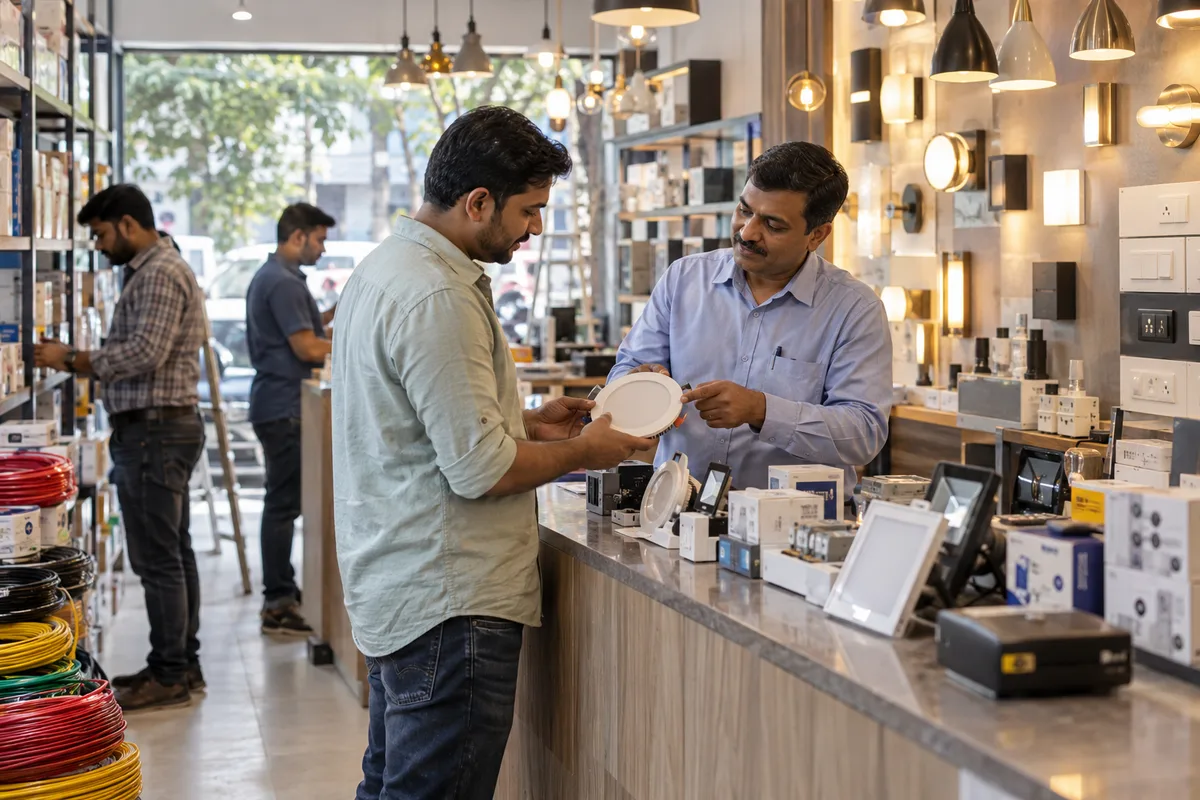
Branding is what a customer remembers about your business beyond the product, including your name, colours, tone of voice and what you are known for locally. GullySales sets or corrects this once and applies it consistently across your website, signage and adverts so the business looks like one company everywhere.
Also for electrical and lighting dealers
- SEO for electrical and lighting dealers
- PPC ads for electrical and lighting dealers
- Lead generation for electrical and lighting dealers
- Digital marketing for electrical and lighting dealers
- Reputation management for electrical and lighting dealers
- Local SEO for electrical and lighting dealers
- Social media marketing for electrical and lighting dealers
- Content marketing for electrical and lighting dealers
Sales and marketing for electrical and lighting dealers, the overview.
Last updated 5 Oct 2026.
For electrical and lighting dealers
Where it usually goes wrong, and what we would do.
“A designer will not bring a client through a godown”
Premium lighting is specified by people who notice what a space looks like. A separate entrance, a darkened display area and somewhere to sit change which projects reach you.
“The rate list is a document with your name on it”
It gets forwarded, photographed and kept in a contractor's phone for a year. A clean, dated sheet carrying your terms says more about the business than the signboard does.
“Your name has to survive the brand boards”
Every wire and switch company will happily cover your front in their colours. Keep your own name and the trade you are known for at the top, readable from the road.
“The delivery vehicle is seen at every site you supply”
Material arriving on a marked vehicle tells a whole site who supplies this job. An unmarked tempo tells them nothing at all.
What we do
What we deliver for electrical and lighting dealers.
Every deliverable, what it covers for you, and the result it is there to produce. Nothing here is an extra.
Your name held above the brand boards
One legible shop name on the front, manufacturer boards placed where their agreements require, and the front lit after dark.
Result: People can name the shop they bought from.
Two spaces given their own character
A counter arranged for speed and stock, and a lighting area that can be darkened so fittings show properly, with somewhere to sit.
Result: Each buyer meets a shop set up for them.
A rate list worth forwarding
A dated sheet with your terms, delivery arrangement, GST details and contact, clean enough to be passed on without embarrassment.
Result: The document that travels carries your name well.
The delivery vehicle marked
Shop name, phone number and the trade in readable letters on the vehicle reaching sites every day.
Result: Every site you supply knows who supplied it.
A trade pack for designers and consultants
Brands carried, sample terms, project references and a named contact, in a document a practice can file and find again.
Result: You are remembered when a specification is written.
One look across counter, bill and screen
Name, colours and typeface used the same way on the board, the bill, the rate list, the vehicle and the Maps profile.
Result: The business looks the same wherever it is met.
How the result is measured
- Recognition in customer feedback
- Consistency across channels
- Repeat enquiries by name
Recorded as a baseline before work starts, so every later report has an honest comparison.
Positioning in one sentence
Fill this sentence in for the shop, and the counter and the showroom will both be easy to describe.
- Who it is for, counter and showroom separately
- Write one line for the electrician or contractor who wants wire, MCBs and switches quickly, and another for the family choosing lights for a new home. Mixing the two blurs both.
- What you sell, grouped the way people ask
- Use the groups buyers say aloud: wires and cables, switchgear, fans, decorative lights, LED panels, smart switches. A shop that says everything electrical is harder to remember than one known for chandeliers or for cable.
- What a buyer gets that the next shop does not
- Pick one you can keep: stock on the shelf today, a lighting plan for the whole flat, a replacement for a faulty fitting without an argument. Say only what the counter staff can repeat.
- The proof you can show
- Show the brands you are authorised for, photographs of homes you supplied with permission, and the years you have been at this address. Keep manufacturer logos where their agreements allow.
- Words every shop board uses
- One-stop shop, best price and all brands are on every board on the road. Replace them with what you actually stock deepest, such as a wall of cables or an entire range of pendants.
- The name and tagline test
- Check the name is readable from the opposite pavement at night. Make sure a lighting showroom name does not mislead the electricians who still need your trade counter.
Who it is for
This is written for these electrical and lighting dealers.
- Electrical trade counters serving electricians and contractors
- Decorative and architectural lighting showrooms
- Switchgear, cable and wire distributors
- Fan, light and home electrical retail stores
- Electrical equipment suppliers for industrial and project buyers
- Solar and LED lighting dealers
- Smart home switches and automation dealers
- Multi-brand electrical dealers with a project sales team
Not for
It is not the right fit if.
- The showroom still has no design of its own, and a new logo placed over a godown look would not persuade a designer.
- The owners have not decided whether the counter and the showroom share a name, and the brand work cannot settle that for them.
- You are planning to compete on the brand boards of the manufacturers, which belong to them and not to the dealer.
How it works
How the branding work runs
The work itself, in order. How an engagement starts, from your brief to a written scope, is set out on our method page.
- 1
Interview customers and team
We talk to real buyers, won and lost, and to people inside the business who deal with customers daily.
- 2
Review the competitive field
We look at how the nearest competitors present themselves so the position is not accidentally identical.
- 3
Draft the position
A first version of the positioning statement and messaging pillars is written and checked against what customers actually said.
- 4
Test it against real conversations
The draft is tried out in a real sales call or two before it is finalised, since a position that does not survive a real conversation needs rework.
- 5
Hand over the rollout brief
The final position, pillars and not-for list are documented for your team and any agency to apply consistently.
Where this fits
Three pieces of sales work, in this order.
This work sits inside sales process design, at stage 1, prospecting and lead generation. The audit comes before it, and sales management keeps it running.
Step 1
Sales audit
Find where deals are being lost and what to fix first.
Start here if you cannot say where orders are lost.
Step 2 · you are here
Sales process design
One written way to sell, from first enquiry to repeat order.
Start here if every salesperson sells differently.
Step 3
Sales management
A target, a review routine and someone who owns the number.
Start here if the team has targets and no routine.
FAQ
Questions owners ask before they call.
Not here? More answers, or ask on WhatsApp.
Should the lighting showroom have a different name?
Is a showroom refit worth the money?
Should the electricians' counter and the decor showroom have different names?
Do the brand boards of manufacturers count as our branding?
How much does it cost?
How long is the contract?
How soon will we see results?
Who will actually do the work?
What do you need from us?
What if we are not happy with the work?
From the blog
Further reading for electrical and lighting dealers.
 6 min read · 6 Oct 2026How trade buyers pick a dealer when the brands matchWhen every counter in town carries the same brands, trade buyers choose on stock, delivery, paperwork and returns. This post sets out how contractors, electricians, plumbers and purchase managers compare dealers.
 8 min read · 21 Sept 2026How to advertise to dealersA dealer is buying an investment, not a product. The advertisement has to answer margin, credit, stock rotation and territory, or the enquiries will all be from people with no shop.
 7 min read · 21 Sept 2026How to advertise to channel partners who already sell somebody elseA partner is not buying your product. They are buying margin, territory, credit and stock they can return, and they will ask your existing dealers before they sign.
More for electrical and lighting dealers
Everything else we would do for you.
Or start from the overview: sales and marketing for electrical and lighting dealers.
Your next practical step
Tell us what you are trying to grow, and we will read it before we call.
Eight short steps, mostly taps. Skip anything you would rather answer on the call.