Electronic components distributors · Buyer persona
Know whether the buyer is an engineer, a purchaser or a founder before you quote.
A buyer persona for a components distributor is a written description of who sends the BOM, what they are worried about and what makes them choose one counter over another. GullySales builds the personas from your invoice history and enquiry log, then shapes the reply for each.
Scope, fee, reporting and term are agreed in writing after we have read your brief and spoken to you.
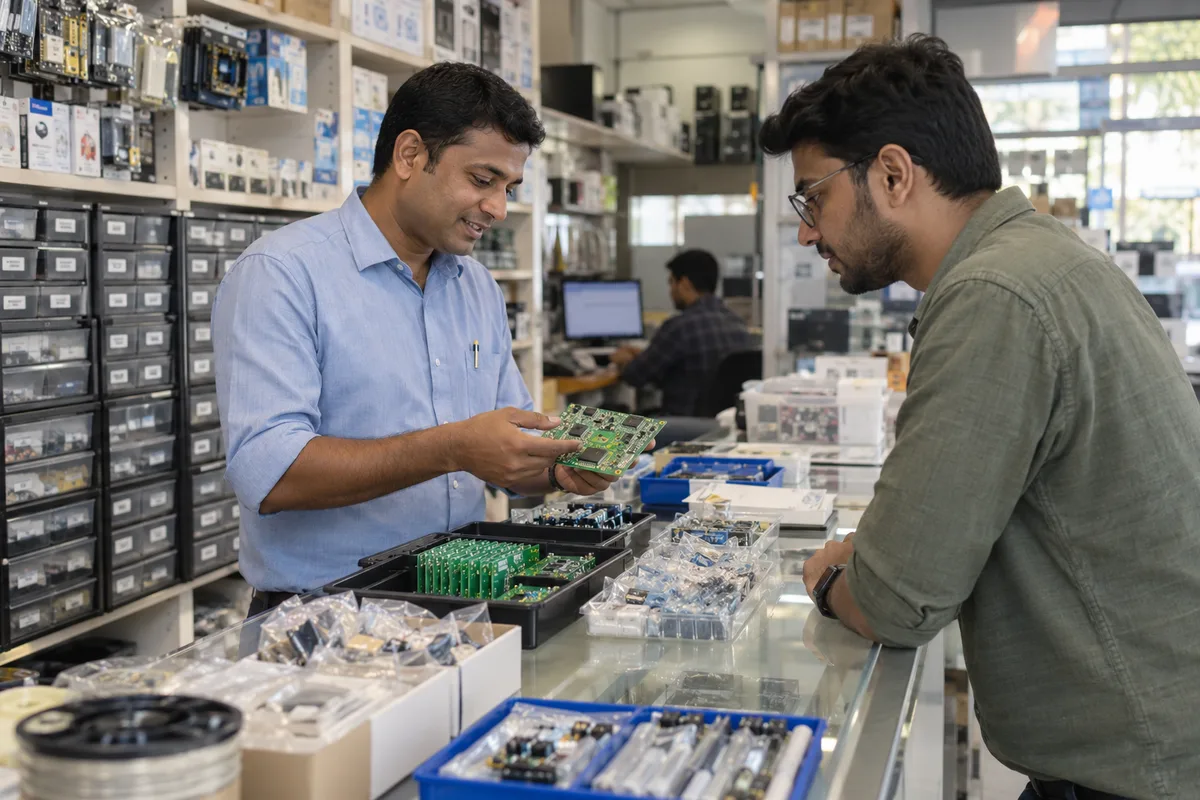
What buyer persona means
A buyer persona is a plain description of the kind of customer who actually buys from you. It includes what they search, what worries them and who else they ask before deciding. GullySales builds this from real enquiries and past sales rather than a generic template, then uses it to write every page and advert.
Also for electronic components distributors
- Digital marketing for electronic components distributors
- SEO for electronic components distributors
- Lead generation for electronic components distributors
- Email marketing for electronic components distributors
- CRM for electronic components distributors
- WhatsApp marketing for electronic components distributors
- Sales process for electronic components distributors
- Website development for electronic components distributors
Sales and marketing for electronic components distributors, the overview.
Last updated 6 Oct 2026.
For electronic components distributors
Where it usually goes wrong, and what we would do.
“The engineer and the purchaser want different answers”
The design engineer asks whether the part will fit and perform. The purchaser asks about price, invoice and delivery. A reply written for one leaves the other with the question that decides the order.
“The startup founder buys small and remembers who answered”
A founder wanting a handful of pieces for a prototype has no purchase department and little patience. The counter that replies with stock and a clear price becomes the supplier for production.
“The contract manufacturer buys by the line and by the schedule”
A purchase team at an assembly unit cares about a complete BOM, one invoice and parts arriving before the build date. A missing line is a stopped line, and they remember who caused it.
“The repair technician buys one part and needs it now”
A service counter owner wants the exact replacement, a clear answer on whether it is on the shelf and no lecture. A reply that asks too many questions loses them to the nearest shop.
What we do
What we deliver for electronic components distributors.
Every deliverable, what it covers for you, and the result it is there to produce. Nothing here is an extra.
Four to five one-page personas
Each persona sets out the role, the usual request, the worry behind it and what a good reply contains, drawn from your own records.
Result: Your team can say which persona an enquiry belongs to.
An analysis of your invoice history
A sort of existing accounts by the type of buyer and the lines they buy, to see which personas pay and repeat.
Result: You know which buyers carry the business.
Reply templates for each persona
A first reply for the engineer, the purchaser, the founder and the technician, each stating stock and source in that buyer's terms.
Result: The first reply answers the question that buyer cares about.
A question list for first calls
A short set of questions the counter asks to place a new buyer, such as the build, the quantity and the date needed.
Result: Every new enquiry is tagged with a persona.
A review of lost quotes by persona
A look at which buyers went elsewhere and the reason recorded, grouped by type.
Result: The pattern of losses shows where the reply is weak.
How the result is measured
- Enquiry match to persona
- Conversion rate by persona
- Content aligned to persona
Recorded as a baseline before work starts, so every later report has an honest comparison.
Who is asking
Five buyers walk into the same counter wanting different things.
- Design engineer with a BOM
- Wants the exact part number and datasheet match, and asks whether a substitute is acceptable before moving on.
- Purchase executive at a manufacturer
- Wants the lowest total price across the line, the delivery date and the invoice terms, and compares you against a global listing.
- Startup founder buying a first batch
- Buys in small numbers, asks many questions and remembers who answered clearly and on time when the next batch comes.
- Contract manufacturer by schedule
- Buys by the line and by the build date, and wants the full BOM priced at once with any missing line named.
- Repair technician needing one part
- Wants the part now, at the counter or by courier, and has no time for a long conversation.
Who it is for
This is written for these electronic components distributors.
- Authorised distributors for one or two brand lines
- Multi-brand stockists of ICs, passives and connectors
- Independent and excess-stock traders
- Development board, module and sensor suppliers for startups and colleges
- BOM sourcing and kitting firms for contract manufacturers
- Repair spares and service parts counters
- Relay, transformer, battery and power component suppliers
- Importers who source against a customer's RFQ
Not for
It is not the right fit if.
- You have not looked at which buyers appear in your invoice history, so a persona set would be invented.
- The counter has a single buyer type, such as one contract manufacturer, and a persona set adds little.
- Nobody will read the sheets before a call or a quote.
How it works
How the buyer persona work runs
The work itself, in order. How an engagement starts, from your brief to a written scope, is set out on our method page.
- 1
Understand the current view
We start with how your team currently describes the customer, since the gap between belief and reality is the finding itself.
- 2
Audit past enquiries and sales
We look at recent enquiries and closed deals to see who actually bought, not who was assumed to buy.
- 3
Interview customers and staff
Structured conversations with recent buyers, held as talk about the last purchase and not a questionnaire. We ask what happened before they called, who else was involved and what they compared. Customers agree before we contact them, and their answers are reported without names.
- 4
Build the personas
Findings are written into short, usable persona documents rather than a long report.
- 5
Apply to your marketing
We show where each persona should change a page, an ad or a script you already have. The sales team reads the drafts and says which ring true. A persona they do not recognise is rewritten.
Where this fits
Three pieces of sales work, in this order.
This work sits inside sales process design, at stage 0, foundation. The audit comes before it, and sales management keeps it running.
Step 1
Sales audit
Find where deals are being lost and what to fix first.
Start here if you cannot say where orders are lost.
Step 2 · you are here
Sales process design
One written way to sell, from first enquiry to repeat order.
Start here if every salesperson sells differently.
Step 3
Sales management
A target, a review routine and someone who owns the number.
Start here if the team has targets and no routine.
FAQ
Questions owners ask before they call.
Not here? More answers, or ask on WhatsApp.
Where does the persona information come from?
Is one persona enough for a small counter?
When should the personas change?
What if we do not hold the part a persona wants?
How much does it cost?
How long is the contract?
How soon will we see results?
Who will actually do the work?
What do you need from us?
What if we are not happy with the work?
From the blog
Further reading for electronic components distributors.
 6 min read · 6 Oct 2026How trade buyers pick a dealer when the brands matchWhen every counter in town carries the same brands, trade buyers choose on stock, delivery, paperwork and returns. This post sets out how contractors, electricians, plumbers and purchase managers compare dealers.
 5 min read · 6 Oct 2026How electronic components distributors answer a BOM enquiryAnswer a BOM in the buyer's own line order, saying for each part whether you hold it, how many, from which source and by what date, and send the firm lines before the open ones.
More for electronic components distributors
Everything else we would do for you.
Closest to this: strategy and research
Also for electronic components distributors
- SEO for electronic components distributors
- Lead generation for electronic components distributors
- Email marketing for electronic components distributors
- CRM for electronic components distributors
- WhatsApp marketing for electronic components distributors
- Sales process for electronic components distributors
Or start from the overview: sales and marketing for electronic components distributors.
Your next practical step
Tell us what you are trying to grow, and we will read it before we call.
Eight short steps, mostly taps. Skip anything you would rather answer on the call.