Fabric shops and retailers · Review generation
Cloth shops have almost no reviews, which is why five of them matter.
Review generation for a cloth shop is asking buyers to write on your Google Business Profile, which hardly anybody in this trade does. That is the opening: a street of fabric shops where one has twenty written reviews and the rest have a handful of stars. GullySales fixes who asks, at what moment, and in what words.
Scope, fee, reporting and term are agreed in writing after we have read your brief and spoken to you.
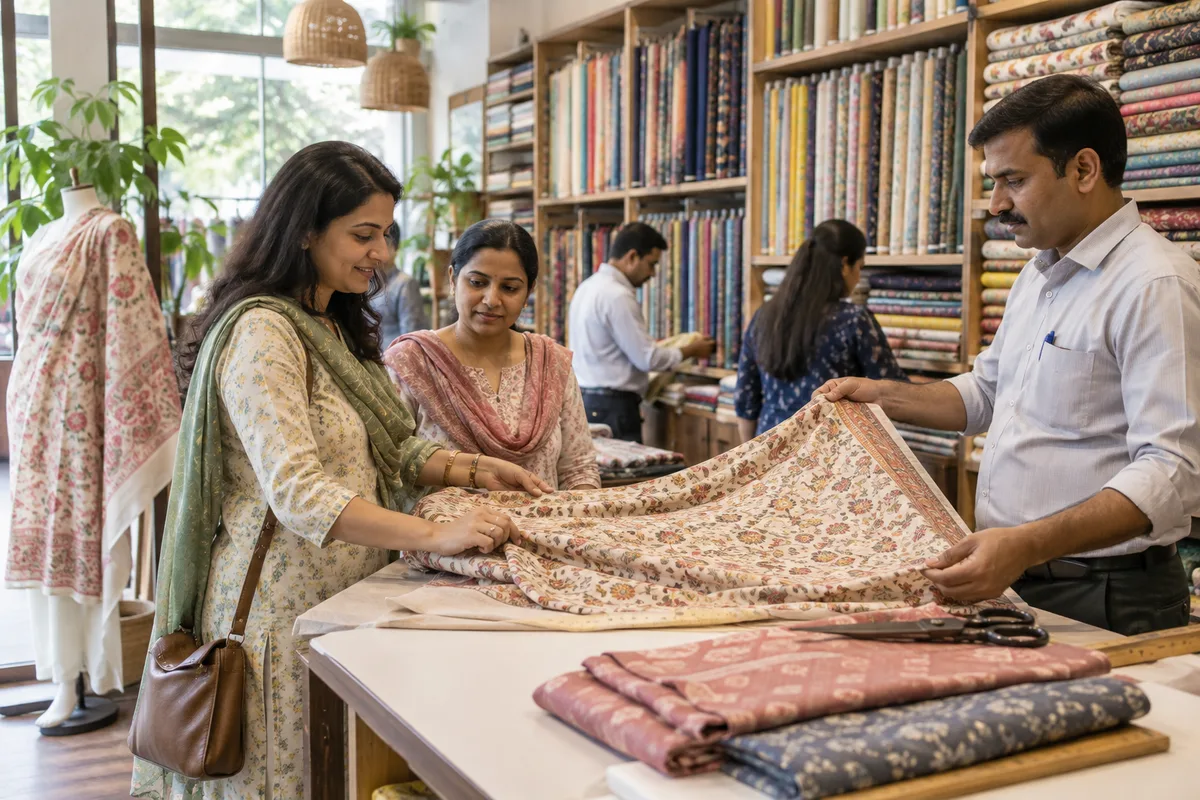
What review generation means
Review generation is the routine of asking satisfied customers to leave a Google or platform review at the moment they are happiest, rather than hoping they remember later. GullySales builds the request into your existing follow-up steps and tracks how many turn into a review.
Also for fabric shops and retailers
- Reputation management for fabric shops and retailers
- SEO for fabric shops and retailers
- PPC ads for fabric shops and retailers
- Lead generation for fabric shops and retailers
- Digital marketing for fabric shops and retailers
- Local SEO for fabric shops and retailers
- Branding and identity for fabric shops and retailers
- Social media for fabric shops and retailers
Sales and marketing for fabric shops and retailers, the overview.
Last updated 5 Oct 2026.
For fabric shops and retailers
Where it usually goes wrong, and what we would do.
“Nobody reviews a cloth shop, so the bar is low”
Walk your own street on Maps and count. Most shops carry a few ratings and no written reviews at all. Twenty honest ones put you above every shop on the road, and the only cost is the asking.
“The moment is at the cutting table, not that evening”
The buyer is pleased, the piece is being folded, and the phone is already in hand. A message sent at eight at night reaches them while they are cooking, and it stays unopened.
“A review that names the cloth does the selling”
Ask the buyer to say what they bought and what it was for: a blouse piece matched to a Kanjeevaram, curtain cloth for a two bedroom flat, poplin for a school uniform. Those are the sentences the next searcher is looking for.
What we do
What we deliver for fabric shops and retailers.
Every deliverable, what it covers for you, and the result it is there to produce. Nothing here is an extra.
An ask at the cutting table, with a printed code
A QR code at the counter and one line for the staff to say while the cloth is being folded.
Result: The ask happens while the buyer is still in the shop.
A short link kept on the shop phone
Your review link shortened and saved ready to send, so nobody hunts through Maps to find it.
Result: A willing customer is not lost to a search.
Prompts that get the cloth named
Two questions sent with the link, about what was bought and what it was for, so the review says something a searcher can use.
Result: Reviews read like your shop, not like a rating.
A separate ask for trade accounts
A tailor or boutique asked about matching, holding a shade and terms, which is what another trade buyer reads for.
Result: The listing speaks to both kinds of buyer.
A written reply to the shade complaint
The answer to the one review every cloth shop eventually gets, about a colour that looked different, drafted once so nobody argues in public.
Result: The reply reads as a shop that takes a return seriously.
Reviews put where buyers see them
The best of them carried onto your website pages and into Google Business Profile posts.
Result: Proof sits beside the designs it is about.
How the result is measured
- Reviews received
- Average rating
- Response rate to requests
Recorded as a baseline before work starts, so every later report has an honest comparison.
Asking for reviews the right way
Ask at the cutting table while the buyer is holding the shade, from the salesman who showed it.
- As the metres are folded
- Ask once the buyer has seen the shade under the shop light and is pleased with it. Waiting until the bill is paid and the bag is at the door loses the moment.
- The salesman who showed the shades
- The person who pulled out the rolls asks, since the buyer remembers that person. A request from a stranger at the cash desk gets a polite nod and nothing else.
- QR on the carry bag and the bill
- Print the Google code on the bag and the bill, and keep the link ready on the shop's WhatsApp for buyers who send a photograph of the cloth later.
- Fabric and use named
- Suggest the buyer write the fabric, such as Kanchipuram silk, cotton lining or suiting, and what it was for. Another buyer with the same job will recognise it.
- Tailors and boutiques as trade accounts
- A tailor who sends you customers is a trade account. Ask for a short line on the Google page about the supply and the cut length, not a star rating alone.
- Say the daylight caveat first
- Tell the buyer at the table that screen and shop-light shades differ from daylight, and offer a swatch to take home. Shade surprises at home are what buyers complain about.
Who it is for
This is written for these fabric shops and retailers.
- Retail cloth shops selling suiting and shirting
- Saree and blouse-piece shops
- Dress material and unstitched wear shops
- Curtain, sofa and upholstery fabric houses
- Wholesale cloth merchants supplying tailors and boutiques
- Uniform cloth suppliers for schools, hotels and factories
- Handloom, khadi and silk outlets
- Online fabric sellers cutting to the metre and couriering
- Brand franchise counters for suiting and shirting
Not for
It is not the right fit if.
- The shop is in a trade lane where buyers pay cash, give no name and will not take a phone out at the cutting table.
- The bill counter is overloaded, and a request for a review would hold the queue up.
- Recent shade complaints are still unresolved, so asking for reviews now would collect them in public.
How it works
How the review generation work runs
The work itself, in order. How an engagement starts, from your brief to a written scope, is set out on our method page.
- 1
Find the moment to ask
We walk through one customer's visit with you and pick the point where the job is done and the customer is still in front of you or holding the phone.
- 2
Read your current reviews
We read every review you have, count how many were answered, and note what customers praise in their own words. We also check that your name, address and phone on Google match your signboard.
- 3
Set up the ask
Link, QR code, message wording and a short briefing for the team. We write down what staff must never do: offer a discount, choose who to ask, or post a review themselves.
- 4
Answer every review
Each incoming review is answered by the routine set down in writing. A complaint is answered by the person who can fix it, with your approval where you want it.
- 5
Count and adjust
We count how many customers were asked and how many reviewed. If few reply, we move the moment or the person asking before touching the wording.
Where this fits
Three pieces of sales work, in this order.
This work sits inside sales process design, at stage 7, after the sale. The audit comes before it, and sales management keeps it running.
Step 1
Sales audit
Find where deals are being lost and what to fix first.
Start here if you cannot say where orders are lost.
Step 2 · you are here
Sales process design
One written way to sell, from first enquiry to repeat order.
Start here if every salesperson sells differently.
Step 3
Sales management
A target, a review routine and someone who owns the number.
Start here if the team has targets and no routine.
FAQ
Questions owners ask before they call.
Not here? More answers, or ask on WhatsApp.
Can we give a few metres free to customers who leave a review?
We got a one-star review about a colour that did not match. What now?
Many of our customers are older and do not use smartphones. How do we ask them?
We have a Facebook page and a Google profile. Where do reviews go?
How much does it cost?
How long is the contract?
How soon will we see results?
Who will actually do the work?
What do you need from us?
What if we are not happy with the work?
More for fabric shops and retailers
Everything else we would do for you.
Closest to this: reputation
Also for fabric shops and retailers
Or start from the overview: sales and marketing for fabric shops and retailers.
Your next practical step
Tell us what you are trying to grow, and we will read it before we call.
Eight short steps, mostly taps. Skip anything you would rather answer on the call.