Fabric shops and retailers · WhatsApp marketing
New stock is shown on WhatsApp in this trade, so show it properly.
WhatsApp is how a cloth shop shows a new lot, quotes a rate per metre and takes a trade order. Done badly it is forty blurred photographs and an argument about shade. GullySales photographs your shelf into a catalogue, writes the saved replies the counter needs, and separates the trade list from the retail one.
Scope, fee, reporting and term are agreed in writing after we have read your brief and spoken to you.
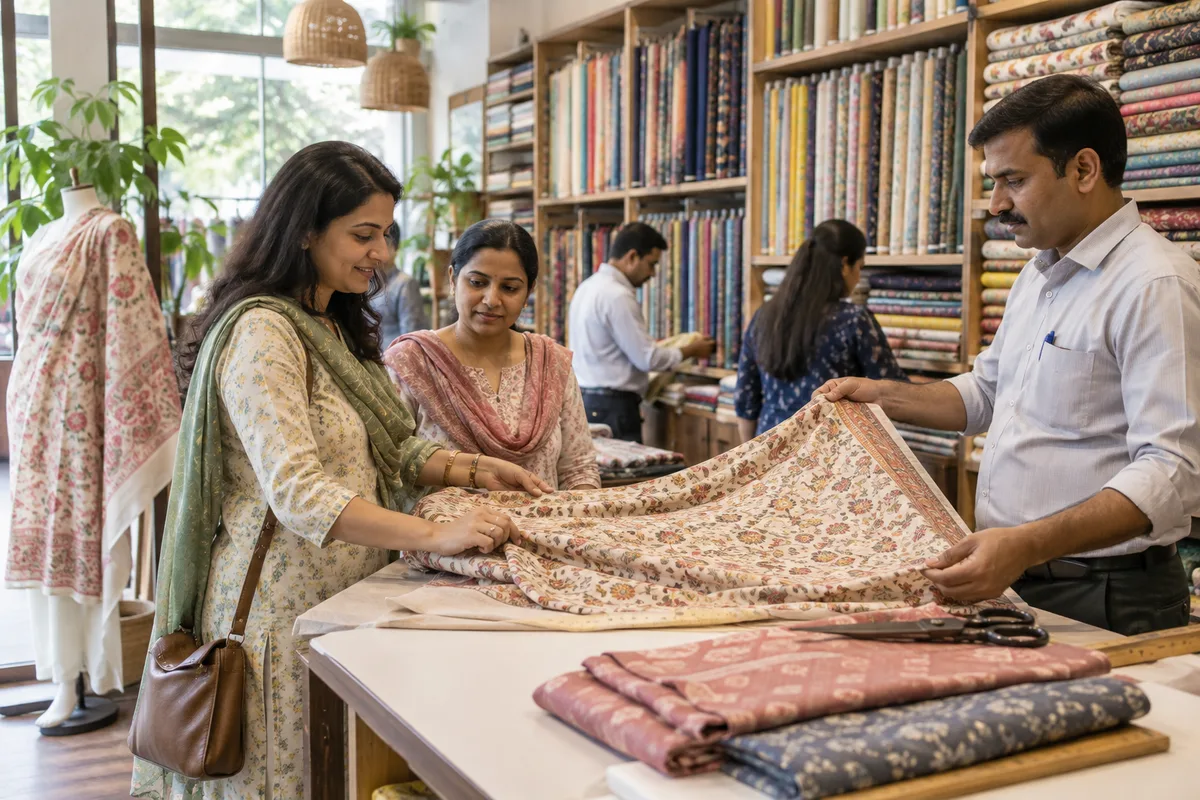
What WhatsApp marketing means
WhatsApp marketing is sending updates, offers and reminders to customers on the app most Indian buyers already check daily. GullySales sets up business WhatsApp, writes the message templates and keeps the list consented and current.
Also for fabric shops and retailers
- Email marketing for fabric shops and retailers
- SEO for fabric shops and retailers
- PPC ads for fabric shops and retailers
- Lead generation for fabric shops and retailers
- Digital marketing for fabric shops and retailers
- Reputation management for fabric shops and retailers
- Local SEO for fabric shops and retailers
- Branding and identity for fabric shops and retailers
Sales and marketing for fabric shops and retailers, the overview.
Last updated 5 Oct 2026.
For fabric shops and retailers
Where it usually goes wrong, and what we would do.
“Forty photographs is not a catalogue”
A buyer asked for a green in cotton and got the contents of a rack. Shoot each running design once in daylight against a white sheet, with the weave, the width and a rate band beside it, and one picture answers the question.
“The trade list and the retail list must be separate”
A tailor asking a thaan rate does not want your saree offers, and a household buyer should never see a wholesale figure. Most shops run both from one number and irritate both.
“Say on the picture that the shade may read differently”
One line under every photograph, and a cut sample couriered to anyone buying in quantity. Shops that do this stop getting returns. Shops that do not quietly give up quoting on WhatsApp at all.
What we do
What we deliver for fabric shops and retailers.
Every deliverable, what it covers for you, and the result it is there to produce. Nothing here is an extra.
Your running stock photographed as a catalogue
Each design shot in daylight against a plain sheet with the weave, the width and a rate band, loaded into the WhatsApp Business catalogue and onto your site.
Result: A question is answered with one picture.
A WhatsApp Business account that belongs to the shop
The shop number, the address, the hours, a greeting message and the catalogue, set up in the shop's name rather than a staff member's.
Result: The buyer list stays with you.
Saved replies for the questions that repeat
This colour in cotton, the rate per metre, whether a cut piece can be couriered, whether the shade will still be there next month.
Result: Nobody waits until evening for a one-line answer.
Trade and retail split into two lists
Tailors, boutiques and contractors on one, household buyers on the other, with different messages and different rates.
Result: The wholesale rate stops reaching the counter customer.
A rule for what goes out
What is worth a broadcast, what belongs on status where looking is optional, and who checks it before it is sent.
Result: People stop muting the shop.
Consent taken at the bill
The number recorded with permission, the buyer told what they will get, and a way to stop it in one word.
Result: The shop stays welcome on the channel it depends on.
How the result is measured
- Messages delivered
- Reply rate
- Enquiries from WhatsApp
Recorded as a baseline before work starts, so every later report has an honest comparison.
What must be in place first
Settle these before the first lot photograph goes out.
- Trade and retail permission, by account
- Ask tailors, boutiques and wholesale buyers to agree to trade updates, and record it by account name. A retail customer who receives a trade rate by mistake will ask for it again.
- The shop's number, not a salesman's
- Run the Business app on the shop's SIM. A salesman's regular customers should not leave with the salesman's phone when the salesman moves to the shop next door.
- A photograph standard for every lot
- Shoot each fabric in daylight on the same background, with a hand to show drape. Put name, composition, width and rate per metre or per thaan in the caption.
- Lot announcements you start yourself
- A new-stock message sent when the customer has not written recently may need an approved template. Check WhatsApp's current business policy and pricing before planning a stock broadcast.
- The cut-cloth line
- Put one line in the catalogue on whether cut pieces can be returned. Written once, it ends the argument after the shade looks different at home.
- A way off the trade list
- Let a tailor leave the new-lot list without losing the account. A tailor who receives retail festival offers will mute you.
Who it is for
This is written for these fabric shops and retailers.
- Retail cloth shops selling suiting and shirting
- Saree and blouse-piece shops
- Dress material and unstitched wear shops
- Curtain, sofa and upholstery fabric houses
- Wholesale cloth merchants supplying tailors and boutiques
- Uniform cloth suppliers for schools, hotels and factories
- Handloom, khadi and silk outlets
- Online fabric sellers cutting to the metre and couriering
- Brand franchise counters for suiting and shirting
Not for
It is not the right fit if.
- Photographs of the shelf are not taken by shade, so broadcasts would be the same forty blurred pictures.
- Trade and retail contacts sit in one list with no way to separate them, and a lot message would go to both.
- Buyers have not agreed to receive new-lot messages, and the plan is to add every saved number to a group.
How it works
How the whatsapp marketing work runs
The work itself, in order. How an engagement starts, from your brief to a written scope, is set out on our method page.
- 1
Read the chats you already have
We read how customers write to you, which questions repeat and where a chat goes quiet. The repeated questions decide what gets automated first.
- 2
Sort the list and the permission
Contacts who asked to hear from you are separated from numbers that only sit in a phone book. We agree the wording new contacts will see before they say yes.
- 3
Choose the app or the API
One phone and a small team can stay on the ordinary app. Several people on one number, templates or a CRM link need the API through a provider, which is its own piece of setup work.
- 4
Write the replies and the plan
The greeting, away message, saved replies and handover rule are written in your words and approved by you. The message plan and its templates follow.
- 5
Connect the record and test
Each link carries its source line and each chat lands in the CRM. We test on real phones, including a customer who asks for a person.
- 6
Read the unanswered questions
A question the first reply could not answer becomes a new saved reply or a fixed handover. Stop requests are watched too, with the number's quality rating where the API is used, since both show a message plan that has gone too far.
Where this fits
Three pieces of sales work, in this order.
This work sits inside sales process design, at stage 0, foundation. The audit comes before it, and sales management keeps it running.
Step 1
Sales audit
Find where deals are being lost and what to fix first.
Start here if you cannot say where orders are lost.
Step 2 · you are here
Sales process design
One written way to sell, from first enquiry to repeat order.
Start here if every salesperson sells differently.
Step 3
Sales management
A target, a review routine and someone who owns the number.
Start here if the team has targets and no routine.
FAQ
Questions owners ask before they call.
Not here? More answers, or ask on WhatsApp.
How often can we send a broadcast without people blocking us?
Should we quote our thaan rate on WhatsApp?
Can customers pay for a cut length through WhatsApp before we ship?
A customer wants the cloth they bought last year. How do we find it?
How much does it cost?
How soon will we see results?
Who will actually do the work?
What do you need from us?
What if we are not happy with the work?
More for fabric shops and retailers
Everything else we would do for you.
Closest to this: messaging and automation
Also for fabric shops and retailers
Or start from the overview: sales and marketing for fabric shops and retailers.
Your next practical step
Tell us what you are trying to grow, and we will read it before we call.
Eight short steps, mostly taps. Skip anything you would rather answer on the call.