Jewellery retailers · Channel opportunity generation and follow-up
An enquiry passed to another showroom should come back with an outcome.
Channel opportunity generation and follow-up for a jewellery retailer is a routine for the franchise, associate and branch showrooms that carry your brand, and for local referrers such as wedding planners and bridal boutiques. GullySales writes the partner playbook, agrees who follows up each enquiry and sets up one shared record from first contact to a recorded sale.
Scope, fee, reporting and term are agreed in writing after we have read your brief and spoken to you.
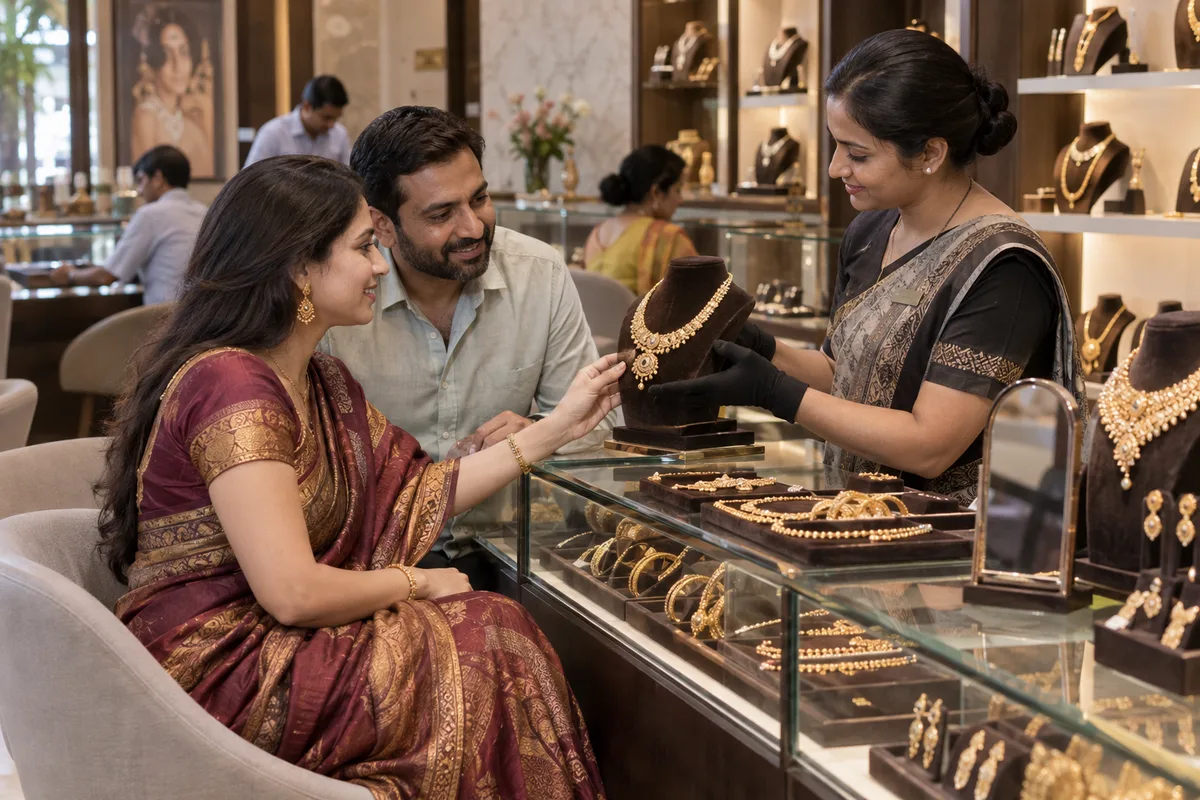
What channel opportunity generation and follow-up means
Channel opportunity generation and follow-up gives dealers, distributors, and resellers a practical routine for finding local buyers and handling enquiries passed on by your team. GullySales writes the partner playbook, agrees who follows up each enquiry, and sets up a shared record that connects local activity with sales outcomes.
Also for jewellery retailers
- Affiliate marketing for jewellery retailers
- E-commerce website development for jewellery retailers
- Market development fund management for jewellery retailers
- Trade promotion planning for jewellery retailers
- Retail execution and merchandising for jewellery retailers
- Cinema advertising for jewellery retailers
- Google Ads for jewellery retailers
- Newspaper advertising for jewellery retailers
Sales and marketing for jewellery retailers, the overview.
Last updated 14 Nov 2026.
For jewellery retailers
Where it usually goes wrong, and what we would do.
“The enquiry leaves head office and disappears”
A bridal enquiry arrives through the website or social media and is passed to the nearest showroom. Nobody records whether the family was called, offered an appointment or sent a quotation. The enquiry has left the inbox without reaching an outcome, and the brand cannot tell whether its advertising created the visit. A shared record with an acknowledgement rule makes the handoff something that can be checked.
“Partner showrooms wait for the walk-in”
An associate showroom depends on passing trade and festival crowds. Between peaks it has a bill book full of past buyers, such as families who exchanged old gold or bought for a wedding, and no routine for writing to them. Brand advertising will not fix that. What helps is a short list of local activities the showroom can run with its own staff, each with a named owner. A showroom that writes to the families who bought a bridal set in earlier seasons, with their agreement, is working from records it already holds.
“Referrers know the family before the showroom does”
A wedding planner, a bridal boutique, a makeup artist or a photographer meets the family early in the wedding plan, and long before a showroom is chosen. Without a simple way to pass on a family and to know what happened, those referrers have no reason to recommend a showroom again. The arrangement between your business and each referrer is your decision; the follow-up record is what this service builds. A family passed on by a referrer should be able to tell the showroom who suggested it, and the showroom should be able to tell the referrer that the family was looked after.
“Follow-up lives on personal phones”
A quotation discussion sits in a salesperson's own WhatsApp chats. When the person is on leave, or leaves the showroom, nobody can see what was promised, which piece was shown or when the next call was due. The record has to belong to the showroom rather than the handset, so the next person can pick the conversation up. The log also lets a head office contact see which showrooms answered the festival enquiries on the day they came in.
What we do
What we deliver for jewellery retailers.
The work available for this need. We agree the deliverables and responsibilities for your engagement in writing.
Partner enquiry review
A review of how enquiries now reach each showroom and referrer, using whatever records exist. You check the findings against real cases, including enquiries your head office forwarded and never heard about again.
Result: The review lists enquiries sent, with an outcome or a gap against each.
Local opportunity playbook
Written activities matched to each showroom's staff and customers, such as writing to past buyers who agreed to hear from the showroom, correcting its Maps listing or running a stall at a local wedding fair. Each activity names its owner and its record.
Result: Every activity in the playbook names a person and a place for its record.
Customer-list messaging guide
A guide to who may be messaged, what may be said and how a request to stop is handled. Your team checks the permission records and current platform rules; a billing phone number alone is not treated as permission.
Result: Each message audience traces to a recorded permission.
Enquiry handoff agreement
An agreed format for the family's details, requirement, occasion and source, with a rule for acknowledging receipt and a route back to head office when an enquiry stays untouched. Showrooms and head office both approve it. The format is short enough to fill in on a phone while the family is still on the line, because a long form is a form that is left blank.
Result: A test enquiry passes through the format and is acknowledged by the showroom.
Shared enquiry log
A shared sheet or customer record with an owner, contact history, next action and outcome for each enquiry. You check it with real records before the showrooms begin using it.
Result: A colleague can read the last contact and the next step on any entry.
Partner outcome report
A showroom-level view that separates enquiries the showroom created from those head office supplied, set against the starting record. Missing outcomes stay visible and are not counted as lost sales.
Result: The report shows unanswered enquiries as a separate, named line.
How the result is measured
- Partner-created enquiries by source, separate from clicks or messages sent
- Qualified opportunities meeting your agreed buyer and requirement criteria
- Time to first reply and recorded follow-up attempts
Recorded as a baseline before work starts, so every later report has an honest comparison.
Who it is for
This is written for these jewellery retailers.
- Bridal and wedding jewellery showrooms
- Gold and diamond jewellery retail chains
- Silver and artificial jewellery stores
- Certified diamond and solitaire retailers
- Traditional and antique jewellery stores
- Single-showroom family jewellers
Before you decide
Agree the work. Know how to judge it.
Channel opportunity generation and follow-up for jewellery retailers: use these checks to prepare, choose the scope, and review what changes.
Bring the right evidence
Trace recent enquiries from arrival to the last recorded action. Include a won enquiry, an unsuitable one, and one that went quiet, with personal details removed for the initial discussion.
Make the scope clear
Agree who accepts each enquiry, what makes it qualified, and how ownership changes. Include a rule for missed replies and a clear reason for closing an enquiry.
Check the work in use
Pick an enquiry at random and ask the team to find its owner, latest conversation, and next action. Check that the record agrees with what actually happened.
Know when to change course
If no one has capacity to respond, assign that responsibility before buying more leads. Automation can support the owner, but it cannot replace an unresolved handover.
These are discussion points, not a fixed package. GullySales confirms the deliverables, responsibilities, fee, and term in writing after reading your brief and speaking with you.
Before we start
What to have ready before the work starts.
The records, access and decisions this work needs from jewellery retailers. Anything missing is noted in the written scope, with who will supply it.
- Partners willing to take part
- The work runs through showrooms and referrers who agree to follow the routine. Begin with those who answer their phones and keep records, including a franchise showroom with a settled counter team and a referrer who already sends families your way. A partner who declines leaves a visible gap in the log.
- Customer lists you may message
- Past-buyer follow-up needs lists where the buyer agreed to hear from the showroom. Bring consent records or confirm none exist. Without them, those messages cannot be written and the bill book stays unused.
- A named owner at each showroom
- Every partner needs one person who answers for follow-up, not a shared number. That person is trained and receives the enquiries. If nobody owns it, enquiries are passed on and left.
- Your current enquiry records
- We review what enquiries reached partners before and what happened. Spreadsheets or exports are fine, even when untidy. Without records, the playbook is written from guesses about where enquiries are lost, and the first review has little to compare against.
- Facts partners may quote
- Showrooms will answer families about designs, the offer and exchange terms. They need approved statements, so promises are not invented at the counter. Without them, a family hears different answers in different showrooms.
How it works
How the channel opportunity generation and follow-up work runs
The work itself, in order. How an engagement starts, from your brief to a written scope, is set out on our method page.
- 1
Choosing the showrooms and referrers
You name the participating showrooms and any referrers, and the person at head office who owns the channel. We review the records available and note the starting position for enquiries by source and reply.
- 2
Choosing activities partners can run
We propose activities each partner can operate with its own staff. You and the partner approve the offer, the audience and the wording before anything is sent, and agree who pays for any stall, print or advertising.
- 3
Testing the handoff
The head office contact and the receiving showroom agree when responsibility passes. We test the enquiry record with them, including how an enquiry that is not acknowledged returns for attention.
- 4
Walking partner staff through the record
Showroom staff practise recording follow-up against real enquiries and learn the facts they may quote to a family. Any activity run by GullySales rather than the partner is named in the written scope.
- 5
Reviewing outcomes with each partner
We compare recorded outcomes with the starting record and talk through gaps with the responsible partner. Your channel lead decides which activities to continue or change, and a showroom that struggles with one activity may be offered a lighter one that fits its staff.
- 6
Setting the next round of activity
With the review in hand, the playbook is revised: activities that produced recorded enquiries are repeated, and those that produced only activity are dropped or changed. Reporting frequency is agreed in writing.
Where this fits
Three pieces of sales work, in this order.
This work sits inside sales process design, at stage 2, qualification. The audit comes before it, and sales management keeps it running.
Step 1
Sales audit
Find where deals are being lost and what to fix first.
Start here if you cannot say where orders are lost.
Step 2 · you are here
Sales process design
One written way to sell, from first enquiry to repeat order.
Start here if every salesperson sells differently.
Step 3
Sales management
A target, a review routine and someone who owns the number.
Start here if the team has targets and no routine.
FAQ
Questions owners ask before they call.
Not here? More answers, or ask on WhatsApp.
Does this work for a single showroom with no partners?
Do you generate enquiries for my partner showrooms?
Can a wedding planner or bridal boutique become a referral partner?
How do we message past buyers without breaking rules?
What if a partner showroom ignores the handed-off enquiries?
Who pays for stalls, print and local advertising?
How much does it cost?
How long is the contract?
How soon will we see results?
Who will actually do the work?
From the blog
Further reading for jewellery retailers.
 8 min read · 21 Sept 2026Tamil advertising creative: what actually changesTamil is written one way and spoken another, and its script cannot tell b from p. What that means for your line, voice artist and brand spelling.
 8 min read · 21 Sept 2026Radio advertising in BengaluruWho listens to radio in Bangalore, and where: the evening traffic crawl, the auto driver's station, shop counters with FM on, and reach past the city.
 8 min read · 21 Sept 2026Premium audience advertising strategyNo platform in India sells verified income. Affluence targeting is inference, and the cheapest filter you own is putting the price in the first frame.
More for jewellery retailers
Related work to consider.
Closest to this: channels and partners
Also for jewellery retailers
Or start from the overview: sales and marketing for jewellery retailers.
Your next practical step
Tell us what you are trying to grow, and we will read it before we call.
Eight short steps, mostly taps. Skip anything you would rather answer on the call.