Jewellery retailers · Market development fund management
Know what the showroom allowance paid for before the festival bill arrives.
For a jewellery retailer, market development fund management means setting the rules for the allowance a brand, wholesaler or head showroom shares with the showrooms that sell its designs, then checking each claim against what actually ran. GullySales writes the approval rules, keeps the claim records and ties funded activity to the enquiries it brought to the counter.
Scope, fee, reporting and term are agreed in writing after we have read your brief and spoken to you.
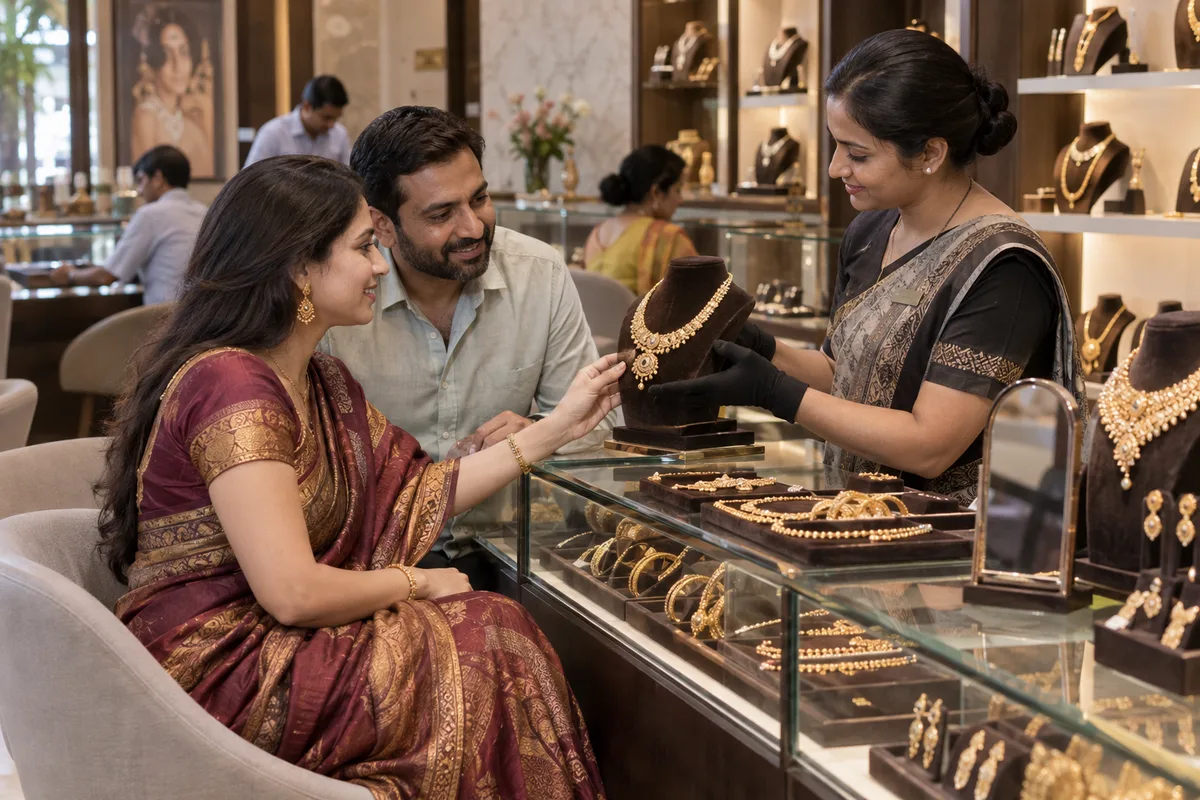
What market development fund management means
Market development fund management is the work of setting rules for marketing allowances given to dealers and distributors, checking claims, and tracing results from funded activity. GullySales documents eligibility and approval requirements, maintains partner fund records, and connects spending to recorded enquiries so you can judge where the next allocation belongs.
Also for jewellery retailers
- Affiliate marketing for jewellery retailers
- Channel opportunity generation and follow-up for jewellery retailers
- E-commerce website development for jewellery retailers
- Trade promotion planning for jewellery retailers
- Retail execution and merchandising for jewellery retailers
- Cinema advertising for jewellery retailers
- Google Ads for jewellery retailers
- Newspaper advertising for jewellery retailers
Sales and marketing for jewellery retailers, the overview.
Last updated 14 Nov 2026.
For jewellery retailers
Where it usually goes wrong, and what we would do.
“A hoarding invoice is not proof of a funded showroom”
A franchise showroom sends a flex printer's bill for a board near the wedding-shopping road, and the head office pays its share. Nobody from the brand has seen the board, read its wording or checked that it shows the right collection. The paperwork proves a purchase, not that the allowance bought what the brand intended. Agreeing in advance which photographs, copies and site details make a claim payable protects both the brand and the showroom owner, who otherwise waits for payment while accounts and marketing argue over a bill.
“Festival spending is committed before anyone approves it”
Akshaya Tritiya and Dhanteras arrive with a rush of ideas: a newspaper insert, a mall stand, a local radio spot, a bridal preview evening. Showroom owners book first because the dates are fixed, then ask the brand to share the cost afterwards. Without a written approval step, the brand either refuses a cost it never saw or pays for activity it would not have chosen. A short proposal form, answered before the booking, keeps the festival calendar moving and the allowance honest.
“Brand rules and the showroom's own claims collide”
Jewellery advertising carries promises about purity, hallmarking, certification, making charges and exchange terms. When a partner showroom writes its own advertisement and claims the brand's share, the brand is funding words it did not write. A fund policy needs a clear line on who approves wording, which logos and designs may appear, and which statements the showroom must be able to support with its own paperwork. Where the rules differ by place, your own adviser decides what the wording may say.
“The same showrooms claim and the others stay silent”
A confident showroom owner in a large town claims the full allowance every season, while a smaller family jeweller in another town never submits anything because the form looks like work. The brand then sees its allowance concentrated in a few places without knowing whether that is where its designs sell best. A fund that is written plainly, explained by phone and followed up with silent partners shows the difference between a showroom that is not interested and one that did not understand the process.
What we do
What we deliver for jewellery retailers.
The work available for this need. We agree the deliverables and responsibilities for your engagement in writing.
Showroom allowance policy
A written policy sets which showrooms qualify, which kinds of activity the allowance can share, the share the brand reimburses, the claim window and what happens to an unused balance. It also states how the allowance treats festival peaks differently from quiet months. You approve it against your own budget before any showroom receives it.
Result: Every showroom is given one document that answers who can claim, for what, and by when.
Pre-approval proposal form
A one-page form asks the showroom what it plans to run, where, on which dates, for which collection, at what estimated cost and with what request from the fund. Your named approver signs or declines before money is spent. The form is short enough to complete on a phone, so a family jeweller is not put off by it.
Result: Each approved activity has a dated proposal on file before the showroom pays its printer, publisher or hall.
Evidence checklists by activity type
Each kind of activity has its own proof. A board needs a photograph that shows the showroom frontage; a newspaper insert needs the printed page and the date; a bridal preview evening needs the guest register and photographs; a window display needs before and after pictures. Partners see the list at approval, not at claim time.
Result: A claim arrives with the proof its activity type requires, or the checklist shows exactly what is missing.
Showroom fund and claim tracker
A sheet, or a record inside the CRM you already use, lists each showroom with its allocated allowance, approved commitments, submitted claims, payments made and balance remaining. Your accounts team compares payment status against the books it already keeps, and GullySales does not hold or move any money.
Result: You can open one view and see what each showroom has been allocated, spent and left unused.
Claim review checklist
Each claim is read against the approved proposal: the amount, the dates, the collection shown, the wording used and the supporting documents. Invoice and credit-note treatment follows the tax position your own accountant has confirmed, and any difference between the proposal and the bill is written down before payment is released.
Result: Every paid claim carries a reviewed checklist showing what was matched and what was queried.
Enquiry source records
Where tracking is practical, a funded activity gets its own phone number, WhatsApp link, coupon wording or answer on the appointment form, so an enquiry can be traced to the board, insert or evening that prompted it. Where tracing is not practical, the record says so plainly instead of guessing.
Result: For each funded activity you can see the enquiries recorded against it, and the gaps where nothing could be traced.
How the result is measured
- Allocated fund, approved commitments, and unused balance by partner
- Claims supported by complete activity evidence
- Late claims and claims awaiting missing documents
Recorded as a baseline before work starts, so every later report has an honest comparison.
Who it is for
This is written for these jewellery retailers.
- Bridal and wedding jewellery showrooms
- Gold and diamond jewellery retail chains
- Silver and artificial jewellery stores
- Certified diamond and solitaire retailers
- Traditional and antique jewellery stores
- Single-showroom family jewellers
Before you decide
Agree the work. Know how to judge it.
Market development fund management for jewellery retailers: use these checks to prepare, choose the scope, and review what changes.
Bring the right evidence
Bring the current target, pipeline, and review format. Mark which decisions the manager can make and which still require the owner's approval.
Make the scope clear
Agree decision rights and the management routine, including who runs it after the engagement. Separate advice to your sales head from taking responsibility for an agreed part of the operation.
Check the work in use
A useful review ends with an owner and next action for the deals or constraints discussed. Revisit those actions before adding more dashboard measures.
Know when to change course
If a review only collects updates already available in the CRM, shorten it. Use the time to resolve a blocked decision or coach a specific piece of selling work.
These are discussion points, not a fixed package. GullySales confirms the deliverables, responsibilities, fee, and term in writing after reading your brief and speaking with you.
Before we start
What to have ready before the work starts.
The records, access and decisions this work needs from jewellery retailers. Anything missing is noted in the written scope, with who will supply it.
- The list of showrooms
- We need every showroom that could claim: franchise, dealer, shop-in-shop or multi-brand partner, with owner name, town and the person who handles marketing. Without it the policy is written for an imagined partner, and the showrooms that matter greatly may be missed when the rules are briefed.
- Your current allowance arrangement
- Bring whatever exists now: an old circular, agreement clauses, a message sent to showrooms or notes from a conversation. Even an informal habit of sharing a printer's bill counts. If we do not see the current practice, the new policy contradicts promises showrooms already believe they were given.
- A budget you can commit
- Decide the total you are willing to put into the fund and whether it differs between festival peaks and quiet months. The figure stays with you and your accounts team. Without a decided ceiling, the policy either stays vague or approves more than the brand can pay.
- Samples of past claims
- Gather several past bills, photographs of boards or inserts and any claim messages from showrooms, including ones you disputed. They show what showrooms actually submit and where the arguments started. A policy written without them solves problems that never occurred and misses the ones that did.
- A named approver and an accounts contact
- Name one person who can approve a proposal and one who releases payment, with a deputy for festival weeks. If approval waits for the owner who is travelling to a wedding fair, showrooms spend first and ask later, and the pre-approval step stops working in practice.
How it works
How the market development fund management work runs
The work itself, in order. How an engagement starts, from your brief to a written scope, is set out on our method page.
- 1
Agree who approves and who pays
We start with the people: who in head office approves a proposal, who in accounts releases the share, and who in each showroom submits claims. We also record the budget you are willing to commit before any rule is drafted. If two people approve in different ways today, we settle that first, because a fund with two rulebooks produces disputes at claim time.
- 2
Draft the allowance policy
We write the policy in plain language that a showroom owner can read standing at the counter. It covers eligible activity, the reimbursed share, the claim window, approved wording and design, and unused balances. Where a rule touches advertising claims or hallmarking statements, we mark it for your own adviser to review. Nothing goes to showrooms until you approve the document.
- 3
Brief the showrooms before the festival
We brief the showrooms by phone or message before the busy season, not after it. The briefing explains the proposal form, the proof each activity needs and the claim window. Showrooms that ask questions are noted, and showrooms that stay silent receive a follow-up call, so the allowance is not to the partners who are already confident.
- 4
Check tracking before activity starts
Before an approved activity goes live, we check that its tracking works: the phone number rings at the right counter, the WhatsApp link opens the correct chat and the appointment form carries the source field. A tracking link that fails during the wedding season costs enquiries nobody can recover, so this check is done first and written down.
- 5
Review claims against proposals
When claims arrive we compare each to its approved proposal and checklist, record what matches and raise what does not. Accounts receives a reviewed claim with a clear recommendation to pay, hold or query. GullySales does not release payment; your accounts team and your own accountant keep that decision and any tax treatment.
- 6
Read results against recorded enquiries
At the close of a festival period we place the enquiry records beside the funded activity and the figures you gave us at the start. The review shows which showrooms and which kinds of activity produced traceable enquiries and where nothing could be traced. You then decide where the next allocation belongs. No sales result is promised in advance.
Where this fits
Three pieces of sales work, in this order.
This work sits inside sales management. A target, a review routine and someone who owns the number.
Step 1
Sales audit
Find where deals are being lost and what to fix first.
Start here if you cannot say where orders are lost.
Step 2
Sales process design
One written way to sell, from first enquiry to repeat order.
Start here if every salesperson sells differently.
Step 3 · you are here
Sales management
A target, a review routine and someone who owns the number.
Start here if the team has targets and no routine.
FAQ
Questions owners ask before they call.
Not here? More answers, or ask on WhatsApp.
Does a jewellery retailer need a market development fund at all?
Can you decide how much allowance each showroom should get?
Will you pay the showrooms or hold the money?
What if a showroom ran an advertisement we would not have approved?
How do you trace an enquiry back to a hoarding or an insert?
Our smaller showrooms never claim anything. Is that a problem?
How long is the contract?
How soon will we see results?
Who will actually do the work?
What do you need from us?
From the blog
Further reading for jewellery retailers.
 8 min read · 21 Sept 2026Tamil advertising creative: what actually changesTamil is written one way and spoken another, and its script cannot tell b from p. What that means for your line, voice artist and brand spelling.
 8 min read · 21 Sept 2026Radio advertising in BengaluruWho listens to radio in Bangalore, and where: the evening traffic crawl, the auto driver's station, shop counters with FM on, and reach past the city.
 8 min read · 21 Sept 2026Premium audience advertising strategyNo platform in India sells verified income. Affluence targeting is inference, and the cheapest filter you own is putting the price in the first frame.
More for jewellery retailers
Related work to consider.
Closest to this: channels and partners
Also for jewellery retailers
Or start from the overview: sales and marketing for jewellery retailers.
Your next practical step
Tell us what you are trying to grow, and we will read it before we call.
Eight short steps, mostly taps. Skip anything you would rather answer on the call.