Jewellery retailers · Follow up systems
Call them before the muhurat, not after the wedding shopping is done.
A follow-up system for a jewellery showroom deals with the buyer who walked out without ordering, the design quote that went quiet, and the booked order waiting on its balance. The date that matters is their occasion, not your diary. GullySales builds the capture at the counter and the calls that follow it.
Scope, fee, reporting and term are agreed in writing after we have read your brief and spoken to you.
What follow up systems means
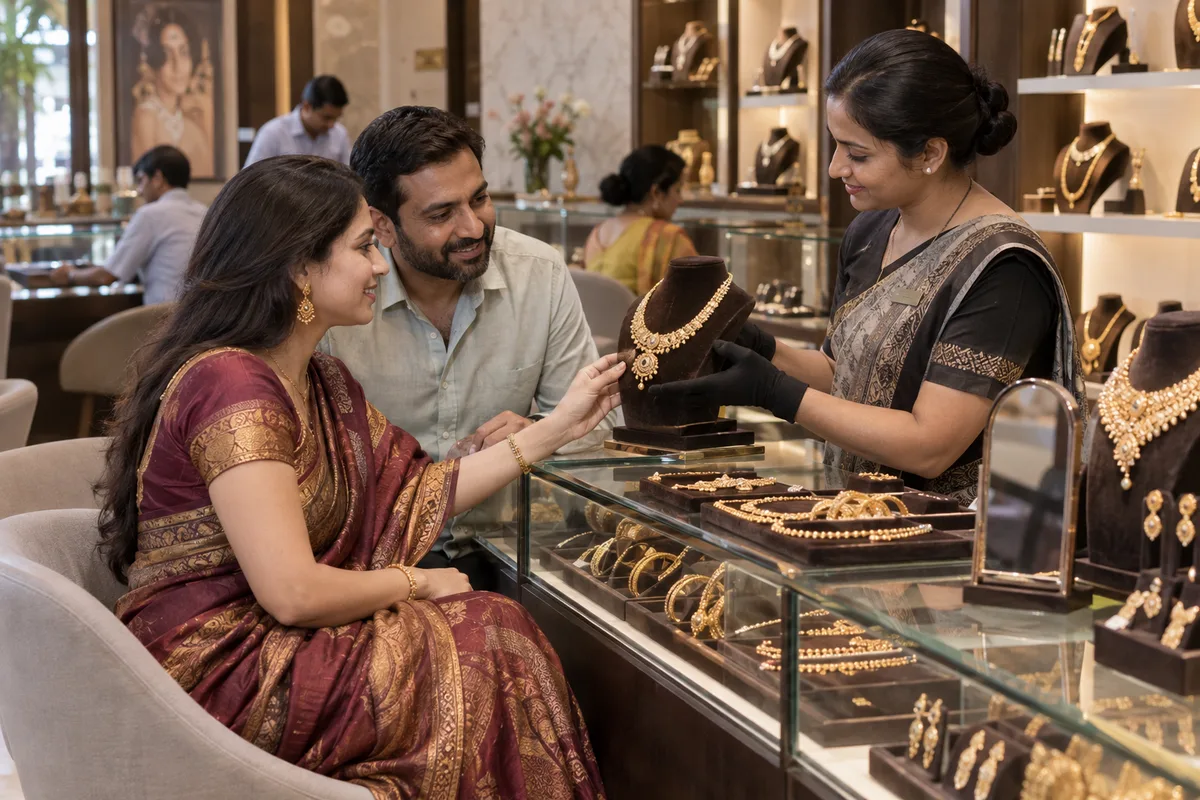
A follow-up system is the set routine for calling, messaging or emailing an enquiry more than once, since most buyers do not decide on the first conversation. GullySales sets the number and timing of follow-ups so an undecided buyer keeps hearing from you until they decide either way.
Also for jewellery retailers
- CRM for jewellery retailers
- Lead generation for jewellery stores
- Cinema advertising for jewellery retailers
- Google Ads for jewellery retailers
- Newspaper advertising for jewellery retailers
- Outdoor advertising for jewellery retailers
- Radio advertising for jewellery retailers
- Sales and marketing strategy for jewellery retailers
Sales and marketing for jewellery retailers, the overview.
Last updated 5 Oct 2026.
For jewellery retailers
Where it usually goes wrong, and what we would do.
“You cannot follow up a visitor whose name nobody took”
Most showrooms lose the enquiry at the counter, not on the phone. Until the salesperson records a name, a number and the occasion for every serious browser, there is nothing to follow up.
“The follow-up date is their wedding date, worked backwards”
A bride buying for a date in two months needs a call now and again as the date nears. A call after the shopping is finished is a wasted one, however polite.
“A custom design quote dies in the wait for the goldsmith”
A made-to-order piece is quoted, then the customer hears nothing while the workshop estimates it. Tell them when you will call back and call then, even if the answer is that it is still being worked out.
What we do
What we deliver for jewellery retailers.
Every deliverable, what it covers for you, and the result it is there to produce. Nothing here is an extra.
Counter capture for every serious enquiry
A short slip or screen the salesperson completes with the name, number, occasion, date, budget band and designs shown.
Result: The store has somebody to call the next day.
Follow-up scheduled against the occasion date
Calls and messages diarised backwards from the wedding, engagement or festival date the buyer gave, rather than on a fixed interval.
Result: You reach them while they are still buying.
A chase routine for booked orders awaiting balance
A named person following each booking through the balance payment and the delivery date, with the customer told what is pending.
Result: Fewer bookings sit half paid and half forgotten.
Evening and Sunday message cover
An agreed owner for messages that arrive after closing and on the busiest shopping day, so nothing waits until the next morning.
Result: The enquiry that came in at nine at night is answered.
An agreed point at which the calling stops
An agreed number of attempts, after which the buyer moves to a list contacted only at the next festival, with the reason recorded.
Result: Nobody is chased into irritation, and nobody is forgotten.
How the result is measured
- Follow-up completion rate
- Average number of follow-ups before close
- Enquiries closed after repeat follow-up
Recorded as a baseline before work starts, so every later report has an honest comparison.
Follow-up routine for this trade
Here is what the showroom does next for each kind of customer who left without ordering.
- Walked out after seeing a bridal set
- The salesperson writes their name, number and wedding date on the card before they leave. Message the same evening with the design photographs they liked.
- Design quote sent, no reply
- Send the weight, the making charges and the stone details in one message. Ask when their family will see the design and record the date.
- Booked order awaiting the balance
- Message when the piece is ready with a photograph, and ask when they will come for the balance. Write the delivery date and the balance due.
- Waiting for the gold rate to settle
- Ask which rate they are watching and offer to send the day's rate by message. Record the date they plan to buy.
- Old gold exchange enquiry
- Explain how the old gold is tested and weighed, and ask them to bring the bills. Write the date they plan to visit.
- Customer from a past occasion
- Note the birthday, anniversary or festival of the last purchase and message before it with a few new designs. Record whether they replied.
Who it is for
This is written for these jewellery retailers.
- Bridal and wedding jewellery showrooms
- Gold and diamond jewellery retail chains
- Silver and artificial jewellery stores
- Certified diamond and solitaire retailers
- Traditional and antique jewellery stores
- Single-showroom family jewellers
Not for
It is not the right fit if.
- Counter staff do not record a visitor's name or number, so there would be no one to follow up with.
- The showroom has no one who can reply on an evening or a festival day, when most visitors who left without buying are thinking about it.
How it works
How the follow up systems work runs
The work itself, in order. How an engagement starts, from your brief to a written scope, is set out on our method page.
- 1
Measure today's reply time
From your recent enquiries, we set the time each arrived against its first reply, using the call log, chats, form entries and portal panel. We also count the follow-ups each one got.
- 2
Agree targets and the sequence
We set reply targets and the follow-up sequence with your team, based on its real hours and workload.
- 3
Write the templates and first-call questions
The first reply, the quote follow-up and the last attempt are written in your voice and loaded as quick replies. The first-call questions are agreed with your best salesperson.
- 4
Set ownership, tasks and alerts
Named owners, cover for leave and CRM or sheet tasks go live. App alerts, such as IndiaMART's, are switched on for the right phones.
- 5
Track and adjust
Reply time and follow-up completion are reported against the baseline, and the routine is changed where it is not kept. How often you are reported to is agreed in writing.
Where this fits
Three pieces of sales work, in this order.
This work sits inside sales process design, at stage 2, qualification. The audit comes before it, and sales management keeps it running.
Step 1
Sales audit
Find where deals are being lost and what to fix first.
Start here if you cannot say where orders are lost.
Step 2 · you are here
Sales process design
One written way to sell, from first enquiry to repeat order.
Start here if every salesperson sells differently.
Step 3
Sales management
A target, a review routine and someone who owns the number.
Start here if the team has targets and no routine.
FAQ
Questions owners ask before they call.
Not here? More answers, or ask on WhatsApp.
Our salespeople say asking for a number puts customers off. Is that true?
How often should we follow up a bridal enquiry?
Is WhatsApp fine to send design photographs?
A customer says they will come back after Akshaya Tritiya. Should we chase?
How much does it cost?
How long is the contract?
How soon will we see results?
Who will actually do the work?
What do you need from us?
What if we are not happy with the work?
From the blog
Further reading for jewellery retailers.
 8 min read · 21 Sept 2026Tamil advertising creative: what actually changesTamil is written one way and spoken another, and its script cannot tell b from p. What that means for your line, voice artist and brand spelling.
 8 min read · 21 Sept 2026Radio advertising in BengaluruWho is actually listening in this city, and where. The evening crawl, the auto driver's choice, the shop counter with FM on all day, and a signal that reaches past the city limits.
 8 min read · 21 Sept 2026Premium audience advertising strategyNo platform in India sells you verified income. Everything offered as affluence targeting is inference, and the cheapest filter you own is putting the price in the first frame.
More for jewellery retailers
Everything else we would do for you.
Closest to this: leads and follow-up
Also for jewellery retailers
Or start from the overview: sales and marketing for jewellery retailers.
Your next practical step
Tell us what you are trying to grow, and we will read it before we call.
Eight short steps, mostly taps. Skip anything you would rather answer on the call.