Jewellery retailers · Lead generation
Find the families planning a wedding set before they walk into three other showrooms.
Lead generation for a jewellery store is the work of collecting the names and numbers of people who intend to buy a bridal set, a solitaire or a festive purchase, while they are still deciding where to go. GullySales works on the enquiry routes, the forms and the showroom-visit bookings that turn a saved design into a name on your list.
Scope, fee, reporting and term are agreed in writing after we have read your brief and spoken to you.
What lead generation means
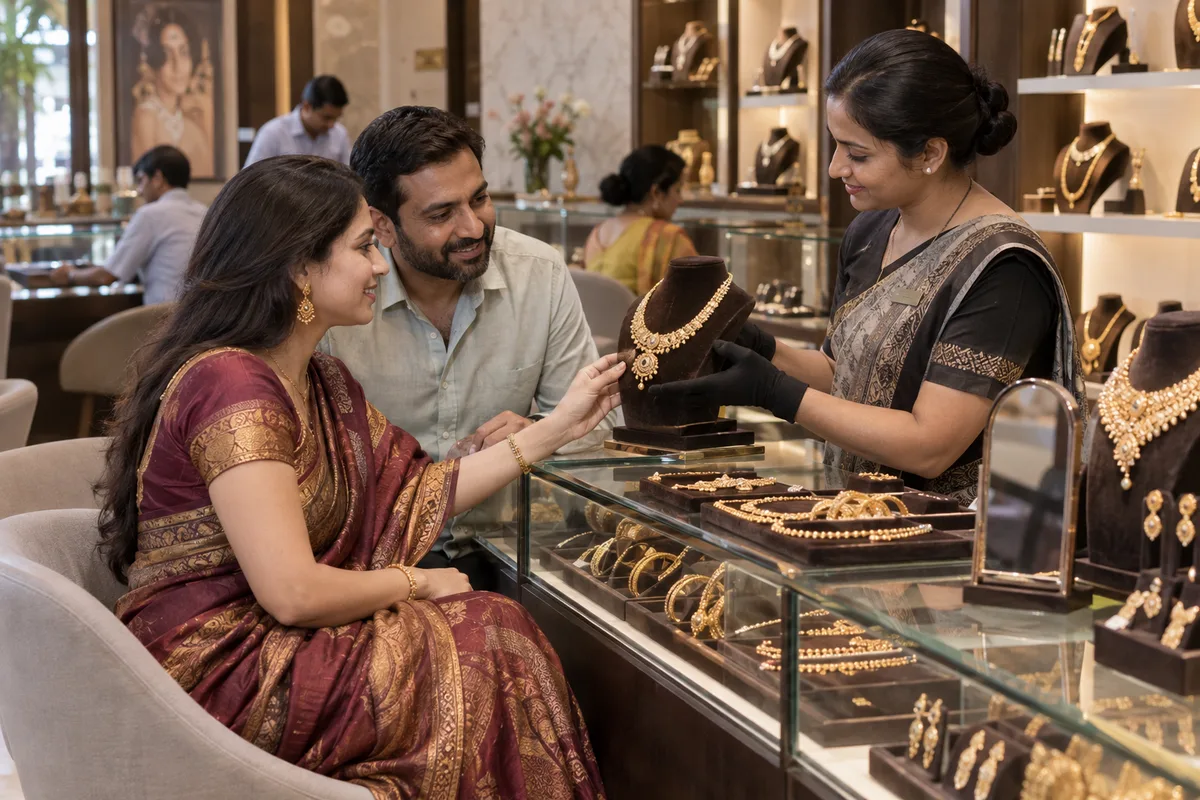
Lead generation is the combined work of every channel that brings in a new enquiry, whether from search, adverts, referrals or a stall at an exhibition. GullySales runs these channels together and reports the number of enquiries each one produced, not the activity behind it.
Also for jewellery retailers
- Follow-up systems for jewellery retailers
- CRM for jewellery retailers
- Cinema advertising for jewellery retailers
- Google Ads for jewellery retailers
- Newspaper advertising for jewellery retailers
- Outdoor advertising for jewellery retailers
- Radio advertising for jewellery retailers
- Sales and marketing strategy for jewellery retailers
Sales and marketing for jewellery retailers, the overview.
Last updated 5 Oct 2026.
For jewellery retailers
Where it usually goes wrong, and what we would do.
“The purchase is planned long before the visit”
A wedding date, a daughter's birthday or Akshaya Tritiya sets the buying window. The family browses designs for weeks and tells no showroom anything. Your list is empty unless an enquiry route exists at the moment the interest begins.
“A saved photo is a lead that has no door”
The buyer screenshots a necklace from a reel and wants the weight and the price. If the only way to ask is to find a phone number, the interest ends there. A tap that opens a chat with the design attached keeps it.
“Exchange customers are a list you already own”
Every customer who handed over old gold has a name in your register and a reason to return when the next occasion arrives. Treating them as new strangers each festival wastes the easiest leads in the shop.
“Walk-ins leave without leaving a trace”
A couple who browse for an hour and say they will come back have given you nothing to follow up. A courteous request for a number, with a reason attached, is the difference between a lost visit and a lead.
What we do
What we deliver for jewellery retailers.
Every deliverable, what it covers for you, and the result it is there to produce. Nothing here is an extra.
A design enquiry button on every collection page
A tap-to-chat button that carries the design name and the page it came from into the message.
Result: Each enquiry arrives with the design the buyer was looking at.
A showroom visit booking form
A short form asking for the occasion, the preferred day and the branch, so the counter can prepare the right trays.
Result: The counter knows who is coming and for what.
A festive and wedding-season landing page
One page for each buying window, with the gold rate method, the schemes you run and a clear route to enquire.
Result: Festive traffic lands on a page built for the occasion.
A counter routine for capturing walk-in numbers
A script and a register line for the staff, asking permission to follow up on the design the visitor liked.
Result: Walk-ins end the day as named leads.
A register of exchange and old-gold customers
Past customers sorted by occasion and last purchase, ready to be contacted before the next festival.
Result: You hold a list of people with a known reason to return.
Source tagging on every route
Each form, link and chat button marked, so you can see which route produced which enquiry.
Result: You can tell which route brought each name.
How the result is measured
- Enquiries generated
- Cost per enquiry
- Enquiries by source
Recorded as a baseline before work starts, so every later report has an honest comparison.
What to capture or send
What to record when a family first asks about a bridal set or a solitaire.
- Occasion and the date of the event
- Ask at the first message or counter visit. A wedding date tells the sales team when to call and how much time design changes allow.
- Metal, stone and approximate weight
- Record what the buyer asks for in their own words. It sets which collection to show first and which counter staff handle it.
- Old gold to exchange
- Note whether the buyer plans to exchange, since it changes the conversation and gives you an existing customer record to open.
- Who is deciding with the buyer
- Write down the parent, spouse or elder joining the visit, so the showroom can prepare seating and the right designs.
- Where the enquiry started
- Tag the website form, saved Instagram photo, Maps call or walk-in, so the owner sees which route brought the visit.
Who it is for
This is written for these jewellery retailers.
- Bridal and wedding jewellery showrooms
- Gold and diamond jewellery retail chains
- Silver and artificial jewellery stores
- Certified diamond and solitaire retailers
- Traditional and antique jewellery stores
- Single-showroom family jewellers
Not for
It is not the right fit if.
- Staff cannot welcome a booked visitor at the counter, so a booking route would produce families who arrive to find no one expecting them.
- The showroom has no stock or design range for the occasion you plan to advertise, and a lead would be turned away.
- You do not record walk-ins at all, so online leads would have nothing to be compared against.
How it works
How the lead generation work runs
The work itself, in order. How an engagement starts, from your brief to a written scope, is set out on our method page.
- 1
Understand your capacity
We ask how many enquiries your team can answer well, who answers after hours, and what a good enquiry looks like. Without this, the system fills a funnel nobody is watching.
- 2
Audit current sources
We read your call log, WhatsApp chats, enquiry sheet and platform dashboards. The baseline is recorded: enquiries by source, reply time, conversion and cost per order.
- 3
Strategise the channel mix
Search and maps are chosen for people ready to buy, ads for people who are not yet looking, and content and referrals for trust.
- 4
Implement capture and follow-up
Pages, forms, tags, the lead record and the first-reply message are built and tested end to end. We submit test enquiries ourselves before any media money is spent.
- 5
Measure and optimise
Enquiries are traced to source and judged by what became orders, not by volume alone. Channels that fill the sheet with poor enquiries are cut back. How often you are reported to is agreed in writing.
Where this fits
Three pieces of sales work, in this order.
This work sits inside sales process design, at stage 1, prospecting and lead generation. The audit comes before it, and sales management keeps it running.
Step 1
Sales audit
Find where deals are being lost and what to fix first.
Start here if you cannot say where orders are lost.
Step 2 · you are here
Sales process design
One written way to sell, from first enquiry to repeat order.
Start here if every salesperson sells differently.
Step 3
Sales management
A target, a review routine and someone who owns the number.
Start here if the team has targets and no routine.
FAQ
Questions owners ask before they call.
Not here? More answers, or ask on WhatsApp.
Should we ask for a phone number before showing prices?
Is a gold savings scheme a lead source?
How do we count a lead from a family event?
How do we count a lead that arrives through a family member?
How long is the contract?
How soon will we see results?
Who will actually do the work?
What do you need from us?
What if we are not happy with the work?
From the blog
Further reading for jewellery retailers.
 8 min read · 21 Sept 2026Tamil advertising creative: what actually changesTamil is written one way and spoken another, and its script cannot tell b from p. What that means for your line, voice artist and brand spelling.
 8 min read · 21 Sept 2026Radio advertising in BengaluruWho is actually listening in this city, and where. The evening crawl, the auto driver's choice, the shop counter with FM on all day, and a signal that reaches past the city limits.
 8 min read · 21 Sept 2026Premium audience advertising strategyNo platform in India sells you verified income. Everything offered as affluence targeting is inference, and the cheapest filter you own is putting the price in the first frame.
More for jewellery retailers
Everything else we would do for you.
Closest to this: leads and follow-up
Also for jewellery retailers
Or start from the overview: sales and marketing for jewellery retailers.
Your next practical step
Tell us what you are trying to grow, and we will read it before we call.
Eight short steps, mostly taps. Skip anything you would rather answer on the call.