Jewellery retailers · Local SEO
Be the showroom Maps names when someone nearby searches for a gold shop open today.
Local SEO for a jewellery store is the contest for the few map results shown to a buyer searching near your street, decided by your listing, your hours, your photographs and your reviews. GullySales works on the profile of each showroom and the signals that tell Google which one is closest to the buyer.
Scope, fee, reporting and term are agreed in writing after we have read your brief and spoken to you.
What local SEO means
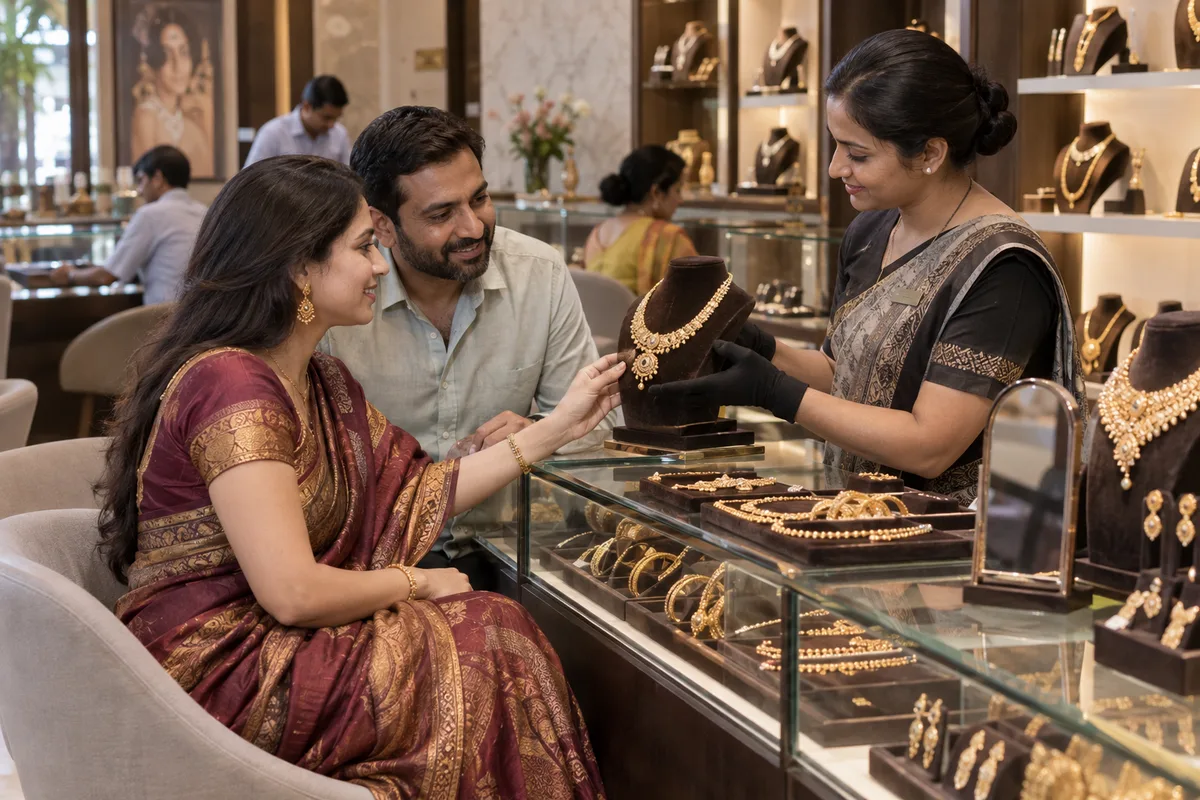
Local SEO is the work of making your business show up for searches that name your town or locality, such as a service plus an area name. GullySales sets up locality pages, local citations and map listings so nearby customers find you before a competitor across town.
Also for jewellery retailers
- SEO for jewellery retailers
- Website design and development for jewellery retailers
- Cinema advertising for jewellery retailers
- Google Ads for jewellery retailers
- Newspaper advertising for jewellery retailers
- Outdoor advertising for jewellery retailers
- Radio advertising for jewellery retailers
- Sales and marketing strategy for jewellery retailers
Sales and marketing for jewellery retailers, the overview.
Last updated 5 Oct 2026.
For jewellery retailers
Where it usually goes wrong, and what we would do.
“A newer showroom can take the map from a famous one”
Maps ranks the nearest well-kept listing, not the oldest name. A jeweller trading in the same locality for decades loses the result to a fresh opening with current photographs, correct hours and recent reviews.
“Hours are wrong on exactly the days that matter”
Dhanteras, Akshaya Tritiya and the Sunday before a wedding all change the opening time. A listing that says closed on those evenings sends the buyer to a rival showroom that says open.
“The buyer reads the photographs before the reviews”
A jewellery listing with dim shop-front pictures looks closed down. Clean images of the counter, the display windows and the bridal section tell a stranger the place is real before a single review is read.
“Branches compete when they share one story”
Two showrooms with the same name, the same description and overlapping areas split the signals between them. Each needs its own verified profile, its own address details and its own photographs.
What we do
What we deliver for jewellery retailers.
Every deliverable, what it covers for you, and the result it is there to produce. Nothing here is an extra.
A verified, complete profile for each showroom
Name, address, phone, categories and description written for that branch alone.
Result: Each branch has its own listing that is complete.
Special hours for every festival and wedding weekend
The festival dates and late-evening openings entered ahead of time on each listing.
Result: The listing is open when the showroom is.
A photograph set of the shop front, interior and counters
Pictures taken in good light, showing the entrance, the displays and the bridal area, without customers in frame.
Result: A stranger can see the place before visiting.
A review request handed over at billing
A card or message with the link, offered when the purchase is complete and the customer is pleased.
Result: Recent reviews come from people who bought.
Replies to reviews that mention price or purity
Written, courteous answers that deal plainly with making charges or hallmark questions.
Result: The hesitant reader sees the concern answered in public.
Tracking of direction taps and calls
The listing's own counts recorded before the work and read again afterwards.
Result: You can see whether the listing sent people to the door.
How the result is measured
- Map pack ranking
- Local search visibility
- Enquiries by locality
Recorded as a baseline before work starts, so every later report has an honest comparison.
Searches your buyers type
The near-me searches that decide which showroom a buyer visits.
- gold jewellery shop near me
- The listing answers with the correct business type, hours, address and photographs of the shop front, so the buyer can find the door.
- diamond showroom open today
- Special hours set for each festival and Sunday, since a closed showroom on a listing loses the visit.
- bridal jewellery in the area name
- A listing description and photographs of the bridal section, with the collection named in plain words.
- gold exchange and old gold buying
- A post or service entry that says you take old gold in exchange, and what the buyer should bring.
- hallmarked gold jewellery shop
- A listing line and a page that explain the hallmark checks done at the counter, without making claims about purity beyond what you test.
Who it is for
This is written for these jewellery retailers.
- Bridal and wedding jewellery showrooms
- Gold and diamond jewellery retail chains
- Silver and artificial jewellery stores
- Certified diamond and solitaire retailers
- Traditional and antique jewellery stores
- Single-showroom family jewellers
Not for
It is not the right fit if.
- The showroom has only a rented counter inside another shop, and a listing cannot send visitors to a door of its own.
- Hours change from day to day and nobody will update the listing, so buyers would arrive at a shut shutter.
- You plan to open reviews by asking staff to post reviews as customers, which breaks the platform's rules.
How it works
How the local SEO work runs
The work itself, in order. How an engagement starts, from your brief to a written scope, is set out on our method page.
- 1
Write down what is true
Each branch's real address, signboard name, phone, hours and owning Google account go into one record you sign off. Every later listing is copied from it.
- 2
Search as your buyer does
We search each branch on a phone from points around it, in your buyers' words, and note who appears with what reviews and photos.
- 3
Fix the profile first
Ownership first, then name, address, pin, phone, hours and business type. Google can suspend a profile with extra words in its name or an address that is not a real premises.
- 4
Build the branch pages and match the listings
Each real branch gets its own page, and the other listings are changed to agree with it. We write none for towns without a branch, because Google treats near-identical pages as doorway pages.
- 5
Ask, reply and measure
We agree with each branch who asks for reviews, when and how. Results are set against the baseline recorded before work began, and the branch that is behind gets the next round.
Where this fits
Three pieces of sales work, in this order.
This work sits inside sales process design, at stage 1, prospecting and lead generation. The audit comes before it, and sales management keeps it running.
Step 1
Sales audit
Find where deals are being lost and what to fix first.
Start here if you cannot say where orders are lost.
Step 2 · you are here
Sales process design
One written way to sell, from first enquiry to repeat order.
Start here if every salesperson sells differently.
Step 3
Sales management
A target, a review routine and someone who owns the number.
Start here if the team has targets and no routine.
FAQ
Questions owners ask before they call.
Not here? More answers, or ask on WhatsApp.
Why does a smaller shop appear above us on Maps?
Can we list the gold rate on the profile?
Should every branch share one phone number?
Can each branch show different festival hours?
How much does it cost?
How long is the contract?
How soon will we see results?
Who will actually do the work?
What do you need from us?
What if we are not happy with the work?
From the blog
Further reading for jewellery retailers.
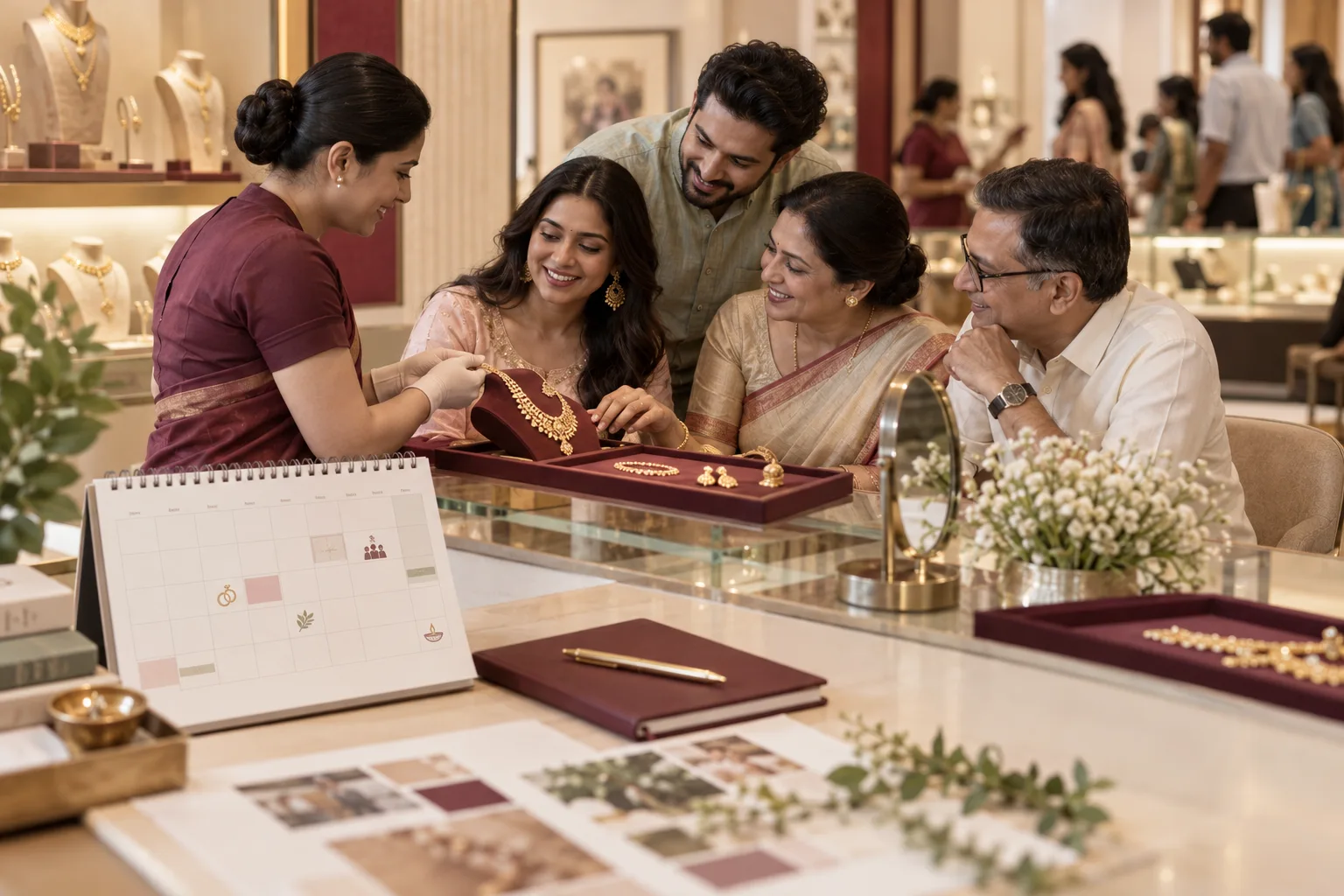 6 min read · 6 Feb 2025How to increase jewellery store footfallJewellery footfall follows a calendar you already own. Plan against the buying seasons and the wedding dates, and sell to the family that decides together.
 8 min read · 21 Sept 2026Tamil advertising creative: what actually changesTamil is written one way and spoken another, and its script cannot tell b from p. What that means for your line, voice artist and brand spelling.
 8 min read · 21 Sept 2026Radio advertising in BengaluruWho is actually listening in this city, and where. The evening crawl, the auto driver's choice, the shop counter with FM on all day, and a signal that reaches past the city limits.
More for jewellery retailers
Everything else we would do for you.
Closest to this: search and visibility
Also for jewellery retailers
Or start from the overview: sales and marketing for jewellery retailers.
Your next practical step
Tell us what you are trying to grow, and we will read it before we call.
Eight short steps, mostly taps. Skip anything you would rather answer on the call.