Jewellery retailers · Search engine optimisation
Rank for the bridal collection and the gold rate question, not just your showroom name.
SEO for a jewellery retailer makes you the page a buyer finds when they search for bridal jewellery or gold rate transparency in your city. They search months before they visit a showroom. GullySales builds pages for each collection and locality and reports the showroom visits that search actually produced.
Scope, fee, reporting and term are agreed in writing after we have read your brief and spoken to you.
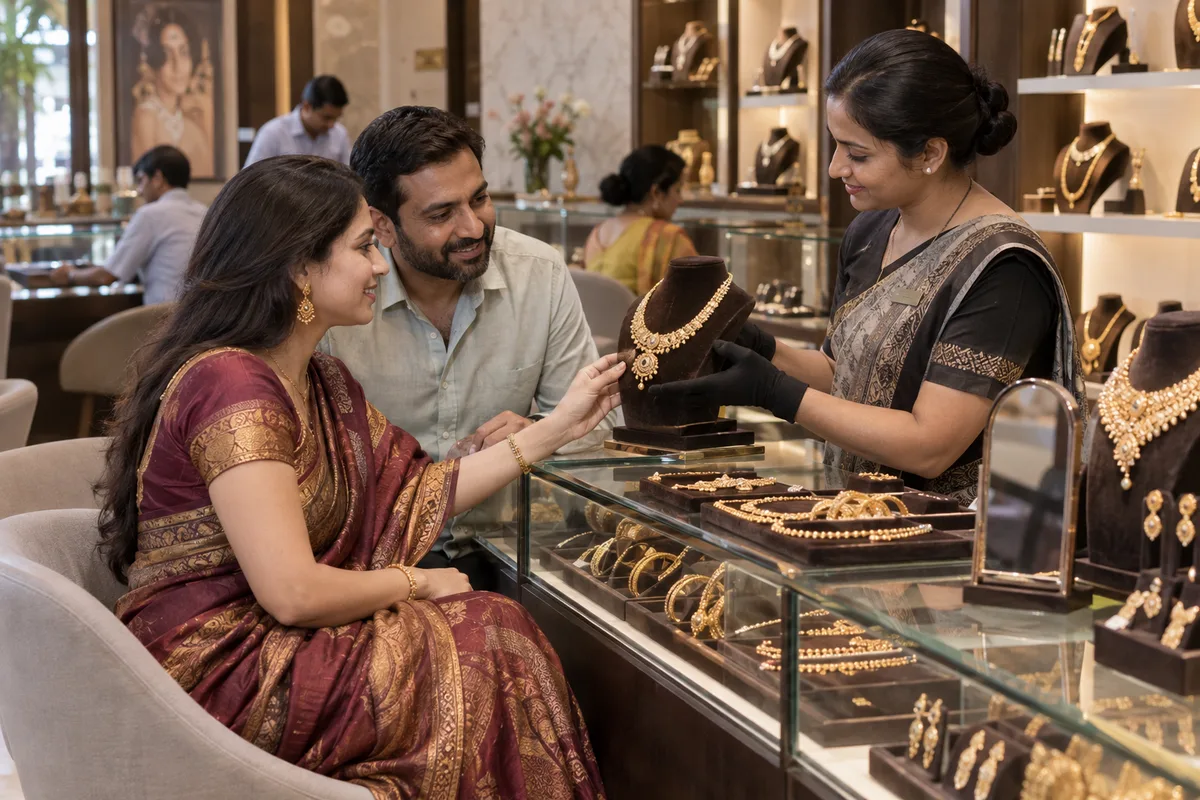
What search engine optimisation means
Search engine optimisation (SEO) is the work of getting your website to appear when a buyer searches Google for what you sell. GullySales builds pages around real search terms, fixes technical issues that block ranking, and tracks which searches actually bring enquiries.
Also for jewellery retailers
- Website design and development for jewellery retailers
- Local SEO for jewellers
- Cinema advertising for jewellery retailers
- Google Ads for jewellery retailers
- Newspaper advertising for jewellery retailers
- Outdoor advertising for jewellery retailers
- Radio advertising for jewellery retailers
- Sales and marketing strategy for jewellery retailers
Sales and marketing for jewellery retailers, the overview.
Last updated 5 Oct 2026.
For jewellery retailers
Where it usually goes wrong, and what we would do.
“A page per collection, not one product catalogue”
Bridal, diamond and lightweight daily-wear collections each get their own page written for the buyer's question, because a single catalogue page ranks for none of them.
“Gold rate and making charges answered on the page”
Buyers search for this before they ever call, and a page that answers it plainly builds the trust that gets the showroom visit booked.
“Locality and showroom pages for multi-branch jewellers”
A search for a jewellery showroom in a specific area needs a page naming that showroom, matching its Business Profile exactly.
What we do
What we deliver for jewellery retailers.
Every deliverable, what it covers for you, and the result it is there to produce. Nothing here is an extra.
A dedicated page for each collection
Separate pages for bridal, diamond and lightweight daily-wear collections, instead of one catalogue page that ranks for none of them individually.
Result: A buyer searching for a specific collection finds the exact page for it.
Gold rate and making-charge information stated plainly
A page section answering the gold rate and making-charge question directly, for a buyer who researches this before ever calling.
Result: A buyer builds trust in the showroom before their first visit.
Showroom pages matching each Business Profile exactly
A page naming the exact showroom and locality it serves, matching that branch's Business Profile listing for multi-branch jewellers.
Result: A search for a showroom in that area finds the right branch.
Technical faults fixed across collection pages
A check of page load speed, broken links and other technical faults that quietly keep a well-written collection page out of search results.
Result: A well-designed collection page is not undone by a slow load.
Ranking and visit report by collection page
A report on search position and enquiries for each collection page, compared against the baseline recorded before work began.
Result: You can see which collection page is actually earning its place.
How the result is measured
- Ranking positions
- Organic traffic
- Enquiries from organic search
Recorded as a baseline before work starts, so every later report has an honest comparison.
Searches your buyers type
What a buyer types before a jewellery purchase, and the page that answers it.
- 22 karat gold necklace designs for wedding
- A collection page. Show real pieces from your showroom with the weight band, the making charge basis and an enquiry button. Say if designs can be made to order and what that needs from the customer.
- lightweight gold earrings for daily wear
- A collection page for everyday buyers. Show pieces by weight and style, and say how to order the same design in another weight. Keep photographs of your own stock, not catalogue images.
- certified diamond solitaire ring
- A solitaire page. Name the grading bodies whose certificates you give with the stone, explain the four Cs in plain words, and say what the buyer receives with the ring.
- gold rate today in Hyderabad
- A rate page only if you can keep it current. Give the day's rate by karat, state the date and time it was set, and explain how making charges and GST are added so the final bill is no surprise.
- old gold exchange value jeweller
- An exchange page. Explain how old gold is tested and weighed in front of the customer, how the deduction is stated, and which papers to carry. This is a trust search, so show the process, not an offer.
- silver pooja items and anklets near me
- A category page for silver. List the items you stock, the purity stamp on each, and give your showroom address, opening hours and a WhatsApp number for choosing from photographs.
Who it is for
This is written for these jewellery retailers.
- Bridal and wedding jewellery showrooms
- Gold and diamond jewellery retail chains
- Silver and artificial jewellery stores
- Certified diamond and solitaire retailers
- Traditional and antique jewellery stores
- Single-showroom family jewellers
Not for
It is not the right fit if.
- The site lists designs without making charges, hallmark detail or a way to enquire, and ranking such pages would only add visits that do not convert.
- You expect search to replace the festival footfall already coming to the showroom, when it builds slowly from a thin site.
How it works
How the search engine optimisation work runs
The work itself, in order. How an engagement starts, from your brief to a written scope, is set out on our method page.
- 1
Audit and baseline
We record where the site stands today: positions, traffic, technical faults and the enquiries search currently produces. Nothing starts until this number is written down.
- 2
Decide what to rank for
We map the searches your buyers use, in your words and theirs, and pick the ones worth the effort for your margin and your capacity.
- 3
Fix the foundations
Technical faults first, because the cheapest gains are there. Then the Business Profile and directory consistency.
- 4
Build the pages
A page for each thing you do, written to answer the question it is searched for, with a clear next step at the end.
- 5
Publish and earn mentions
Content goes out on the calendar. Links and mentions are earned from real relationships, not bought.
- 6
Measure, report, adjust
At an interval agreed in writing we report what moved and what did not, and change the plan when the numbers say so.
Where this fits
Three pieces of sales work, in this order.
This work sits inside sales process design, at stage 1, prospecting and lead generation. The audit comes before it, and sales management keeps it running.
Step 1
Sales audit
Find where deals are being lost and what to fix first.
Start here if you cannot say where orders are lost.
Step 2 · you are here
Sales process design
One written way to sell, from first enquiry to repeat order.
Start here if every salesperson sells differently.
Step 3
Sales management
A target, a review routine and someone who owns the number.
Start here if the team has targets and no routine.
FAQ
Questions owners ask before they call.
Not here? More answers, or ask on WhatsApp.
How long does SEO take for a jewellery showroom?
Is SEO worth it if most buyers still visit in person?
Should the website show the weight and price of each piece?
Should every collection get its own page?
How long is the contract?
Who will actually do the work?
What do you need from us?
What if we are not happy with the work?
From the blog
Further reading for jewellery retailers.
 8 min read · 21 Sept 2026Tamil advertising creative: what actually changesTamil is written one way and spoken another, and its script cannot tell b from p. What that means for your line, voice artist and brand spelling.
 8 min read · 21 Sept 2026Radio advertising in BengaluruWho is actually listening in this city, and where. The evening crawl, the auto driver's choice, the shop counter with FM on all day, and a signal that reaches past the city limits.
 8 min read · 21 Sept 2026Premium audience advertising strategyNo platform in India sells you verified income. Everything offered as affluence targeting is inference, and the cheapest filter you own is putting the price in the first frame.
More for jewellery retailers
Everything else we would do for you.
Closest to this: search and visibility
Also for jewellery retailers
Or start from the overview: sales and marketing for jewellery retailers.
Your next practical step
Tell us what you are trying to grow, and we will read it before we call.
Eight short steps, mostly taps. Skip anything you would rather answer on the call.