Jewellery retailers · Referral marketing
One satisfied mother-in-law sends you the next three weddings in the family.
Referral marketing for a jewellery retailer runs on two lines: the family that recommends you to relatives, and the wedding trade that sees the bride before you do. Both work on trust rather than on posters. GullySales builds the ask, the introduction and the record of who is actually sending business.
Scope, fee, reporting and term are agreed in writing after we have read your brief and spoken to you.
What referral marketing means
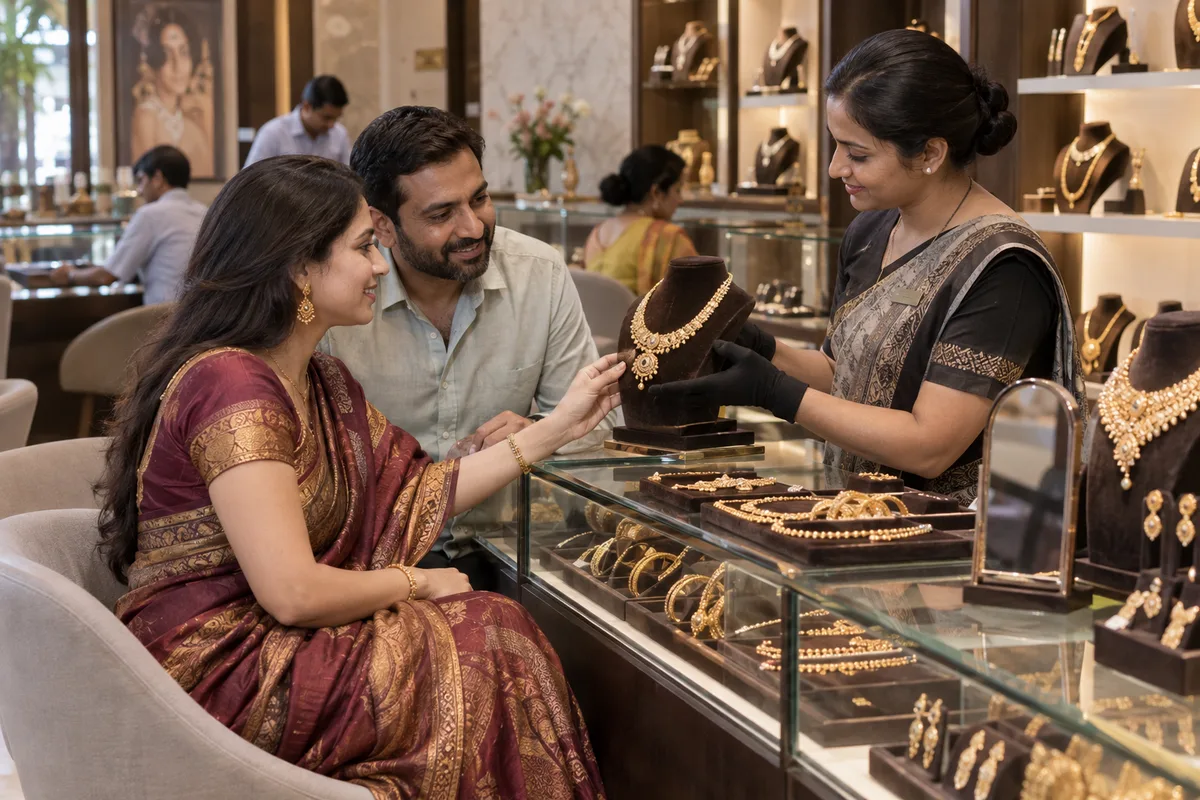
Referral marketing is asking an existing customer to recommend you to someone they know, usually with a reward for both sides. It differs from a loyalty scheme because it brings in a new customer rather than a repeat purchase. GullySales builds the ask and the reward into a point where a customer is already satisfied.
Also for jewellery retailers
- Customer retention for jewellery retailers
- Cinema advertising for jewellery retailers
- Google Ads for jewellery retailers
- Newspaper advertising for jewellery retailers
- Outdoor advertising for jewellery retailers
- Radio advertising for jewellery retailers
- Sales and marketing strategy for jewellery retailers
- SEO for jewellery retailers
Sales and marketing for jewellery retailers, the overview.
Last updated 5 Oct 2026.
For jewellery retailers
Where it usually goes wrong, and what we would do.
“Referrals travel along family lines, not friend groups”
A bridal purchase is discussed among relatives who will themselves have weddings in the next few years. Ask at the delivery visit which cousin is getting married next, and the introduction is natural.
“The wedding trade meets the bride months before you do”
Photographers, makeup artists, silk saree shops and wedding planners are booked early. They are asked for a jeweller's name, and the one they remember is the one who sent them a customer last month.
“A cash cut for a referral changes the advice a bride is given”
Pay a planner per introduction and your store becomes the one the planner pushes, which the family eventually senses. A reciprocal arrangement, where both sides send business, holds up better and costs nothing.
What we do
What we deliver for jewellery retailers.
Every deliverable, what it covers for you, and the result it is there to produce. Nothing here is an extra.
A referral ask built into the delivery visit
A simple question at the fitting or delivery about the next occasion in the family, with a card the customer can pass on.
Result: You ask when the set is in their hands and they are pleased.
A wedding trade contact list for your area
Photographers, makeup artists, boutiques and planners working in the localities you draw from, with a named person at each.
Result: Outreach goes to people who meet your buyers first.
A reciprocal arrangement in writing
An agreed, written basis for what each side does for the other, so the relationship survives a change of staff on either side.
Result: Referrals keep coming when the person who set it up leaves.
Every referral recorded to its source
New customers tagged with the family member, planner or photographer who sent them, entered at the counter.
Result: You know which handful of relationships are worth your time.
A thank-you that is noticed and not paid
A planned way of acknowledging a referrer, from a call by the owner to an invitation at a collection launch, agreed and used consistently.
Result: The referrer feels seen without being bought.
How the result is measured
- Referrals received
- Referral conversion rate
- Cost per referred customer
Recorded as a baseline before work starts, so every later report has an honest comparison.
How referrals reach a jewellery showroom
A showroom is recommended by the family that bought, and by the people who see the bride before the jeweller does.
- The mother or mother-in-law
- At delivery, ask the customer to mention the showroom to relatives buying for the next wedding. Offer a private appointment instead of a flyer, because trust in a jeweller travels at family functions.
- Bridal makeup artists and photographers
- They see the bride's set on the wedding morning. Give them a card with your showroom name, and ask for the bride's consent before any photo goes online.
- Saree shops and wedding planners
- A saree shop sends a customer matching the blouse to the necklace. Agree a reciprocal visiting list, and write down what each shop tells the customer about the other.
- Community and temple associations
- An association hears who is planning a wedding. Offer a talk on hallmarking and purity certificates, and leave the showroom card on request.
- Referrer on the invoice file
- Note the referrer on the invoice file, not on the bill the customer takes. Keep one clean list so the person who sent the next wedding is remembered.
- What never to do
- Never tell a referred family what the referrer paid or bought. Price and design choices stay private, and purity certificates are shown to every buyer alike.
Who it is for
This is written for these jewellery retailers.
- Bridal and wedding jewellery showrooms
- Gold and diamond jewellery retail chains
- Silver and artificial jewellery stores
- Certified diamond and solitaire retailers
- Traditional and antique jewellery stores
- Single-showroom family jewellers
Not for
It is not the right fit if.
- You have not decided what a referring family receives, and an ad hoc reward given to one person causes friction with the next.
- Your customers have not yet had a good after-sales experience, so there is little they would be glad to recommend.
How it works
How the referral marketing work runs
The work itself, in order. How an engagement starts, from your brief to a written scope, is set out on our method page.
- 1
Read the margin and the relationship
We work out what a new customer is worth and what you can pay to get one, then check whether customers know others like themselves.
- 2
Find the referrals you already get
Your invoices, call notes and WhatsApp threads show who already sends people to you, and who they are. That sets the starting point and the first people to ask.
- 3
Write the offer and the rules
The reward, the definition of a valid referral and the payout steps are agreed in writing before anything is shown to customers.
- 4
Build the share path and the record
The message, the link or code and the referral sheet are built. Your team tests a referral end to end, from forward to reward.
- 5
Start with your best customers, then widen
The first asks go to people who have already praised you. What they say about the offer decides what changes before it reaches the wider base.
Where this fits
Three pieces of sales work, in this order.
This work sits inside sales process design, at stage 7, after the sale. The audit comes before it, and sales management keeps it running.
Step 1
Sales audit
Find where deals are being lost and what to fix first.
Start here if you cannot say where orders are lost.
Step 2 · you are here
Sales process design
One written way to sell, from first enquiry to repeat order.
Start here if every salesperson sells differently.
Step 3
Sales management
A target, a review routine and someone who owns the number.
Start here if the team has targets and no routine.
FAQ
Questions owners ask before they call.
Not here? More answers, or ask on WhatsApp.
Should we pay a commission to wedding planners?
How do we ask for a referral without it feeling like a sales pitch?
A referred family asks what the referring customer paid. What do we say?
How do we protect a customer's privacy if relatives want to see the same design?
How long is the contract?
How soon will we see results?
Who will actually do the work?
What do you need from us?
What if we are not happy with the work?
From the blog
Further reading for jewellery retailers.
 8 min read · 21 Sept 2026Tamil advertising creative: what actually changesTamil is written one way and spoken another, and its script cannot tell b from p. What that means for your line, voice artist and brand spelling.
 8 min read · 21 Sept 2026Radio advertising in BengaluruWho is actually listening in this city, and where. The evening crawl, the auto driver's choice, the shop counter with FM on all day, and a signal that reaches past the city limits.
 8 min read · 21 Sept 2026Premium audience advertising strategyNo platform in India sells you verified income. Everything offered as affluence targeting is inference, and the cheapest filter you own is putting the price in the first frame.
More for jewellery retailers
Everything else we would do for you.
Closest to this: customers after the sale
Also for jewellery retailers
Or start from the overview: sales and marketing for jewellery retailers.
Your next practical step
Tell us what you are trying to grow, and we will read it before we call.
Eight short steps, mostly taps. Skip anything you would rather answer on the call.