Retailers · Lead generation
Every is it in stock call is a shopper you could ring back.
Lead generation for a shop is the phone call asking whether a size is in stock, the message asking a price, and the number taken at billing. GullySales sets up how those are answered and recorded, so the store can call somebody back the day the stock lands.
Scope, fee, reporting and term are agreed in writing after we have read your brief and spoken to you.
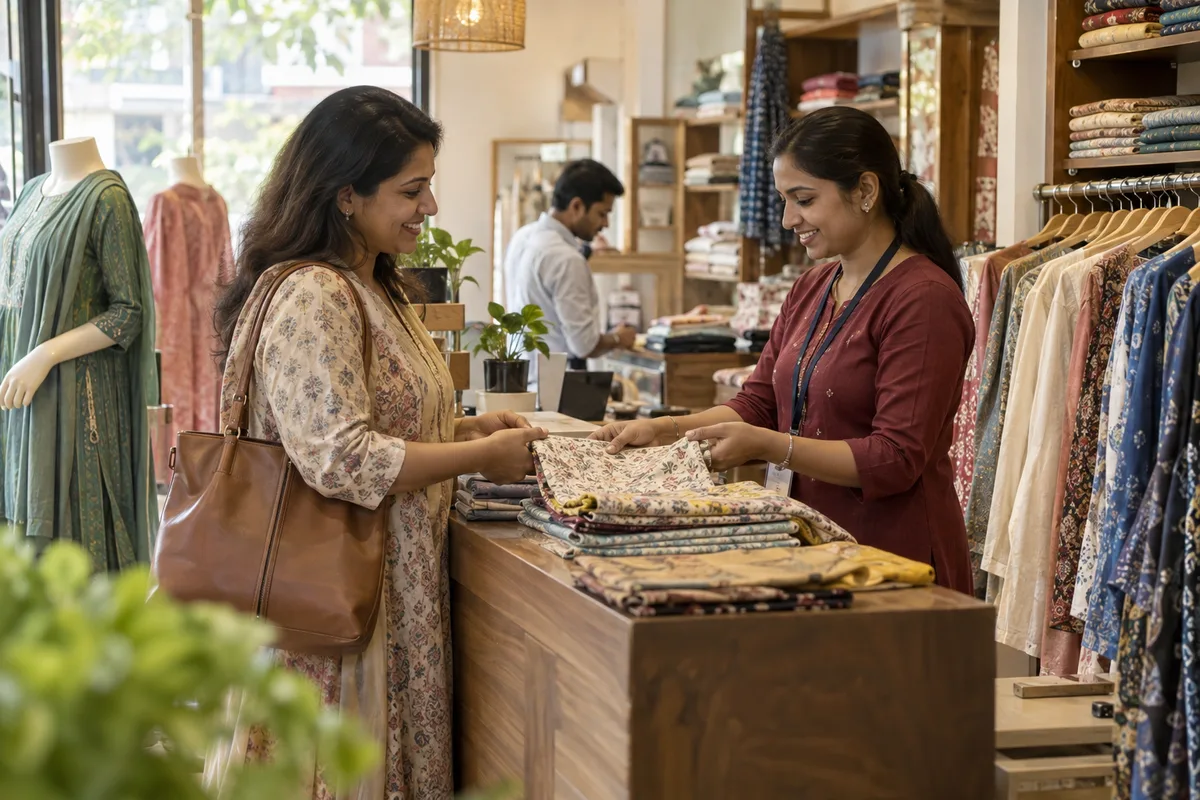
What lead generation means
Lead generation is the combined work of every channel that brings in a new enquiry, whether from search, adverts, referrals or a stall at an exhibition. GullySales runs these channels together and reports the number of enquiries each one produced, not the activity behind it.
Last updated 14 Nov 2026.
For retailers
Where it usually goes wrong, and what we would do.
“The out-of-stock call is the lead nobody writes down”
Somebody wanted the thing enough to ring. If nobody takes their number, the sale goes to whichever shop had it on the shelf.
“The number at billing is the whole database”
A store writing two thousand bills a month with no numbers has no way of telling anyone that the new stock arrived.
“The floor staff are the sales team”
Whether a shopper is asked their size, offered an alternative or walked to the counter is decided by a person, never by a campaign.
“A wedding or a school list is a bigger lead”
A family buying for a wedding or a school year buys a great deal at once. That conversation deserves a name, a number and a callback.
What we do
What we deliver for retailers.
The work available for this need. We agree the deliverables and responsibilities for your engagement in writing.
A short ask at billing that staff will use
The wording, the consent line and where the number goes, kept to a few seconds so no queue builds behind it.
Result: The shop starts owning a list of people who bought.
A stock enquiry register
Every call and message about a size, model or colour you did not have, written down with the number and what was wanted.
Result: You can ring twelve people the day the stock arrives.
Reply rules for calls and direct messages
Who answers, how quickly, what is said about price and stock, and how the conversation ends with a name and a number.
Result: An enquiry stops disappearing into somebody's phone.
A separate route for wedding and bulk buyers
A named person, a promised callback and a simple record for families buying for a wedding, a school year or a new house.
Result: Large baskets get the attention they are worth.
Floor prompts for the things that raise a basket
The two or three questions that lead to a second item, and what to offer when the size on the shelf has run out.
Result: Shoppers leave with more than they came for.
Enquiries and captured numbers reported
Calls, messages, stock enquiries, numbers taken and repeat purchases, held against the count from before any of this existed.
Result: You watch the list grow and get used.
How the result is measured
- Enquiries generated
- Cost per enquiry
- Enquiries by source
Recorded as a baseline before work starts, so every later report has an honest comparison.
Where enquiries come from
The places shoppers reach your store before they walk in, and what to note at each.
- The number taken at billing
- Record the number with the bill, and a line about what was bought. Say what messages the number will get, and keep it to people who agree.
- Calls asking if something is in stock
- Write the item, size or colour wanted, the number and when it was asked. This register is the list to ring when the stock arrives.
- WhatsApp messages with a product photo
- Shoppers send a screenshot from Instagram or a competitor and ask the price. Save the thread by name, reply with price and availability, and invite them in to see it.
- Google Maps and Justdial calls
- Ask how they found the store and tick the source. Directions and calls from the listing show whether new photographs, hours and reviews are bringing people to the door.
- Wedding, school and bulk enquiries
- A family buying for a wedding or a school list should be written down at the counter with the date needed and the budget. Name an owner for each, because these are the large baskets.
- Instagram direct messages and story replies
- Treat a story reply asking about an item as an enquiry. Move it to WhatsApp or a call, take a number, and note which post prompted it.
Who it is for
This is written for these retailers.
- Apparel and footwear stores
- Electronics and appliance retailers
- Grocery and kirana stores
- Home decor and furnishing stores
- Jewellery and gifting retailers
- Multi-brand outlet stores
Before you decide
When this may not be the right fit.
- Your billing staff will not ask for a number, and a plan that depends on that ask would collect nothing.
- Nobody rings back a shopper who asked whether an item is in stock, so more enquiries would only add to the unanswered ones.
- You have no stock for the wedding and bulk buyers you want, and a separate route for them would promise what the shelves lack.
Before you decide
Agree the work. Know how to judge it.
Lead generation for retailers: use these checks to prepare, choose the scope, and review what changes.
Bring the right evidence
Define the organisations or buyers you can serve and the reasons they would consider a conversation. Bring examples of accepted and rejected prospects so the selection rule is visible.
Make the scope clear
Agree the research sources, contact approach, qualification rules, and handover. Clarify which meetings count as accepted and what happens to replies that are not ready to buy.
Check the work in use
Review why a prospect was selected and what was learned from the response. Count held, relevant conversations separately from contacts found, messages sent, or meetings booked.
Know when to change course
If the same objection appears repeatedly, adjust the offer or buyer group before increasing outreach. Respect a request to stop contact and keep the exclusion in the record.
These are discussion points, not a fixed package. GullySales confirms the deliverables, responsibilities, fee, and term in writing after reading your brief and speaking with you.
Before we start
What to have ready before the work starts.
The records, access and decisions this work needs from retailers. Anything missing is noted in the written scope, with who will supply it.
- One week of unrecorded enquiries
- Ask staff to note every call, message and walk-in question for a week, even on scrap paper. It gives us a true starting point for what reaches the store and what gets lost. If it is missing, we have to estimate, and later figures cannot be compared with anything solid.
- The billing software export
- We need to see what your billing system can record: a mobile number field, a customer name, an item list. Screens or a sample bill are fine. If it cannot hold a number, we plan a paper or phone-based capture instead, which asks more of the staff.
- Who answers the shop phone
- Name the person for the landline, the WhatsApp number and Maps calls during each part of the day. A shop where the owner answers everything needs that said plainly. If cover is unclear, we design reply rules around a person who may not exist, and leads wait.
- A list of bulk and wedding buyers
- Write down past orders from offices, schools, marriage parties and gifting buyers, with who handled them. This lets us build the separate route around real buyers. Without it, bulk enquiries are treated as ordinary ones, and the largest orders get the weakest reply.
- Your decision on stock-arrival calls
- Only you can say whether the store will call a shopper when a missing size or model arrives, and who makes that call. This single promise is what makes giving a number worthwhile. If you decline, the ask at billing has little to offer and is dropped from the plan.
How it works
How the lead generation work runs
The work itself, in order. How an engagement starts, from your brief to a written scope, is set out on our method page.
- 1
Sit at the billing counter for a shift
We watch how a sale ends, from the last item scanned to the carry bag handed over, and note where a number could be asked without annoying anyone. You tell us which staff are comfortable talking to shoppers. The ask is designed around that real moment, not around a form that sits unused.
- 2
Write the stock enquiry down as it arrives
We listen to how size, model and price questions reach the store by phone and direct message, and copy a week of them into a plain register. You decide the columns that matter, such as the item, the size and whether it was in stock. This register is the baseline everything is read against.
- 3
Choose the reason to give a number
A shopper hands over a number for a reason: a stock-arrival call, a service reminder or a festive preview. You decide which offers the store can honestly keep. We write the short ask, with the reason in one line, and settle how consent is noted on the bill.
- 4
Run a test enquiry through to a sale
We place a few test calls and messages, as a shopper would, and follow each to the person who answers and the register entry made. Gaps show immediately: a call unanswered at lunch, a message with no owner. You fix who covers the phone when the floor is full before anything is switched on.
- 5
Route wedding and bulk buyers separately
Orders for a wedding trousseau, an office or a school do not fit the counter queue. We agree a separate route with a named person, a short form of questions and a call-back rule. You set the minimum quantity worth the detour, so those buyers are never lost behind a walk-in.
- 6
Compare numbers captured with the starting register
We read the numbers captured, the enquiries answered and the stock calls returned against the register recorded before the work began. You see which source brought callers and which only brought noise. The next change is chosen from your own sheet, and no number of enquiries is promised in advance.
Proof
Published examples of our work.
Real clients and the work recorded for each engagement. These examples may cover related services or industries. They show the method, not a guaranteed result.
Bon Millette
- Situation
- A new food brand has to look trustworthy before anyone will try it, and Bon Millette had nothing online for a first-time buyer to weigh up.
- What we did
- A site that matches the food
- The story in a trust-building order
- Product sections with full disclosure
- A short path from reading to buying
- Result
- No numbers were recorded for this engagement. The work is described in full in the case study.
Also worked with
Chord Road Hospital · Curtain Label · Difesa Security Services · Felicity Inn · Hands On CSR · Implevista · Kambar Group · Kalessi · Kerur Pain Clinic · LL Trust · Lucky Deals · Natural Gases · NavaShakthi Souhardha · NewCom Logistics · Proton Technical Services · SB Engineering · Shakthi Foundation · Shakthi Group · Urbanest · Insyde Studio · Venkateshwara Laser Tech · Vivara Studios
Where this fits
Three pieces of sales work, in this order.
This work sits inside sales process design, at stage 1, prospecting and lead generation. The audit comes before it, and sales management keeps it running.
Step 1
Sales audit
Find where deals are being lost and what to fix first.
Start here if you cannot say where orders are lost.
Step 2 · you are here
Sales process design
One written way to sell, from first enquiry to repeat order.
Start here if every salesperson sells differently.
Step 3
Sales management
A target, a review routine and someone who owns the number.
Start here if the team has targets and no routine.
FAQ
Questions owners ask before they call.
Not here? More answers, or ask on WhatsApp.
Shoppers refuse to give their number at billing.
Somebody wanted a size we did not have. What now?
Should we buy a database of local shoppers' numbers?
Who should answer WhatsApp messages when the floor is busy?
Can staff be paid for the numbers they collect?
How much does it cost?
How long is the contract?
How soon will we see results?
Who will actually do the work?
What do you need from us?
From the blog
Further reading for retailers.
 7 min read · 21 Sept 2026NRI jewellery advertisingAn NRI jewellery buyer is two customers: one flying in for a wedding, one paying from abroad for a mother who collects. Timing and payment differ.
 7 min read · 21 Sept 2026Local audience targeting strategyThree people are local to you: the one who lives near, the one who works near and the one searching near. The settings that reach each differ.
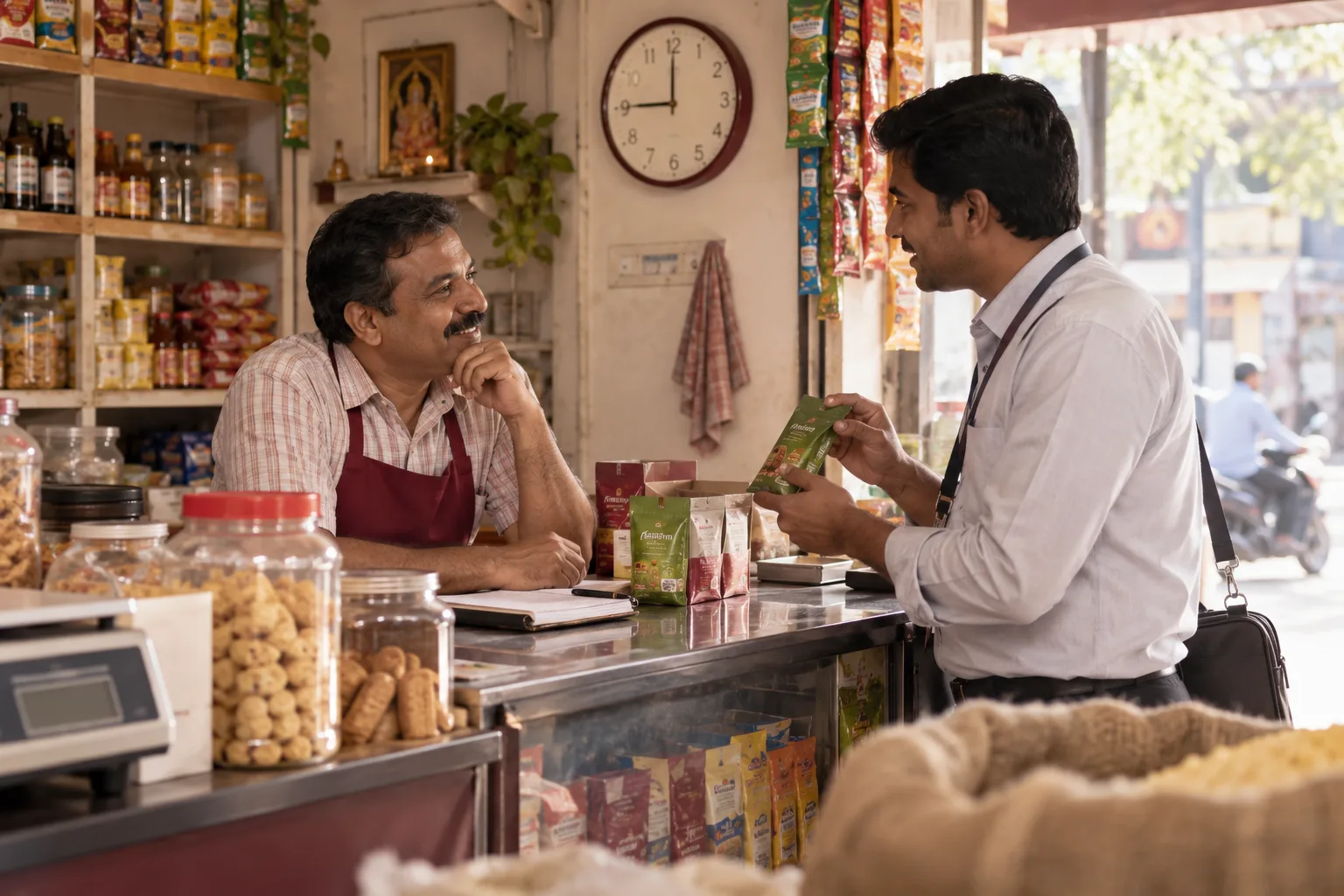 8 min read · 21 Sept 2026How to advertise to retail business ownersA shop owner cannot leave the counter from ten to nine. Reach them in the afternoon lull, through the distributor's salesman and on WhatsApp.
More for retailers
Related work to consider.
Closest to this: leads and follow-up
Also for retailers
Or start from the overview: sales and marketing for retailers.
Your next practical step
Tell us what you are trying to grow, and we will read it before we call.
Eight short steps, mostly taps. Skip anything you would rather answer on the call.