Retailers · Digital marketing
Spend the year on Maps and WhatsApp, and the bursts on the season.
Digital marketing for a shop is deciding how much goes into the Maps listing, the WhatsApp list from billing, Instagram and short advert bursts. GullySales sets what each one is for, given a market a few kilometres wide, and reports what it did to footfall.
Scope, fee, reporting and term are agreed in writing after we have read your brief and spoken to you.

What digital marketing means
Digital marketing is the combined work of search, social media, advertising and website channels running together rather than as separate projects with separate people. GullySales runs these as one connected system so a change in one channel, such as a new offer, is reflected everywhere at once.
Last updated 14 Nov 2026.
For retailers
Where it usually goes wrong, and what we would do.
“New shoppers and past shoppers need different channels”
Maps brings somebody who has never heard of the shop. WhatsApp brings back the family who bought school shoes in June. Neither does the other's job.
“The calendar is the shop's own year”
Festivals, the sale weeks, school reopening, the wedding season and the month a new range lands. Everything between should cost very little.
“A shop cannot post daily and should not try”
Two posts a week showing what actually arrived beat a schedule padded with greetings and quotations nobody reads.
“Your competitor is a shelf, not a website”
Most lost sales go to the store on the same road that had the size. Being visible on that road matters more than a digital strategy.
What we do
What we deliver for retailers.
The work available for this need. We agree the deliverables and responsibilities for your engagement in writing.
A plan naming what each channel is for
What Maps, WhatsApp, Instagram, the website and short advert bursts are each meant to bring, and which of them the shop should stop doing.
Result: Effort stops being spread evenly over things that do nothing.
A calendar built on the shop's season
Festival weeks, sale periods, school reopening and new stock arrivals, with what goes out on each channel and when.
Result: Everything is ready before the week that earns.
The listing and the WhatsApp list kept as the base
A current profile and a consented list from billing, working all year so the seasonal bursts have something to build on.
Result: The shop is found and remembered without constant spend.
A photography routine for new stock
Arrivals photographed the day they are unpacked, with prices and sizes noted, ready for WhatsApp and Instagram that evening.
Result: Shoppers hear about stock the week it lands.
A small website carrying the practical details
Categories, brands, hours, the exchange policy and a WhatsApp link on one page your staff can send to anybody.
Result: There is somewhere to point an advert and a message.
Footfall, enquiries and repeats reported
Calls, direction requests, WhatsApp reach, numbers captured and repeat purchases, set beside the figures taken before work starts.
Result: You can argue the next quarter's spend from evidence.
How the result is measured
- Enquiries across channels
- Cost per enquiry overall
- Channel mix by contribution
Recorded as a baseline before work starts, so every later report has an honest comparison.
Where to start for shops
Fix the listing and the billing counter before spending on festive offers.
- The Maps listing
- Correct the name, hours and festive timings, and add photographs of the shopfront and the shelves. Note the calls and direction requests the listing reports.
- A number taken at billing
- Ask each billing customer for a WhatsApp number and write what they bought beside it. That list is the base for every later message.
- A WhatsApp catalogue
- Put the items people ask for most, with prices, into the WhatsApp Business catalogue and answer enquiries from it. Tally how many catalogue enquiries end in a visit.
- One festive message to past buyers
- Write the Diwali or wedding-season offer and send it only to past buyers of that kind of item. Count how many came to the counter and mentioned it.
- Replies to old reviews
- Answer the unanswered reviews politely and fix any wrong detail they point to. Check the listing again after the next festive change of hours.
- What to leave until later
- Marketplace listings, frequent posting and paid reach can wait until the billing list and the listing are working.
Who it is for
This is written for these retailers.
- Apparel and footwear stores
- Electronics and appliance retailers
- Grocery and kirana stores
- Home decor and furnishing stores
- Jewellery and gifting retailers
- Multi-brand outlet stores
Before you decide
When this may not be the right fit.
- Your Maps listing is wrong or unclaimed, so any other channel would send shoppers to bad details.
- You have no one to answer WhatsApp and calls in store hours, and more channels would bring more unanswered messages.
- You expect one burst to build the year's footfall, though the base is the listing and the shopper list.
Before you decide
Agree the work. Know how to judge it.
Digital marketing for retailers: use these checks to prepare, choose the scope, and review what changes.
Bring the right evidence
Bring a recent won order and an enquiry that went nowhere. Trace how each buyer found you, what they asked, and who handled the next step. A channel list alone will not explain the difference.
Make the scope clear
Choose one offer and one buyer group first. Agree which part needs attention: being found, getting a useful enquiry, or turning an enquiry into an order. Separate recommendations from the work required to carry them out.
Check the work in use
A useful plan names the first change, its owner, the evidence behind it, and the number that will show whether it worked. Ask what has deliberately been left out and why.
Know when to change course
If your team cannot answer the enquiries it already receives, improve that handover before buying more traffic. If the offer itself is unclear, test it with buyers before adding channels.
These are discussion points, not a fixed package. GullySales confirms the deliverables, responsibilities, fee, and term in writing after reading your brief and speaking with you.
Before we start
What to have ready before the work starts.
The records, access and decisions this work needs from retailers. Anything missing is noted in the written scope, with who will supply it.
- Logins for every online account
- A list of the accounts the shop has, with the person who owns each login: Google, Instagram, Facebook, WhatsApp Business, the domain. A shared notebook page is fine. If an old agency or relative holds one, tell us now, because recovering access later holds up the whole base.
- Last year's sales by month
- Sales or bill counts by month from the billing system show when the store is full and when it is slack. A rough chart is enough. Without it, the calendar rests on memory, and spend may land in a quiet month.
- A shortlist of fast-moving lines
- Name the products that sell without persuasion and the ones that need a push. This tells us what the posts should show and what the broadcasts should carry. If left out, the plan treats a slow, expensive line the same as a bestseller.
- A person who owns the plan
- One person in the store must be our contact: the owner, a manager or a trusted senior. They approve posts and answer questions. Without them, approvals queue, new stock goes unposted and the calendar slips behind the shelf.
- Your budget for outside help
- Say how much, if anything, the shop can put into adverts and design, even as a range. We shape the plan to that figure and split it between channels. If you leave it open, the plan stays organic only and says so.
How it works
How the digital marketing work runs
The work itself, in order. How an engagement starts, from your brief to a written scope, is set out on our method page.
- 1
List what the shop already does online
We start with an inventory of everything the store has online today: the Maps listing, any Instagram handle, a WhatsApp number, a website, old adverts. You tell us who set each one up and who still has the password. We find out what is already working before anything new is proposed.
- 2
Name one purpose for each channel
With you at the table, we give each channel one job: the listing brings first-time shoppers in, the WhatsApp list brings known ones back, posts show new arrivals. You decide which jobs the shop can staff. A channel without a job and a person is left switched off.
- 3
Build the season into a calendar
We lay the shop's own year across a calendar: festive rushes, exam weeks, wedding months, clearance. You mark when fresh stock lands. Posts, broadcasts and adverts are placed against those dates, so effort follows the counter's rhythm and not a generic content plan.
- 4
Fix the listing and the list first
Before new posts, we correct the Maps details and set up the consent line at billing for the WhatsApp list. These two are the base, and every other channel points back to them. You check the hours, address and kinds of products on screen with us.
- 5
Agree the photo routine for new stock
New arrivals need pictures that look like your shelf. We agree who photographs them, where the light is good, and how the pictures reach us. You approve the first batch, and a rough phone shot taken the same day is preferred over a polished one taken later.
- 6
Read the counter against the plan
We set walk-ins, calls, direction requests and repeat shoppers beside the figures recorded before the work began. You see which channel earned its place and which gets less effort next season. No outcome is promised; the figures show what happened.
Proof
Published examples of our work.
Real clients and the work recorded for each engagement. These examples may cover related services or industries. They show the method, not a guaranteed result.
Bon Millette
- Situation
- A new food brand has to look trustworthy before anyone will try it, and Bon Millette had nothing online for a first-time buyer to weigh up.
- What we did
- A site that matches the food
- The story in a trust-building order
- Product sections with full disclosure
- A short path from reading to buying
- Result
- No numbers were recorded for this engagement. The work is described in full in the case study.
Also worked with
Chord Road Hospital · Curtain Label · Difesa Security Services · Felicity Inn · Hands On CSR · Implevista · Kambar Group · Kalessi · Kerur Pain Clinic · LL Trust · Lucky Deals · Natural Gases · NavaShakthi Souhardha · NewCom Logistics · Proton Technical Services · SB Engineering · Shakthi Foundation · Shakthi Group · Urbanest · Insyde Studio · Venkateshwara Laser Tech · Vivara Studios
Where this fits
Three pieces of sales work, in this order.
This work sits inside sales process design, at stage 0, foundation. The audit comes before it, and sales management keeps it running.
Step 1
Sales audit
Find where deals are being lost and what to fix first.
Start here if you cannot say where orders are lost.
Step 2 · you are here
Sales process design
One written way to sell, from first enquiry to repeat order.
Start here if every salesperson sells differently.
Step 3
Sales management
A target, a review routine and someone who owns the number.
Start here if the team has targets and no routine.
FAQ
Questions owners ask before they call.
Not here? More answers, or ask on WhatsApp.
Should we be on the marketplaces as well?
Who does this work in a shop with six staff?
How do we know a WhatsApp offer brought someone in?
Should we put money into Instagram ads or Google?
Should the shop run every channel at once?
How do we tell digital work from what the counter did?
How much does it cost?
How long is the contract?
How soon will we see results?
What do you need from us?
From the blog
Further reading for retailers.
 7 min read · 21 Sept 2026NRI jewellery advertisingAn NRI jewellery buyer is two customers: one flying in for a wedding, one paying from abroad for a mother who collects. Timing and payment differ.
 7 min read · 21 Sept 2026Local audience targeting strategyThree people are local to you: the one who lives near, the one who works near and the one searching near. The settings that reach each differ.
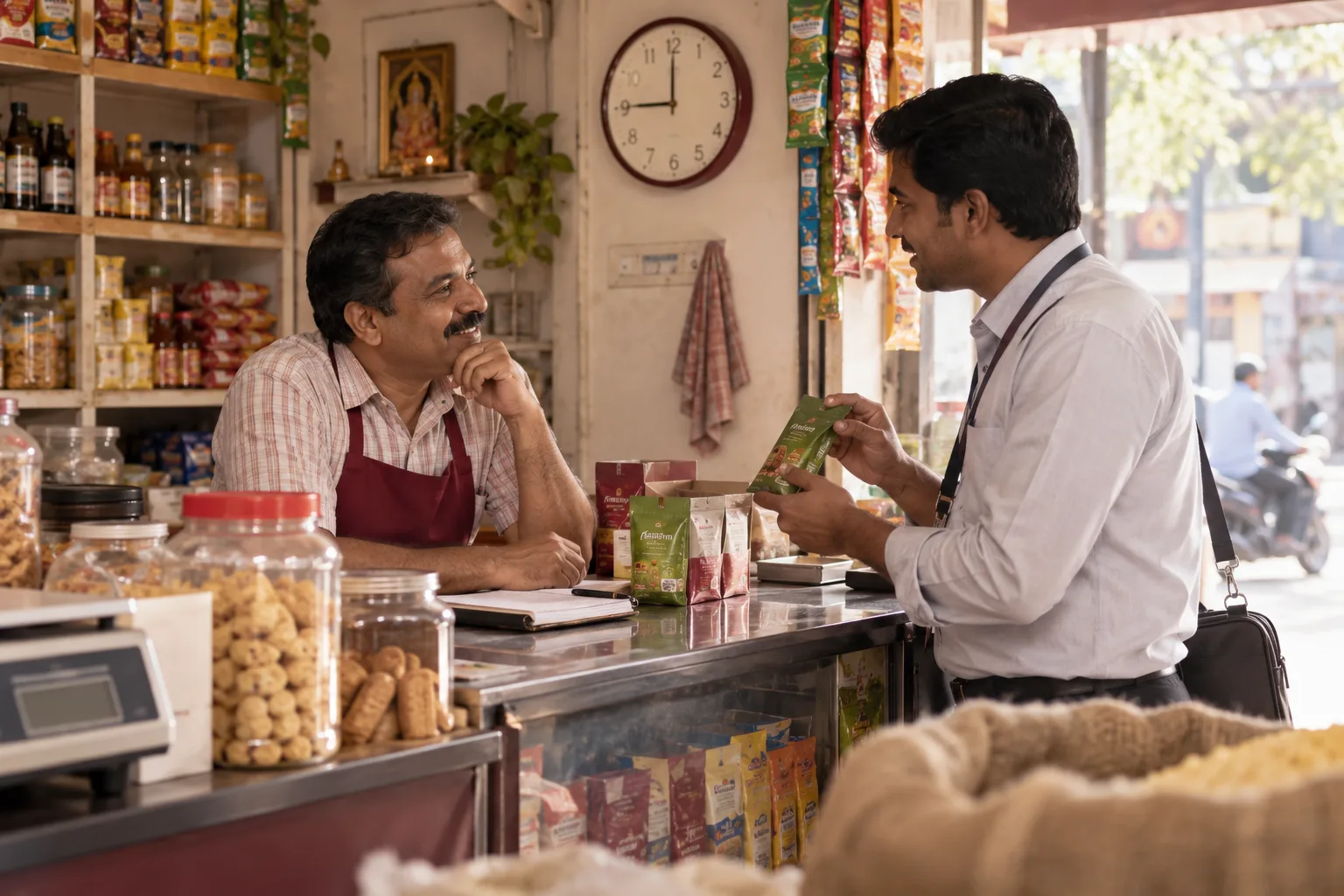 8 min read · 21 Sept 2026How to advertise to retail business ownersA shop owner cannot leave the counter from ten to nine. Reach them in the afternoon lull, through the distributor's salesman and on WhatsApp.
More for retailers
Related work to consider.
Closest to this: strategy and research
Also for retailers
Or start from the overview: sales and marketing for retailers.
Your next practical step
Tell us what you are trying to grow, and we will read it before we call.
Eight short steps, mostly taps. Skip anything you would rather answer on the call.