Retailers · Pay per click advertising
Advertise for the fortnight before the sale, not for the whole year.
Pay per click advertising for a shop is worth buying in short bursts, before a festival, a sale or the school season. GullySales sets the radius and the dates, keeps the online bargain hunters out of it, and counts what actually reached the counter.
Scope, fee, reporting and term are agreed in writing after we have read your brief and spoken to you.

What pay per click advertising means
Pay per click advertising (PPC) is paying a fee each time someone clicks your advert on Google or another platform. It puts you at the top of a search page immediately, instead of waiting for ranking to build. GullySales sets the targeting, writes the ad text and checks spend against enquiries received.
Also for retailers
- Direct mail postcard design for retailers
- Promotional calendar design for retailers
- Integrated campaign creative design for retailers
- Standee and event banner design for retailers
- Retail store signage design for retailers
- Multi-location media execution for retailers
- SEO for retailers
- Lead generation for retailers
Sales and marketing for retailers, the overview.
Last updated 14 Nov 2026.
For retailers
Where it usually goes wrong, and what we would do.
“Two kilometres is the whole market for most stores”
Nobody drives across the city for a shirt. The radius should match what a shopper will cross a signal for on a weekday evening.
“The burst beats the drip”
A small budget spread over twelve months is invisible. The same money spent in the ten days before Diwali moves footfall you can see at the counter.
“Price comparers click and never come”
A shopper standing in a rival store checking your price is a click you paid for. Adverts about stock and hours draw better than adverts about price.
“The result is a call or a route, not a sale”
Nothing gets bought online here, so an advert has to be judged on calls, direction requests and what the staff hear at billing.
What we do
What we deliver for retailers.
The work available for this need. We agree the deliverables and responsibilities for your engagement in writing.
Campaigns timed to the shop's own season
Adverts planned for the fortnight before Diwali, the sale weeks, school reopening and any local market event, and switched off between them.
Result: Money is spent when people are already buying.
A radius set to the road, not the city
Adverts limited to the neighbourhoods shoppers genuinely come from, including the office crowd if you sit near one.
Result: You stop paying for clicks from twenty kilometres away.
Adverts built on stock, hours and location
Copy naming the brands and sizes held, the festival timings and the landmark, with call and direction links inside the advert.
Result: The click becomes a visit rather than a price check.
Negative keywords for online and job searches
Online, coupon, discount code, wholesale, dealership and vacancy searches kept out of the store campaigns.
Result: The budget follows people who can walk in.
A rough way to trace footfall to the advert
A tracked number, one question asked at billing, and direction requests counted across the campaign days.
Result: You know what the burst brought through the door.
Spend and footfall reported after each burst
What the burst cost, the calls and routes it produced and what the counter recorded, compared with the same weeks before it ran.
Result: Next season's budget is set on what happened.
How the result is measured
- Cost per click
- Cost per enquiry
- Enquiries from paid search
Recorded as a baseline before work starts, so every later report has an honest comparison.
Searches to bid on and block
The searches worth paying for as a shop, and the ones to keep out.
- Product plus area, such as running shoes near Koramangala
- Bid, in a short burst. A person who names the product and the neighbourhood is ready to walk in. Name the brands and sizes you hold and show your opening hours inside the advert.
- Festival and sale searches, such as Diwali sale offers
- Bid in the fortnight before the festival and stop when it ends. Lead the advert with the dates and what is on offer in the store, not with the shop's name.
- Online price searches, such as coupon code or cheaper on Amazon
- Block. These searchers are comparing an online price and will not walk into a store. Do not try to out-argue a marketplace on a click you pay for.
- Wholesale, dealership and vacancy searches
- Block. They want to buy at trade rates, become a dealer or find a job, and none of them is a shopper. Add the words once and review what the search report shows.
- Where the click lands
- Send the click to your Maps listing or a one-screen page with the address, hours, a directions button and a WhatsApp number. A shopper who has to scroll for the shop address will not come.
- Counting a real enquiry
- Count a call or WhatsApp that asks whether an item is in stock, a request for directions, and a shopper who says at billing that they saw the advert. Keep a tick sheet at the counter.
Who it is for
This is written for these retailers.
- Apparel and footwear stores
- Electronics and appliance retailers
- Grocery and kirana stores
- Home decor and furnishing stores
- Jewellery and gifting retailers
- Multi-brand outlet stores
Before you decide
When this may not be the right fit.
- Your stock list changes daily and nobody checks it, so an advertisement could name an item the shop no longer has.
- You have no way to ask a walk-in how they heard of you, so the spend could not be traced to anyone who came through the door.
- The shop cannot take extra footfall during the season you plan to advertise, because staff are short at the counter.
Before you decide
Agree the work. Know how to judge it.
PPC for retailers: use these checks to prepare, choose the scope, and review what changes.
Bring the right evidence
Bring search-term reports, conversion definitions, and the sales outcome of past enquiries where available. Identify products, locations, and enquiries you cannot serve.
Make the scope clear
Choose the offer and landing page before setting a media budget. Agree who pays the platform, which actions count as conversions, and how unsuitable searches will be reviewed.
Check the work in use
Trace a test enquiry from the advert to the sales record. Review qualified enquiries and orders alongside spend, and separate duplicates or spam from genuine buyer demand.
Know when to change course
If the advert generates enquiries that do not fit, revise targeting and qualification before increasing spend. If suitable enquiries are lost after contact, work on the sales process.
These are discussion points, not a fixed package. GullySales confirms the deliverables, responsibilities, fee, and term in writing after reading your brief and speaking with you.
Before we start
What to have ready before the work starts.
The records, access and decisions this work needs from retailers. Anything missing is noted in the written scope, with who will supply it.
- A calendar of your busy weeks
- A simple list of the weeks that fill the store and the weeks that do not, with the reason for each, lets us place spend only where stock and staff can use it. Last year's festival dates and any planned sale are enough. Without this, spend spreads thinly and pays for clicks nobody can serve.
- The stock list for the burst
- Before each burst we need what will really be on the floor: lines, brands and the sizes or models in depth. A photograph of the shelf or a short list works. If it is missing, adverts could promise goods you do not hold, which turns a paid visit into a wasted one.
- Access to the Business Profile
- Owner or manager access to your Google Business Profile lets us connect call and direction data to the advert account. It also keeps the hours and address in the advert identical to the listing. Without it, advert extensions may show details that contradict Maps, and shoppers lose trust.
- A named person for the tally
- Someone at the counter must mark where each walk-in said they came from, and note the bills against a coupon word. One named person, with a printed sheet beside the billing machine, is enough. If nobody is named, we are left with clicks and no footfall, and the burst cannot be judged.
- A decision on the budget ceiling
- Only you can set the largest sum you are willing to spend on a burst and what you would stop at. We build the campaign inside that figure and agree who can raise it. Without a ceiling decided beforehand, the account is cautious and under-uses the season you chose.
How it works
How the pay per click advertising work runs
The work itself, in order. How an engagement starts, from your brief to a written scope, is set out on our method page.
- 1
Mark the festive and school calendar
We begin with the dates your counter is busiest and the weeks it is quiet: the festival rush, the school reopening, a clearance. You tell us which of those weeks have stock to support an advert. Spend is planned around those bursts only, and the gaps are left unpaid on purpose.
- 2
Draw the radius on a street map
With a map in front of us, you point out the roads, colonies and offices your shoppers actually come from, and the areas that are too far to travel for a purchase. We set the advert area to that shape rather than to the whole city. You decide how far a shopper realistically drives for your kind of goods.
- 3
List the searches to keep out
We write the words that bring the wrong click: online price comparisons, job vacancies, repair manuals, a brand's customer care number. You add the ones you recognise from past calls. This negative list is built before the first rupee is spent, and it grows when the search report shows new waste.
- 4
Write adverts from stock and hours
The adverts are drafted from what is on the floor this week, the opening hours and the exact location, each checked by you against the shelf. Nothing is advertised that the store cannot hand over on arrival. We also agree a counter phrase, so staff can ask a visitor how they heard of you.
- 5
Set the footfall tally before launch
Before any advert runs, we agree how visits will be counted: calls, direction requests, a coupon word at billing and the tally staff keep on a sheet. You nominate who keeps it. We record the usual footfall of the same weeks beforehand, so the burst has something to be read against.
- 6
Read each burst against the tally
When a burst ends, we put spend, clicks, calls, direction requests and the counter tally next to the figures recorded before it began, in your trade's terms of walk-ins and bills. You decide whether the next festival gets a burst, a smaller one or none, and nothing in this reading is a promise of footfall.
Proof
Published examples of our work.
Real clients and the work recorded for each engagement. These examples may cover related services or industries. They show the method, not a guaranteed result.
Bon Millette
- Situation
- A new food brand has to look trustworthy before anyone will try it, and Bon Millette had nothing online for a first-time buyer to weigh up.
- What we did
- A site that matches the food
- The story in a trust-building order
- Product sections with full disclosure
- A short path from reading to buying
- Result
- No numbers were recorded for this engagement. The work is described in full in the case study.
Also worked with
Chord Road Hospital · Curtain Label · Difesa Security Services · Felicity Inn · Hands On CSR · Implevista · Kambar Group · Kalessi · Kerur Pain Clinic · LL Trust · Lucky Deals · Natural Gases · NavaShakthi Souhardha · NewCom Logistics · Proton Technical Services · SB Engineering · Shakthi Foundation · Shakthi Group · Urbanest · Insyde Studio · Venkateshwara Laser Tech · Vivara Studios
Where this fits
Three pieces of sales work, in this order.
This work sits inside sales process design, at stage 1, prospecting and lead generation. The audit comes before it, and sales management keeps it running.
Step 1
Sales audit
Find where deals are being lost and what to fix first.
Start here if you cannot say where orders are lost.
Step 2 · you are here
Sales process design
One written way to sell, from first enquiry to repeat order.
Start here if every salesperson sells differently.
Step 3
Sales management
A target, a review routine and someone who owns the number.
Start here if the team has targets and no routine.
FAQ
Questions owners ask before they call.
Not here? More answers, or ask on WhatsApp.
Which weeks are actually worth paying for?
How do we know an advert brought somebody in?
Should a small shop bid on its own name?
Do we need a website before we run ads for the shop?
Can the shop run adverts only on weekends?
How much does it cost?
How long is the contract?
How soon will we see results?
Who will actually do the work?
What do you need from us?
From the blog
Further reading for retailers.
 7 min read · 21 Sept 2026NRI jewellery advertisingAn NRI jewellery buyer is two customers: one flying in for a wedding, one paying from abroad for a mother who collects. Timing and payment differ.
 7 min read · 21 Sept 2026Local audience targeting strategyThree people are local to you: the one who lives near, the one who works near and the one searching near. The settings that reach each differ.
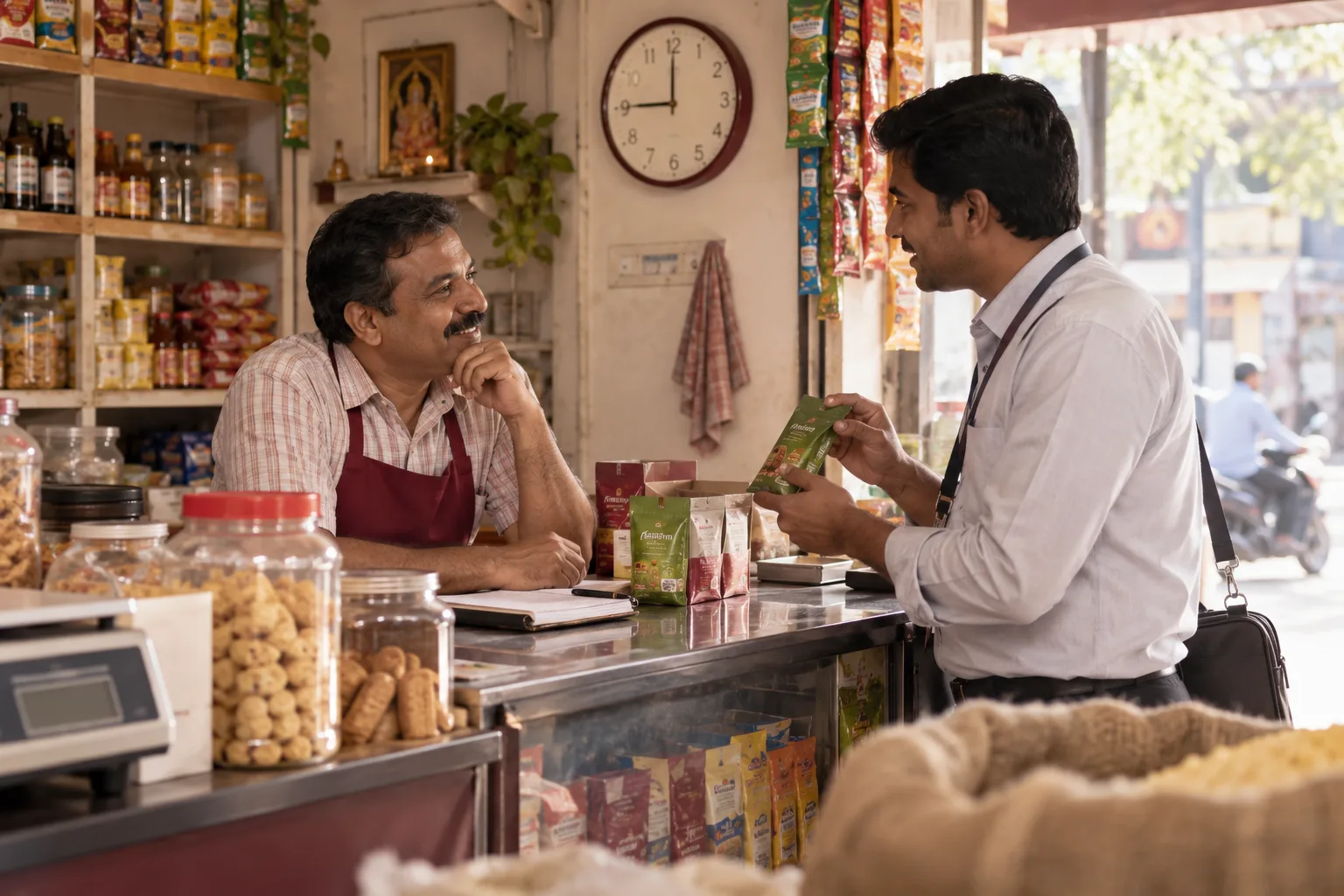 8 min read · 21 Sept 2026How to advertise to retail business ownersA shop owner cannot leave the counter from ten to nine. Reach them in the afternoon lull, through the distributor's salesman and on WhatsApp.
More for retailers
Related work to consider.
Closest to this: paid and media
Also for retailers
Or start from the overview: sales and marketing for retailers.
Your next practical step
Tell us what you are trying to grow, and we will read it before we call.
Eight short steps, mostly taps. Skip anything you would rather answer on the call.