Retailers · Multi-location media execution
Run one sale across every store and see what each placement did for its own counter.
Multi-location media execution for a retailer is the booking, artwork, delivery proof and enquiry record for one campaign that appears near several stores. GullySales keeps a register for each store, checks local details before print, and compares each store's billing and calls with the figures recorded before the campaign.
Scope, fee, reporting and term are agreed in writing after we have read your brief and spoken to you.
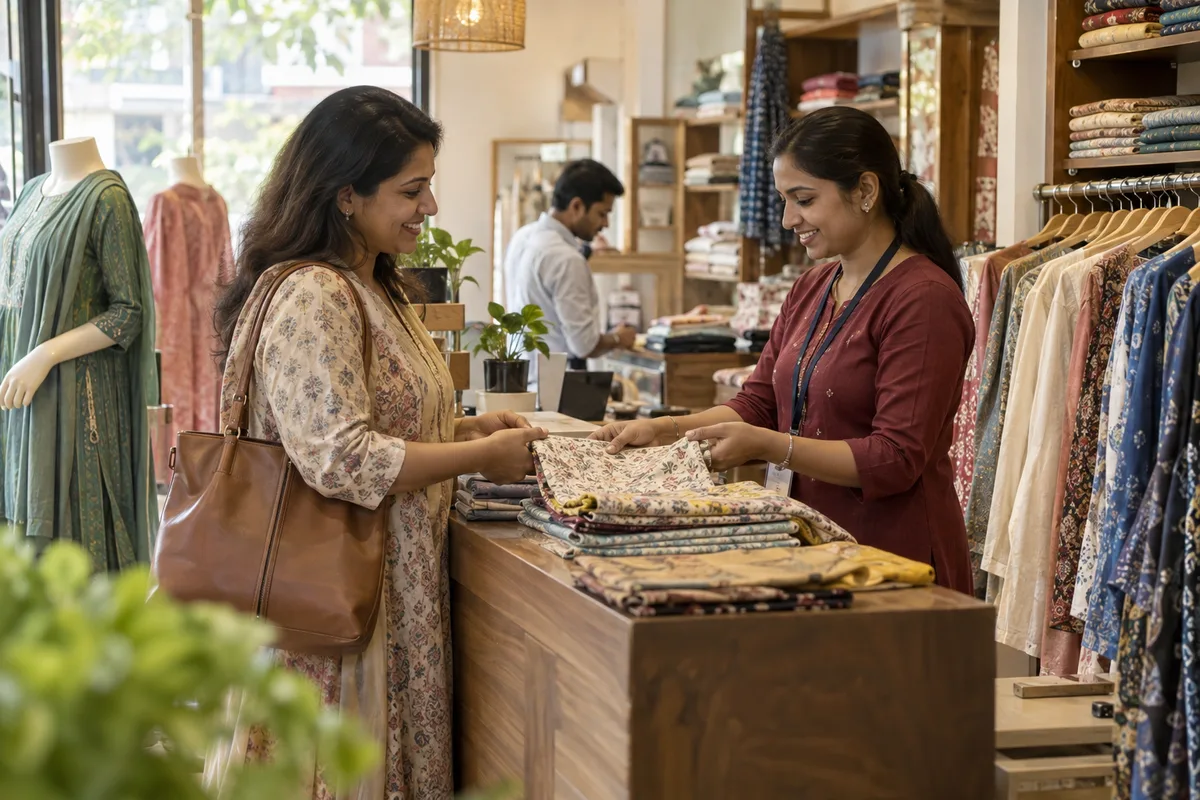
What multi-location media execution means
Multi-location media execution coordinates an advertising campaign across branches, dealer outlets, or franchise locations, with separate bookings and checks for each market. GullySales manages the location schedule, local artwork versions, media-owner coordination, and proof of delivery, then brings branch response and booking costs into a record your head office can check.
Last updated 14 Nov 2026.
For retailers
Where it usually goes wrong, and what we would do.
“A sale means different things at each counter”
The head office approves a festive offer, but the store in the market has one set of stock, the mall store has another, and the outskirts store has a third. A hoarding that names a product the shop floor ran out of last week sends a shopper home angry. Execution has to start from what each store holds and what its staff can serve, before the media is booked.
“Local media is bought one conversation at a time”
Newspaper inserts, pamphlet distribution, hoardings near a junction, auto branding and mall panels are sold by separate local owners, each with a rate, a specification and a deadline. The store manager rings one, the head office rings another, and nobody holds the full list. Overlapping bookings and missed deadlines come from this, not from a bad idea.
“Brand partners ask for proof of display”
Electronics, apparel and home brands that fund part of a retailer's advertising want dated photographs, the artwork used and the invoice before they release their share. A retailer without a store-by-store file spends weeks looking for these, and a claim made without them can be refused. Records kept as the work happens decide whether the funds are received.
“Response lands on a phone nobody checks”
A shopper sees the panel, calls the number printed on it and reaches a billing counter or a voicemail. A WhatsApp number printed for the whole chain goes to head office, which cannot say what the nearest store holds. Each placement needs a response route its own store staff actually watch, or the campaign's cost is spent and the result cannot be read.
What we do
What we deliver for retailers.
The work available for this need. We agree the deliverables and responsibilities for your engagement in writing.
Store and booking register
A shared sheet with one row for each store and placement: the media owner, the dates booked, the rate, the artwork version, the proof and the invoice. Head office reads the full campaign in one place, and each store manager sees only what concerns that store.
Result: Any placement can be matched to its booking and its invoice in one lookup.
Store-wise spend proposal
A proposed split of the campaign budget across stores, based on each store's catchment, its stock depth and the local media costs, not an equal share. The reasoning is written down so head office can accept, change or refuse it before any booking is made.
Result: Your approver signs a spend plan whose basis is written on the page.
Master artwork with local panels
One approved design with controlled local panels for the store address, a landmark, the local language, the store's opening hours and the response number. The store manager confirms the local details, and a fluent reader checks every language version before printing.
Result: No panel goes to print without its store's details confirmed.
Offer terms sheet
A one-page statement of what the sale covers, which products are excluded, how long it runs and what a shopper must show at billing. Store staff hold the same sheet the artwork was written from, so the answer at the counter matches the answer on the panel.
Result: A shopper quoting the panel is told the same terms by every store.
Delivery proof folder
Dated photographs, newspaper tear sheets, distribution confirmations and the media owner's invoice, filed against the register by store. Gaps are flagged as they appear, so a missing proof is chased while the media owner can still correct it.
Result: A partner brand's claim can be assembled from the folder without searching.
Store response log
A simple log kept by each store for calls, walk-ins mentioning the campaign and billed sales for the sale items, compared with the figures noted before the campaign. It records what store staff observed and does not claim the media caused each sale.
Result: Each store's response is read against its own starting figures.
How the result is measured
- Sites delivered against approved locations and booked dates
- Permission documents and dated proof received against booked sites
- Actual spend and unresolved invoice differences by branch
Recorded as a baseline before work starts, so every later report has an honest comparison.
Who it is for
This is written for these retailers.
- Apparel and footwear stores
- Electronics and appliance retailers
- Grocery and kirana stores
- Home decor and furnishing stores
- Jewellery and gifting retailers
- Multi-brand outlet stores
Before you decide
Agree the work. Know how to judge it.
Multi-location media execution for retailers: use these checks to prepare, choose the scope, and review what changes.
Bring the right evidence
State the buyer group, catchment, and dates that matter to the offer. Ask for the proposed inventory and available evidence about its audience, with the source and date shown.
Make the scope clear
Agree the exact placements, formats, booking period, and proof of delivery. Separate media charges from design, production, permissions, and installation where these apply.
Check the work in use
Compare delivery evidence with the agreed booking and record enquiries through a distinct response route where practical. Treat audience estimates separately from measured responses.
Know when to change course
Do not buy a placement only because it is discounted. If the location or audience does not fit the buyer, revisit the plan before committing production costs.
These are discussion points, not a fixed package. GullySales confirms the deliverables, responsibilities, fee, and term in writing after reading your brief and speaking with you.
Before we start
What to have ready before the work starts.
The records, access and decisions this work needs from retailers. Anything missing is noted in the written scope, with who will supply it.
- Store list with local contacts
- Each store's address, opening hours, manager and a phone or WhatsApp number that someone watches. Without it, panels carry the head office number and every shopper's question goes to a person who cannot answer it. We cannot confirm local details we have never seen.
- Sale items and stock position
- The products in the sale, what each store holds, and which stores cannot supply which items. This decides where media is worth buying. A campaign planned without it advertises items some counters do not have, and the complaint falls on the store manager.
- Brand partner funding terms
- Any written arrangement under which a brand pays part of the cost, with the proof they require. If these are missing, the work can still run, but the proof folder is built to a guess and the partner may refuse the claim afterwards.
- Approved logos and master design files
- Current logo files, brand colours and any design the head office has already approved. Old or low-resolution files produce blurred hoardings that cannot be reprinted cheaply, and a design change after booking costs a media owner's revision fee.
- Pre-campaign billing figures
- Calls, walk-ins and billed sales for the sale items in a comparable stretch before the campaign, kept store by store. Without them the result cannot be read, because nobody can say what the stores were already doing.
How it works
How the multi-location media execution work runs
The work itself, in order. How an engagement starts, from your brief to a written scope, is set out on our method page.
- 1
Store list and campaign owner
You confirm which stores take part and name one person at head office who approves artwork, spend and invoices. Each store names its manager as the local contact. We ask for current stock, staffing and billing figures for the sale items so the plan starts from what each counter can serve.
- 2
Local media options by store
For each store we gather options near its catchment: newspaper inserts, hoardings, mall panels, pamphlet teams, vehicle branding or local radio. Each option is listed with the media owner, the specification and what the owner supplied. You choose; we do not book anything on assumptions about availability.
- 3
Spend and artwork approval
Head office approves the store-wise spend, the master artwork and the offer terms. Local panels go to the store managers for checking. Where the sale involves a brand partner's products, their approval of logos and claims is collected before print, through the person who deals with them.
- 4
Booking and print release
Bookings are confirmed in writing with each media owner, and the media owner's permission papers for any outdoor site are requested and filed. A site without them is held back. Artwork files go out only after the store's local details have been confirmed by its manager.
- 5
Checking delivery as it happens
Proof is collected against the register while the placements are live: photographs of the panel, tear sheets, confirmation from the distribution team. A late or wrong placement is raised with the media owner the same day it is noticed, and the exception is recorded beside the booking.
- 6
Reading each store against its baseline
After the sale closes, each store's calls, walk-ins and billed sales are read against the figures recorded before it began, with the spend, proof and exceptions beside them. The reading shows which placements to repeat, change or drop, and which stores had a stock or staffing problem that media could not fix.
Proof
Published examples of our work.
Real clients and the work recorded for each engagement. These examples may cover related services or industries. They show the method, not a guaranteed result.
Bon Millette
- Situation
- A new food brand has to look trustworthy before anyone will try it, and Bon Millette had nothing online for a first-time buyer to weigh up.
- What we did
- A site that matches the food
- The story in a trust-building order
- Product sections with full disclosure
- A short path from reading to buying
- Result
- No numbers were recorded for this engagement. The work is described in full in the case study.
Also worked with
Chord Road Hospital · Curtain Label · Difesa Security Services · Felicity Inn · Hands On CSR · Implevista · Kambar Group · Kalessi · Kerur Pain Clinic · LL Trust · Lucky Deals · Natural Gases · NavaShakthi Souhardha · NewCom Logistics · Proton Technical Services · SB Engineering · Shakthi Foundation · Shakthi Group · Urbanest · Insyde Studio · Venkateshwara Laser Tech · Vivara Studios
Where this fits
Three pieces of sales work, in this order.
This work sits inside sales process design, at stage 1, prospecting and lead generation. The audit comes before it, and sales management keeps it running.
Step 1
Sales audit
Find where deals are being lost and what to fix first.
Start here if you cannot say where orders are lost.
Step 2 · you are here
Sales process design
One written way to sell, from first enquiry to repeat order.
Start here if every salesperson sells differently.
Step 3
Sales management
A target, a review routine and someone who owns the number.
Start here if the team has targets and no routine.
FAQ
Questions owners ask before they call.
Not here? More answers, or ask on WhatsApp.
Do you book the media ourselves or do we?
Can the spend be split equally between stores?
How do we know a hoarding actually went up?
Will you prove the media caused our sales?
What if one store cannot serve the sale items?
Do regulated products need special handling?
How much does it cost?
How long is the contract?
How soon will we see results?
Who will actually do the work?
From the blog
Further reading for retailers.
 7 min read · 20 Jan 2026How to enter a new cityA new city fails on a phone number from head office, a name nobody knows, and a promise the local rival has kept for twenty years.
 7 min read · 21 Sept 2026NRI jewellery advertisingAn NRI jewellery buyer is two customers: one flying in for a wedding, one paying from abroad for a mother who collects. Timing and payment differ.
 7 min read · 21 Sept 2026Local audience targeting strategyThree people are local to you: the one who lives near, the one who works near and the one searching near. The settings that reach each differ.
More for retailers
Related work to consider.
Closest to this: paid and media
Also for retailers
Or start from the overview: sales and marketing for retailers.
Your next practical step
Tell us what you are trying to grow, and we will read it before we call.
Eight short steps, mostly taps. Skip anything you would rather answer on the call.