Retailers · Standee and event banner design
A standee at the shop door gets one glance to say what the sale is.
A standee is the tall freestanding board, and an event banner is the wide printed sheet, that a retailer puts at a shop door, a mall kiosk or a trade stall to announce a sale, an opening or a launch. GullySales designs the artwork and the print-ready files from the offer and the words the owner supplies, drawn for the actual spot where the board will stand.
Scope, fee, reporting and term are agreed in writing after we have read your brief and spoken to you.
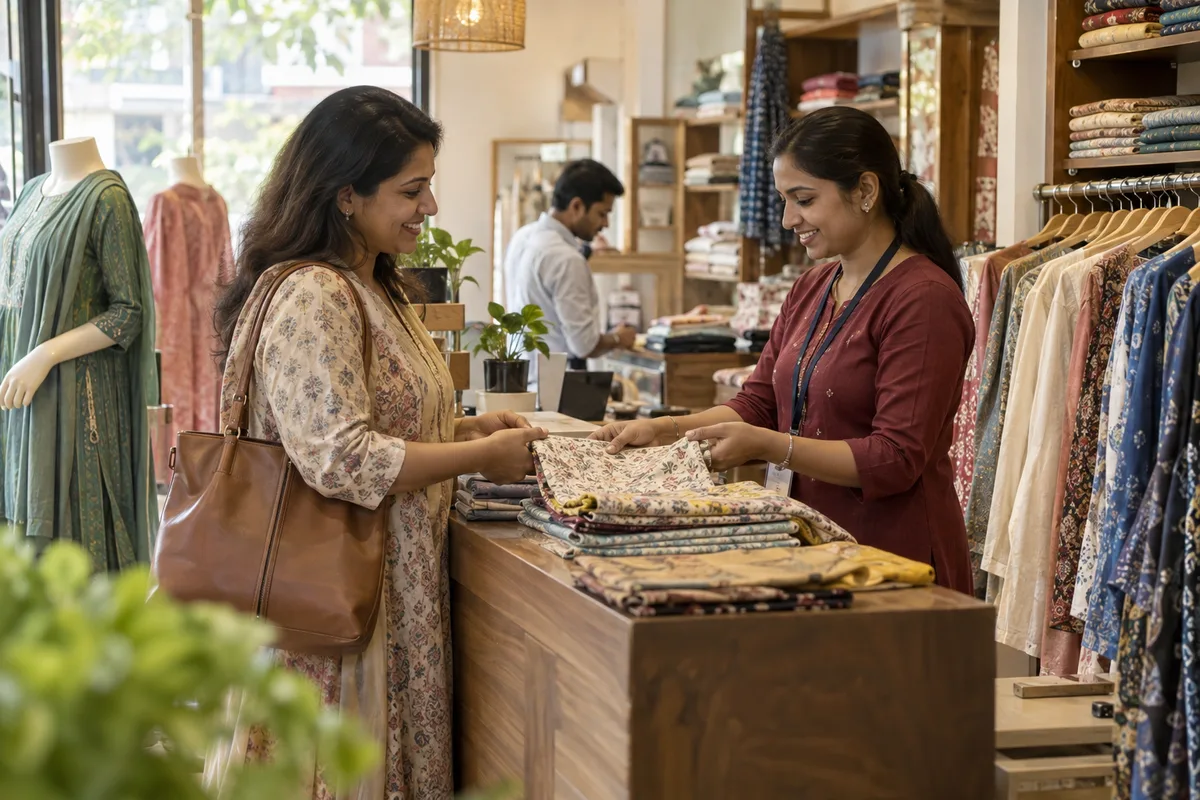
What standee and event banner design means
A standee is the tall freestanding board and an event banner is the wide printed sheet that hangs or stands in a lobby, a hall or a stall, and both are read while people walk past. GullySales designs the artwork for each one and hands over layout, colour and print-ready files, using words you supply.
Last updated 14 Nov 2026.
For retailers
Where it usually goes wrong, and what we would do.
“The board is read at walking pace”
A shopper passing a kiosk or a pavement-facing door reads a standee while carrying bags, steering a trolley or talking to a companion. One offer in large type, one image and one next step fit that glance. A list of brands, three offers and a paragraph about the store do not, and the board turns into decoration that nobody remembers.
“The offer changes but the board stays”
A festive sale, an exchange fortnight, a clearance of last season's stock and a new-arrival week all need a board at the door. Built from scratch each time, the shop's look drifts. Reused with a sticker over the old line, the offer is hidden. A fixed frame with a replaceable offer panel keeps the shop recognisable and the message current.
“Brand-supplied standees do not say which shop this is”
Multi-brand stores receive standees from the brands they stock, each in its own colours and lettering. Lined up at the entrance they read as a row of other companies' adverts, and the shop's own name appears nowhere. A board of your own tells the shopper which store this is before they read a single brand.
“Where it stands decides what is safe to use”
A standee behind the billing counter loses its lower third. One beside a glass door catches glare. A banner hung from a mall railing is seen from below and at an angle. The artwork has to be drawn for the real spot, with the offer, the QR code and the shop name in the part that stays visible. Placement rules belong to the landlord or the mall, so check with them.
What we do
What we deliver for retailers.
The work available for this need. We agree the deliverables and responsibilities for your engagement in writing.
Offer-led standee artwork
One roll-up standee layout built around a single offer or announcement: the headline, one image or product group, the shop name and one action. Type sizes are set for reading from a few steps away, and the empty space is planned rather than left over.
Result: The offer can be read from the shop door, which you can test by standing there.
Event banner for hall, kiosk or stall
A wide banner sized for the structure it hangs on or stands behind, with the shop name and the offer placed where passers-by look first. The same message is redrawn for the width instead of being stretched from the standee.
Result: The banner can be checked against the measured frame or railing before it goes to print.
Reusable frame with a changeable offer panel
A fixed part carrying the logo, colours and shop name, and a separate panel for the current offer. When the next sale comes, only the panel is redesigned, and the printer reprints only that part where the hardware allows it.
Result: A new offer can be dropped in without redrawing the shop's brand elements.
QR and contact block
A scannable code that opens the shop's Google Maps listing or its WhatsApp number, with the code size and clear border set for the distance a shopper really stands at. We test it on more than one phone before the file is released.
Result: The code scans from the spot you marked on the floor at the shop.
Print-ready files and a printer sheet
Files at the size, bleed and resolution your printer's own specification asks for, with colour mode set and fonts converted to outlines. A one-page note tells the printer the material, the finish and the proof expected before the full run.
Result: Your printer accepts the files without asking for a resupply.
Matching set for door, counter and invitation
A flat board for the door, a counter-top version and a small invitation image for WhatsApp, all built from the same layout so an opening or a sale reads as one campaign instead of three unrelated pieces.
Result: The three pieces laid side by side look like one campaign.
How the result is measured
- Visitors at the stall or the lobby who mention the board's message when asked how they heard of you
- Enquiries that name the offer or service shown on the board
- Forms, QR code scans or calls traced to the board's contact line
Recorded as a baseline before work starts, so every later report has an honest comparison.
Who it is for
This is written for these retailers.
- Apparel and footwear stores
- Electronics and appliance retailers
- Grocery and kirana stores
- Home decor and furnishing stores
- Jewellery and gifting retailers
- Multi-brand outlet stores
Before you decide
Agree the work. Know how to judge it.
Standee and event banner design for retailers: use these checks to prepare, choose the scope, and review what changes.
Bring the right evidence
Name the buyers you want to meet and the reason for them to speak with you. Bring a product or service story that can lead to a useful next conversation after the event.
Make the scope clear
Agree the event activity, demonstration material, enquiry capture, and follow-up responsibilities. Separate venue or sponsorship spend from production and sales preparation.
Check the work in use
Review the conversations that had a recorded need and agreed next step. Track them through proposals and orders instead of treating badge scans as qualified opportunities.
Know when to change course
If nobody can follow up after the event, reduce the activity to what the team can handle. A full contact list with no next action is not a sales pipeline.
These are discussion points, not a fixed package. GullySales confirms the deliverables, responsibilities, fee, and term in writing after reading your brief and speaking with you.
Before we start
What to have ready before the work starts.
The records, access and decisions this work needs from retailers. Anything missing is noted in the written scope, with who will supply it.
- Photographs and measurements of the spot
- The width of the doorway, the height of the ceiling, the position of the counter and the glare at the entrance all shape the artwork. When these are missing, the board is drawn for an ideal wall, and the first day at the shop shows what was hidden.
- The offer with dates and conditions
- The artwork can carry only what you have decided. Dates, exchange terms and any limit on stock must be settled before layout, because a late change to a printed board means a reprint. When a board carries several conditions, we ask which one a shopper must see first.
- Logo files and brand colours
- We need the logo as a vector file or the largest version you hold, and the colour values you use on bills and bags. A small logo from a social profile prints rough at standee size, and a colour matched by eye prints differently from the shop front.
- Product photographs you own
- Pictures taken in the shop, or supplied by the brand with permission to use them, give the board its one image. Images pulled from a marketplace or a search result may belong to someone else and print poorly. Without any, we plan a type-led board.
- The printer's specification and mall rules
- Your printer states the size, bleed and file type, and a mall or landlord may limit where a standee can stand or what a banner can hang from. Missing either, the files are built to a guess, and a rejection arrives at the last moment before the event.
How it works
How the standee and event banner design work runs
The work itself, in order. How an engagement starts, from your brief to a written scope, is set out on our method page.
- 1
Photographs of the door and floor
We start with photographs and measurements of the shop entrance, the kiosk or the trade stall where the board will stand, and the distance a shopper passes from. Without them the board is drawn for a screen and then meets a pillar, a glass glare or a counter that hides the lower half.
- 2
The offer and its small print
You tell us the single thing the board must say, the dates it runs for and any condition that must appear. We separate the line a passer-by reads from the line a buyer reads at the counter, and we ask you to cut the offer down to one idea if it holds three.
- 3
Three layouts at standee scale
We sketch three layouts at the real proportions of a roll-up standee or a banner, each placing the offer, the image and the shop name differently. You choose one or combine two. Each is shown small on a phone and large on a wall, because the board is seen at both.
- 4
A proof read from six paces
The chosen layout is printed at reduced size on a sheet and pinned up, then checked from the distance a shopper passes at. If the offer cannot be read, the type grows and something else leaves the board. Colour is checked against a printed swatch, not only a screen.
- 5
Files for the printer and stand
We prepare the files to your printer's specification and mark the safe zone for the stand hardware, the bottom pocket of a roll-up and the grommet edge of a banner. A note lists the material and finish. Printing and the stand itself stay with your printer.
- 6
Reading the board against billing
After the board is up, we look at the figures you recorded before the work began: counter enquiries about the offer, numbers taken at billing, scans of the QR code. We report what the figures show and say plainly what a board alone cannot explain.
Proof
Published examples of our work.
Real clients and the work recorded for each engagement. These examples may cover related services or industries. They show the method, not a guaranteed result.
Bon Millette
- Situation
- A new food brand has to look trustworthy before anyone will try it, and Bon Millette had nothing online for a first-time buyer to weigh up.
- What we did
- A site that matches the food
- The story in a trust-building order
- Product sections with full disclosure
- A short path from reading to buying
- Result
- No numbers were recorded for this engagement. The work is described in full in the case study.
Also worked with
Chord Road Hospital · Curtain Label · Difesa Security Services · Felicity Inn · Hands On CSR · Implevista · Kambar Group · Kalessi · Kerur Pain Clinic · LL Trust · Lucky Deals · Natural Gases · NavaShakthi Souhardha · NewCom Logistics · Proton Technical Services · SB Engineering · Shakthi Foundation · Shakthi Group · Urbanest · Insyde Studio · Venkateshwara Laser Tech · Vivara Studios
Where this fits
Three pieces of sales work, in this order.
This work sits inside sales process design, at stage 1, prospecting and lead generation. The audit comes before it, and sales management keeps it running.
Step 1
Sales audit
Find where deals are being lost and what to fix first.
Start here if you cannot say where orders are lost.
Step 2 · you are here
Sales process design
One written way to sell, from first enquiry to repeat order.
Start here if every salesperson sells differently.
Step 3
Sales management
A target, a review routine and someone who owns the number.
Start here if the team has targets and no routine.
FAQ
Questions owners ask before they call.
Not here? More answers, or ask on WhatsApp.
How much text should a standee for a shop carry?
Can one standee design serve both a sale and a store opening?
Do you print the standee and supply the stand?
Should a retailer put a QR code on a standee?
What if the brands we stock send their own standees?
Who writes the words on the board?
How long is the contract?
How soon will we see results?
Who will actually do the work?
What do you need from us?
From the blog
Further reading for retailers.
 7 min read · 21 Sept 2026NRI jewellery advertisingAn NRI jewellery buyer is two customers: one flying in for a wedding, one paying from abroad for a mother who collects. Timing and payment differ.
 7 min read · 21 Sept 2026Local audience targeting strategyThree people are local to you: the one who lives near, the one who works near and the one searching near. The settings that reach each differ.
 8 min read · 21 Sept 2026How to advertise to retail business ownersA shop owner cannot leave the counter from ten to nine. Reach them in the afternoon lull, through the distributor's salesman and on WhatsApp.
More for retailers
Related work to consider.
Closest to this: paid and media
Also for retailers
Or start from the overview: sales and marketing for retailers.
Your next practical step
Tell us what you are trying to grow, and we will read it before we call.
Eight short steps, mostly taps. Skip anything you would rather answer on the call.