Retailers · Local SEO
Win the near-me search that happens while a shopper is already out.
Local SEO for a shop is the near-me result that decides which of the stores on a road somebody walks into. GullySales completes the Business Profile with the categories, photographs and hours a shopper checks, keeps festival timings correct and works the reviews sitting beside them.
Scope, fee, reporting and term are agreed in writing after we have read your brief and spoken to you.
What local SEO means
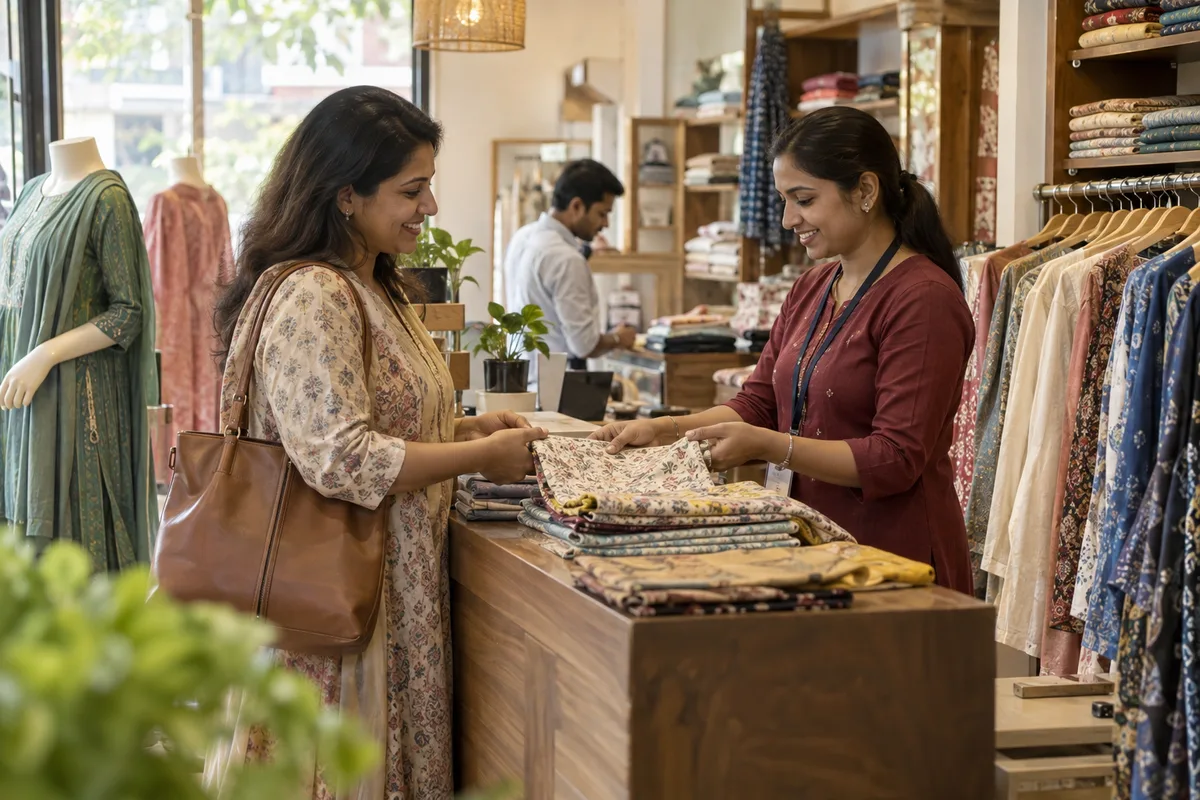
Local SEO is the work of making your business show up for searches that name your town or locality, such as a service plus an area name. GullySales sets up locality pages, local citations and map listings so nearby customers find you before a competitor across town.
Last updated 14 Nov 2026.
For retailers
Where it usually goes wrong, and what we would do.
“The search happens on the road, not at home”
Somebody already out with an hour to spare is choosing between two shops on a phone. Whoever looks open, stocked and well rated gets them.
“The shopfront photograph is how they recognise you”
A shopper walking down the road matches the photograph to the board. An interior shot with no shopfront makes them walk straight past.
“Festival hours are the point of the listing”
The evenings before Diwali and Rakhi are when a shop earns, and they are also when the timings on the listing are most likely to be wrong.
“A shop in a mall needs a floor and a landmark”
Level two, near the escalator, past the food court. Without that, people give up inside a building they do not know.
What we do
What we deliver for retailers.
The work available for this need. We agree the deliverables and responsibilities for your engagement in writing.
A complete profile with the right categories
Primary and secondary categories, the brands held, products listed, and services such as alterations, exchange or home delivery.
Result: The shop appears for what it actually sells.
Photographs of the shopfront, shelves and counter
The board seen from the road, the inside as it looks today, the parking and the billing counter, refreshed whenever the store changes.
Result: A shopper recognises the place and walks in.
Hours, festival timings and the weekly off
Regular hours, extended festive evenings, holidays and any early closing entered before the day rather than after it.
Result: Nobody arrives to find the shutter down.
Posts when stock and offers change
Short posts for new arrivals, sale dates and festival timings, put up in the week they matter and not afterwards.
Result: The listing shows a shop that is open and trading.
Directions that work inside a mall or market
Floor, landmark, nearest entrance and parking written into the profile, with the map pin checked on the ground.
Result: Shoppers find the door without ringing you.
Visibility and actions reported
How many searches showed the shop, and the calls, direction requests and website taps that followed, against the figures taken before work starts.
Result: You can see whether the listing is producing visits.
How the result is measured
- Map pack ranking
- Local search visibility
- Enquiries by locality
Recorded as a baseline before work starts, so every later report has an honest comparison.
What Google weighs here
How a shopper who is already out finds a store nearby, and what to fix first.
- Primary category
- Choose the most specific category for your biggest line, such as Clothing store, Electronics store or Jewellery shop. Add up to a few secondary categories for lines you stock in depth, not everything on the shelf.
- Pin on the shop door
- Check the pin against your shopfront on the satellite view. In a market or mall, add the floor, the shop number and the nearest landmark, and a clear photograph of the entrance board.
- Products on the profile
- Add your best-selling products with photographs, names and a starting price only where it is stable. A shopper searching for a thing then sees it before walking in. Update when stock goes.
- Special hours
- Set holiday and festival hours before each festival, and the day you are shut. A wrong closing time shown on a Diwali evening costs sales and brings a review that outlasts the festival.
- Mall and market directories
- Check the mall's own store directory, Justdial and Sulekha for the same name, floor and phone. A mall listing with last year's shop number sends shoppers to the wrong floor.
Who it is for
This is written for these retailers.
- Apparel and footwear stores
- Electronics and appliance retailers
- Grocery and kirana stores
- Home decor and furnishing stores
- Jewellery and gifting retailers
- Multi-brand outlet stores
Before you decide
When this may not be the right fit.
- The shop moves or changes name soon, and a profile built now would need rebuilding with its history lost.
- You do not want to publish the shop's closing day and festival hours, which a shopper on the road needs.
- You have no photographs of the shopfront, shelves or counter, and a profile without them looks abandoned.
Before you decide
Agree the work. Know how to judge it.
Local SEO for retailers: use these checks to prepare, choose the scope, and review what changes.
Bring the right evidence
Confirm the real business address, service area, contact details, and who controls the business listings. Keep examples of calls that came from the wrong location or asked for a service you do not provide.
Make the scope clear
Choose the locations you actually serve and the information each needs. Agree who approves listing changes, responds to enquiries, and keeps opening hours accurate.
Check the work in use
Check the journey from a local search to a call or enquiry on a phone. The address, service area, and description should agree across your website and listings.
Know when to change course
Do not create an office claim for a place where you only serve customers remotely. Clear service coverage is more useful than a misleading local presence.
These are discussion points, not a fixed package. GullySales confirms the deliverables, responsibilities, fee, and term in writing after reading your brief and speaking with you.
Before we start
What to have ready before the work starts.
The records, access and decisions this work needs from retailers. Anything missing is noted in the written scope, with who will supply it.
- Owner access to the Business Profile
- We need you listed as owner, or the verified manager, on the profile. If the listing is claimed by someone else or unverified, claiming it comes first, and some edits wait until the verification step is complete. Share the email linked to the listing, because recovery codes are sent there and an unreachable address delays every change.
- Exact hours including festival changes
- Write out the real opening and closing times, the day the shop closes, lunch closure if any, and the festival days you open or shut. Wrong hours send shoppers to a locked door and invite one-star reviews. Without them we leave the existing times and flag the risk.
- A route description from the road
- Describe how a stranger finds the shop: the nearest landmark, the floor in a mall, the lane in a market. A short note from the staff is enough. It feeds the listing's directions and the first post. Missing it, shoppers keep calling for directions.
- Recent photographs of stock and shelves
- Fifteen or so honest phone photographs taken in daylight, covering the front, the aisles and the counter, will do. We choose from them for the listing. If none exist, a short photo walk is added to the plan, and the listing stays plain until it is done. Include a picture of the board with the shop number visible, since shoppers match that to what Maps shows.
How it works
How the local SEO work runs
The work itself, in order. How an engagement starts, from your brief to a written scope, is set out on our method page.
- 1
Choose which branch is looked at first
For a chain or a store with a second outlet, we choose together which address gets the first attention, the one with the heaviest walk-in traffic or the weakest listing. You tell us which branch carries the brand. The first listing becomes the pattern the others follow.
- 2
Check the listing against the signboard
We compare the Business Profile with the signboard, the carry bag and the bill: name, address, floor, landmark, phone, opening hours. You sign off the correct version. Any gap between the board and the listing is settled in your favour, and a duplicate or old listing is flagged. We also look for second listings, such as an old address or a marketplace entry, that could send a shopper to the wrong door.
- 3
Search the neighbourhood the way a shopper does
On a phone, standing in the market, we search for what you sell with near me and the locality name, and note which stores appear and what their listings show. You see where you are absent. This shows which products and photos the listing should lead with. We screenshot the results so you can see the same view later and judge whether the profile changed what a nearby shopper sees.
- 4
Photograph the shop and plan the posts
A photo walk covers the shopfront, the main shelves, the counter and the entry from the road. You choose the products to feature. We write the first posts around current stock and festival timings, and you approve them before they appear on the profile.
- 5
Read profile actions against walk-ins
We take the calls, direction requests and views from the profile and put them beside the footfall and call figures recorded earlier. You tell us whether staff noticed more people mention Maps. The next change to products, photos or posts follows the figures, and no ranking is promised.
Proof
Published examples of our work.
Real clients and the work recorded for each engagement. These examples may cover related services or industries. They show the method, not a guaranteed result.
Bon Millette
- Situation
- A new food brand has to look trustworthy before anyone will try it, and Bon Millette had nothing online for a first-time buyer to weigh up.
- What we did
- A site that matches the food
- The story in a trust-building order
- Product sections with full disclosure
- A short path from reading to buying
- Result
- No numbers were recorded for this engagement. The work is described in full in the case study.
Also worked with
Chord Road Hospital · Curtain Label · Difesa Security Services · Felicity Inn · Hands On CSR · Implevista · Kambar Group · Kalessi · Kerur Pain Clinic · LL Trust · Lucky Deals · Natural Gases · NavaShakthi Souhardha · NewCom Logistics · Proton Technical Services · SB Engineering · Shakthi Foundation · Shakthi Group · Urbanest · Insyde Studio · Venkateshwara Laser Tech · Vivara Studios
Where this fits
Three pieces of sales work, in this order.
This work sits inside sales process design, at stage 1, prospecting and lead generation. The audit comes before it, and sales management keeps it running.
Step 1
Sales audit
Find where deals are being lost and what to fix first.
Start here if you cannot say where orders are lost.
Step 2 · you are here
Sales process design
One written way to sell, from first enquiry to repeat order.
Start here if every salesperson sells differently.
Step 3
Sales management
A target, a review routine and someone who owns the number.
Start here if the team has targets and no routine.
FAQ
Questions owners ask before they call.
Not here? More answers, or ask on WhatsApp.
Our pin is in the wrong place on the map.
We have two branches. Do they need separate listings?
Can we show products on Maps if we do not sell online?
Somebody reported our shop as closed. How do we fix it?
Do we need a separate listing for each counter in a mall?
Can the listing show prices?
How long is the contract?
How soon will we see results?
Who will actually do the work?
What do you need from us?
From the blog
Further reading for retailers.
 7 min read · 21 Sept 2026Local audience targeting strategyThree people are local to you: the one who lives near, the one who works near and the one searching near. The settings that reach each differ.
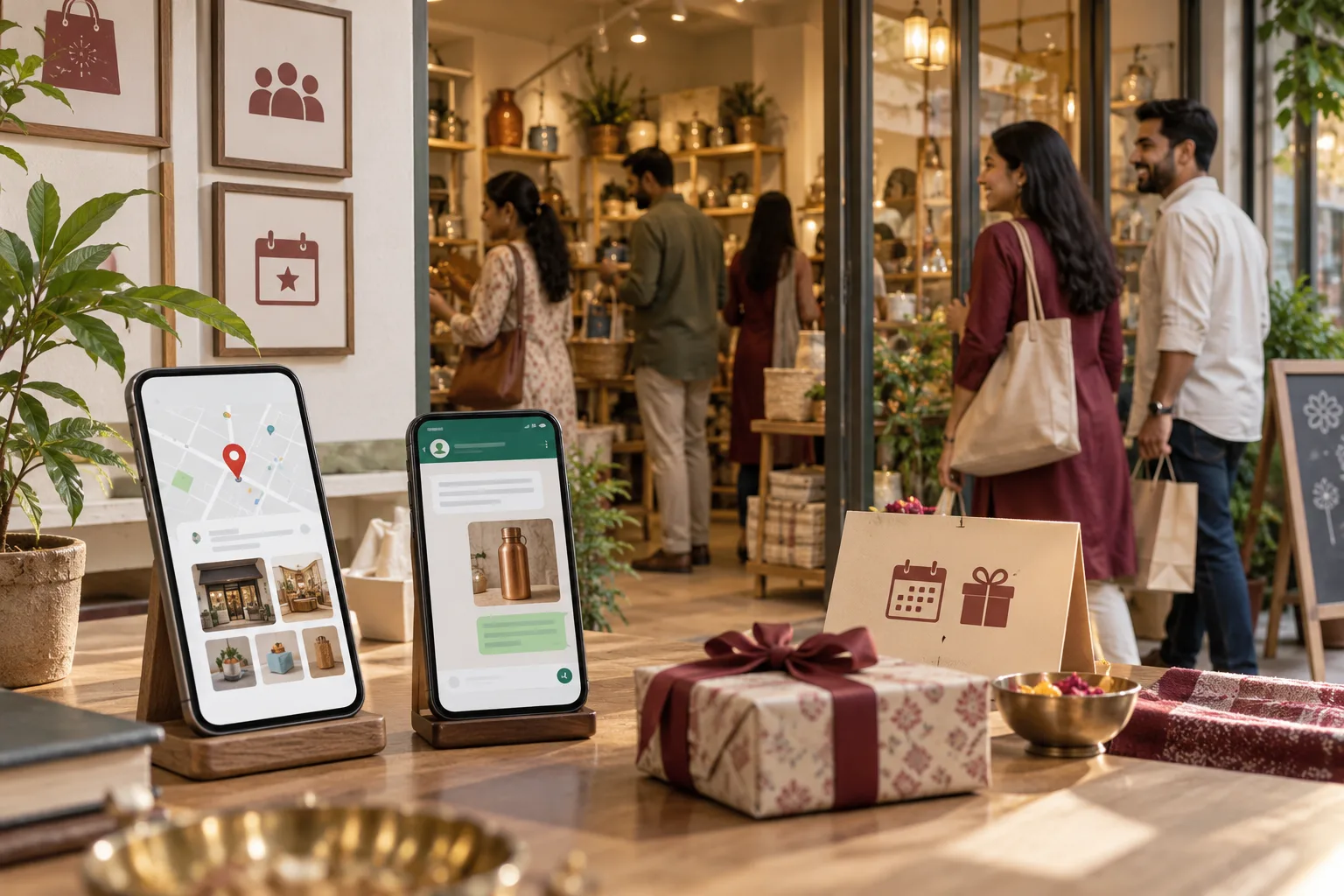 6 min read · 22 May 2026How to increase footfall in a retail storeBe found on Maps for what you stock, give past customers a reason to come back on WhatsApp, and run promotions tied to dates people already shop for.
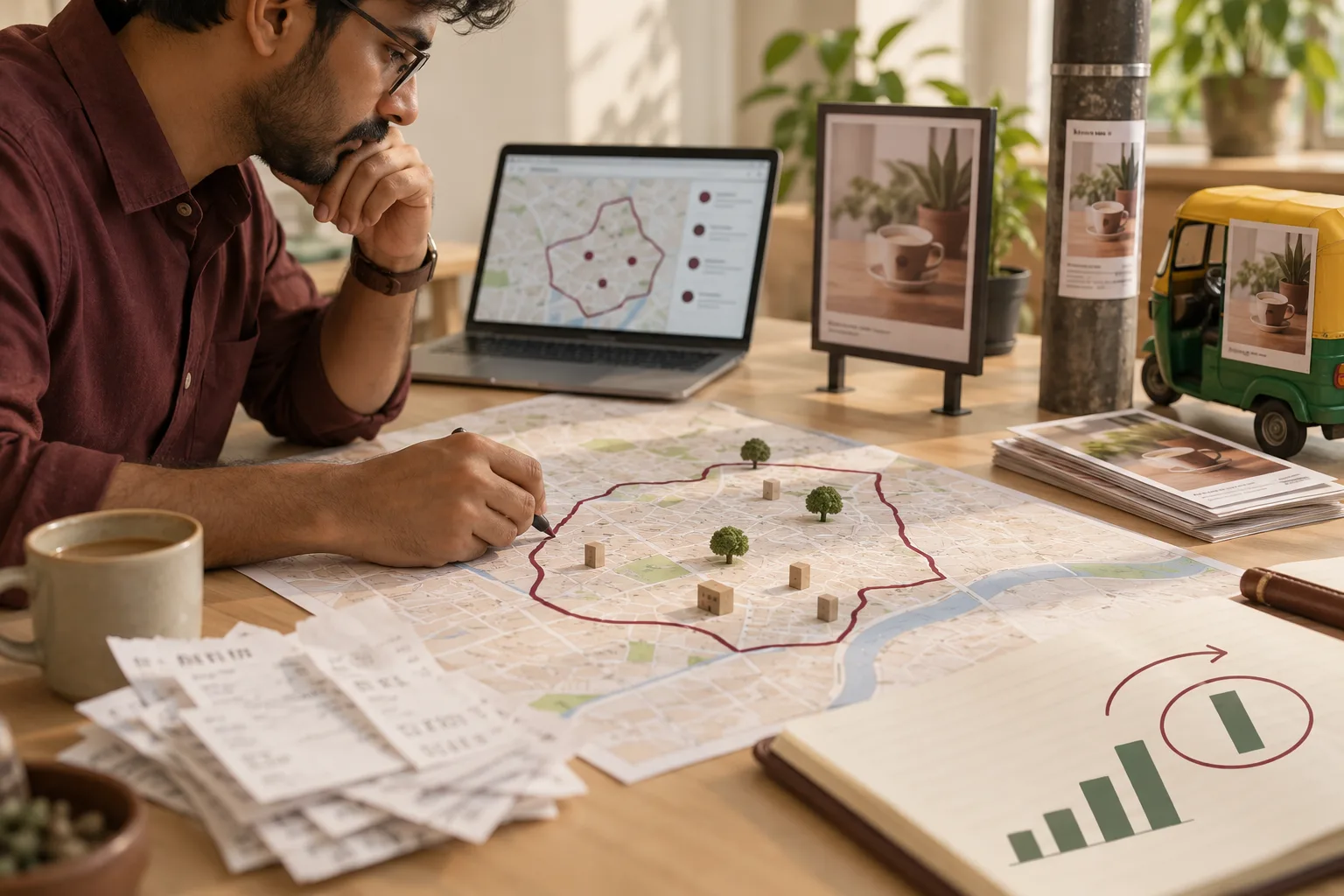 6 min read · 19 Mar 2026How to plan a hyperlocal advertising campaignDraw the catchment from your own bills first. Then buy only the media that stops at the same boundary, and measure it with a number nobody else uses.
More for retailers
Related work to consider.
Closest to this: search and visibility
Also for retailers
Or start from the overview: sales and marketing for retailers.
Your next practical step
Tell us what you are trying to grow, and we will read it before we call.
Eight short steps, mostly taps. Skip anything you would rather answer on the call.