Retailers · Direct mail postcard design
Design the postcard a shopper keeps on the fridge until the sale begins.
Direct mail postcard design for a retailer is the artwork for one card posted to named households near the shop: the front, the address side, the reply device and the print files. GullySales designs the card around one offer and one reason to walk in, and prepares files to your printer's specification.
Scope, fee, reporting and term are agreed in writing after we have read your brief and spoken to you.
What direct mail postcard design means
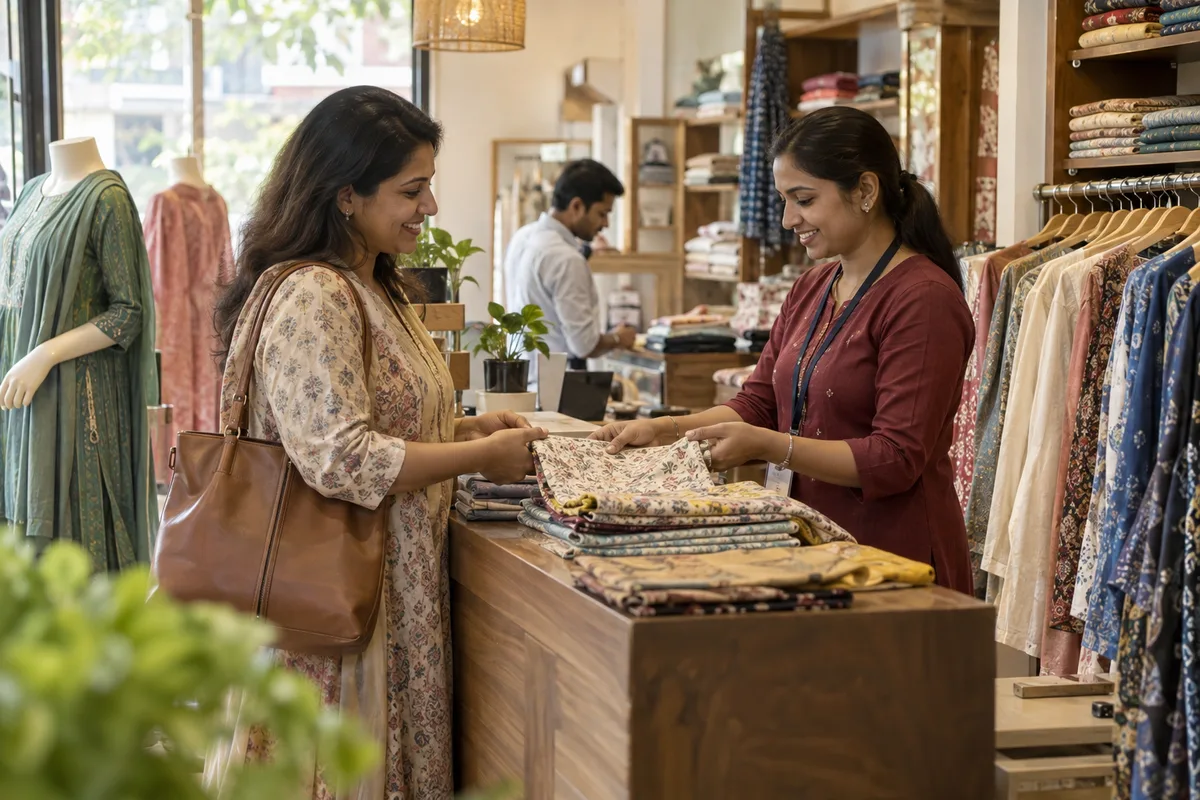
Direct mail postcard design is the artwork for a single card that is posted to a named household or business: front, address side and the files a printer needs. GullySales designs the card around one offer and one reply route, so your team receives print-ready artwork and a clear specification for the printer.
Last updated 14 Nov 2026.
For retailers
Where it usually goes wrong, and what we would do.
“The card competes with the pile on the doormat”
A household postcard lands among bills, takeaway menus and other shops' leaflets. The shopper decides in the time it takes to cross the hallway whether it is kept. A retailer's card has to show the shop's name, one clear reason to visit and the place at a glance. Design chooses what the card says first, and cuts everything that would make the front look like a catalogue.
“A card sent to the right street is a local act”
A shop draws shoppers from a few nearby streets, so a card can name the neighbourhood, show the road to the door and mention a landmark people use. That local detail is what separates a shop's card from a national brand's mailer. The design makes the address, the nearest turn and the opening hours easy to find without a map-reading effort.
“The offer needs a reason to keep the card”
A sale date on its own is thrown away once the sale is over. A card that works as a voucher, a festive invitation or a preview pass for existing customers gives the shopper a reason to keep it near the door. The design decides whether the card is an invitation, a coupon or a reminder, and builds the layout for that single purpose.
“Counter staff must be able to recognise the card”
A card that brings a shopper to the counter is useful only if staff know what it means and can note it. If the voucher part is unclear, the billing clerk argues with the shopper at the desk. A reply device with a code or tear-off that staff can read at a glance lets the shop record who came because of the card.
What we do
What we deliver for retailers.
The work available for this need. We agree the deliverables and responsibilities for your engagement in writing.
A one-card brief for the shop
A short written brief records who receives the card, the single offer or invitation, the action wanted, the dates the offer holds and the printer's and post's limits. The owner approves it before drawing begins, so the design starts from one agreed purpose instead of a list of everything on sale.
Result: The brief states one offer and one action, and the approved front carries only those.
Front side directions for the shop
One or more front directions show the image, the headline, the offer and the shop's name, so the owner can judge which one holds attention. Each is drawn from your signboard and bag so the card is recognised before it is read, and none is crowded with a full price list.
Result: A person shown the front for a few moments can say who sent it and what it offers.
The address and message side
The back is laid out with the message, the shop's address and opening hours, the address panel for the shopper's name, and the return details. It stays inside the areas the printer and the postal service require, so the card is accepted and the address stays readable.
Result: The proof shows the address panel and the postal areas clear, with nothing printed across them.
A voucher or reply device staff can read
The coupon, tear-off strip, code panel or QR placement is drawn so it is easy to find and easy for the billing clerk to check at the counter. A simple code lets the shop trace each card back to the mailing list it came from, without complicated records.
Result: Counter staff can identify a returned card by its code without asking the shopper any questions.
Versions for existing and new shoppers
Variants of the same card suit people who already shop with you and people who live nearby but have never visited. The image and opening line change, while the layout and offer stay fixed. This saves the shop from sending one message to two different readers.
Result: Each version is labelled for its list and differs from the other only where the reader's knowledge differs.
Print-ready files and a printer specification
Press-ready artwork with bleed and safe margins, a colour and paper specification and a file naming pattern are handed over with the editable sources. A printer who has been told the card size and stock can quote and produce from the files without asking for corrections.
Result: The printer accepts the files and the proof matches the approved design on the first check.
How the result is measured
- Cards returned to the printer for file faults
- Replies received that carry the card's code
- Enquiries logged with the card named as the source
Recorded as a baseline before work starts, so every later report has an honest comparison.
Who it is for
This is written for these retailers.
- Apparel and footwear stores
- Electronics and appliance retailers
- Grocery and kirana stores
- Home decor and furnishing stores
- Jewellery and gifting retailers
- Multi-brand outlet stores
Before you decide
Agree the work. Know how to judge it.
Direct mail postcard design for retailers: use these checks to prepare, choose the scope, and review what changes.
Bring the right evidence
State the buyer group, catchment, and dates that matter to the offer. Ask for the proposed inventory and available evidence about its audience, with the source and date shown.
Make the scope clear
Agree the exact placements, formats, booking period, and proof of delivery. Separate media charges from design, production, permissions, and installation where these apply.
Check the work in use
Compare delivery evidence with the agreed booking and record enquiries through a distinct response route where practical. Treat audience estimates separately from measured responses.
Know when to change course
Do not buy a placement only because it is discounted. If the location or audience does not fit the buyer, revisit the plan before committing production costs.
These are discussion points, not a fixed package. GullySales confirms the deliverables, responsibilities, fee, and term in writing after reading your brief and speaking with you.
Before we start
What to have ready before the work starts.
The records, access and decisions this work needs from retailers. Anything missing is noted in the written scope, with who will supply it.
- One offer, with the dates it holds
- Decide what the card offers and for how long, and write it in one line. A design cannot choose between a clearance, a new arrival and a loyalty gift. Without one decision, the front tries to hold all three and the shopper reads none of them.
- The streets or customers who will receive it
- Tell us whether the card goes to named past shoppers who agreed to be contacted or to households around the shop, and roughly how many. The size, the greeting and the tone depend on this. Without it, the card speaks to nobody in particular and the reply device has no list to trace.
- Your logo, colours and a good image
- Working logo files and brand colours let the card look like the shop. One clear photograph of the shop front or the product on offer is better than several weak ones. If these are missing, the card is built from stock picture styles that a shopper does not connect with the shop.
- Your printer and the card size
- Name the printer, or send their file specification, before the layout is set. Each printer has its own sizes, stock and limits on edges. When this is missing, the artwork is drawn for a guess and may be redrawn after the first proof, which delays the whole mailing.
- A person at the counter who will note returns
- Choose who will record the cards that come back and where they note them. Without a named person, the code on the card is never read and the shop cannot tell which streets brought shoppers. A simple tally sheet at the billing desk is enough to start.
How it works
How the direct mail postcard design work runs
The work itself, in order. How an engagement starts, from your brief to a written scope, is set out on our method page.
- 1
Take the offer, the list and the printer's limits
The first things needed from the owner are the single offer, the dates it holds, the streets or customers the card will reach and the printer chosen. GullySales records the counts from the last mailing or leaflet, such as cards sent and visits noted, so the new card is read against them.
- 2
Decide what the card is for
The shop picks the card's job: a festive invitation, a voucher for the sale, a reminder to past buyers or an announcement of a new department. Only one is chosen. This decision shapes the size, the picture and the reply device, and it keeps the front from carrying three messages at once.
- 3
Sketch the front around the shop's own look
Front directions are drawn from the signboard, bag and bill so the card looks like the shop on the high street. One image and one headline are chosen. The owner picks a direction, and the others are put aside rather than blended, which would bring back the crowding the brief was meant to avoid.
- 4
Lay out the address side and the voucher
The address panel, return details, opening hours and the voucher or code are placed to the printer's and the post's rules. The reply device is checked with the person who stands at the billing desk, who confirms it can be read and noted without slowing the queue.
- 5
Proof, correct and prepare the files
A proof is checked for bleed, safe margins, resolution, fonts and the positions of the postal areas. The owner reads every word and every date. Corrections are made once and the artwork is marked final, then packed with sources and a specification so the printer can work from it.
- 6
Read the card against the earlier counts
When the cards have been posted, the shop notes how many vouchers return, how many shoppers mention the card and which version they hold. These are read against the counts recorded at the start. GullySales states what the figures show and what they cannot show, and does not claim the card caused any sale.
Proof
Published examples of our work.
Real clients and the work recorded for each engagement. These examples may cover related services or industries. They show the method, not a guaranteed result.
Bon Millette
- Situation
- A new food brand has to look trustworthy before anyone will try it, and Bon Millette had nothing online for a first-time buyer to weigh up.
- What we did
- A site that matches the food
- The story in a trust-building order
- Product sections with full disclosure
- A short path from reading to buying
- Result
- No numbers were recorded for this engagement. The work is described in full in the case study.
Also worked with
Chord Road Hospital · Curtain Label · Difesa Security Services · Felicity Inn · Hands On CSR · Implevista · Kambar Group · Kalessi · Kerur Pain Clinic · LL Trust · Lucky Deals · Natural Gases · NavaShakthi Souhardha · NewCom Logistics · Proton Technical Services · SB Engineering · Shakthi Foundation · Shakthi Group · Urbanest · Insyde Studio · Venkateshwara Laser Tech · Vivara Studios
Where this fits
Three pieces of sales work, in this order.
This work sits inside sales process design, at stage 1, prospecting and lead generation. The audit comes before it, and sales management keeps it running.
Step 1
Sales audit
Find where deals are being lost and what to fix first.
Start here if you cannot say where orders are lost.
Step 2 · you are here
Sales process design
One written way to sell, from first enquiry to repeat order.
Start here if every salesperson sells differently.
Step 3
Sales management
A target, a review routine and someone who owns the number.
Start here if the team has targets and no routine.
FAQ
Questions owners ask before they call.
Not here? More answers, or ask on WhatsApp.
Is a postcard worth designing for a single shop?
What should the front of a retail postcard show?
Can the card carry a voucher or discount code?
Do you write the words and handle the posting?
How do we know the card brought anyone in?
Can one design work for both regular and new shoppers?
How much does it cost?
How long is the contract?
How soon will we see results?
Who will actually do the work?
From the blog
Further reading for retailers.
 7 min read · 21 Sept 2026NRI jewellery advertisingAn NRI jewellery buyer is two customers: one flying in for a wedding, one paying from abroad for a mother who collects. Timing and payment differ.
 7 min read · 21 Sept 2026Local audience targeting strategyThree people are local to you: the one who lives near, the one who works near and the one searching near. The settings that reach each differ.
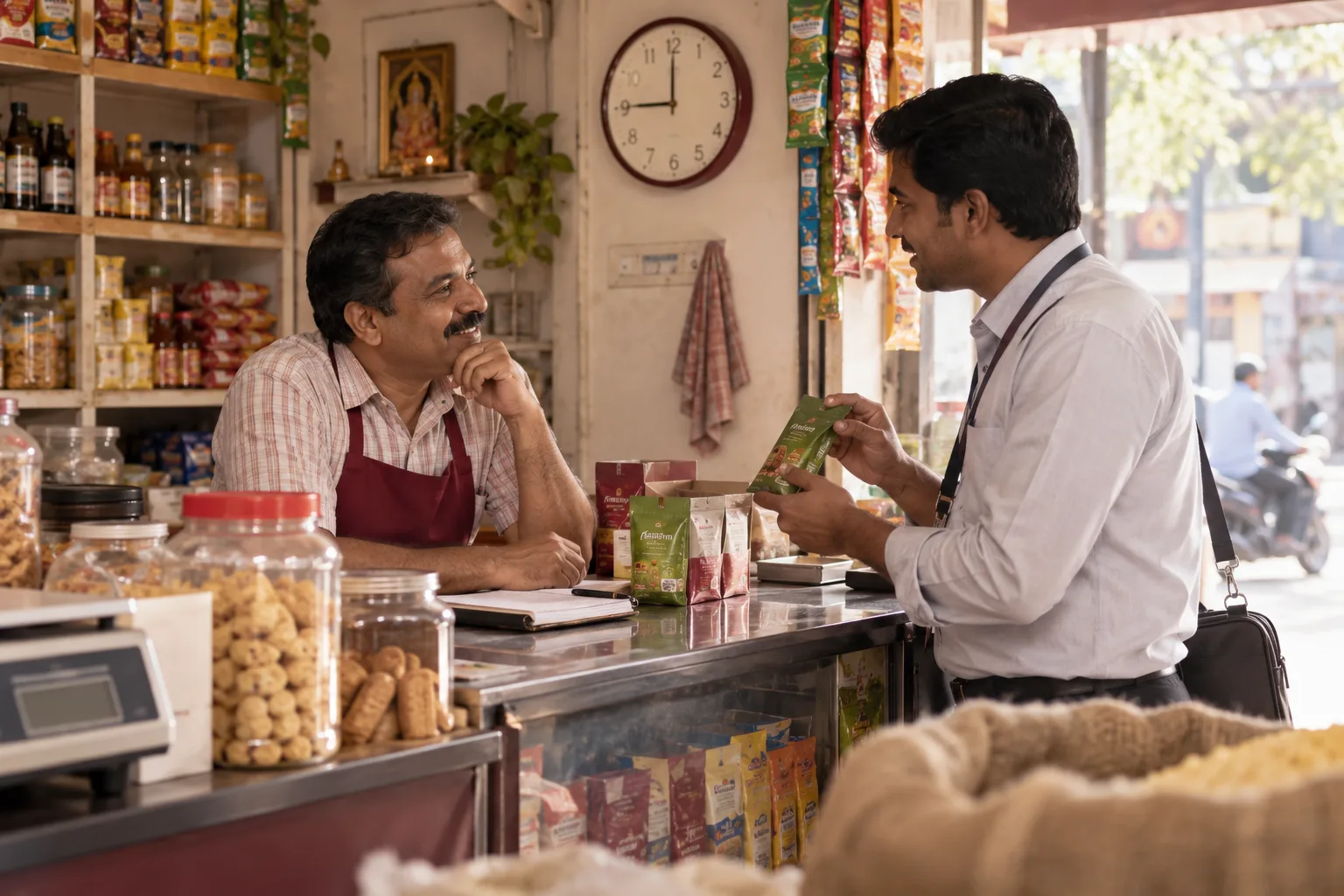 8 min read · 21 Sept 2026How to advertise to retail business ownersA shop owner cannot leave the counter from ten to nine. Reach them in the afternoon lull, through the distributor's salesman and on WhatsApp.
More for retailers
Related work to consider.
Closest to this: paid and media
Also for retailers
Or start from the overview: sales and marketing for retailers.
Your next practical step
Tell us what you are trying to grow, and we will read it before we call.
Eight short steps, mostly taps. Skip anything you would rather answer on the call.