Retailers · Buyer persona
A shop sells to five different shoppers and talks to all of them the same way.
A buyer persona for a retail store is a written description of one type of shopper: why they walk in, what they compare, what makes them leave without buying. GullySales builds yours from your own billing records and counter conversations, so each message and each shelf is aimed at a shopper who exists.
Scope, fee, reporting and term are agreed in writing after we have read your brief and spoken to you.
What buyer persona means
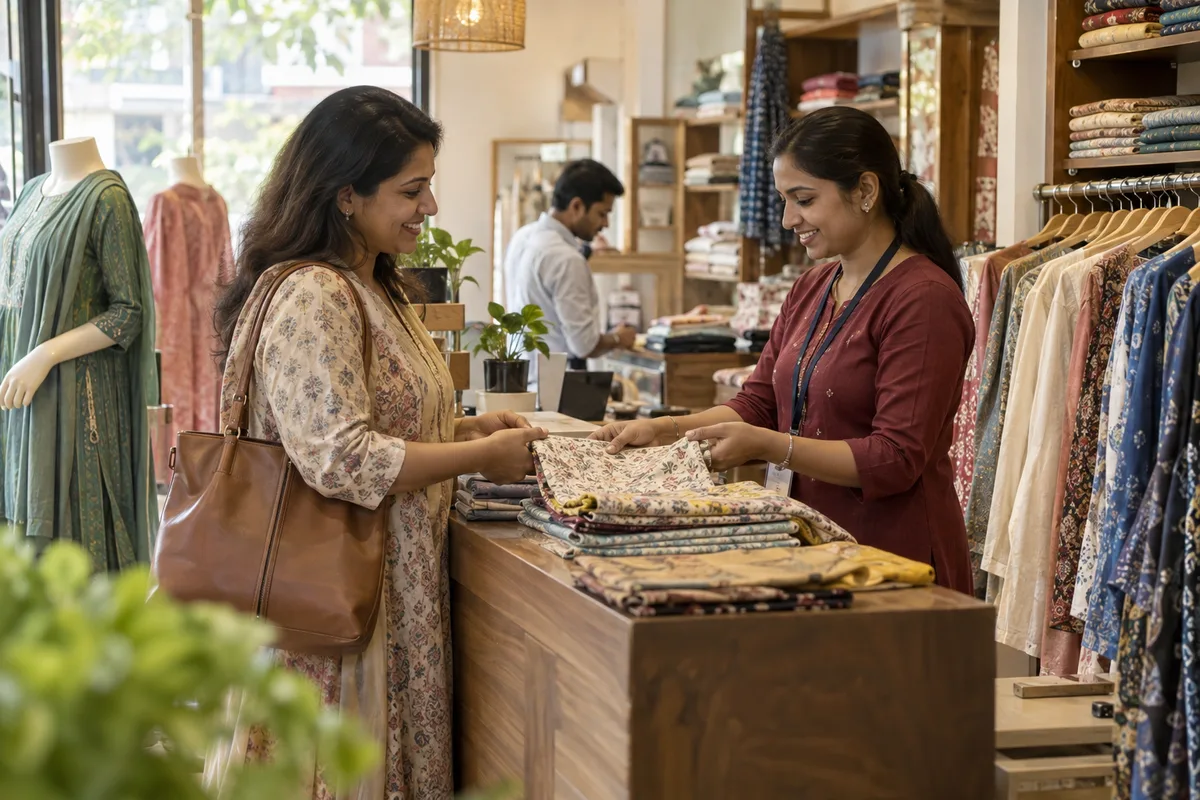
A buyer persona is a plain description of the kind of customer who actually buys from you. It includes what they search, what worries them and who else they ask before deciding. GullySales builds this from real enquiries and past sales rather than a generic template, then uses it to write every page and advert.
Last updated 14 Nov 2026.
For retailers
Where it usually goes wrong, and what we would do.
“The festival shopper and the regular are not one customer”
The person who appears before Diwali, buys one big basket and disappears wants a reason to choose your shop this year. The regular who comes in every few weeks wants to be recognised. A single broadcast insults one of them and bores the other.
“The family buying for a wedding decides together”
Parents, the couple and an uncle with opinions all sit in one conversation, and the person paying is rarely the person choosing. A persona that names every voice in the room tells the floor staff whom to address and what each of them needs to hear.
“The comparison shopper has already looked at your price”
They arrive with a phone showing a rival's rate or an online listing. Treating them as a fresh walk-in wastes the visit. The persona records what they have seen, what trust they still want from a counter, and which answer closes the gap.
“Your best customers are visible in the bills”
The shopper with the biggest basket is not always the one who talks the longest. Billing records show who returns, what they pair together and which month they vanish. That pattern describes a real person far better than a guess made at the owner's desk.
What we do
What we deliver for retailers.
The work available for this need. We agree the deliverables and responsibilities for your engagement in writing.
Shopper types written from your own bills
Three to five named shopper types, each built from what customers actually bought, when they came and how they paid.
Result: You can describe your customers without guessing.
A one-page card per shopper type
The reason they visit, the question they ask first, the objection they raise and the answer that settles it, written for floor staff to read.
Result: A new salesperson can serve each type on the first day.
Questions to ask at the counter
Two or three natural questions that tell staff which shopper type is standing in front of them without sounding like a form.
Result: The right card gets picked at the right time.
Message wording matched to each type
The words for a WhatsApp note, a festive offer and a reminder, written differently for the occasional buyer and the regular.
Result: Each shopper receives something that fits them.
A shelf and display review against the personas
A walk through the store with the persona cards, noting what each shopper cannot find, cannot compare or cannot afford at a glance.
Result: You get a short list of layout changes tied to real shoppers.
A list of who to leave out
The customers whose basket does not repay the discount or the effort, named so that offers stop going to them.
Result: Your offers reach fewer wrong people.
How the result is measured
- Enquiry match to persona
- Conversion rate by persona
- Content aligned to persona
Recorded as a baseline before work starts, so every later report has an honest comparison.
Who is asking
The shoppers who walk into a store, and what each wants settled at the door.
- A family buying for a wedding
- They arrive with a list, a deadline and several people to please. They ask about alterations, delivery to the venue and whether the store can hold items until the whole group has seen them.
- A regular who shops for the household
- They know the aisle and want the usual brands in stock, a bill they can trust and a call when a favourite item arrives. Being remembered matters more than a new offer.
- A shopper comparing against an online price
- They have a phone in hand and a figure from a website. They want to see, touch and ask, and need a reason, such as service or exchange, to buy from you.
- Someone buying a gift for another person
- They are unsure of size, taste and budget. They ask what others choose, whether the item can be exchanged and if the store wraps it.
- A first-time visitor from the next street
- They found the store on the map and wonder if it is open, if it has what they need and whether they will be welcome. The first minute decides if they return.
Who it is for
This is written for these retailers.
- Apparel and footwear stores
- Electronics and appliance retailers
- Grocery and kirana stores
- Home decor and furnishing stores
- Jewellery and gifting retailers
- Multi-brand outlet stores
Before you decide
When this may not be the right fit.
- You have not spoken to your counter staff about who walks in, and the personas would be a guess from the owner's desk.
- You sell a single item to one type of shopper, so one description already covers the store.
- Nobody records who buys, so there is no way to check the personas against real shoppers.
Before you decide
Agree the work. Know how to judge it.
Buyer personas for retailers: use these checks to prepare, choose the scope, and review what changes.
Bring the right evidence
Write the decision the research must support, such as entering a market or choosing a buyer group. Separate what you know from sales records from what the team currently assumes.
Make the scope clear
Agree which buyers to speak to, which sources to review, and what access you can provide. Include lost enquiries and people who chose another supplier, where they are willing to take part.
Check the work in use
Look for source dates, sample limitations, and evidence that disagrees with the preferred answer. A recommendation should show how it follows from the findings.
Know when to change course
Do not treat a few positive conversations as proof of demand. Test the proposed offer with an actual buying decision before committing to a wider launch.
These are discussion points, not a fixed package. GullySales confirms the deliverables, responsibilities, fee, and term in writing after reading your brief and speaking with you.
Before we start
What to have ready before the work starts.
The records, access and decisions this work needs from retailers. Anything missing is noted in the written scope, with who will supply it.
- A sample of anonymised bills
- A set of recent bills with names and numbers hidden is enough: items, quantities, totals and dates. Without it, personas rest on staff memory alone and describe the loudest shoppers.
- Time with the staff who know regulars
- The senior salesperson and the cashier know who returns and why. We need an hour of their time away from the queue. Without them, the personas reflect assumptions, not the counter. Pick people who handle shoppers at different hours, because the evening crowd and the morning crowd are different people.
- Names of a few willing regular shoppers
- Three or four loyal customers who will agree to a short, friendly chat. You make the introduction. Without them the cards lack the shopper's own words.
- A statement of who you wish to attract
- Say which shoppers the owner wants more of, such as young families or institutions. It sets which personas we build first. Left undecided, we describe only the present mix. Include any shopper you would rather not serve, such as those who only compare prices, so the cards can say who to leave out.
How it works
How the buyer persona work runs
The work itself, in order. How an engagement starts, from your brief to a written scope, is set out on our method page.
- 1
Choose which shoppers to describe first
We ask you to name the shoppers you want more of and those you are happy to lose. You tell us whether the store's footfall is mostly families, offices, couples before a wedding or tourists. The first personas cover the shoppers who carry the shop's turnover. If the store serves both walk-in households and institutional buyers, we describe them as separate people, because their reasons for choosing a shop rarely match.
- 2
Pull a sample of bills and number records
With your permission, we read a sample of bills or the billing export: basket size, items together, repeat names. Personal details stay with you and are not kept by us. The patterns show who buys what, as opposed to who you think buys. Where the billing software holds nothing useful, we work from a day's paper bills instead and say so in the notes, so the gap is visible.
- 3
Sit at the counter and listen
We spend a shift beside the counter, hearing what shoppers ask, compare and refuse. You introduce us to the staff who know the regulars. A few short conversations with willing regular shoppers add what the bills cannot show. We write down the exact phrases shoppers use, such as asking for something cheaper or comparing with a shop across the road, and keep them in the shopper's words.
- 4
Check the draft cards with the staff
We write each persona on one page and read it aloud to the counter team. Staff correct what they recognise as wrong. You decide which corrections change the card. A persona the floor does not recognise is rewritten.
- 5
Apply the cards to display and messages
We walk the shelves against the cards, note what is missing for each shopper type, and rewrite sample messages. You choose two changes to make first. The cards are then compared with bills six months on, to see if the mix of shoppers moved. Each card ends with the one thing that shopper would need to hear to choose your store over the one next door.
Proof
Published examples of our work.
Real clients and the work recorded for each engagement. These examples may cover related services or industries. They show the method, not a guaranteed result.
Bon Millette
- Situation
- A new food brand has to look trustworthy before anyone will try it, and Bon Millette had nothing online for a first-time buyer to weigh up.
- What we did
- A site that matches the food
- The story in a trust-building order
- Product sections with full disclosure
- A short path from reading to buying
- Result
- No numbers were recorded for this engagement. The work is described in full in the case study.
Also worked with
Chord Road Hospital · Curtain Label · Difesa Security Services · Felicity Inn · Hands On CSR · Implevista · Kambar Group · Kalessi · Kerur Pain Clinic · LL Trust · Lucky Deals · Natural Gases · NavaShakthi Souhardha · NewCom Logistics · Proton Technical Services · SB Engineering · Shakthi Foundation · Shakthi Group · Urbanest · Insyde Studio · Venkateshwara Laser Tech · Vivara Studios
Where this fits
Three pieces of sales work, in this order.
This work sits inside sales process design, at stage 0, foundation. The audit comes before it, and sales management keeps it running.
Step 1
Sales audit
Find where deals are being lost and what to fix first.
Start here if you cannot say where orders are lost.
Step 2 · you are here
Sales process design
One written way to sell, from first enquiry to repeat order.
Start here if every salesperson sells differently.
Step 3
Sales management
A target, a review routine and someone who owns the number.
Start here if the team has targets and no routine.
FAQ
Questions owners ask before they call.
Not here? More answers, or ask on WhatsApp.
We sell everything. Can one persona cover the store?
Where does the information come from if we have no customer records?
Do personas change with the seasons?
Should a persona include the shopper's age and income?
Can we use personas to decide what to stock?
How much does it cost?
How long is the contract?
How soon will we see results?
Who will actually do the work?
What do you need from us?
From the blog
Further reading for retailers.
 7 min read · 21 Sept 2026NRI jewellery advertisingAn NRI jewellery buyer is two customers: one flying in for a wedding, one paying from abroad for a mother who collects. Timing and payment differ.
 7 min read · 21 Sept 2026Local audience targeting strategyThree people are local to you: the one who lives near, the one who works near and the one searching near. The settings that reach each differ.
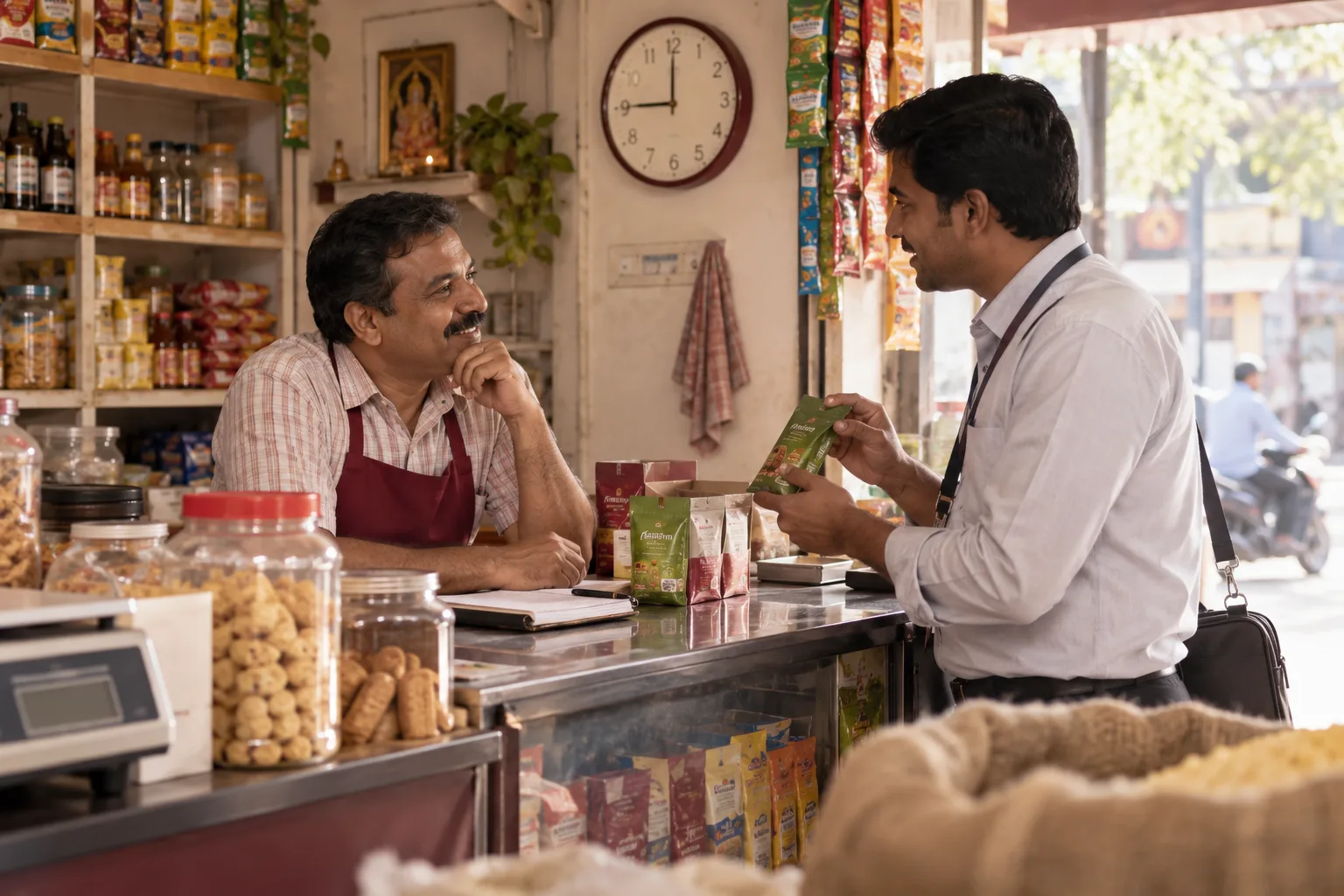 8 min read · 21 Sept 2026How to advertise to retail business ownersA shop owner cannot leave the counter from ten to nine. Reach them in the afternoon lull, through the distributor's salesman and on WhatsApp.
More for retailers
Related work to consider.
Closest to this: strategy and research
Also for retailers
Or start from the overview: sales and marketing for retailers.
Your next practical step
Tell us what you are trying to grow, and we will read it before we call.
Eight short steps, mostly taps. Skip anything you would rather answer on the call.