Piercing studios · Content marketing
Write the answers a worried customer would search for, and put your name under them.
Content marketing for a piercing studio is publishing plain answers to the questions people ask before booking, from pain and healing to which metal suits sensitive skin. GullySales works on choosing those questions, writing them from your piercer's own practice and placing them where searchers and Instagram viewers find them.
Scope, fee, reporting and term are agreed in writing after we have read your brief and spoken to you.
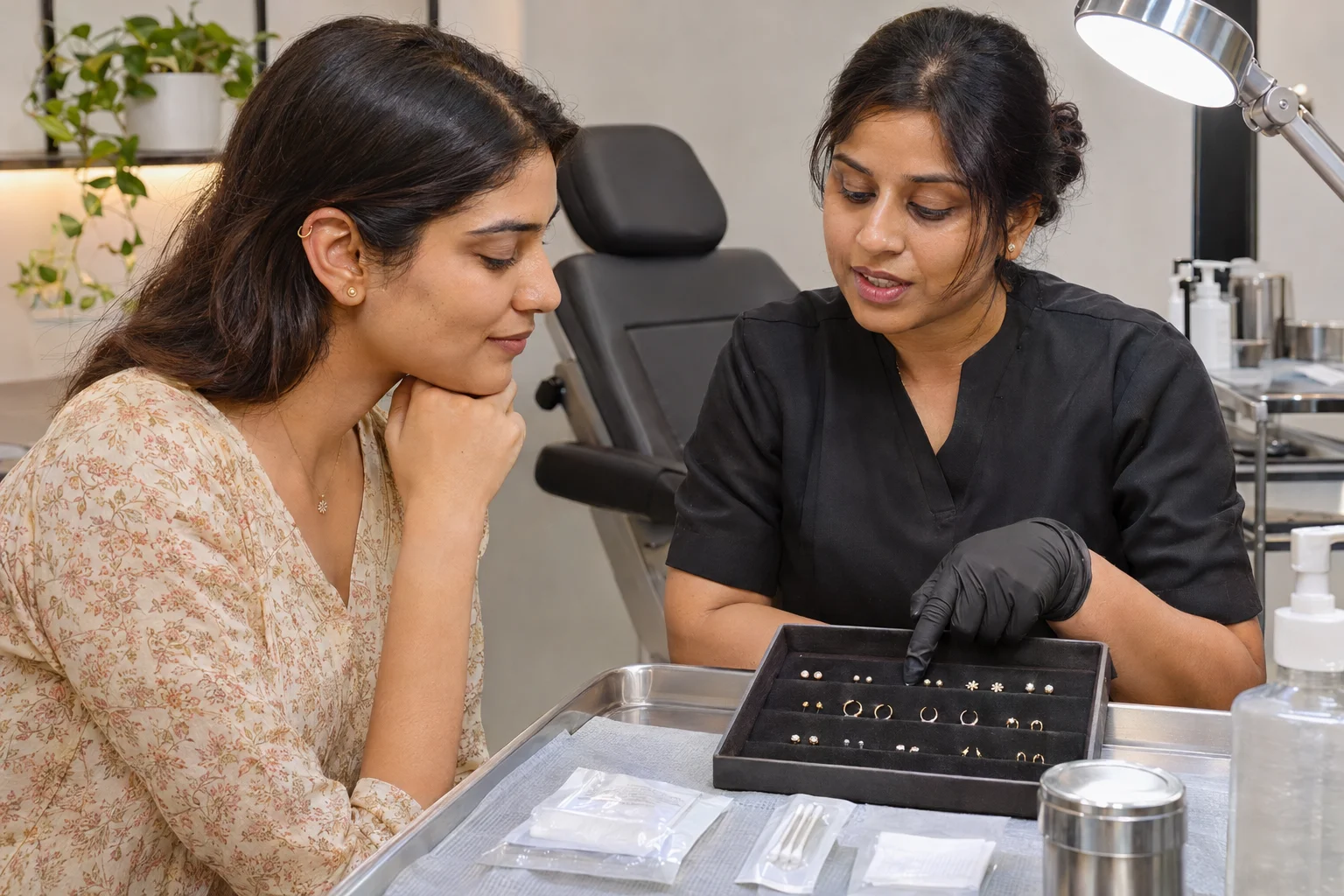
What content marketing means
Content marketing is writing articles, guides and pages that answer the questions buyers search before they are ready to enquire. This makes your business visible and trusted before the first call. GullySales plans this content from the first conversation onward, choosing topics that match real search demand rather than guesses.
Last updated 14 Nov 2026.
For piercing studios
Where it usually goes wrong, and what we would do.
“The best content is the question the counter hears daily”
Whatever customers ask at the desk, ask on the phone and message at night is your content list. 'Gun or needle', 'titanium or steel' and 'when can I change the stud' are three articles already waiting.
“Parents read differently from teenagers”
A parent wants a calm explanation of what happens on the day and what to watch for after. A teenager wants to see the look. One article for both satisfies neither, so each reader gets a page written to their worry.
“Content that sounds like a supplier's catalogue is invisible”
Copied jewellery descriptions and generic aftercare text are on every studio's site. The piercer's own account of why one stud suits one ear, in everyday language, is the only part a competitor cannot copy.
“A stale aftercare page does damage”
Advice on cleaning changes as practice changes. An old page that contradicts what the piercer says at the counter confuses customers and invites a complaint, so each page needs an owner who reads it again.
What we do
What we deliver for piercing studios.
The work available for this need. We agree the deliverables and responsibilities for your engagement in writing.
A list of questions from your own enquiries
Every repeated question from calls, messages and the counter, sorted by piercing type and by who asks.
Result: You hold a ranked list of what to write next.
Articles written with your piercer
Pages drafted from the piercer's spoken answers, then checked by the piercer line by line before publishing.
Result: Each page says what the piercer would say.
A jewellery guide by material and fit
A plain guide to titanium, steel and gold-plated pieces, with sizes and which suits which piercing.
Result: One page the counter can send a customer.
A children's first piercing guide
A parent-facing page on the day, the room, the consent needed and the aftercare to follow at home.
Result: A parent can read it before deciding to call.
Reels cut from the same answers
Short videos using the same questions, so one conversation with the piercer becomes a page and a reel.
Result: The page and the reel say the same thing.
How the result is measured
- Pages published
- Organic traffic
- Enquiries from content pages
Recorded as a baseline before work starts, so every later report has an honest comparison.
Posts and pieces to plan
Answers a worried buyer would search for.
- Does ear piercing hurt
- A plain page on what the client feels in the chair and what the piercer does to keep them calm. No promise of comfort.
- Choosing a first stud
- A guide to materials and sizes with photographs of the studio's own tray.
- Which ear piercing suits a teenager
- A page for the parent, covering the piercer's questions and who must be present.
- Helix or tragus: how to choose
- A comparison page with photographs, written by the piercer, and a line sending medical questions to a doctor.
- Taking care of a new piercing
- The routine the studio gives, kept up to date, with a note that any worry goes to a doctor.
Who it is for
This is written for these piercing studios.
- Ear piercing studios for adults and teenagers
- Kids' ear piercing studios and baby-friendly rooms
- Cartilage and helix piercing specialists
- Nose piercing studios for nostril and septum work
- Navel and body piercing studios
- Piercing counters inside tattoo studios
- Mall kiosks and studios in jewellery stores
- Body jewellery boutiques that pierce on site
Before you decide
When this may not be the right fit.
- The piercer has no time to review a draft, and guessing at technique in print would mislead readers.
- Your aftercare advice is not written down, so an article would invent a routine the studio does not follow.
Before you decide
Agree the work. Know how to judge it.
Content marketing for piercing studios: use these checks to prepare, choose the scope, and review what changes.
Bring the right evidence
Bring questions from sales calls and examples of objections that delay a decision. Choose a subject expert who can check the substance, and identify evidence that can be published.
Make the scope clear
Agree the reader, buying question, format, and distribution route for each piece. Set the approval process and distinguish new research from rewriting material you already have.
Check the work in use
Ask a colleague to use the draft in a real buyer conversation. It should answer the question, support its claims, and make the next step clear without requiring a sales pitch to explain it.
Know when to change course
If the same unanswered question appears in several articles, improve the strongest page before commissioning another. More words are not a substitute for missing evidence.
These are discussion points, not a fixed package. GullySales confirms the deliverables, responsibilities, fee, and term in writing after reading your brief and speaking with you.
Before we start
What to have ready before the work starts.
The records, access and decisions this work needs from piercing studios. Anything missing is noted in the written scope, with who will supply it.
- A week of tally sheets from the counter
- Articles come from real questions. Have staff mark each one on the sheet we provide. If the counter cannot manage it, we read chat history instead, which shows what customers type but not what they ask aloud.
- Time with your piercer
- Every article depends on the piercer's account. Set aside a sitting. If the piercer is unavailable, we write from the counter and mark each piece as awaiting their check.
- Supplier sheets for the jewellery
- Material claims must match the product. Bring the sheets or tell us the supplier. Where they are missing, the guide describes the style and size and leaves the material out.
- A named person who checks each piece
- Someone with the right knowledge must read every article before it is published. Name them. Without a reviewer, nothing about aftercare or safety is published.
- A place to publish the articles
- Pieces need a page, a post or a printed card. Tell us what you can edit. If none, we begin with cards and replies that need no website.
How it works
How the content marketing work runs
The work itself, in order. How an engagement starts, from your brief to a written scope, is set out on our method page.
- 1
Keep a tally sheet at the counter
We give the counter a one-page sheet on which staff mark each question a customer asks, from pain to metals to what age is allowed. You and your staff use it for a stretch of working days, and we collect it. What exists is a count of the real questions, so the articles answer what is asked and not what we imagine. The sheet has a column for who asked, so the parent's questions are kept apart from the teenager's.
- 2
Rank the questions by who is asking
We sort the questions by asker: the first-timer, the parent, the returning customer and the jewellery buyer, and by when in the decision they arise. You say which groups you want more of. The ranking sets the order of the articles and decides which ones are short and which need space. Questions about price are placed with the jewellery guide, because the answer depends on the metal and the style chosen.
- 3
Interview the piercer on the record
We sit with your piercer and record the answers to the top questions in plain speech, covering the room, the tools, the jewellery and what a customer should know. You approve what is said about the studio's practice. The recording is the source for every article, so the voice and the facts stay the piercer's. We ask the piercer to name the questions that should be answered only in person, so that no article tries to replace a conversation at the counter.
- 4
Write the jewellery guide by material and fit
We draft a guide to the metals, sizes and styles the studio stocks, written from your stock list and the supplier sheets you hold. You confirm each material claim and strike out any that you cannot support. The guide describes what is sold, and does not tell any reader what will suit their skin. Sizes are given as the studio fits them, and the guide says that the piercer measures at the visit.
- 5
Write the guide for a child's first piercing
We write the guide for parents from your piercer's account of how the studio treats a child, what the parent signs and what aftercare is given. You and your adviser check every line. The guide explains the process and leaves medical questions to a doctor.
- 6
Cut the answers into reels and read the results
We turn the interview answers into short clips and captions and place each beside its article, then count the messages and bookings that name a piece against the figures before we began. You tell us which became appointments. The piece that brings no enquiry is rewritten or dropped. Each clip is cut with a caption that names the room and the piercer, never a customer.
Where this fits
Three pieces of sales work, in this order.
This work sits inside sales process design, at stage 0, foundation. The audit comes before it, and sales management keeps it running.
Step 1
Sales audit
Find where deals are being lost and what to fix first.
Start here if you cannot say where orders are lost.
Step 2 · you are here
Sales process design
One written way to sell, from first enquiry to repeat order.
Start here if every salesperson sells differently.
Step 3
Sales management
A target, a review routine and someone who owns the number.
Start here if the team has targets and no routine.
FAQ
Questions owners ask before they call.
Not here? More answers, or ask on WhatsApp.
How much should we publish?
Can an article give medical advice?
Whose property is the content once it is written?
Who should check what the studio publishes?
Can an article tell readers what to do if a piercing looks wrong?
Once the articles exist, who owns them?
How long is the contract?
How soon will we see results?
Who will actually do the work?
What do you need from us?
More for piercing studios
Related work to consider.
Closest to this: content and social
Also for piercing studios
Or start from the overview: sales and marketing for piercing studios.
Your next practical step
Tell us what you are trying to grow, and we will read it before we call.
Eight short steps, mostly taps. Skip anything you would rather answer on the call.