Spas · CRM
Know who came, who treated them and what they booked next.
A spa CRM records each visit, the treatment, the therapist and where the customer stands in their package, in one place the front desk can read. GullySales sets up those fields, handles sensitive intake notes carefully, and turns the record into the list the desk calls from.
Scope, fee, reporting and term are agreed in writing after we have read your brief and spoken to you.
What CRM means
A CRM is the record where every enquiry, call and quote is kept against a customer, replacing separate notebooks, spreadsheets and memory. GullySales sets up or cleans an existing CRM and reports from it by enquiry outcome rather than by activity logged.
Last updated 5 Oct 2026.
For spas
Where it usually goes wrong, and what we would do.
“The therapist's name belongs on every visit”
Customers ask for a person, not a treatment. Without the name on the record you cannot rebook them properly, and you will not notice when that therapist leaves and takes forty regulars along.
“A package is a balance, not a sale”
Six sessions paid in advance is a liability with a number on it. The record has to show what is left and when it expires, or the desk cannot sell the renewal.
“Some of what a customer tells a therapist is not marketing data”
Pregnancy, injuries, skin conditions and medication come up at intake. Restrict who can see them, keep them out of every promotional list, and take your own advice on what you may hold.
What we do
What we deliver for spas.
The work available for this need. We agree the deliverables and responsibilities for your engagement in writing.
Fields built around visits, packages and therapists
Date, treatment, therapist, duration, amount paid, the package it drew from and the balance left, plus the customer's preferred day and time.
Result: The desk rebooks without asking the customer to repeat themselves.
Package balances and expiry visible at the counter
Sessions used, sessions left and the expiry date shown on the record the moment a customer arrives.
Result: The renewal is offered on the last session rather than after it lapses.
Intake notes restricted and kept out of marketing lists
Health information stored where only therapists see it, separated from booking and offer data, set up after checking your own obligations.
Result: Your messaging never touches something told to a therapist in confidence.
Bookings from the phone, chat, Instagram and the door in one record
Every appointment entered in the same place with its source, so the diary and the customer list stop being separate things.
Result: You can see which channel fills a weekday afternoon.
A lapsed list the desk can work
The record read as customers who have not visited recently, sorted by last visit and by therapist.
Result: Somebody drifting away is noticed while it still matters.
Therapist request patterns visible to the owner
Who is asked for by name, how often, and what happens to those customers when that therapist is unavailable.
Result: You know how much of the business rests on one pair of hands.
Visits, renewals and repeat rate against the baseline
Bookings by source and treatment, package sales and renewals, and repeat visits, measured against the baseline recorded before work started.
Result: The owner runs the spa off the record instead of the till.
How the result is measured
- Enquiries logged in the CRM
- Data completeness
- Reports generated from CRM data
Recorded as a baseline before work starts, so every later report has an honest comparison.
What to record, and when
What a spa should record about every customer and package, and whether software is needed yet.
- Products and pressure preferred
- Record the oil or product and the pressure a regular likes. When the customer asks for the usual blend, a new therapist can match it without asking again.
- Gift vouchers and corporate passes
- Hold the voucher code, the buyer, the person using it and the expiry. A voucher holder is a new customer, so note whether the customer came back.
- Slots people prefer
- Note the day and time each customer likes, so empty weekday afternoons can be matched with the customers who prefer them. Call with a slot, not a general discount.
- Allergy or caution flag, nothing more
- Keep a simple flag on the booking and leave the detail on the therapist's own form. The therapist reads the form. The desk sees only the flag.
- Where the customer came from
- Mark Maps, a walk-in, a referral or a corporate tie-up. Corporate groups are worth recording separately because they book together.
- Do you need software yet?
- A booking app with a customer list and a sheet for packages is enough for one outlet with a few therapists. Move to a CRM when package balances, birthdays and several outlets cannot be checked at the counter.
Who it is for
This is written for these spas.
- Day spas
- Ayurveda and wellness centres
- Salon-spa combo outlets
- Medi-spas and skin clinics with spa services
- Massage-only therapy centres
- Resort and hotel spas
- Corporate and mobile wellness services
Not for
It is not the right fit if.
- You see a few guests in a day and know each by name, so a notebook still does the job.
- Staff will not enter visit notes, and a record the desk does not fill goes stale.
- You have not decided who may read health or intake notes, and that is settled before they are stored.
Before you decide
Agree the work. Know how to judge it.
CRM for spas: use these checks to prepare, choose the scope, and review what changes.
Bring the right evidence
List the records your team uses and show how an enquiry becomes an order today. Bring examples of duplicate entries, missing owners, and reports that require manual correction.
Make the scope clear
Agree the stages, required fields, access roles, and integrations before configuring the system. Separate software subscriptions from setup, data work, and training.
Check the work in use
Ask the people who will use the CRM to complete a real handover and find the next action without help. Check that the management report can be traced back to individual records.
Know when to change course
If the process is unclear, buying a more complex CRM adds more places for confusion. Start with the minimum fields and rules the team can use consistently.
These are discussion points, not a fixed package. GullySales confirms the deliverables, responsibilities, fee, and term in writing after reading your brief and speaking with you.
How it works
How the CRM work runs
The work itself, in order. How an engagement starts, from your brief to a written scope, is set out on our method page.
- 1
Sales journey agreement
Your sales lead explains how an enquiry becomes an order, using open deals as examples. We agree which steps belong in the CRM and identify decisions needing your approval.
- 2
Configuration approval
You approve stage definitions, required fields, ownership rules, and access. Unresolved choices are settled before configuration starts.
- 3
Test environment decision
We confirm whether your plan provides a trial copy or separate pipeline. Where neither is available, changes to the live system need an agreed approach before work proceeds.
- 4
Connection and rule checks
Enquiry connections are checked before automations are activated separately. Your nominated owner verifies where records arrive and which person receives each task.
- 5
Sales team acceptance
The people handling enquiries test open deals from entry through closure. Required corrections are resolved before you approve the switch.
- 6
Switch and ownership handover
The agreed configuration goes into use, and your CRM owner receives the final record. Any post-switch corrections included in the scope are documented before handover closes.
Where this fits
Three pieces of sales work, in this order.
This work sits inside sales management. A target, a review routine and someone who owns the number.
Step 1
Sales audit
Find where deals are being lost and what to fix first.
Start here if you cannot say where orders are lost.
Step 2
Sales process design
One written way to sell, from first enquiry to repeat order.
Start here if every salesperson sells differently.
Step 3 · you are here
Sales management
A target, a review routine and someone who owns the number.
Start here if the team has targets and no routine.
FAQ
Questions owners ask before they call.
Not here? More answers, or ask on WhatsApp.
Our booking software already has a customer list. Is that a CRM?
Should we record which therapist a customer prefers?
Do we need the customer's birthday and anniversary?
What happens to a package balance when a customer stops coming?
How much does it cost?
How long is the contract?
How soon will we see results?
Who will actually do the work?
What do you need from us?
From the blog
Further reading for spas.
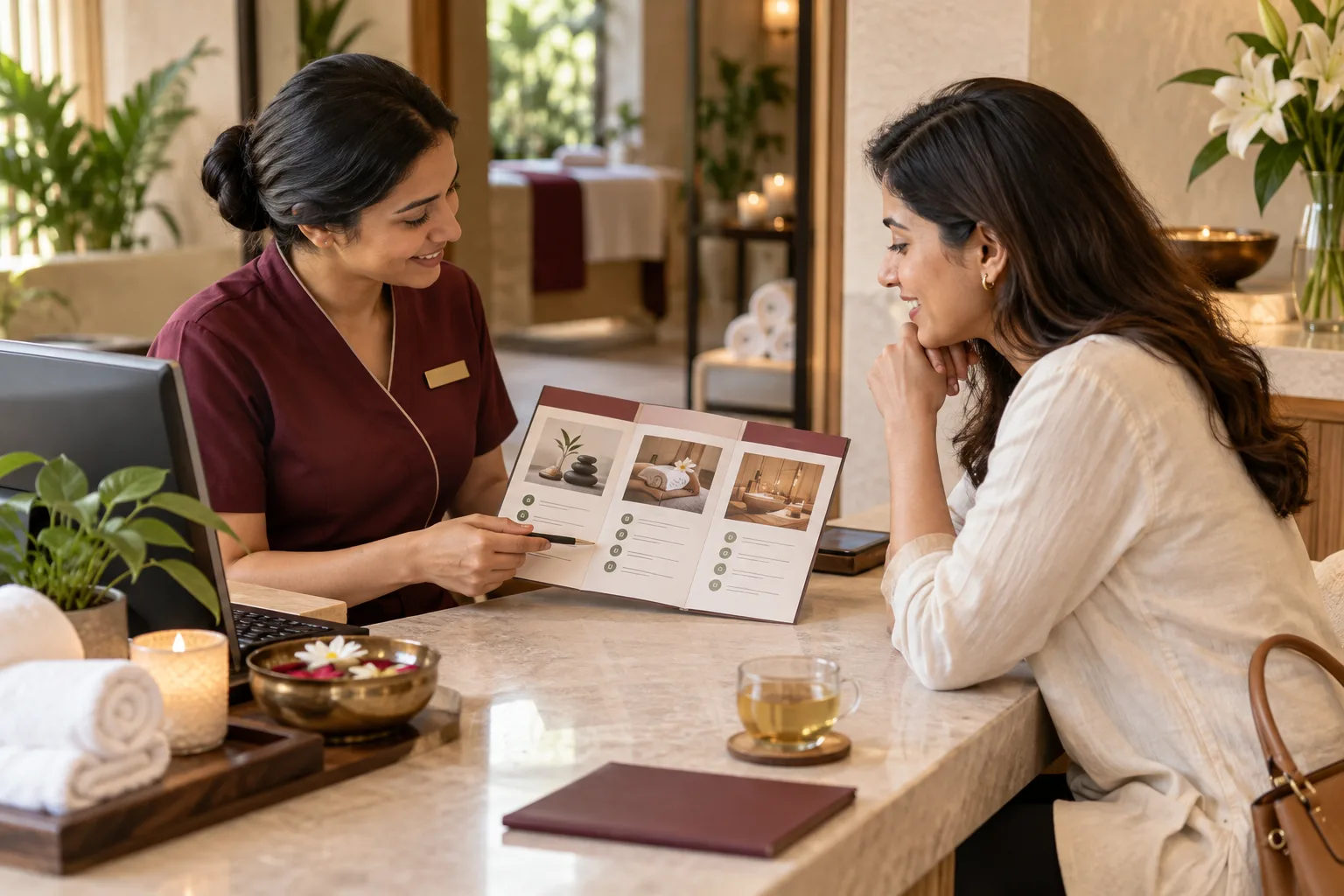 6 min read · 19 Aug 2026How to sell spa membership packages that customers renewBuild spa membership packages around how often customers already visit, with a saving they can see. Offer them after a session; follow up before renewal.
 7 min read · 3 Jun 2025How to reactivate dormant customersDefine dormant against your own purchase interval, then call your highest-value lapsed customers to ask why they stopped before offering any discount.
More for spas
Related work to consider.
Closest to this: leads and follow-up
Also for spas
Or start from the overview: sales and marketing for spas.
Your next practical step
Tell us what you are trying to grow, and we will read it before we call.
Eight short steps, mostly taps. Skip anything you would rather answer on the call.