Spas · Referral marketing
A gift voucher is a referral, so treat it like one.
Referrals bring a spa its best customers, because somebody arriving on a friend's word already trusts the place. GullySales builds the ask into the visit, turns the gift voucher into a tracked introduction, and sets a reward that is worth having on both sides.
Scope, fee, reporting and term are agreed in writing after we have read your brief and spoken to you.
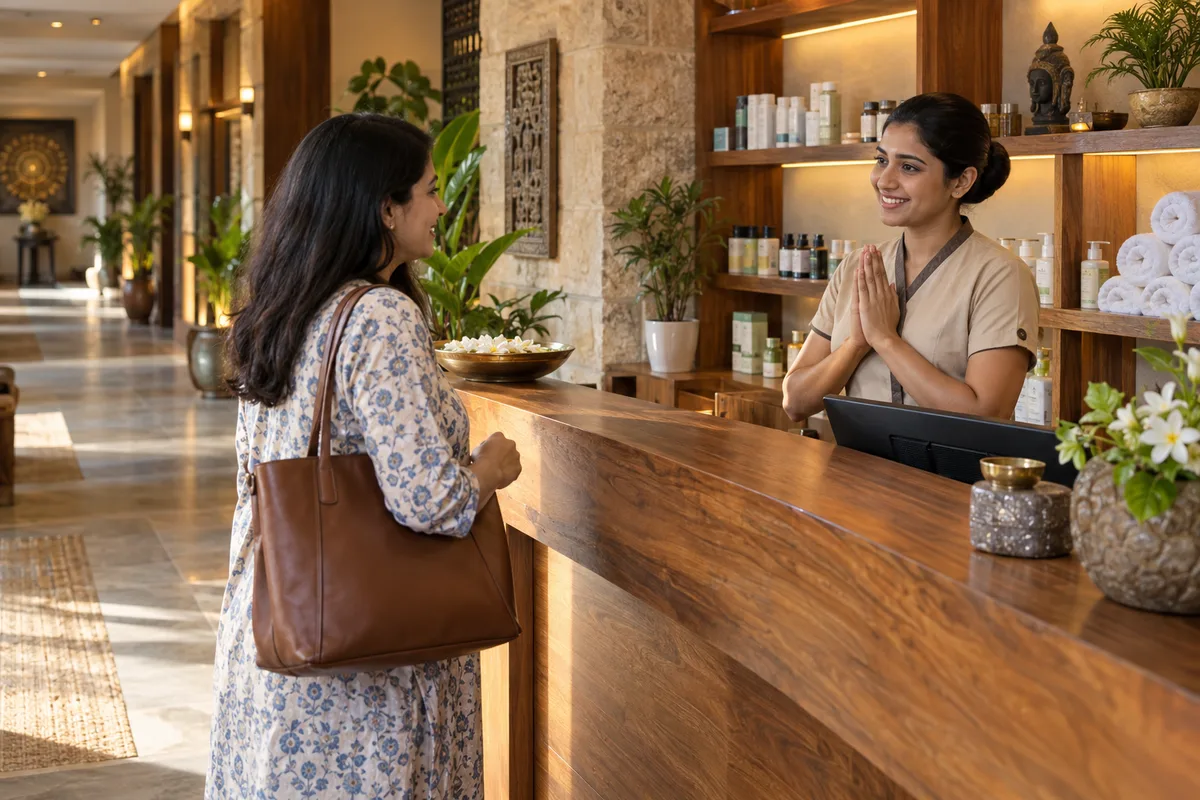
What referral marketing means
Referral marketing in a regulated practice is being the one a physician, a colleague or a former patient names, without being paid to, because paying for a referral is restricted in most of these professions. GullySales builds the ask into the moment a patient is satisfied and into the note that goes back to the referring doctor, and it never involves a fee.
Last updated 5 Oct 2026.
For spas
Where it usually goes wrong, and what we would do.
“A voucher is one customer paying to introduce another”
Somebody buys a treatment for a friend's birthday. That friend is a referred first-timer, and almost no spa follows up as though they were.
“The ask comes from the desk, never from the therapist”
A therapist asking a customer to bring friends damages the reason they came. The request belongs at the counter afterwards, from somebody else.
“Friends and couples book together, so the reward should too”
The offers that travel are the ones a customer can use with the person they are recommending you to. A couples slot moves faster than a discount code.
What we do
What we deliver for spas.
The work available for this need. We agree the deliverables and responsibilities for your engagement in writing.
A referral ask at the counter after a good visit
A short, specific request as the customer pays, naming a friend or colleague rather than asking them to tell anyone.
Result: The customer leaves with one person in mind.
Gift vouchers tracked back to the buyer
Each voucher recorded with who bought it and who redeemed it, so the redeeming customer is followed up as a referral.
Result: A birthday gift turns into a second customer.
A reward both sides can use together
A discount or an added session for the referrer and the referred, structured to suit a two-person booking.
Result: The reward is worth claiming rather than forgetting.
Corporate introductions through regulars who work nearby
Regulars asked whether their office would consider a wellness day, with a short note they can forward to HR.
Result: One regular opens a conversation with a whole office.
Referral source recorded on every new customer
Each new booking tagged with who sent them, followed through to whether they returned and what they spent.
Result: You can see which regulars are actually bringing people.
A thank-you the referrer notices
A message and the reward applied promptly whenever a referral books, rather than at the end of some scheme.
Result: The customer refers a second time because the first was acknowledged.
Referred customers read against the baseline
Referrals received, how many booked, and how many came back for a second visit, measured against the baseline recorded before work started.
Result: You can tell whether referral beats paying for first-time traffic.
How the result is measured
- Referrals received
- Referral conversion rate
- Cost per referred customer
Recorded as a baseline before work starts, so every later report has an honest comparison.
How referrals reach a spa
The best new customer is a friend who was told which therapist to ask for.
- The regular customer
- Ask at the desk, after payment, while the customer is gathering a bag. Do not ask during the treatment or from the therapist, and note the friend's name against the regular's card.
- The buyer of a gift voucher
- A voucher is one customer introducing another. Record who bought it and who used it, and let the buyer know the recipient came, without saying what was booked.
- The regular who works in an office nearby
- Offer the customer a short chair massage or a package for their team, and let them choose whom to ask. The booking is theirs to arrange, and you supply the therapist and the room.
- The hotel concierge and the homestay host
- Visitors ask the front desk for a good spa. Leave your menu, the timings and a way to book, and agree openly with the property if anything is given back, in writing.
- What never to do
- Never ask for a referral in the treatment room, and never use a customer's name or photograph in an offer without the customer's yes. A friend's recommendation only works while the customer still feels private here.
Who it is for
This is written for these spas.
- Day spas
- Ayurveda and wellness centres
- Salon-spa combo outlets
- Medi-spas and skin clinics with spa services
- Massage-only therapy centres
- Resort and hotel spas
- Corporate and mobile wellness services
Not for
It is not the right fit if.
- Few guests have had a visit worth recommending yet, and a referral ask would meet silence.
- You cannot track who sent whom, and a reward would go to the wrong person or be argued over.
- You plan to pay a hotel desk or a therapist for each guest, and the arrangement has not been agreed in writing.
Before you decide
Agree the work. Know how to judge it.
Referral marketing for spas: use these checks to prepare, choose the scope, and review what changes.
Bring the right evidence
Review repeat orders, inactive customers, and reasons for leaving. Separate a normal buying interval from a customer who stopped because of an unresolved problem.
Make the scope clear
Choose the customer group and the reason to contact them. Agree how complaints, renewal decisions, and additional offers are handled, including when a sales message is inappropriate.
Check the work in use
Track the response through to a retained or repeat order, with discounts and service costs visible. Record why the customer returned rather than crediting every repeat purchase to the campaign.
Know when to change course
If customers leave because delivery is unreliable, fix that before offering a loyalty reward. Repeated promotions can hide the cause without improving the experience.
These are discussion points, not a fixed package. GullySales confirms the deliverables, responsibilities, fee, and term in writing after reading your brief and speaking with you.
How it works
How the referral marketing work runs
The work itself, in order. How an engagement starts, from your brief to a written scope, is set out on our method page.
- 1
Starting-point agreement
We review your requirements brief and discuss customer relationships, margin, and existing records. The scope, fee, and term are agreed in writing before work starts.
- 2
Baseline and audience selection
Your invoices, enquiry notes, and available WhatsApp records establish the referral baseline. Together, we select customers to approach and decide which introductions are worth pursuing.
- 3
Offer approval
You approve the reward and eligibility rules before they appear in a message. Any accountant or compliance review needed for your business happens before launch.
- 4
Record and sales handoff test
We prepare the sharing route and referral record, then test an introduction through to reward status with your team. A named person accepts responsibility for the enquiry and its next action.
- 5
Initial release and adjustment
The first asks go to selected satisfied customers. Their responses and the resulting enquiry records guide changes before you approve a wider release; reporting timing is agreed in writing.
Where this fits
Three pieces of sales work, in this order.
This work sits inside sales process design, at stage 7, after the sale. The audit comes before it, and sales management keeps it running.
Step 1
Sales audit
Find where deals are being lost and what to fix first.
Start here if you cannot say where orders are lost.
Step 2 · you are here
Sales process design
One written way to sell, from first enquiry to repeat order.
Start here if every salesperson sells differently.
Step 3
Sales management
A target, a review routine and someone who owns the number.
Start here if the team has targets and no routine.
FAQ
Questions owners ask before they call.
Not here? More answers, or ask on WhatsApp.
What reward should we offer for a referral?
Should therapists get something for bringing in customers?
A hotel concierge wants a cut for every guest the concierge sends. Is that normal?
How do we record the source when a couple books together?
How much does it cost?
How long is the contract?
How soon will we see results?
Who will actually do the work?
What do you need from us?
What if we are not happy with the work?
From the blog
Further reading for spas.
 6 min read · 19 Aug 2026How to sell spa membership packages that customers renewBuild spa membership packages around how often customers already visit, with a saving they can see. Offer them after a session; follow up before renewal.
 7 min read · 3 Jun 2025How to reactivate dormant customersDefine dormant against your own purchase interval, then call your highest-value lapsed customers to ask why they stopped before offering any discount.
More for spas
Related work to consider.
Closest to this: customers after the sale
Also for spas
Or start from the overview: sales and marketing for spas.
Your next practical step
Tell us what you are trying to grow, and we will read it before we call.
Eight short steps, mostly taps. Skip anything you would rather answer on the call.