Spas · Sales process
Turn a first massage booking into a signed monthly package within one visit.
A sales process for a spa is the fixed set of steps from an enquiry to a confirmed booking and, ideally, a package sale. The outcome does not depend on which receptionist happens to answer. GullySales writes this process with your front desk and gives you the record to see where bookings drop out.
Scope, fee, reporting and term are agreed in writing after we have read your brief and spoken to you.
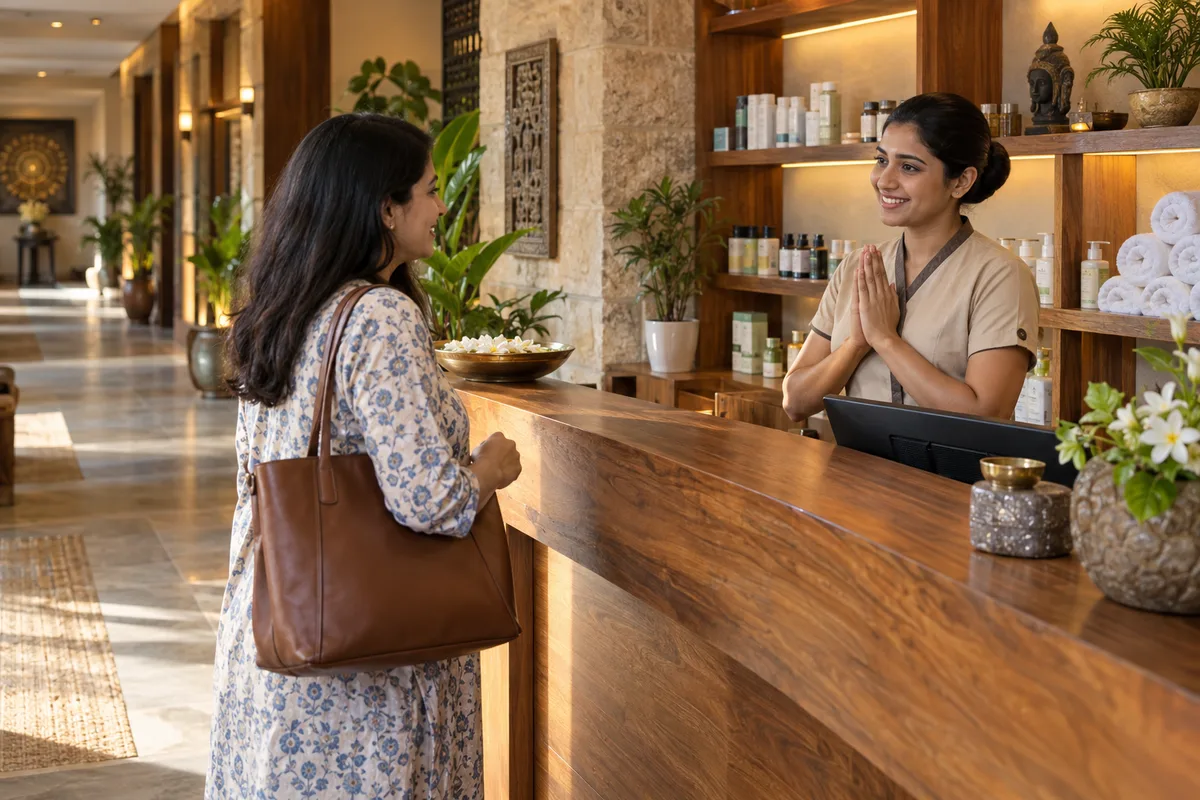
What sales process means
A sales process is the fixed sequence of steps, such as enquiry, site visit, quote and order, that every deal is expected to pass through in the same order. GullySales writes this sequence down for your business and checks that every salesperson actually follows it.
Last updated 5 Oct 2026.
For spas
Where it usually goes wrong, and what we would do.
“The enquiry starts with price, and the answer should include the package”
A caller asking what a deep-tissue massage costs should hear both the single-session price and the saving on a four-session package, rather than only the number they asked for.
“The package pitch has a natural moment”
The end of a good first treatment, while the customer is still relaxed and pleased, is the point to mention a monthly package. A follow-up call days later has already lost the moment.
“No-shows need a same-day reschedule step”
A reminder the evening before and a message an hour before a booking come first. A same-day reschedule call for anyone who misses protects therapist time that cannot be resold once the slot has passed.
What we do
What we deliver for spas.
The work available for this need. We agree the deliverables and responsibilities for your engagement in writing.
Enquiry script naming the package alongside the price
A short script so a caller asking a single-session price also hears the saving on a package, every time.
Result: Every price enquiry becomes a chance to mention the package.
Package pitch moment fixed at checkout
A defined point, right after a good first treatment, where staff are expected to mention a monthly package.
Result: The pitch happens while the customer is still relaxed and pleased.
Reminder and same-day reschedule steps
A message the evening before, a reminder an hour before, and a same-day reschedule call for anyone who misses.
Result: A missed slot gets a chance to be rebooked instead of sitting empty.
Cold enquiry follow-up step with a reason logged
A step requiring a reason, such as price or timing, to be logged against any enquiry that goes cold.
Result: The real reason bookings are lost becomes visible and fixable.
Written checklist for enquiry, booking and pitch
A short, printed checklist covering the enquiry, the booking and the package pitch, for the front desk to follow.
Result: A receptionist in the first week runs the same booking call as your most experienced one.
How the result is measured
- Deals following the process
- Time spent at each step
- Drop-off rate by step
Recorded as a baseline before work starts, so every later report has an honest comparison.
Steps of a sale
Take a guest from the first WhatsApp message to the next booked visit in the same order every time.
- Enquiry and preferences
- Ask the treatment, the preferred therapist gender, any injury, pregnancy or allergy, and the time slot. Record it on the guest card before confirming the booking.
- Consultation form at arrival
- Have the guest fill in the health form and choose the oil and pressure. Note anything the therapist must avoid, such as a recent surgery or high blood pressure.
- Room and therapist
- Introduce the therapist by name and walk the guest to a ready room. Record which therapist did the treatment, so a repeat guest can ask for the same person.
- Checkout and feedback
- At the counter, with tea or water, ask about the pressure and the room. Note any complaint, such as noise or room temperature, against the guest card.
- Package paperwork
- If the guest buys a package, write the sessions, validity, whether it can be shared and the treatments covered on the receipt. Update the balance of sessions after each visit.
- Rebooking
- Offer the next slot before the guest leaves, with the therapist they liked. Note the booking made or the reason they declined.
Who it is for
This is written for these spas.
- Day spas
- Ayurveda and wellness centres
- Salon-spa combo outlets
- Medi-spas and skin clinics with spa services
- Massage-only therapy centres
- Resort and hotel spas
- Corporate and mobile wellness services
Not for
It is not the right fit if.
- You have no package or membership to offer at checkout, so the process would end at the first visit.
- Staff keep changing and nobody trains the new one, so a written steps sheet would not be followed.
- The enquiry volume is so low that every call is handled by the owner, who already knows each guest.
Before you decide
Agree the work. Know how to judge it.
Sales process for spas: use these checks to prepare, choose the scope, and review what changes.
Bring the right evidence
Bring examples of deals that moved forward and deals that stalled. Record what the buyer had actually agreed at each stage rather than relying on the salesperson's confidence.
Make the scope clear
Define the entry and exit rule for each stage, the owner, and the document or decision that moves the deal. Agree how exceptions will be handled before rolling the process out.
Check the work in use
Take a live enquiry through the proposed stages with the team. Two people reviewing the same evidence should place it at the same stage and agree the next action.
Know when to change course
If a stage produces no useful decision or handover, remove it. The process should help someone do the next piece of work, not create administration for its own sake.
These are discussion points, not a fixed package. GullySales confirms the deliverables, responsibilities, fee, and term in writing after reading your brief and speaking with you.
How it works
How the sales process work runs
The work itself, in order. How an engagement starts, from your brief to a written scope, is set out on our method page.
- 1
Requirements and scope agreement
Send the requirements brief, then discuss where deals stop and what systems you use. GullySales puts the scope, fee, and term in writing before work starts.
- 2
Current-flow confirmation
We trace deals with the people who sell and receive orders, and review existing selling materials. Your process owner confirms the current-flow map and baseline before changes begin.
- 3
Rules and material approval
Draft stages and enquiry handoffs are tested against real buying paths. Your sales head approves the evidence rules and checks the scripts and templates before configuration.
- 4
Configuration and acceptance
The approved structure is built into the agreed tool. Your team tests stage moves and exceptions, then checks reminders and report figures before accepting the setup.
- 5
Team rollout
Salespeople practise recording enquiries and moving deals through the stages, using the approved materials. The process owner resolves unclear rules before taking responsibility for daily use.
- 6
Adoption review and handover
We check records against the approved rules and address agreed configuration or guidance gaps. Unresolved management actions go to your sales head with responsibility made clear.
Where this fits
Three pieces of sales work, in this order.
This work sits inside sales process design, at stage 1, prospecting and lead generation. The audit comes before it, and sales management keeps it running.
Step 1
Sales audit
Find where deals are being lost and what to fix first.
Start here if you cannot say where orders are lost.
Step 2 · you are here
Sales process design
One written way to sell, from first enquiry to repeat order.
Start here if every salesperson sells differently.
Step 3
Sales management
A target, a review routine and someone who owns the number.
Start here if the team has targets and no routine.
FAQ
Questions owners ask before they call.
Not here? More answers, or ask on WhatsApp.
Can our current staff run this without hiring?
What happens to enquiries that go cold?
A guest asks only for the cheapest massage. How should the front desk handle it?
Should therapists sell packages, or only the front desk?
How much does it cost?
How long is the contract?
How soon will we see results?
Who will actually do the work?
What do you need from us?
What if we are not happy with the work?
From the blog
Further reading for spas.
 6 min read · 19 Aug 2026How to sell spa membership packages that customers renewBuild spa membership packages around how often customers already visit, with a saving they can see. Offer them after a session; follow up before renewal.
 7 min read · 3 Jun 2025How to reactivate dormant customersDefine dormant against your own purchase interval, then call your highest-value lapsed customers to ask why they stopped before offering any discount.
More for spas
Related work to consider.
Closest to this: sales craft
Also for spas
Or start from the overview: sales and marketing for spas.
Your next practical step
Tell us what you are trying to grow, and we will read it before we call.
Eight short steps, mostly taps. Skip anything you would rather answer on the call.