Spas · Website
Let a nervous first-timer check hygiene and a regular book a package in two clicks.
A spa's website needs to reassure a first-time visitor about hygiene and the therapist, and let a returning customer book or renew a package quickly. It should not force every visitor through the same generic homepage. GullySales builds sites that show real treatment rooms and make packages and booking clear from the first screen.
Scope, fee, reporting and term are agreed in writing after we have read your brief and spoken to you.
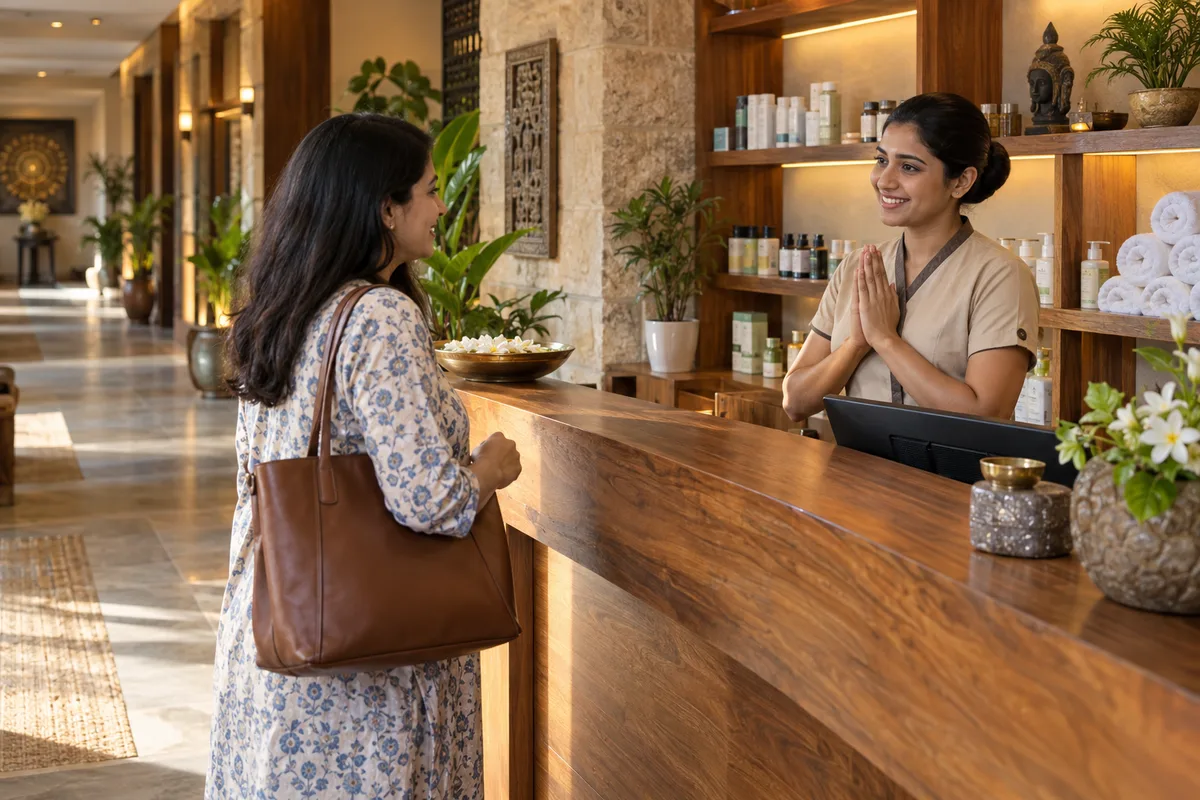
What website means
A website is the page a customer lands on after searching, clicking an advert or scanning a code, and it decides whether they call or leave. GullySales builds and maintains sites that load quickly, explain the offer plainly and make the enquiry form or phone number easy to find.
Last updated 5 Oct 2026.
For spas
Where it usually goes wrong, and what we would do.
“Hygiene and therapist details answered on the page itself”
A page describing sterilisation between clients and naming the senior therapist for a treatment answers the exact hesitation that stops a first-time visitor from booking.
“Package comparisons shown clearly, not buried in a PDF”
A visitor comparing a single massage against a monthly package wants to see both prices and savings on the page, not download a rate card to work it out.
“A booking button that goes straight to WhatsApp”
Most spa customers want to confirm a slot on WhatsApp rather than fill an online form. A website that forces a form first loses bookings to a competitor with a direct WhatsApp link.
What we do
What we deliver for spas.
The work available for this need. We agree the deliverables and responsibilities for your engagement in writing.
Hygiene and sterilisation page
A page describing sterilisation between clients and naming the senior therapist for each priority treatment.
Result: A first-time visitor's hesitation is answered before they ever call.
Package comparison table on the site
A table showing a single session price against the saving on a monthly package, visible on the page, not in a downloadable rate card.
Result: A visitor sees the saving without doing the maths themselves.
Direct WhatsApp booking button on every page
A booking button linking straight to WhatsApp, placed on every treatment and package page, replacing a generic contact form.
Result: A visitor can confirm a slot in the same message, not after filling a form.
Therapist and treatment room photo pages
Real photographs of treatment rooms and named therapists placed on the pages a customer checks before booking.
Result: A customer sees the actual place and people before walking in.
Mobile speed check for the booking pages
A technical check that treatment and package pages load quickly on a phone, where most spa searches happen.
Result: A customer checking on their phone does not give up before booking.
How the result is measured
- Page load time
- Bounce rate
- Enquiries from the website
Recorded as a baseline before work starts, so every later report has an honest comparison.
What the page must show
What a spa's website must show before a first-time customer books.
- What each treatment is, in one plain line
- Describe each massage by pressure, oil used, areas worked and who it suits. Avoid medical claims. A customer who cannot tell two treatments apart books the cheaper one or none.
- Length and price with GST shown
- State the time and the price of each treatment with GST shown, so the bill matches the page. Hidden tax is a common complaint.
- Therapists by name, gender and language
- Give therapist names, training and languages spoken, and say whether a female or male therapist can be requested. Customers choose on this.
- What to expect in the room
- Explain privacy, draping, shower and lockers, and what the customer wears. A first-timer is more nervous about the room than the massage.
- Package validity and cancellation terms
- State how many sessions a package holds, how long it stays valid, whether it can be shared, and the late-arrival and cancellation rules.
- A health note before booking
- Add a line asking guests with a medical condition, an injury or pregnancy to say so and to check with their doctor first. Link it to the booking form.
Who it is for
This is written for these spas.
- Day spas
- Ayurveda and wellness centres
- Salon-spa combo outlets
- Medi-spas and skin clinics with spa services
- Massage-only therapy centres
- Resort and hotel spas
- Corporate and mobile wellness services
Not for
It is not the right fit if.
- You have no photographs of the rooms and therapists, and a site without them would not answer a nervous first-timer.
- Prices and packages change every few weeks and nobody can edit the page, so it would soon be wrong.
- Almost every booking comes by WhatsApp and the phone, and a booking calendar nobody checks would add a second place to miss.
Before you decide
Agree the work. Know how to judge it.
Website for spas: use these checks to prepare, choose the scope, and review what changes.
Bring the right evidence
List the pages that support a buying decision and the actions visitors must complete. Keep examples of failed forms, unclear product information, and questions your team answers repeatedly.
Make the scope clear
Agree the page list, content ownership, integrations, and who controls the domain and hosting. Include redirects and existing search traffic in a redesign brief, before changing addresses.
Check the work in use
Complete a real enquiry journey on a phone and a laptop. Check that the confirmation appears, the enquiry reaches the right person, and tracking records the action once.
Know when to change course
If visitors can enquire but the team does not follow up, start with the sales handover. A larger website will not resolve that delay.
These are discussion points, not a fixed package. GullySales confirms the deliverables, responsibilities, fee, and term in writing after reading your brief and speaking with you.
How it works
How the website work runs
The work itself, in order. How an engagement starts, from your brief to a written scope, is set out on our method page.
- 1
Build scope agreement
Your requirements brief comes first, followed by a conversation. We agree the build scope, fee, and term in writing before work starts.
- 2
Access and content confirmation
We check available content, domain access, and hosting arrangements. You confirm missing material and whether preserving an existing site’s search standing requires a redesign scope.
- 3
Sitemap and design approval
You approve the page list, platform, and content responsibilities. Phone and desktop designs then go to you for approval before development.
- 4
Test-site content approval
The approved designs become working pages with real content. You review business details on the test site and approve the content before launch checks.
- 5
Launch approval
You approve the finished pages and launch checklist before the site goes live. Where an old site exists, its addresses are mapped to destinations you approve as part of this decision.
- 6
Live checks and access handover
After launch, we test the live enquiry routes and tracking, complete agreed corrections, and hand over documented account access and source files for your acceptance. Further improvements are distinguished from build corrections and scoped separately.
Where this fits
Three pieces of sales work, in this order.
This work sits inside sales process design, at stage 1, prospecting and lead generation. The audit comes before it, and sales management keeps it running.
Step 1
Sales audit
Find where deals are being lost and what to fix first.
Start here if you cannot say where orders are lost.
Step 2 · you are here
Sales process design
One written way to sell, from first enquiry to repeat order.
Start here if every salesperson sells differently.
Step 3
Sales management
A target, a review routine and someone who owns the number.
Start here if the team has targets and no routine.
FAQ
Questions owners ask before they call.
Not here? More answers, or ask on WhatsApp.
Do we need an online booking calendar?
How long does a rebuild take?
How do we keep the website from attracting the wrong enquiries?
Can we sell gift vouchers on the website?
How much does it cost?
How long is the contract?
Who will actually do the work?
What do you need from us?
What if we are not happy with the work?
From the blog
Further reading for spas.
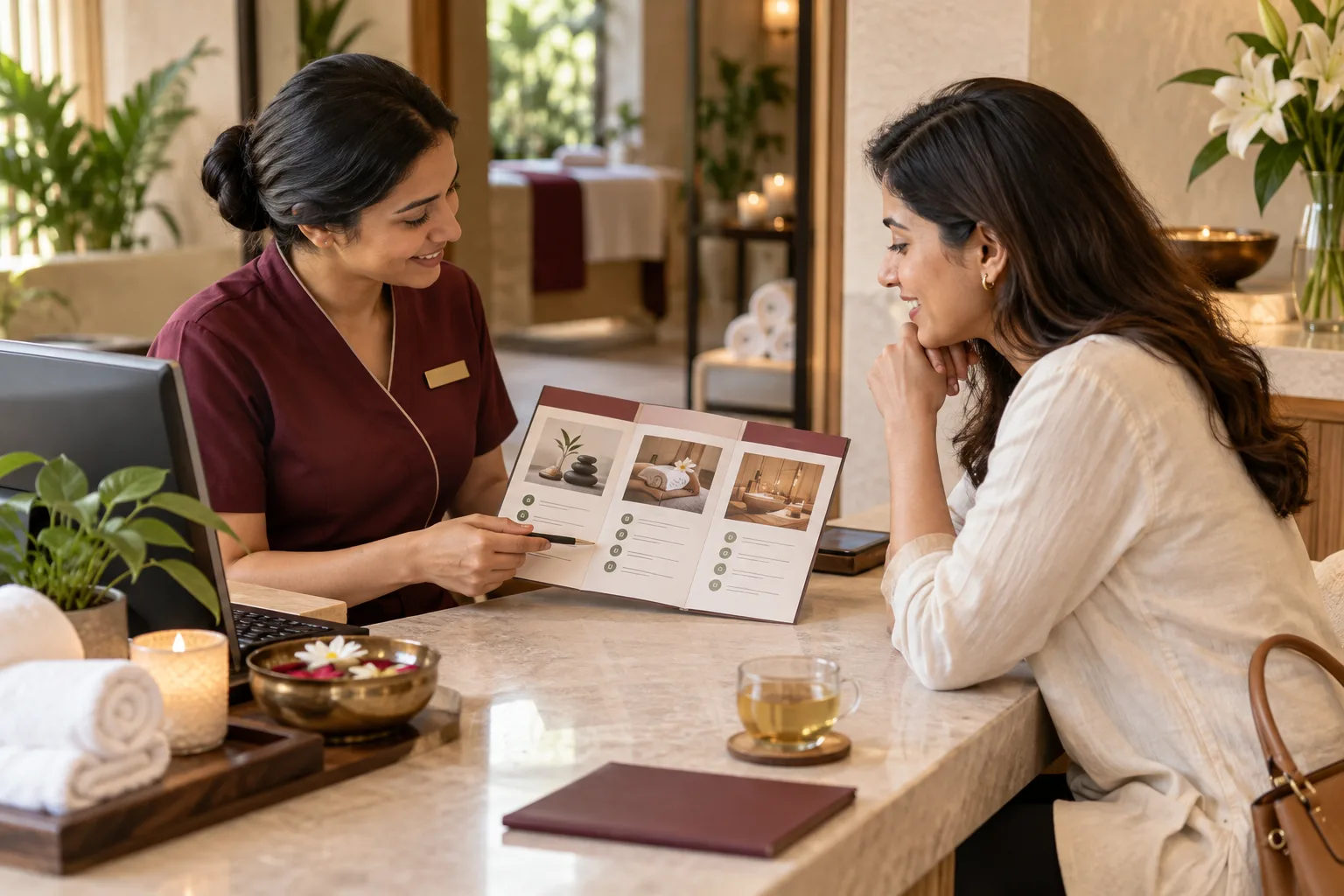 6 min read · 19 Aug 2026How to sell spa membership packages that customers renewBuild spa membership packages around how often customers already visit, with a saving they can see. Offer them after a session; follow up before renewal.
 7 min read · 3 Jun 2025How to reactivate dormant customersDefine dormant against your own purchase interval, then call your highest-value lapsed customers to ask why they stopped before offering any discount.
More for spas
Related work to consider.
Closest to this: search and visibility
Also for spas
Or start from the overview: sales and marketing for spas.
Your next practical step
Tell us what you are trying to grow, and we will read it before we call.
Eight short steps, mostly taps. Skip anything you would rather answer on the call.