IPL advertising · Marketing
Check who you will reach and what you are buying before committing to IPL advertising.
A large cricket audience is not automatically a buying audience. If you sell through dealers or need enquiries from business owners, an IPL proposal must explain why its reach matters to those buyers. A national package needs a stronger case than the tournament's popularity.
Scope, fee, reporting and term are agreed in writing after we have read your brief and spoken to you.
In one paragraph
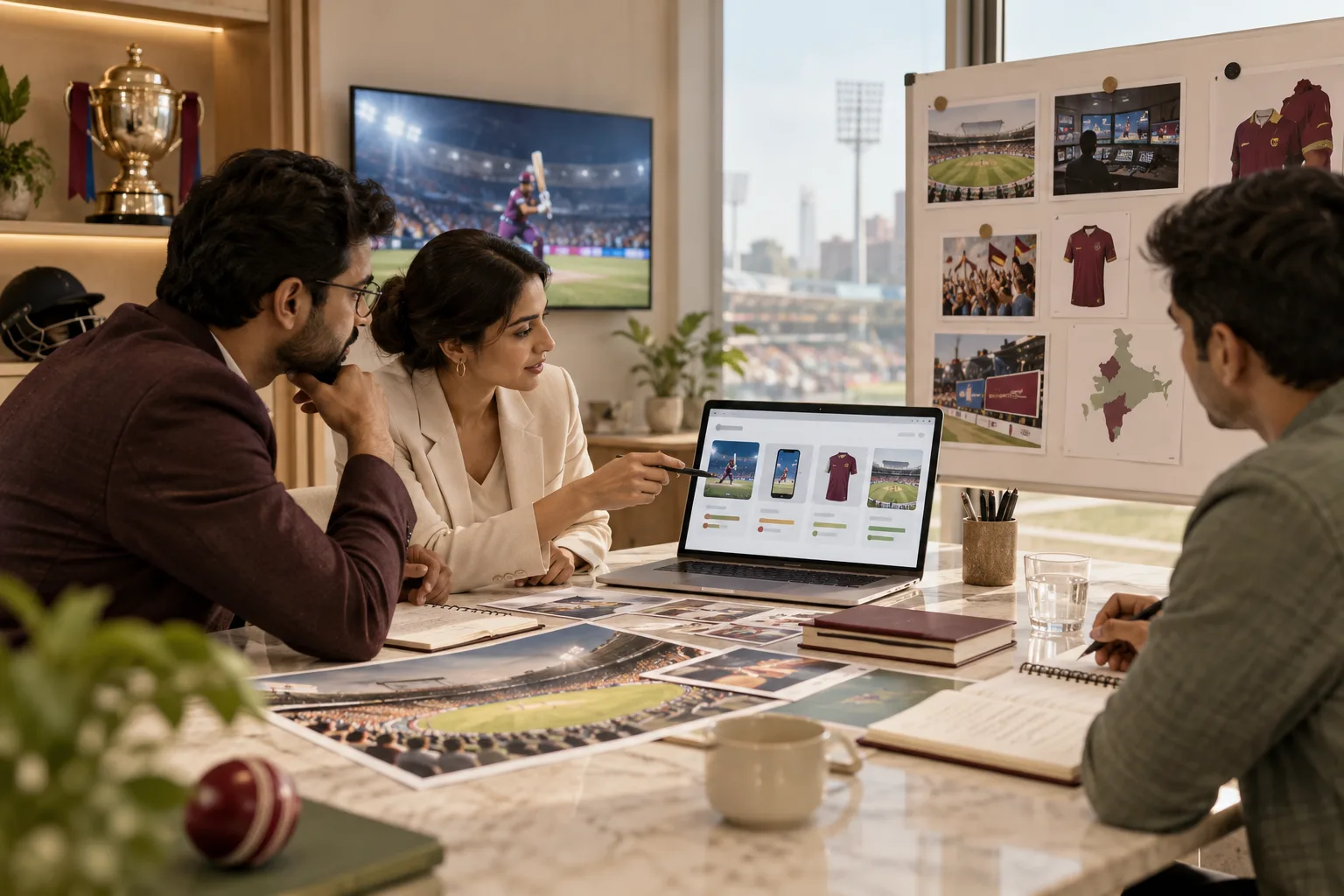
Indian Premier League (IPL) advertising covers paid placements around the tournament, including television spots, streaming ads, franchise sponsorships, and ground signage, each sold through its rights holder or appointed seller. GullySales checks current availability, compares the proposed audience and full cost with alternatives, and coordinates the agreed booking, creative approvals, response tracking, and delivery checks.
For consumer brands, the question is also practical: can someone who sees the advertisement find your product and receive it where they live? For a restaurant or retailer, a match-night offer is a different purchase from tournament sponsorship. It does not require an IPL media package.
GullySales holds no IPL rights or inventory and has no privileged access to the league, broadcasters, or franchises. We ask authorised sellers what is available for the actual season, then coordinate the work you approve. Last season's package is not evidence of current availability.
Who it is for
This is written for you if these sound familiar.
- Manufacturers and dealer-led brands with evidence that tournament viewers include their buyers
- B2B brands considering a proposal for recognition rather than immediate sales appointments
- Consumer and direct-to-consumer brands with stock and delivery across the proposed geography
- Regional companies comparing available franchise sponsorship with regional media
- Restaurants and retailers planning match-night offers without claiming tournament association
- Owners who want an existing IPL proposal examined before committing funds
Before you decide
When this may not be the right fit.
- A narrow B2B offer needing named decision-makers, where direct outreach or targeted advertising is the more relevant purchase
- A neighbourhood shop considering national reach without evidence that the spend serves its catchment
- An owner expecting guaranteed enquiries, sales, or unrestricted use of tournament and team branding
The problem
Does this sound like your business?
Common situations this work addresses.
“An unclear package”
A headline price combines match spots with bonus digital inventory. Without separate quantities and formats, you cannot compare it fairly with another proposal.
“Reach outside your market”
The proposed coverage extends beyond your dealers or delivery area. You pay for attention in places where a buyer cannot order.
“Unconfirmed usage rights”
The sponsorship presentation shows team imagery, but the agreement does not explain what you may use. Creative production begins before permission is clear.
“No record of response”
The advertisement runs, but calls enter the usual phone line without a source recorded. Sales cannot separate campaign enquiries from existing demand.
Choose the right scope
Start with the work your business needs.
Existing proposal review
You already have a sponsorship or media offer. The starting scope examines its quantities, seller authority, and commercial conditions before you decide whether to proceed.
Television or streaming placement
You need paid exposure rather than sponsorship association. We compare available feeds and formats, checking geography selection only where the seller confirms it is offered.
Franchise or ground presence
You are considering a regional association or signage position. The scope centres on the rights offered, visibility commitments, and permitted use of the association, subject to availability.
Independent match-night promotion
Your restaurant, shop, or dealer outlet needs an offer around match fixtures without purchasing IPL rights. Local media and the response plan are scoped separately from official tournament inventory.
What we do
The work we can include.
Each deliverable and the purpose it serves. Your written scope confirms what is included, who is responsible, and what it costs.
Current inventory record
A record of available placements, seller details, and stated availability for the season. You can see who is offering each placement and which commitments still need confirmation.
Comparable media options
A comparison of audience coverage, geography, and total cost, including alternatives where relevant. Each option separates confirmed delivery from estimates or promotional claims.
Itemised booking specification
The proposed match list, spot counts, durations, and format split, with targeting where offered. You approve named inventory rather than a package description alone.
Commercial questions register
Written questions covering product-type exclusivity, usage periods, schedule changes, and shortfall remedies. Seller answers are kept with the proposal for your commercial and legal review.
Approved film and artwork
Creative prepared to the agreed placement specifications, with approval status recorded. You check the offer and brand treatment; your own compliance reviewer approves claims and disclaimers before release.
Campaign response route
An agreed campaign number, code, or landing page, with the enquiry source recorded. A test response checks that it reaches the person responsible for answering and quoting.
Delivery and reconciliation file
Seller delivery evidence compared with the booking, plus a record of discrepancies raised under the agreed terms. You can distinguish what was ordered from what was reported as delivered.
How the result is measured
- Spots or impressions reported as delivered against the booked inventory
- Media cost per agreed buying unit, separate from production and GullySales time
- Campaign calls, code uses, and landing-page responses, separate from qualified enquiries
- Qualified dealer or buyer opportunities accepted by your sales team
- Completed orders and cost per order where campaign records support attribution
- Brand searches and enquiries by geography against the baseline, without claiming every increase came from IPL advertising
Recorded as a baseline before work starts, so every later report has an honest comparison.
Marketing and sales together
Your sales team receives a source-labelled enquiry, not a viewing figure.
Before launch, we agree who receives campaign responses and what makes one worth following up. The handover record carries the campaign source, buyer location, requirement, and assigned salesperson; your team adds the quotation decision and order outcome. Impressions remain delivery evidence, not sales opportunities.
Decisions to make before the work starts
Seller-controlled availability
Inventory, targeting options, and approval deadlines depend on the current authorised seller. No placement or usage right is assumed from a previous season.
Production and compliance dependencies
Film versions and format adaptations affect production cost. You provide approved product information and arrange your own legal or sector-specific compliance review before release.
Separate campaign requirements
Wider digital advertising, local media, and in-person activations need their own agreed scope. An IPL booking does not automatically include ongoing sales follow-up or a broader marketing programme.
This or a nearby service
Which piece of work fits your situation.
These services sit close to each other. The line between them, in plain words.
- Sports advertising and sponsorship
- Choose sports advertising and sponsorship when the question is any match, team, tournament or broadcast where a rights holder controls placement. Choose IPL advertising when the tournament itself is the setting and you need current availability, audience and total cost compared before committing.
- Television advertising
- Choose television advertising when you want airtime on named channels and feeds, bought to serve the places where you sell. Choose IPL advertising when the purchase is tied to the tournament and sits alongside streaming, franchise and ground options from rights holders.
- Connected TV and OTT advertising
- Choose connected TV and OTT advertising when streaming is the plan and viewing standards and frequency limits matter. Choose IPL advertising when streaming is only one of several tournament placements you are comparing against television and sponsorship, each sold by a different seller.
A sample of the output
A booking comparison sets each tournament option against what it includes and excludes.
This is a sample comparison for a home appliance brand weighing options. Each row is one placement. Read across to see what is in the offer, what is left out and what to ask the seller.
| Option | What is included | What is excluded | Question for the seller |
|---|---|---|---|
| Television spot during a match | Airtime on a named channel in an agreed band | Film production and repeat positions | Is the position fixed or sold as a package |
| Streaming ad in the live feed | Placement in a named platform's feed | Viewer targeting beyond what is stated | Which viewers see it and how is delivery reported |
| Franchise sponsorship | Agreed brand display on named items | Use of player images and team marks | What may we show in our own advertising |
| Ground signage | Board space at a named venue | Control over which matches or camera angles | How is display evidenced after the match |
| Independent match-night offer | Our own promotion on our own channels | Any official tournament or team branding | Which wording avoids implying a sponsorship |
Before we start
What we need from you.
The work depends on these. Each says why it is needed and what happens when it is missing.
- The audience you are trying to reach
- Tournament options reach broad households, so the buyer needs to be described clearly. A short description of who buys and where is acceptable. Without it, nothing can be compared and the narrow B2B cases are redirected.
- A total budget that includes production
- Rights fees are only part of the cost; film, artwork, approvals and tracking come on top. A single ceiling covering all of it is acceptable. Without it, proposals cannot be compared fairly and nothing is approved.
- Any proposal you have already received
- Offers from sellers or agencies are reviewed line by line against alternatives. Copies as received are acceptable. If none exist, we ask for itemised terms ourselves, which only starts after you approve who may be approached.
- An approved commercial film
- Placement needs a finished film or artwork that passes the seller's checks. An existing version is acceptable. If neither is available, planning stops after comparison and no booking is raised.
- A route for recording enquiries
- The tournament runs on a fixed schedule, so response must be recorded from the first spot. A form, call log or counter register is acceptable. Without it, delivery proof exists but sales cannot be compared with it.
How it works
How the IPL advertising work runs
The work itself, in order. How an engagement starts, from your brief to a written scope, is set out on our method page.
- 1
Audience and budget decision
After your requirements brief and a conversation, we agree the business goal and spending boundary. Scope, fee, and term are put in writing before work begins.
- 2
Seller and inventory confirmation
We request current availability and booking deadlines from the rights holder or appointed seller. Unconfirmed options remain separate from inventory offered in writing.
- 3
Placement and terms approval
You choose the format after reviewing the comparison and seller's terms. Your authorised decision-maker approves the booking, payment commitments, and any unresolved risks.
- 4
Creative and response handoff
Approved artwork goes to the seller for its required clearance. The response route is tested with your sales or store team before the campaign is released.
- 5
Delivery evidence review
We compare seller evidence with the order and raise shortfalls within the contractual notice period. Any proposed replacement or remedy goes back for your approval.
- 6
Commercial results review
Response records are compared with the baseline and sales outcomes available from your team. Reporting frequency is agreed in writing before work starts, rather than assumed.
Where this fits
Three pieces of sales work, in this order.
This work sits inside sales process design, at stage 1, prospecting and lead generation. The audit comes before it, and sales management keeps it running.
Step 1
Sales audit
Find where deals are being lost and what to fix first.
Start here if you cannot say where orders are lost.
Step 2 · you are here
Sales process design
One written way to sell, from first enquiry to repeat order.
Start here if every salesperson sells differently.
Step 3
Sales management
A target, a review routine and someone who owns the number.
Start here if the team has targets and no routine.
FAQ
Questions owners ask before they call.
Not here? More answers, or ask on WhatsApp.
How much does IPL advertising cost?
Can IPL advertising work for a B2B company?
Do you sell IPL inventory directly?
Can we put a team logo on our match-night offer?
Will you guarantee enquiries or recover our spend?
When should we approach you, and what happens first?
By industry
IPL advertising, written for your industry.
Related services
Often bought with this, or instead of it.
Your next practical step
Tell us what you are trying to grow, and we will read it before we call.
Eight short steps, mostly taps. Skip anything you would rather answer on the call.