Dealer network brand visibility · Channel and partners
Our brand should look the same at every dealer, and a buyer should find the right one.
A buyer in Hubballi searches for your brand on Maps and finds a dealer under a different spelling, with a phone number that rings in a godown. Ten minutes away, another dealer still shows the old logo on a faded board. Head office has a brand guide, but nobody can say which outlets follow it.
Scope, fee, reporting and term are agreed in writing after we have read your brief and spoken to you.
In one paragraph
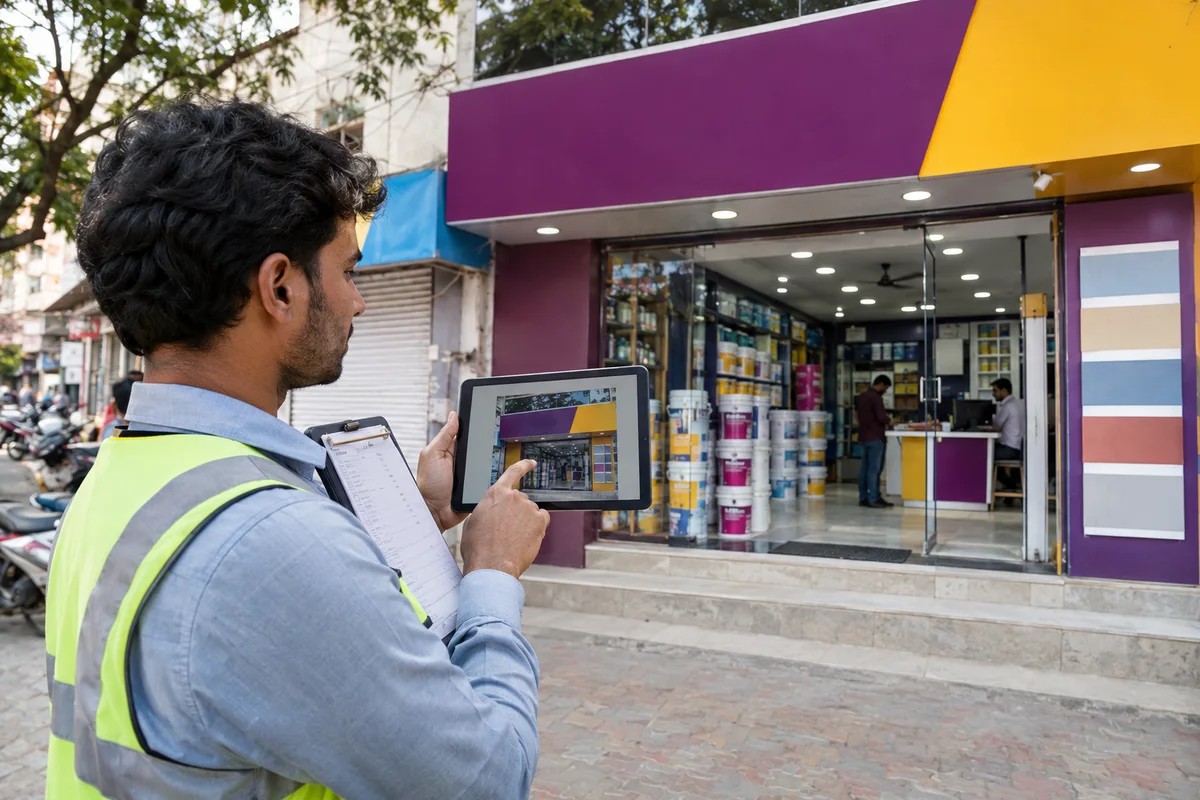
Dealer network brand visibility makes your brand look consistent and findable at every dealer outlet, on the street and online. GullySales sets the shop-front standard, the dealer brand kit and one agreed dealer record, aligns listings and locator pages to it, and checks each outlet against the standard by visit or photo.
This service covers what a buyer sees at the dealer: the signboard, the counter, the delivery vehicle, the uniform, the Google listing and the dealer page on your own website. It ends with a check of each outlet against one written standard.
Pick a sibling page where the problem is narrower. Brand guidelines is the rulebook itself. Google Business Profile management is one profile. Dealer development builds dealer sales. Multi-location media execution runs paid media across locations.
Who it is for
This is written for you if these sound familiar.
- Manufacturers whose dealers carry the brand on boards, vehicles and uniforms
- Brands whose dealers appear on Google under different names, addresses or numbers
- Companies with a brand guide that dealers do not follow in practice
- Distributors and franchisors rolling out a new logo across outlets
- Networks selling to households or to businesses, such as tiles, batteries, paints and spare parts
Not for
It is not the right fit if.
- You have no brand guide yet. Start with brand guidelines, then return here.
- You want one location's Google profile fixed. That is Google Business Profile management.
- Dealers will not accept a standard, or head office will not hold anyone to it after the visit.
The problem
Does this sound like your business?
Common situations this work addresses.
“Our boards look like four different companies”
Each dealer ordered signage from a local printer, some years ago. Logos, colours and taglines differ, and nobody holds the master artwork.
“Buyers cannot find the right dealer online”
The dealer appears under a spelling of its own, with an old address or a personal mobile number. The enquiry goes to the wrong person, or nowhere.
“Our website lists dealers who closed”
The dealer page was built once from a spreadsheet. Nobody owns the changes when an outlet moves, closes or changes its number.
“We sent the brand guide and heard nothing”
A PDF in a WhatsApp group shows that you sent it. It does not show what is on the shop front today.
What we do
The work we can include.
Each deliverable and the purpose it serves. Your written scope confirms what is included, who is responsible, and what it costs.
Dealer outlet standard
A written standard for the shop-front board, counter, display and interior branding, with sizes, placement and what must not appear. Head office signs it before any dealer sees it.
Dealer brand kit
Master signage files, vehicle branding and uniform artwork in the formats a local printer needs. A short sheet names who approves a variation.
Dealer record
One sheet holding each outlet's trading name, address, map pin, phone number, hours and the person who confirms changes. Every listing and web page is built from this record.
Listing alignment
Google Business Profile and directory entries compared with the dealer record, with duplicates and wrong names listed. Where a dealer sells several brands, the naming follows the platform's current rules on dealers and resellers.
Dealer pages on your site
A page for each dealer, or a dealer locator, written from the same record. It carries the address and number a buyer should use.
Outlet check
A field visit or a set of dated photos from the dealer: board, counter, vehicle, uniform. Each is marked against the standard and kept in the outlet file.
Correction list
For each outlet, the items that fail the standard, who fixes them and who pays. Head office sees which items stay open.
How the result is measured
- Outlets matching the written standard, by touchpoint
- Dealers with correct name, address and phone on Google and directories
- Duplicate or outdated dealer listings still open
- Dealer pages live and matching the dealer record
- Corrections raised, completed and still open
- Enquiries from dealer listings and pages, as your team records them
Recorded as a baseline before work starts, so every later report has an honest comparison.
Before you decide
Agree the work. Know how to judge it.
Dealer network brand visibility: use these checks to prepare, choose the scope, and review what changes.
Bring the right evidence
Map existing partners, their territories, and the customers they serve. Review active selling and repeat orders separately from the number of partners signed up.
Make the scope clear
Agree partner fit, territory rules, onboarding, and support responsibilities. Clarify how direct enquiries and partner enquiries are assigned before starting recruitment.
Check the work in use
Follow a partner enquiry through to an order and the next purchase. Check whether the partner has the product knowledge and material needed to sell without repeated intervention.
Know when to change course
If current partners cannot sell because supply or support is weak, resolve that before recruiting more. A bigger network can spread the same problem further.
These are discussion points, not a fixed package. GullySales confirms the deliverables, responsibilities, fee, and term in writing after reading your brief and speaking with you.
How it works
How the work runs
The work itself, in order. How an engagement starts, from your brief to a written scope, is set out on our method page.
- 1
Network and standard scope
After your requirements brief and a conversation, we agree which dealers and which touchpoints are in. The written scope names your approver and records the fee and term.
- 2
Outlet and listing baseline
We gather photos of current boards and vehicles and search for each dealer online. The baseline records what exists before anything changes.
- 3
Standard and kit sign-off
We draft the outlet standard, the dealer brand kit and the dealer record. Your brand owner approves the standard, and your channel head agrees what dealers must change and what they may keep.
- 4
Dealer briefing and corrections
Dealers receive the kit and a short briefing in their language. Each dealer confirms its record and confirms or corrects its listing under its own login.
- 5
Outlet check and review
We mark each outlet against the standard from visits or photos. Your channel sales owner receives the correction list and decides which dealers need a follow-up.
Before you hire anyone
Do this first yourself.
Look at your network the way a buyer does before you spend on anything.
- Search your brand name plus a town on Google Maps for ten dealers and note the name, address and phone number each shows.
- Walk or photograph five outlets and compare each board and counter with your current logo.
- Open your own website and check that every listed dealer is still trading at that address and number.
- Name one person at head office who owns the master logo files and approves any variation.
- Write down what a dealer may and may not put on a board, and who pays for a replacement.
Judge any provider
What to ask any provider of this service.
Useful whoever you choose, including us.
- Which single record will our dealer names, addresses and numbers be kept in, and who updates it?
- How will you check an outlet, by visit or by dated photo, and what does each check cover?
- Who holds the Google profile login for each dealer, and what do you do if a dealer already has duplicates?
- What happens to a dealer who fails the standard after the check?
- Which costs do we pay separately, such as boards, printing and installation?
Where this fits
Three pieces of sales work, in this order.
This work sits inside sales process design, at stage 1, prospecting and lead generation. The audit comes before it, and sales management keeps it running.
Step 1
Sales audit
Find where deals are being lost and what to fix first.
Start here if you cannot say where orders are lost.
Step 2 · you are here
Sales process design
One written way to sell, from first enquiry to repeat order.
Start here if every salesperson sells differently.
Step 3
Sales management
A target, a review routine and someone who owns the number.
Start here if the team has targets and no routine.
FAQ
Questions owners ask before they call.
Not here? More answers, or ask on WhatsApp.
How is this different from brand guidelines?
Why not just use Google Business Profile management?
Do you build dealers or run our ads across locations?
Who owns each dealer's Google profile?
Who pays for new boards and vehicle branding?
What do you need before quoting?
How much does it cost?
How long is the contract?
How soon will we see results?
Who will actually do the work?
By industry
Dealer network brand visibility, written for your industry.
Related services
Often bought with this, or instead of it.
Your next practical step
Tell us what you are trying to grow, and we will read it before we call.
Eight short steps, mostly taps. Skip anything you would rather answer on the call.