YouTube channel strategy and SEO · Marketing
Somebody searches your problem tonight and watches a video you made in 2024.
Our YouTube influencer marketing page is about renting somebody else's channel for one video. This page is your own channel, which you keep, and which carries on working after the spending stops.
Scope, fee, reporting and term are agreed in writing after we have read your brief and spoken to you.
In one paragraph
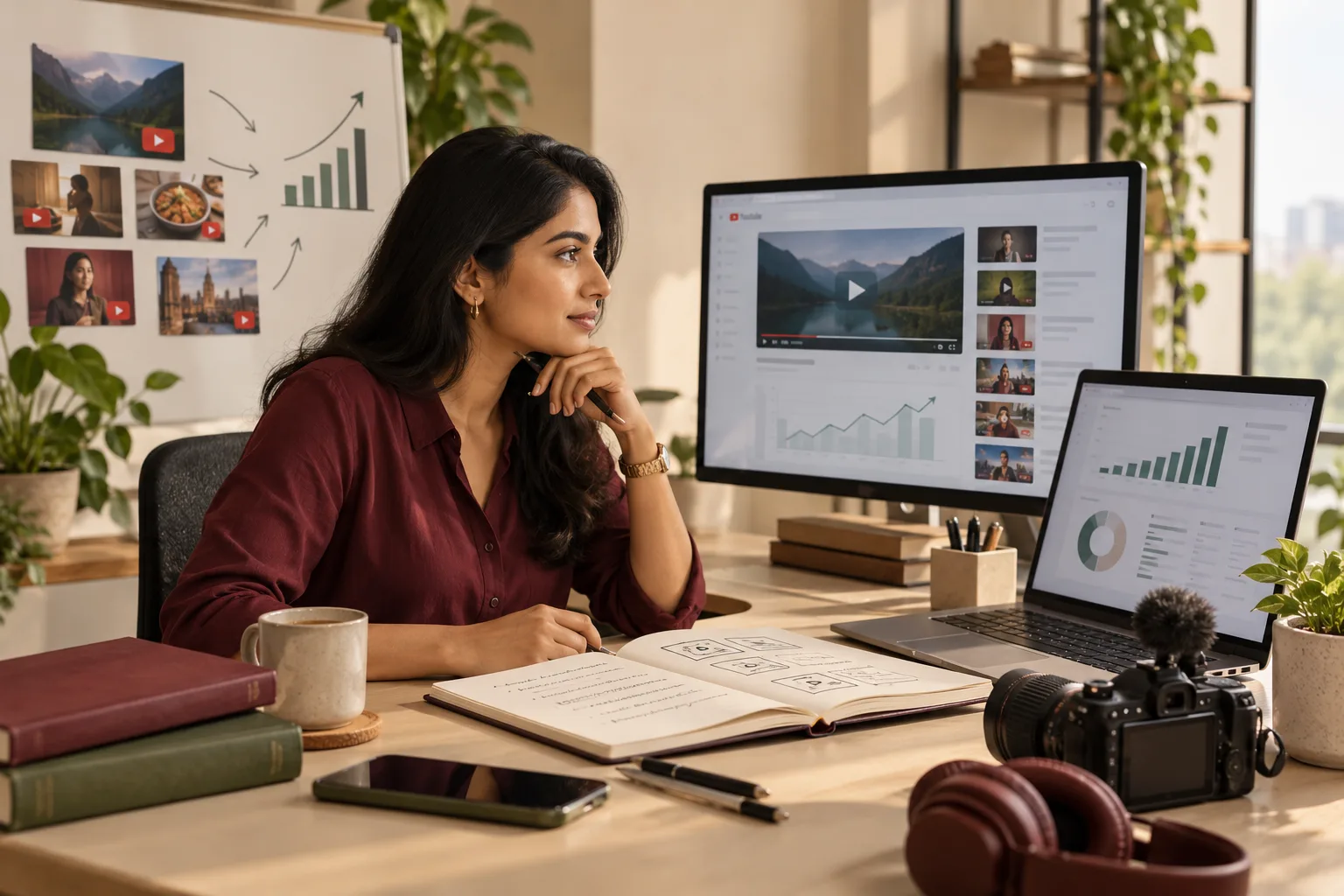
YouTube channel strategy and search engine optimisation treats YouTube as a search engine rather than a feed, where one video keeps earning views for years. GullySales picks topics people actually search for, writes the titles and thumbnails that decide the click, and reports the enquiries each video brings.
YouTube behaves like a search box with a screen attached. A person types a problem, and the answer that comes up can be two years old and still the first thing they watch.
That changes what is worth filming. Your anniversary party is gone in a week. A clear answer to the question you get on every enquiry call earns views for years, which is why most small businesses should publish rarely and make each one properly.
Who it is for
This is written for you if these sound familiar.
- Businesses whose buyers search how something is done before deciding to hire anybody
- Manufacturers and dealers selling equipment people watch before they order
- Clinics and practitioners answering the same patient question in every consultation
- Owners sitting on twenty uploads with no plan behind a single one
- Coaching centres and trainers whose subject teaches better on video than on a page
Not for
It is not the right fit if.
- You want to publish every week whatever happens, which fills a channel with videos nobody searched for
- Nothing you sell can be shown and nobody will speak on camera, leaving slideshows with a voiceover
- You need enquiries this month, in which case run ads and come back to the channel when there is patience for it
The problem
Does this sound like your business?
What owners tell us on the first call, in their words.
“Views stop dead after the first day”
Everything that arrives comes from the people you sent the link to. Nothing is being found through search or suggestion, so each video's life is one evening.
“Our thumbnails are a frame from the video with the logo on it”
The title and the thumbnail are the entire decision a viewer makes. A blurred still of somebody mid-sentence loses to a competitor who spent ten minutes on theirs.
“The videos are about us and not about what anyone asked”
Company profile films, event coverage and a founder's message. Nobody types any of that into a search box, so nothing is ever found.
“We cannot say whether the channel has produced one enquiry”
The description has the home page link, the same as every other channel. There is no way to tell a caller who watched a video from a caller who searched your name.
What we do
Everything that is included.
Each deliverable, and what it gets you. Nothing here is an extra.
Topics taken from search, not from a meeting
What people type when they have your problem, checked against what already ranks for it. Your sales team's most repeated question is nearly always on the list.
Titles written for the search and the click
The words a person used, in a title that still makes somebody choose your video over the five beside it. Keyword stuffing loses the click and the click is the whole game.
Thumbnails made on purpose
Three or four words, one face or one object, readable at the size of a stamp on a phone. Drafted before the video is shot, because the thumbnail decides what has to be filmed.
The first thirty seconds, scripted
A searcher decides in that window whether you are answering their question or clearing your throat. Everything else in the edit depends on getting past it.
Descriptions, chapters and the link people use
A description written for a reader, chapters so somebody can jump to the part they came for, and a tracked link or WhatsApp route that belongs to the channel alone.
A publishing rhythm you can hold for a year
Fewer videos, each worth finding. Two good ones a month that answer real searches beat weekly uploads that exist to keep a schedule.
The back catalogue reworked
Old uploads re-titled, re-thumbnailed and given proper descriptions. A video already carrying some watch history is the cheapest thing on the channel to improve.
Reporting against enquiries
The report separates what search brought from what a one-off share brought, and names the videos that produced calls.
How the result is measured
- Impressions and click-through rate for each title and thumbnail
- Average view duration, and the point where viewers leave
- Views a video earns after its first month, and again after six
- Enquiries traced to the channel's own link or WhatsApp route
- Subscribers arriving from search, separated from subscribers from a share
- Videos published against the plan
Recorded as a baseline before work starts, so every later report has an honest comparison.
How it works
How the work runs
The work itself, in order. How an engagement starts, from your brief to a written scope, is set out on our method page.
- 1
Decide what the channel is for
Answering buyers before the call, reaching people who have never heard of you, or training existing customers. Each one changes which videos get made first.
- 2
Find the searches worth answering
We list what your buyers type, in English and in the regional language, then judge each by buying intent rather than by how many people search it.
- 3
Script and shoot in batches
Several videos filmed in one session, because getting a doctor or a plant head in front of a camera is the hard part and should be done once.
- 4
Publish with the title and thumbnail settled first
Both are written before the upload, not after. A video uploaded with a working title keeps that title for two years.
- 5
Read the retention graph, not the view count
Where viewers left tells you what to change. A video with fewer views and a flat retention line is worth more than a shared one people abandoned at minute two.
- 6
Go back to what is already working
The videos still earning views months later show what the channel should make more of, and that decides the next batch.
Where this fits
Three pieces of sales work, in this order.
This work sits inside sales process design, at stage 1, prospecting and lead generation. The audit comes before it, and sales management keeps it running.
Step 1
Sales audit
Find where deals are being lost and what to fix first.
Start here if you cannot say where orders are lost.
Step 2 · you are here
Sales process design
One written way to sell, from first enquiry to repeat order.
Start here if every salesperson sells differently.
Step 3
Sales management
A target, a review routine and someone who owns the number.
Start here if the team has targets and no routine.
FAQ
Questions owners ask before they call.
Not here? More answers, or ask on WhatsApp.
How often should we publish?
Is this the same as paying a YouTuber to review us?
Can you guarantee our video ranks first?
Do we need a studio?
How long before a video brings enquiries?
What does this cost?
How long is the contract?
Who will actually do the work?
What do you need from us?
What if we are not happy with the work?
By industry
YouTube channel strategy and SEO, written for your industry.
Related services
Often bought with this, or instead of it.
Learn the method
The teaching pages behind this work. Read them to judge the work, or to do the parts you want to do yourself.
Your next practical step
Tell us what you are trying to grow, and we will read it before we call.
Eight short steps, mostly taps. Skip anything you would rather answer on the call.