Notes for owners · Websites and conversion
A website brief for a small business: what to write before you call a developer
A two-page website brief template covering goals, pages, who answers enquiries, content owners and what you already own, with a filled-in example for a ship supplier.
The GullySales team · Updated 17 Oct 2026 · 5 min read

On this page
A website brief for a small business is a two-page document that says what the site must achieve, which pages it needs, who answers the enquiries, who supplies the content and what you already own. Write it before you call anyone. It lets you compare quotes fairly, and it stops a developer from filling the gaps with their own idea of your business. The template below can be filled in an afternoon.
Page one: purpose, people and the first action
Write these five items in plain sentences:
- What the site is for. One sentence, such as "to get enquiries from ship owners and managers for supply of provisions and spares".
- Who visits. Two or three kinds of person and what each wants to find in the first minute.
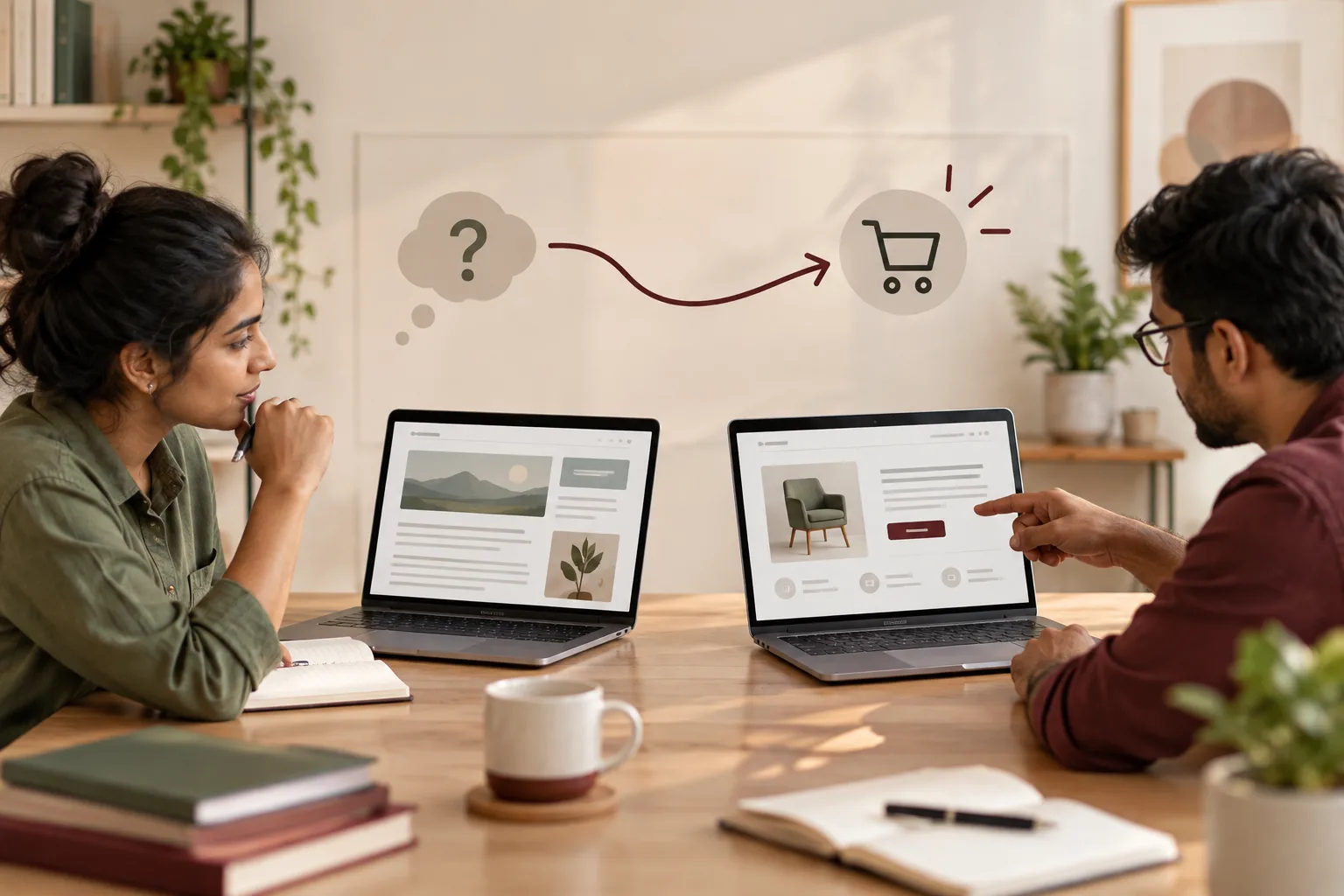
- The first action. The one thing you want most visitors to do: call, send a form, message on WhatsApp, or download a catalogue.
- Who answers. A named person for calls, one for forms. If nobody is named, enquiries arrive and nobody follows up.
- How you will judge it. Enquiries counted the same way each time.
Page two: pages, content and what you own
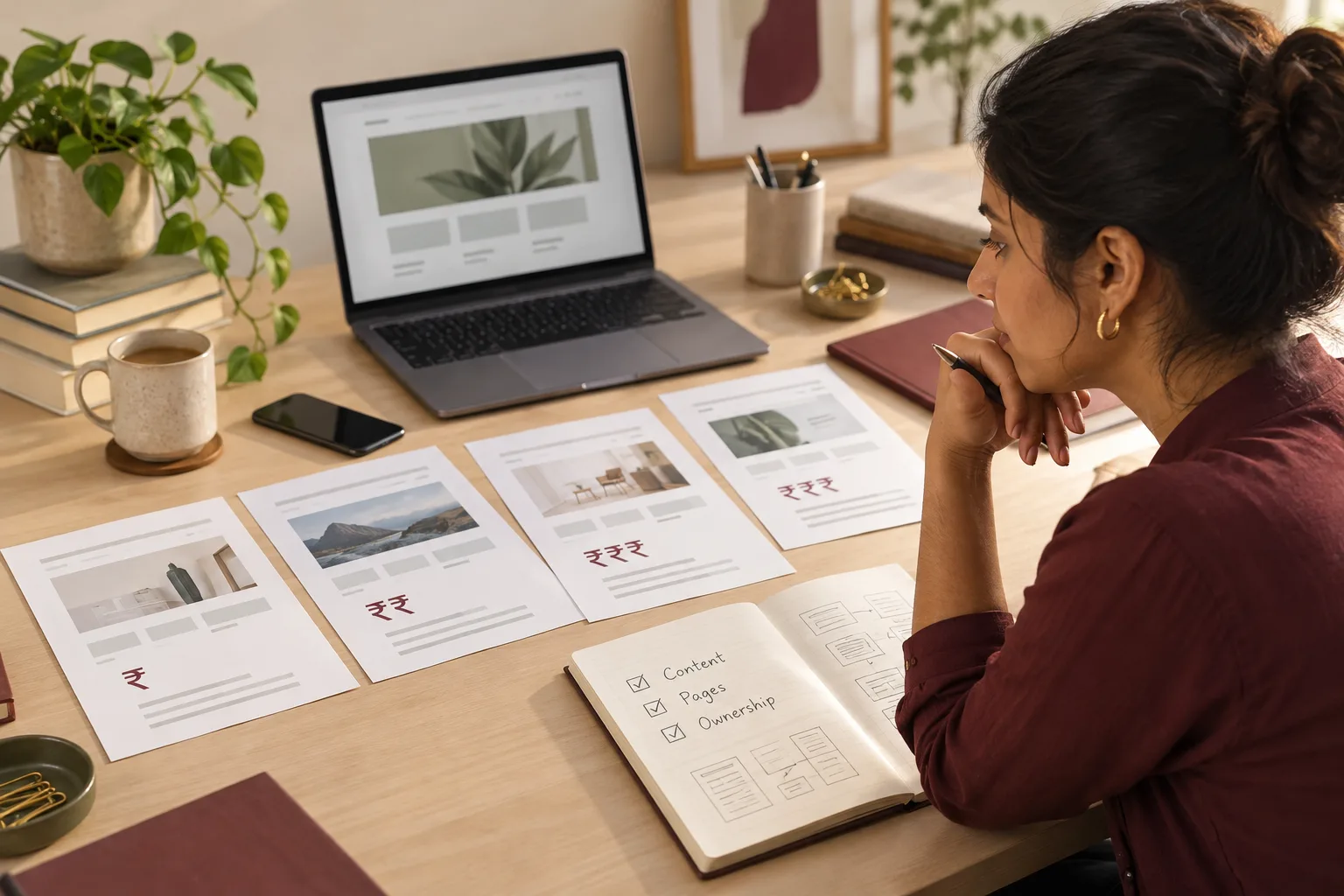
A brief should list pages by the question each answers, not by name. The table below is a starting layout.
| Page | The question it answers | Who supplies content | Ready by |
|---|---|---|---|
| Home | What do you do and for whom? | Owner | |
| Products or services | What exactly can I buy? | Sales head | |
| Proof | Who else has used you? | Owner, with customer consent | |
| About | Who am I dealing with? | Owner | |
| Contact | How do I reach you today? | Office |
Under the table, list what you already own: domain name and who holds the login, hosting, logo files, photographs, existing text, old website address, Google Business Profile, WhatsApp number, analytics account. If you do not know, write "unknown" and find out before the first meeting.
A ship chandler's brief, filled in
An invented example. A ship chandler in Visakhapatnam supplies provisions and deck stores, and its brief reads:
Purpose: to receive supply enquiries from ship managers and agents. First action: send a request-for-quotation form or tap a WhatsApp button. Who answers: the operations manager in the daytime, the owner after hours. Pages: home, provisions, deck and engine stores, port coverage, about, contact. Content owners: the operations manager supplies the product lists; the owner writes the about page; photographs are shot by a freelance photographer who has been booked. Already owned: the domain (login with the owner's nephew, to be retrieved), a logo, no photographs.
One mistake showed up on the first read-through. The owner wanted the site live before a trade event, but nobody had been named for the product lists, and the operations manager was away that week. The brief now lists the lists' deadline as the first item and makes the launch date depend on it. The launch date moves by a few weeks, which annoys the owner, but nobody finds out on launch day that the pages are empty.
What to leave out of a brief
Leave out the colours and fonts you like. Show two sites you admire instead, with a line on what you like about each. Leave out the technical stack too. A wish list is fine, but put it under a heading called "later", because a developer who sees thirty items prices all thirty.
Also resist describing the design in words. A brief that says "modern and clean" can describe any website. Better: "calm, with the product photographs large, and the phone number visible on every screen."
One line on life after launch
Add a line saying who will edit the site once it is live. If the answer is "the developer, for every change", say so and ask what each change costs. If you want your own staff to update prices and photographs, say that the platform must allow it without code. A small change can turn out to need a quote. Writing the answer into the brief means the developer prices the right thing from the start, and you are not tied to one supplier for a job your office could do.
Where the brief earns its keep
The brief is most useful in the first conversation and again at sign-off. Hold each developer to the same document and compare quotes by what they would build, who maintains it afterwards, and what they need from you. If the page list is the part you are unsure of, that is the subject of website strategy and information architecture. Costs are discussed in how much a business website costs in India.
Questions to put to each developer
Send the same brief to two or three developers and ask each the same questions in writing. Who will actually build it, and who do I speak to when something breaks? What do you need from me, and by when, for the launch date to hold? Where is the site hosted, and who holds the logins on launch day? What happens if I want to change a page myself afterwards? What is included in the price and what is extra?
Compare the answers on those points rather than on the design samples. A developer who asks you questions about enquiries and content owners is probably working from the brief. If a quote arrives with none of those questions answered, ask whether the brief was read.
Keep a copy of every version of the brief you send. When scope grows during the project, as it often does, you can point to the page and say what was agreed. That protects both of you.
Write the first page tonight
Start with the five items on page one and send them to the person who will answer the enquiries, to confirm they agree. Fix the gaps they find before you phone a developer. The brief also decides how the site fits with the rest of your marketing, since the first action you pick is the one every ad and listing will point to. If you would like help turning the brief into a build, see website design and development, or tell us what you need.