Notes for owners · Sales management
Is your receptionist a sales role? Training for the first conversation
The person who picks up the phone decides whether a new patient books. What to teach a clinic receptionist for the first call, what to leave to the doctor, and how to check it.
The GullySales team · Updated 17 Oct 2026 · 6 min read
Rules for this trade differ by state and professional body, and they change. Check the current position with your own council or adviser before you act on anything here.

On this page
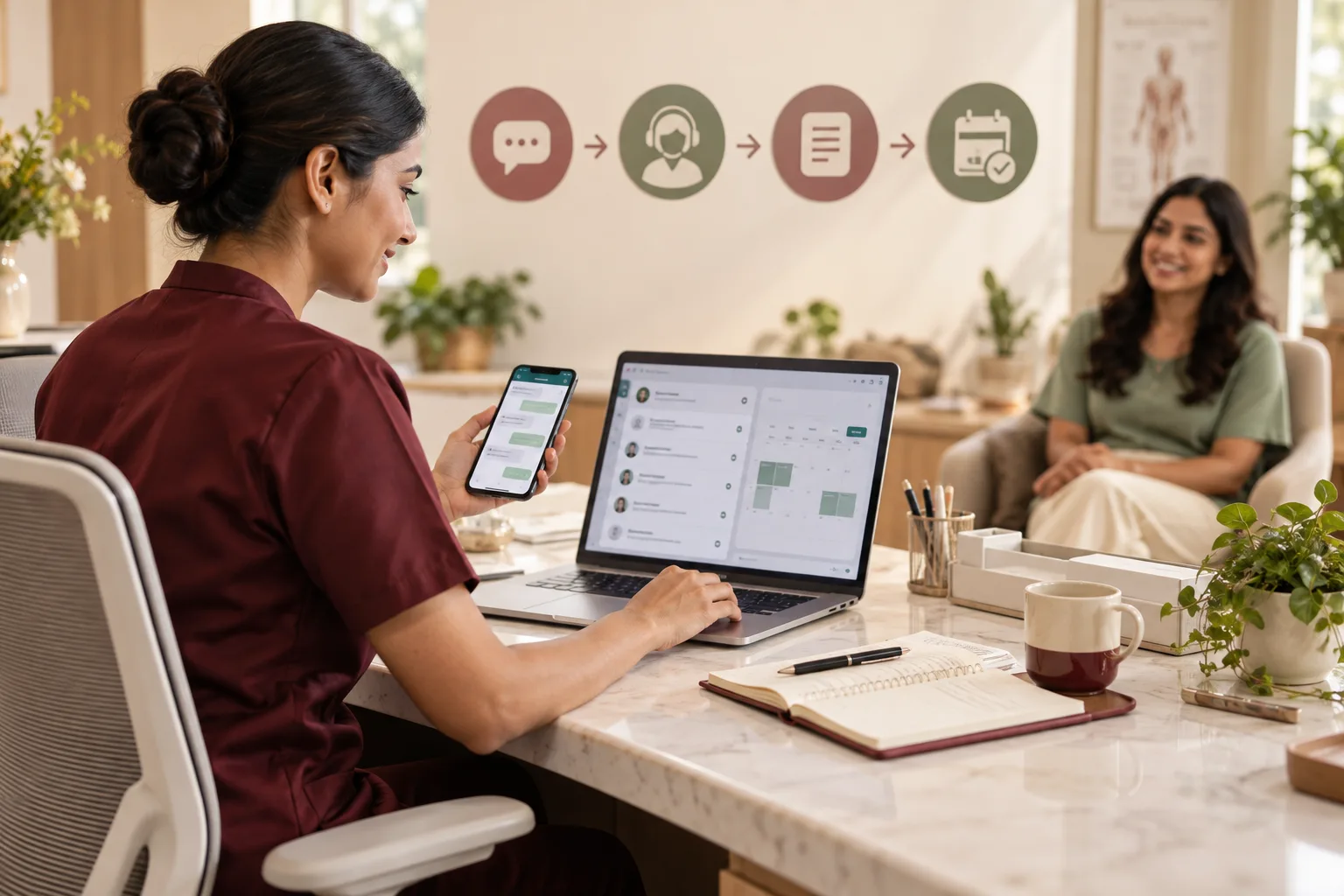
A new patient who rings a clinic is not choosing a doctor yet. The caller is choosing between three numbers on the same search page, and the person who answers can decide whether they book or dial the next one. So yes, the receptionist has a sales role, but a small one. The receptionist does not sell. They answer plainly, ask two or three useful questions, offer a slot, and leave everything clinical to the doctor.
What the caller wants in the first minute
A first-time caller usually opens with something practical, not clinical: "Do you do hearing tests? What time is the doctor there? What does the first visit cost?" The caller is judging whether the clinic feels organised. A receptionist who says "Hold on, let me ask" and puts the phone down has already lost some of that feeling.
Teach four answers until they are automatic: what the clinic treats, which doctor sees what, the hours, and what the first visit includes. Put them on a card by the phone. The fee goes on the card only if the clinic is happy to state it on the phone; some prefer to give it at booking.
The running order of the call
This is not a speech to read out. It is an order of moves.
- Greet with the clinic's name and your own. "Sunrise Hearing Clinic, this is Meena."
- Ask for the name and the reason. "May I have your name? What are you looking for help with?"
- Answer the question first, then ask yours. If the caller asks the fee, give it, then ask who the visit is for.
- Offer two slots. "I have Thursday at 11 or Friday at 4. Which is easier?" An open "when would you like to come?" gets "I will let you know".
- Take the number and read it back. Then say what happens next: a message with the address, a reminder, the name of the doctor the caller will meet.
- Finish with the landmark or parking. A patient who cannot find the clinic may not come at all, whatever the fee.
If the caller does not book, ask one thing: "Shall I send the details on WhatsApp, in case you want to decide later?" Note the answer. This is the one moment the receptionist sells, and it is only an offer to follow up.
What the receptionist can say, and what goes to the doctor
| The receptionist can | The receptionist hands to the doctor |
|---|---|
| Say what services the clinic offers | Say what a symptom might be |
| Quote the consultation fee and hours | Suggest a medicine, test or treatment |
| Explain how the first visit runs | Promise how a treatment will turn out |
| Give directions and parking | Comment on another doctor's advice |
| Offer a slot and send a reminder | Decide whether a case is urgent |
On the last row, sit down with the doctor and write three or four phrases a caller might use that mean "this person should speak to the doctor now". The receptionist uses the list and does not make the judgement. Rules differ by state and body and change, so check what your own council expects of clinic staff and of advertising.
An invented case: a hearing clinic in Nashik
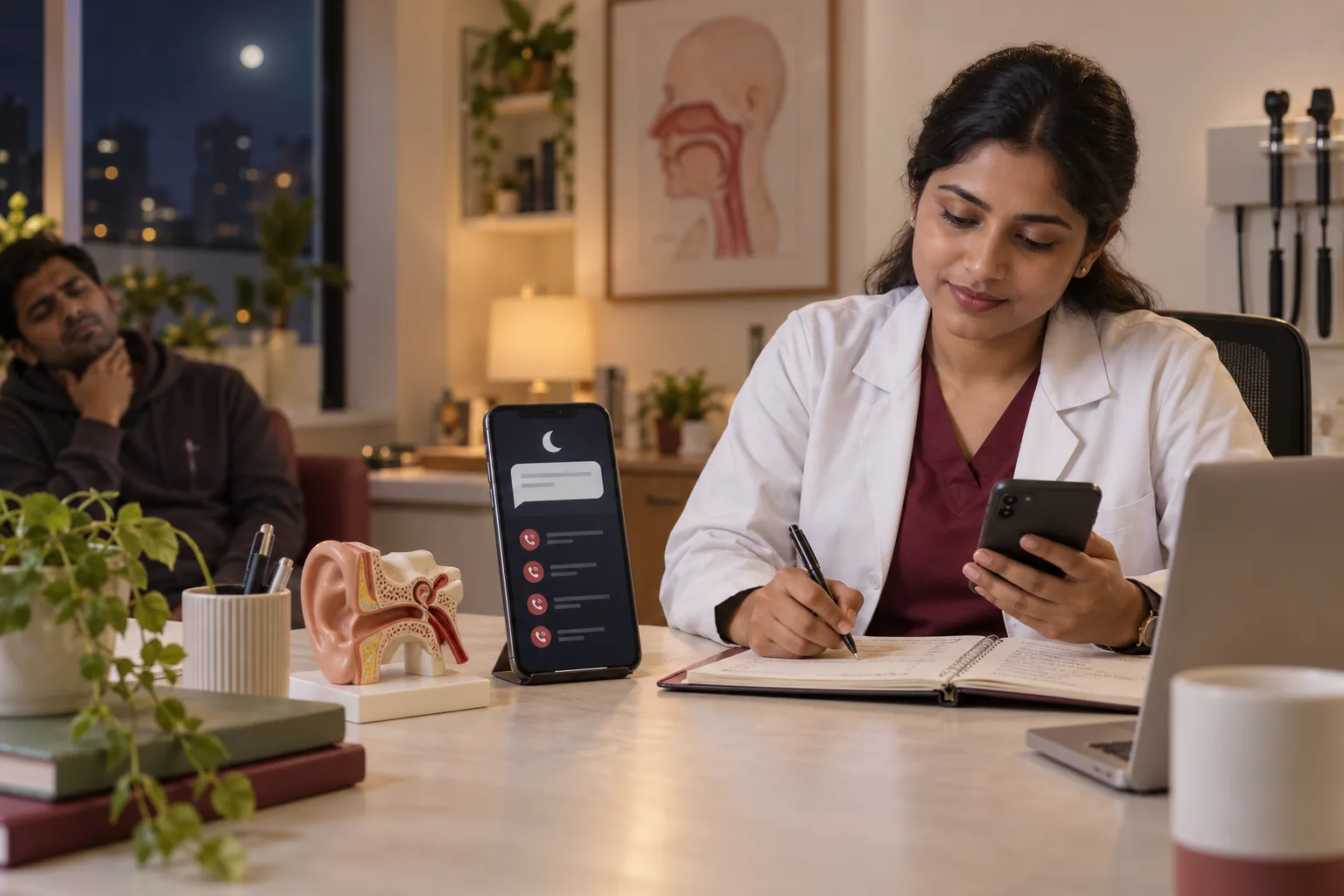
Take an invented hearing clinic in Nashik whose receptionist, new that month, takes a call from a man asking about hearing aids for his father. The receptionist says, "Aids start from some price, come and see the doctor." He says he will think about it and never calls back.
The price answer was not the trouble. The receptionist gave no reason to come, no slot and no number to call back. After the clinic adopts the running order, the same call changes. The receptionist asks whom the aid is for, explains that the doctor begins with a hearing test, so nothing needs buying on the first day, offers two slots and notes the son's number. When he says he will think about it, they offer the details on WhatsApp. The son does not book that day, because his father has to agree first. The clinic still has a number to follow up and the son has a reason to come, but the win is a chance at a visit, not a booking.
Checking it without catching anyone out
Keep a tally on a sheet for two weeks so you have something to compare against: calls received, calls where a name and number were taken, visits booked, visits attended. The number to watch is the gap between calls received and names taken. A wide gap means the desk answers questions but asks none. If bookings are made but not kept, the reminders need attention.
Then listen. Sit beside the receptionist for an hour, or ask a friend to ring as a new patient. Tell the receptionist beforehand. This is coaching, not inspection, and they should hear that from you in so many words.
When a script is not the answer
If the phone rings all day in the middle of the receptionist's desk work, no script helps. A receptionist who is also the billing clerk, the file keeper and the patient escort will miss calls however well they speak. Fix the load first with a second phone, a call-forwarding rule at lunch, or an extra pair of hands in the afternoon rush.
Skip commission too if you cannot track bookings reliably. Wrong numbers on a sheet turn into arguments.
Print it and listen to five calls
Print the running order and tape it beside the phone. Then listen to five calls this month, and note where each one stalls. The step after the call is in how clinics can improve the journey from online enquiry to appointment. If you want the desk trained with you, see sales team training, the healthcare hub for more on clinics, and tell us what you need.