Two-wheeler dealers · Follow up systems
Ring the father who has to approve the bike, not only the son who wants it.
Follow-up in a two-wheeler showroom is what happens after the visit: the rider who needs his father's approval, the one waiting for the finance answer, the one told the bike is on a wait. GullySales builds the call list, the words for each case and the note that records why a sale did not happen.
Scope, fee, reporting and term are agreed in writing after we have read your brief and spoken to you.
What follow up systems means
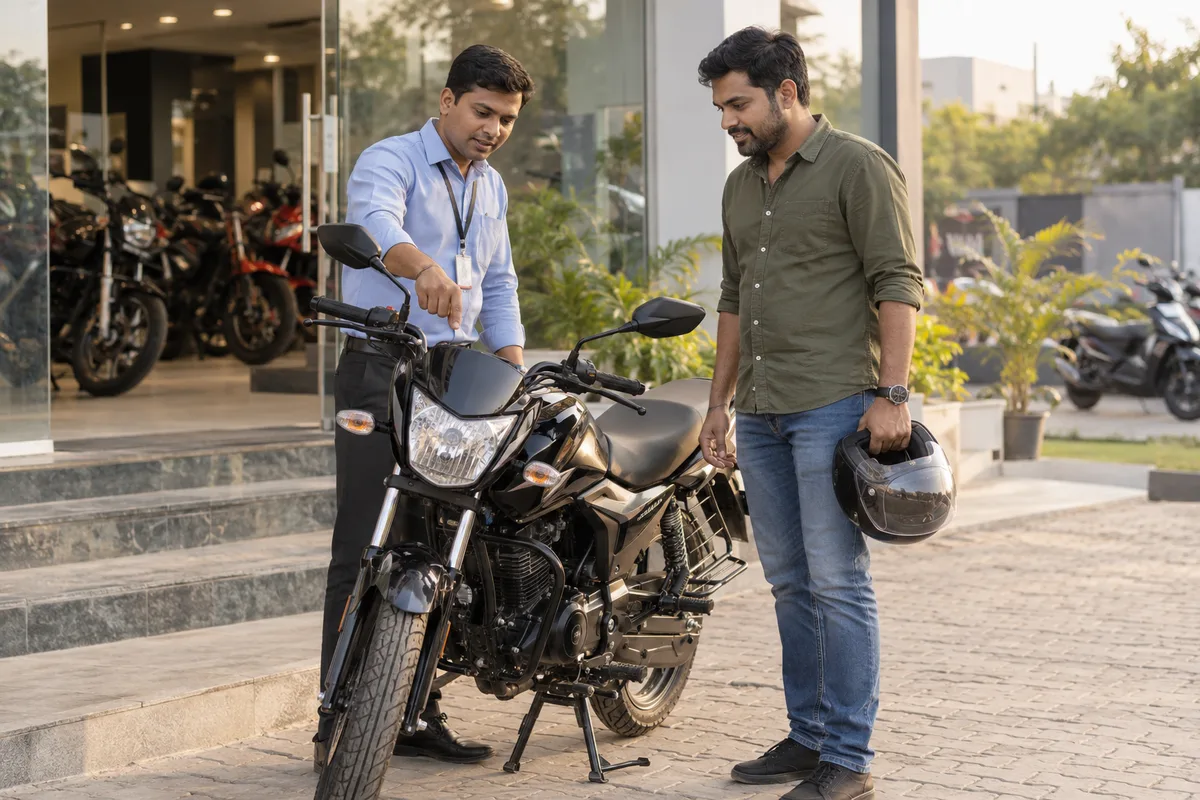
A follow-up system is the set routine for calling, messaging or emailing an enquiry more than once, since most buyers do not decide on the first conversation. GullySales sets the number and timing of follow-ups so an undecided buyer keeps hearing from you until they decide either way.
Also for two-wheeler dealers
- Lead generation for two-wheeler dealers
- SEO for two-wheeler dealers
- Local SEO for two-wheeler dealers
- Pay per click advertising for two-wheeler dealers
- Social media marketing for two-wheeler dealers
- WhatsApp marketing for two-wheeler dealers
- Reputation management for two-wheeler dealers
- Video marketing for two-wheeler dealers
Sales and marketing for two-wheeler dealers, the overview.
Last updated 6 Oct 2026.
For two-wheeler dealers
Where it usually goes wrong, and what we would do.
“The decision is made at home by someone who was not in the showroom”
A parent, a spouse or a friend decides on the model and the instalment. A message the rider can show them, with the model, colour and instalment worked out, does the follow-up for you.
“The finance answer arrives and nobody calls”
The lender's approval comes in two days later and the rider has already bought. A call the day approval arrives, with the documents to bring, keeps the sale.
“The rider told to wait hears nothing”
A buyer told his bike is on a wait gets no news until the day it arrives. A date, or an honest not yet, keeps him from booking elsewhere.
What we do
What we deliver for two-wheeler dealers.
Every deliverable, what it covers for you, and the result it is there to produce. Nothing here is an extra.
A call list of riders who visited and did not book
Everyone who visited or rode and left without booking, taken from the register with the model, the date and what he said.
Result: The riders nearest to a decision are on one page.
A message the rider can show his family
A short message for each model with the colour, the instalment and the showroom hours, written so a parent can read it without the rider beside him.
Result: The person who signs has the facts in his own phone.
A finance-status routine
A rule to check the financier's status before ringing the rider, so the call carries a real answer and a list of missing documents.
Result: The finance question stops losing sales.
A waiting-period update for bikes on order
A short message for riders on a wait: the colour that moved up, stock expected or a plain not yet, noted in the register.
Result: A waiting rider stays with you.
Festival-week follow-up for the undecided
A list of riders who said they would buy around a festival, called with the models and booking dates a few days before it.
Result: A rider who postponed for the festival has a reason to come in.
One line on why each sale was lost
The reason in the rider's own words, entered by whoever spoke to him last.
Result: You learn which models, instalments and answers lose sales.
How the result is measured
- Follow-up completion rate
- Average number of follow-ups before close
- Enquiries closed after repeat follow-up
Recorded as a baseline before work starts, so every later report has an honest comparison.
Follow-up routine for dealers
What the showroom does next for each kind of rider who has gone quiet.
- Enquired by phone or message, not yet answered
- The executive on the register replies the same day with the on-road build-up and the colours in stock, then offers a test ride slot. Note the attempt and the next date.
- Test ride done, no booking
- The executive who gave the ride calls the next day, asks what is holding him back and writes the answer down. Offer a second ride with the family.
- Finance in process
- Check the status with the financier before calling, so there is something real to say. Tell him which document is missing and note the date he promised to bring it.
- Said he will bring his father
- Send a message the father can read, with the model, the colour, the instalment and the showroom hours. Ask for a day, note it and ring on that day.
- Told the bike is on a wait
- Stay in touch with what you know: a colour that moved up, stock expected or a plain not yet. Do not promise a date you do not have.
- Bought a bike some years ago and is due a change
- From the invoice register, ring owners of ageing bikes at a service visit or a festival. Offer an exchange valuation and ask what they ride the most.
Who it is for
This is written for these two-wheeler dealers.
- Single-brand two-wheeler dealerships
- Multi-brand two-wheeler showrooms
- Scooter-focused dealerships
- Dealers with a large service business
- Rural and semi-urban dealerships
- Dealers with multiple branches
How it works
From your first message to the first report.
No open-ended retainer. Every step gives you something in writing.
First
Your brief
You tell us what you need in a few short steps: your business, what you want, where enquiries come from and how they are handled.
After the brief
A conversation and a written scope
We read it, then talk with whoever handles your enquiries. If you want our help, the scope, the fee and the reporting come in writing, and nothing starts before you have read them.
Before work starts
Baseline recorded
The numbers this work is meant to move, such as enquiries, quotations, orders, visits or renewals, written down so every later report has an honest comparison.
After the baseline
The first fix goes live
The fix we agreed to start with is put in place and measured against the baseline, whether that is a reply, a follow-up, a page, a listing or the handover between marketing and sales.
As agreed
Report against the baseline
What moved, what did not, and what changes next, in plain words. How often you get it is set in writing before work starts.
At renewal
Renew on the numbers
The term ends and you decide whether to continue from the results. The length is agreed in writing before anything starts.
How the follow up systems work runs
- 1
Measure today's reply time
From last month's enquiries, we measure how long each waited for a first reply and how many follow-ups it got.
- 2
Agree targets and the sequence
We set reply targets and the follow-up sequence with your team, based on its real hours and workload.
- 3
Set up templates, tasks and ownership
Templates, first-call questions, CRM tasks and named owners go live, with cover for leave and weekends.
- 4
Track and adjust every month
Reply time and follow-up completion are reported against the baseline, and the routine is changed where it is not kept.
Why us
Why owners pick GullySales over an agency.
Marketing and sales, as one job
Most agencies stop at the enquiry. We also fix what happens after it: the reply, the follow-up, the quote and the CRM.
The person on the first call does the work
No account managers in between. You are never handed to someone you have not met.
A baseline before anything starts
Your numbers are written down on day one, so every later report compares against something honest.
The fee in writing, split three ways
Our time, your media spend and production on separate lines. You always see what goes to us.
No guarantees we cannot keep
The term is agreed in writing and never a default twelve months. We never promise a ranking or a lead count, because nobody controls those.
One office, and we say so
Nagarbhavi, Bengaluru. We work across India by call and WhatsApp and travel when a session needs to be in person.
#257, 3rd floor, Sri Nanjundeshwara Complex, Nagarbhavi 8th Block, Outer Ring Road. How we work.
Your brief
Tell us what you need, and we will read it before we call.
Eight short steps about your business, what you want and who decides. Most questions are a tap, and you can skip any you would rather answer on the call.
FAQ
Questions owners ask before they call.
Not here? More answers, or ask on WhatsApp.
How often should we call a rider who has not decided?
Should we call the father or the son?
What do we say to a rider who bought elsewhere?
Is it right to push a rider who said he would think about it?
How much does it cost?
How long is the contract?
How soon will we see results?
Who will actually do the work?
What do you need from us?
What if we are not happy with the work?
From the blog
Further reading for two-wheeler dealers.
 5 min read · 6 Oct 2026How two-wheeler dealers follow up a showroom walk-inA visitor who says he will come back with his father usually buys from whoever calls him first. Here is how to take his details properly and follow up without nagging.
 6 min read · 6 Oct 2026How buyers choose a showroom, workshop or parts counterCar, bike, repair and parts buyers send one enquiry to several sellers and pick the first clear answer. This post lists what each buyer checks, and where a dealer or workshop quietly loses them.
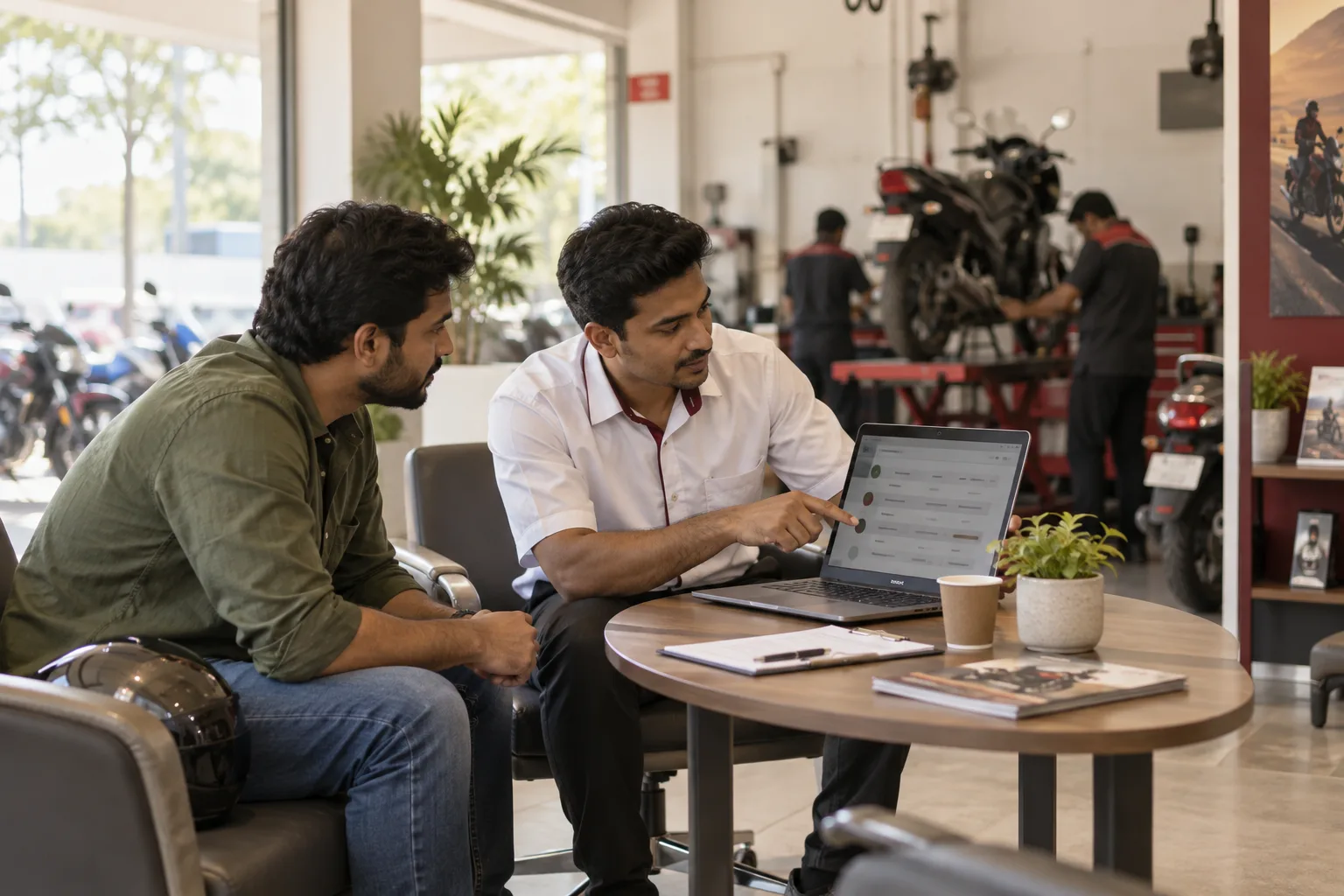 7 min read · 2 Sept 2026How two-wheeler dealers sell from their own service databaseThe easiest sale in a two-wheeler dealership is the customer waiting for his bike in your own service bay. Here is how to read the database and have the conversation.
More for two-wheeler dealers
Everything else we would do for you.
Closest to this: leads and follow-up
Also for two-wheeler dealers
Or start from the overview: sales and marketing for two-wheeler dealers.
Your next practical step
Tell us what you are trying to grow, and we will read it before we call.
Eight short steps, mostly taps. Skip anything you would rather answer on the call.