Payment service providers · Lead generation
Find the merchants who will actually switch on payments and transact.
Lead generation for a payment service provider means reaching shop owners, online sellers and developers who are ready to take payments, and separating them from people who only browse. GullySales builds the enquiry routes and counts the merchants who reach a first live payment, not the forms filled.
Scope, fee, reporting and term are agreed in writing after we have read your brief and spoken to you.
What lead generation means
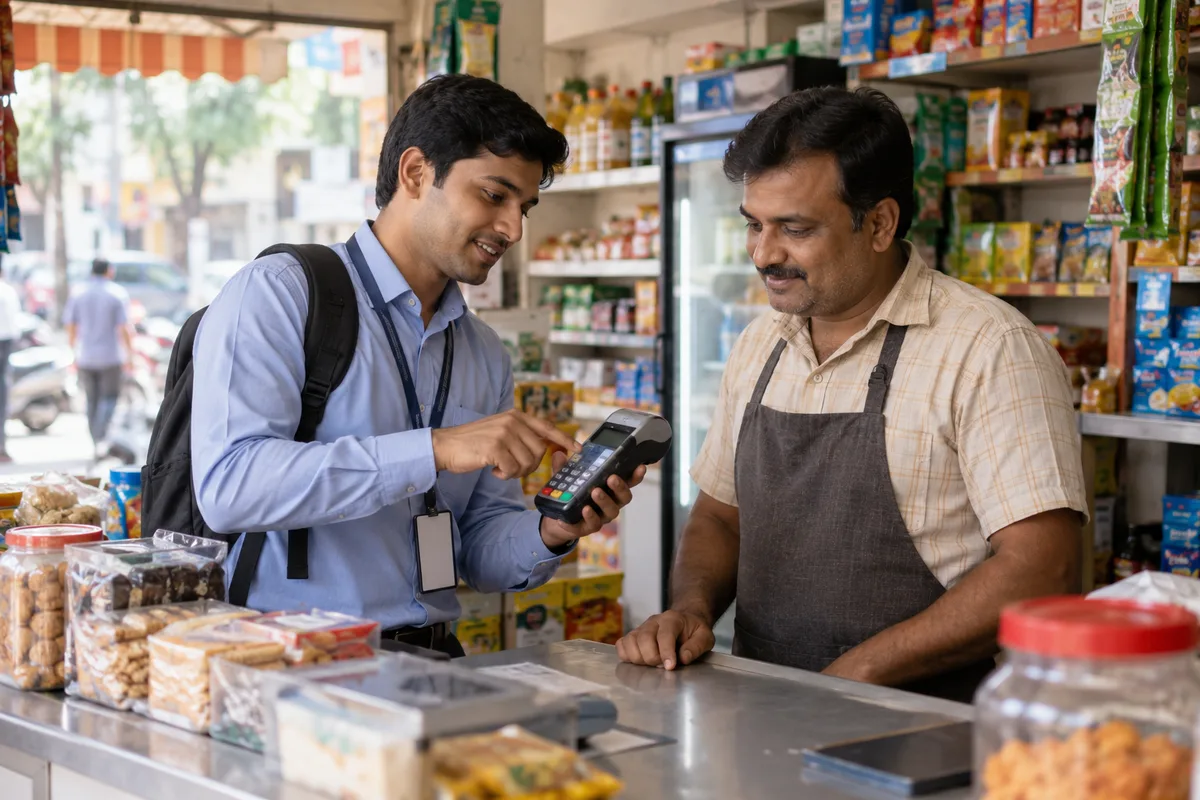
Lead generation is the combined work of every channel that brings in a new enquiry, whether from search, adverts, referrals or a stall at an exhibition. GullySales runs these channels together and reports the number of enquiries each one produced, not the activity behind it.
Also for payment service providers
- CRM for payment service providers
- Follow-up systems for payment service providers
- SEO for payment service providers
- Social media marketing for payment service providers
- Content marketing for payment service providers
- Buyer personas for payment service providers
- WhatsApp marketing for payment service providers
- Digital marketing for payment service providers
Sales and marketing for payment service providers, the overview.
Last updated 18 Oct 2026. Rules for this trade differ by state and professional body, and they change. We describe restrictions in general terms, so check the current position with your own council or adviser before you publish anything.
For payment service providers
Where it usually goes wrong, and what we would do.
“A signup is not a merchant until money moves”
A form with a business name is the cheapest thing to collect. The lead that matters is the one that reaches documents, activation and a first transaction, so the source of each signup needs to stay attached to that journey.
“The kirana owner and the developer search for different things”
One looks for a QR code and a soundbox, the other for an API and a sandbox. A single enquiry route sends both to the same page, and one of them leaves without asking anything.
“Field executives and online forms feed the same pipeline”
A merchant met on the shop floor and a seller who filled a form at night both need follow-up. When the two sit in separate sheets, nobody can say which route produces merchants who transact.
“Larger merchants ask for rates before anything else”
A business with real volume opens with a request for lower charges. A lead route that has no answer ready for that conversation hands the merchant to a competitor with a sharper reply.
What we do
What we deliver for payment service providers.
Every deliverable, what it covers for you, and the result it is there to produce. Nothing here is an extra.
Audience-split enquiry pages
Separate entry pages for shop owners, online sellers, developers and finance heads, each with its own short form.
Result: Each enquiry arrives labelled with the kind of merchant it is.
One lead register for field and online
A single sheet or CRM view where a field signup, a call, a form and a partner introduction are recorded with their source.
Result: You can read the source of every merchant in one place.
A rate-request reply kit
An agreed set of answers for merchants who ask for lower charges, written in wording your compliance head has approved.
Result: Your team replies to a rate request from the same approved text.
Go-live status on every lead
Stages from enquiry to documents, activation, integration and first payment, shown against each lead.
Result: You can see which leads are stuck and at which stage.
Source report by live merchant
Spend and effort set against merchants who transacted, split by route and by executive.
Result: You can compare sources on live merchants, not on forms.
How the result is measured
- Enquiries generated
- Cost per enquiry
- Enquiries by source
Recorded as a baseline before work starts, so every later report has an honest comparison.
Who it is for
This is written for these payment service providers.
- Payment aggregators and gateways for online sellers and platforms
- UPI QR, soundbox and card machine providers for shops and restaurants
- Payment link and invoice collection providers for small sellers
- Merchant acquiring resellers and sales partners
- Payout and vendor payment platforms for marketplaces and businesses
- Bill payment and recurring collection providers for fees and subscriptions
- Cross-border payment providers for exporters and freelancers
- Providers that serve a single sector, such as schools, clinics or logistics
How it works
How the lead generation work runs
The work itself, in order. How an engagement starts, from your brief to a written scope, is set out on our method page.
- 1
Understand your capacity
We agree how many enquiries your sales team can actually handle well, so the system is not built to overwhelm it.
- 2
Audit current sources
We check what already brings in enquiries today, even informally, before adding anything new.
- 3
Strategise the channel mix
Content, search and paid channels are chosen based on where your buyers already look.
- 4
Implement capture and follow-up
Pages, forms and a follow-up process are built and connected end to end.
- 5
Measure and optimise
We track enquiry volume and quality and adjust the channel mix to match.
Where this fits
Three pieces of sales work, in this order.
This work sits inside sales process design, at stage 1, prospecting and lead generation. The audit comes before it, and sales management keeps it running.
Step 1
Sales audit
Find where deals are being lost and what to fix first.
Start here if you cannot say where orders are lost.
Step 2 · you are here
Sales process design
One written way to sell, from first enquiry to repeat order.
Start here if every salesperson sells differently.
Step 3
Sales management
A target, a review routine and someone who owns the number.
Start here if the team has targets and no routine.
FAQ
Questions owners ask before they call.
Not here? More answers, or ask on WhatsApp.
Which leads should we count as real?
Can lead generation include developer enquiries?
Do you promise a number of merchants?
How much does it cost?
How long is the contract?
How soon will we see results?
Who will actually do the work?
What do you need from us?
What if we are not happy with the work?
More for payment service providers
Everything else we would do for you.
Closest to this: leads and follow-up
Also for payment service providers
Or start from the overview: sales and marketing for payment service providers.
Your next practical step
Tell us what you are trying to grow, and we will read it before we call.
Eight short steps, mostly taps. Skip anything you would rather answer on the call.