Payment service providers · WhatsApp marketing
Use WhatsApp to guide the merchant through documents to the first payment.
WhatsApp marketing for a payment service provider means using chat to answer merchant questions, collect pending documents and support the first transactions. GullySales designs the conversations, templates and handover so the chat helps onboarding without crossing into spam.
Scope, fee, reporting and term are agreed in writing after we have read your brief and spoken to you.
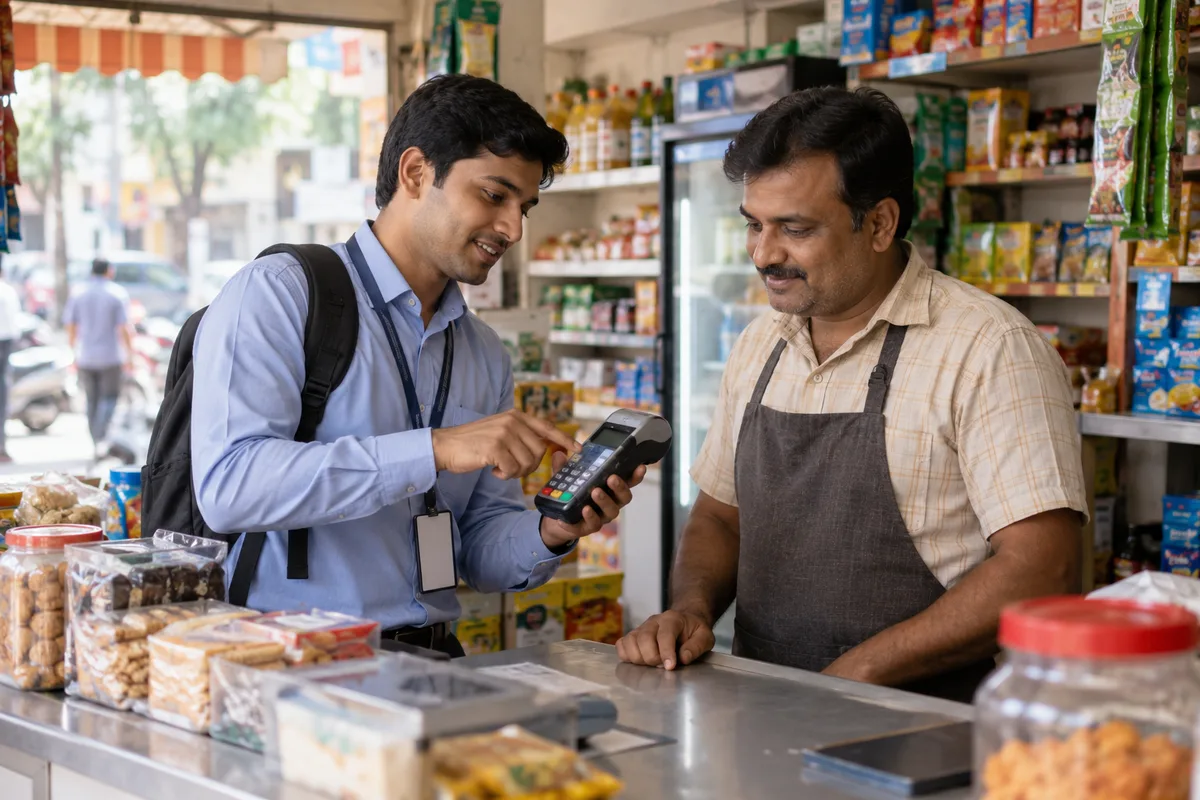
What WhatsApp marketing means
WhatsApp marketing is sending updates, offers and reminders to customers on the app most Indian buyers already check daily. GullySales sets up business WhatsApp, writes the message templates and keeps the list consented and current.
Also for payment service providers
- Lead generation for payment service providers
- SEO for payment service providers
- Social media marketing for payment service providers
- Content marketing for payment service providers
- Buyer personas for payment service providers
- CRM for payment service providers
- Follow-up systems for payment service providers
- Digital marketing for payment service providers
Sales and marketing for payment service providers, the overview.
Last updated 18 Oct 2026. Rules for this trade differ by state and professional body, and they change. We describe restrictions in general terms, so check the current position with your own council or adviser before you publish anything.
For payment service providers
Where it usually goes wrong, and what we would do.
“Merchants already send documents on chat”
A shop owner photographs a certificate and sends it on WhatsApp whether you asked for that or not. A process that expects the upload portal only receives those files through someone's personal phone.
“A business account separates the provider from the person”
When an executive uses a personal number, the merchant's history leaves with them. A business number with a shared inbox keeps the conversation with the provider.
“Messages about payments carry trust risk”
Merchants are warned about payment fraud. A message that asks for sensitive details in a chat looks like the scams they have heard about, so the wording has to show clearly who you are.
“Platform rules decide what you may send”
Promotional and service messages are treated differently, and consent matters. Check the platform's current rules and your own compliance head's guidance before any template is sent.
What we do
What we deliver for payment service providers.
Every deliverable, what it covers for you, and the result it is there to produce. Nothing here is an extra.
Business account setup plan
A plan for the business number, profile, catalogue of replies and the shared inbox your team uses.
Result: The merchant sees one verified business, not individual phones.
Onboarding conversation flows
Chat scripts for welcoming a new merchant, listing documents and confirming each one received.
Result: A merchant gets the same clear steps whoever handles the chat.
Template messages for approval
Service messages for pending documents and activation, written plainly and kept separate from promotions.
Result: Templates are submitted in wording your compliance head has approved.
Safe-handling rules for sensitive data
Rules on what is never requested on chat and how documents are moved into your system.
Result: Your team knows which details never travel by chat.
Handover to a person
A route from the automated reply to a named executive when the merchant needs help.
Result: A merchant who asks for a person reaches one.
How the result is measured
- Messages delivered
- Reply rate
- Enquiries from WhatsApp
Recorded as a baseline before work starts, so every later report has an honest comparison.
Who it is for
This is written for these payment service providers.
- Payment aggregators and gateways for online sellers and platforms
- UPI QR, soundbox and card machine providers for shops and restaurants
- Payment link and invoice collection providers for small sellers
- Merchant acquiring resellers and sales partners
- Payout and vendor payment platforms for marketplaces and businesses
- Bill payment and recurring collection providers for fees and subscriptions
- Cross-border payment providers for exporters and freelancers
- Providers that serve a single sector, such as schools, clinics or logistics
How it works
How the whatsapp marketing work runs
The work itself, in order. How an engagement starts, from your brief to a written scope, is set out on our method page.
- 1
Understand current WhatsApp use
We review how customers currently message you and how consistently, if at all, it is answered.
- 2
Audit common questions
We identify the questions that come up repeatedly, which decide what should be automated first.
- 3
Set up automation and templates
An automated first response and quick reply templates are built for the most common needs.
- 4
Connect to the CRM
Conversations are linked to customer records so context carries over between team members.
- 5
Measure and optimise
We track response time and conversion, refining automated responses based on what customers actually ask.
Where this fits
Three pieces of sales work, in this order.
This work sits inside sales process design, at stage 0, foundation. The audit comes before it, and sales management keeps it running.
Step 1
Sales audit
Find where deals are being lost and what to fix first.
Start here if you cannot say where orders are lost.
Step 2 · you are here
Sales process design
One written way to sell, from first enquiry to repeat order.
Start here if every salesperson sells differently.
Step 3
Sales management
A target, a review routine and someone who owns the number.
Start here if the team has targets and no routine.
FAQ
Questions owners ask before they call.
Not here? More answers, or ask on WhatsApp.
Can we send bulk offers to merchants?
Should documents be accepted on WhatsApp?
Do you run the chat for us?
How much does it cost?
How long is the contract?
How soon will we see results?
Who will actually do the work?
What do you need from us?
What if we are not happy with the work?
More for payment service providers
Everything else we would do for you.
Or start from the overview: sales and marketing for payment service providers.
Your next practical step
Tell us what you are trying to grow, and we will read it before we call.
Eight short steps, mostly taps. Skip anything you would rather answer on the call.