Forex and currency exchange dealers · Buyer persona
Tell a student's parent from a pilgrim, a traveller and an importer's finance head.
A buyer persona for a forex dealer is a short description of one type of customer: the need, the documents, the worries and who they ask. GullySales works on personas drawn from your counter notes and enquiry records.
Scope, fee, reporting and term are agreed in writing after we have read your brief and spoken to you.
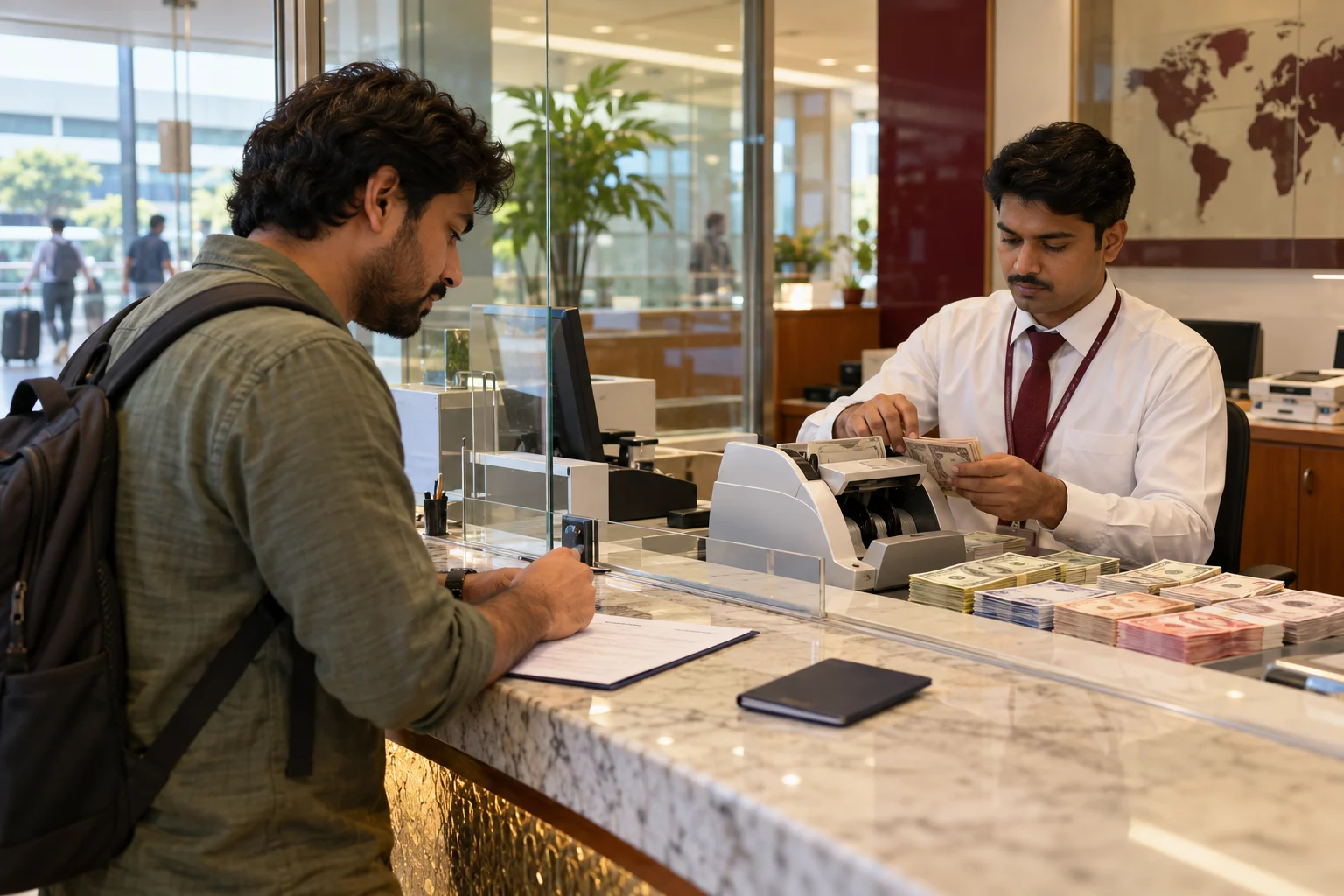
What buyer persona means
A buyer persona is a plain description of the kind of customer who actually buys from you. It includes what they search, what worries them and who else they ask before deciding. GullySales builds this from real enquiries and past sales rather than a generic template, then uses it to write every page and advert.
Also for forex and currency exchange dealers
Sales and marketing for forex and currency exchange dealers, the overview.
Last updated 14 Nov 2026. Rules for this trade differ by state and professional body, and they change. We describe restrictions in general terms, so check the current position with your own council or adviser before you publish anything.
For forex and currency exchange dealers
Where it usually goes wrong, and what we would do.
“The parent of a student is anxious and careful”
The sums are large and the forms new. They ask about documents, timing and what happens if something goes wrong, and they compare dealers on trust more than on rate. Their question is whether the money will arrive when the fees are due.
“The holiday traveller wants speed and clarity”
A family heading abroad wants cash and a card without a long queue. They ask about what to carry and what the dealer will explain. Record the countries they travel to, since documents and cash needs differ.
“The pilgrim group organiser handles several people”
A travel organiser needs documents for each traveller and a single point of contact. They value a dealer who has done it before. Note the group size, the shared papers and the person who pays.
“The importer's finance head wants process”
They ask about documentation, settlement and a named person. They compare on reliability and compliance more than on a quote. Note who signs, who checks documents and who must be copied on messages.
What we do
What we deliver for forex and currency exchange dealers.
The work available for this need. We agree the deliverables and responsibilities for your engagement in writing.
Persona sheets from your own records
One page each for student parents, travellers, pilgrimage groups, medical travel and business buyers.
Result: The team describes customers the same way.
Questions each buyer asks first
A ranked list for every persona.
Result: First replies answer the real worry.
Documents by persona
The papers each type brings or misses, noted from experience.
Result: Checklists match the buyer.
Reply wording per persona
Short versions for call, message and page, reviewed by your adviser.
Result: No buyer gets the wrong answer.
Decision makers noted
Who else influences the choice: consultant, college, employer, bank.
Result: You know whom else to reach.
A language and channel note
Whether each buyer prefers a call, a message or a visit, and in which language.
Result: Replies arrive in the form the buyer reads.
A review against new enquiries
A periodic check of the personas against fresh cases.
Result: The sheets stay true.
How the result is measured
- Enquiry match to persona
- Conversion rate by persona
- Content aligned to persona
Recorded as a baseline before work starts, so every later report has an honest comparison.
Who is asking
The people who ask a forex dealer for help differ by purpose.
- Parent of a student heading abroad
- Wants to know which papers are needed, how the payment reaches the college and who to call if a paper is missing.
- Holiday traveller
- Wants to know what to carry, whether to take cash or a card and how long the counter queue will be.
- Pilgrim group organiser
- Handles papers for several people and wants one desk and one contact who knows the group.
- Importer's finance head
- Wants to know the process for a business payment and who at the dealer handles the paperwork.
- Medical traveller's family
- Wants clarity on payments abroad for treatment, and a counter that treats the case with care.
Who it is for
This is written for these forex and currency exchange dealers.
- Full-fledged money changers at airports and city centres
- Authorised dealers handling remittances and forex cards
- Student-focused forex advisers near colleges and consulting offices
- Travel agency forex desks
- Hajj, Umrah and pilgrim travel currency services
- Corporate forex desks for importers and exporters
- Medical travel and tourism currency exchange
- Bank-linked and co-operative forex counters
Before you decide
When this may not be the right fit.
- The dealer serves one kind of customer, and a set of personas would add work and no new decision.
- Staff have not been asked who they serve, so personas would reflect head office's guess.
- Customers' papers are the only source of detail, and they cannot be used for personas.
Before you decide
Agree the work. Know how to judge it.
Buyer personas for forex dealers: use these checks to prepare, choose the scope, and review what changes.
Bring the right evidence
Write the decision the research must support, such as entering a market or choosing a buyer group. Separate what you know from sales records from what the team currently assumes.
Make the scope clear
Agree which buyers to speak to, which sources to review, and what access you can provide. Include lost enquiries and people who chose another supplier, where they are willing to take part.
Check the work in use
Look for source dates, sample limitations, and evidence that disagrees with the preferred answer. A recommendation should show how it follows from the findings.
Know when to change course
Do not treat a few positive conversations as proof of demand. Test the proposed offer with an actual buying decision before committing to a wider launch.
These are discussion points, not a fixed package. GullySales confirms the deliverables, responsibilities, fee, and term in writing after reading your brief and speaking with you.
Before we start
What to have ready before the work starts.
The records, access and decisions this work needs from forex and currency exchange dealers. Anything missing is noted in the written scope, with who will supply it.
- Enquiry records with names removed
- Records of past enquiries, with names, passport numbers and contact details blacked out or left out. We need purpose, outcome and the points where people paused. Never send identity papers. Without records, the sheets rest on staff memory alone and are marked as such. If two outlets keep records differently, send a sample from each.
- A list of customers who may speak to us
- Names of customers who have said they are happy to be contacted, with their consent noted. A short list is fine. We will not call anyone you have not approved, and with no list the persona rests on records and staff interviews alone.
- Time with the senior counter staff
- The people who deal with students, travellers and organisers each working day know the worries that never reach a form. We need a conversation with them. If they cannot be spared, we reduce the number of personas to match the time given.
- Your own view of the best customer
- A short note on which customers you want, and which you would rather not serve. This is a decision only the owner can take, and the personas are weighted by it. Without a view, we describe the customers who come in greatest number, which may not be those you want.
- A decision on how the sheets are used
- Tell us who will read the sheets: counter staff, the person managing messages, a referrer. The wording and the length depend on that. If the answer is no one, we shorten them and place them in the new-staff folder, because unread sheets are wasted work. A sheet meant for referrers is written in a different register from one meant for the desk.
How it works
How the buyer persona work runs
The work itself, in order. How an engagement starts, from your brief to a written scope, is set out on our method page.
- 1
Choose the customers worth describing first
We start by asking you which customers bring the biggest volume or the greatest trouble: the parent funding a student, the holiday family, the pilgrim organiser, the importer's finance head. You choose three to describe. Describing every type at once produces thin sheets, so what you leave out waits for a later round. For each chosen type we also write down who else sits in the conversation, such as a spouse, an agent or a company accountant, because they shape the questions the desk hears.
- 2
Pull out the enquiry records you already have
You give us the notebook, the form entries or the chat logs for the customers you chose, with identifying details removed. We read them for purpose, papers, delays and who joined the conversation. This is the evidence the persona rests on, and your own records take priority over anything we assume. Where the notebook says only rate enquiry, we mark the case as unknown and do not invent a purpose for it.
- 3
Pick customers to speak with
You select a few people who have used your service and agree to talk, and the staff who deal with them. Customers are asked only about how they chose and what worried them, never about the amounts. The owner decides who is approached, as some will refuse, and refusal is respected. The talks also record which paper the customer found hardest to produce, and which word on the form caused doubt.
- 4
Write the first sheet and check it
We write each persona as a one-page sheet: the need, the first questions, the papers, the people who advise them and the words they use. Counter staff read it and correct what is wrong. A sheet nobody at the desk recognises is thrown out and rewritten.
- 5
Match the sheet to the desk and the messages
With the corrected sheets we revise the first reply, the checklist and the call script for each customer type. Your adviser reads any sentence touching rules. You decide which messages are used straight away and which wait, and the sheet goes into the new-staff folder. A traveller sheet and a parent sheet will not share a single reply, since their worries differ.
- 6
Compare new enquiries against the sheets
After some enquiries have arrived, we read them against the sheets to see what fits and what does not. A new kind of customer, or a worry we missed, changes the sheet. You decide what the team does differently, and what is added to the next round.
Where this fits
Three pieces of sales work, in this order.
This work sits inside sales process design, at stage 0, foundation. The audit comes before it, and sales management keeps it running.
Step 1
Sales audit
Find where deals are being lost and what to fix first.
Start here if you cannot say where orders are lost.
Step 2 · you are here
Sales process design
One written way to sell, from first enquiry to repeat order.
Start here if every salesperson sells differently.
Step 3
Sales management
A target, a review routine and someone who owns the number.
Start here if the team has targets and no routine.
FAQ
Questions owners ask before they call.
Not here? More answers, or ask on WhatsApp.
How many personas does a currency exchange counter need?
Do we need to interview customers?
Can personas include real names?
Can personas use real customer papers?
Should the persona have a name and a photograph?
Can we put customer names and passport details in the sheet?
How much does it cost?
How long is the contract?
How soon will we see results?
Who will actually do the work?
More for forex and currency exchange dealers
Related work to consider.
Closest to this: strategy and research
Also for forex and currency exchange dealers
Or start from the overview: sales and marketing for forex and currency exchange dealers.
Your next practical step
Tell us what you are trying to grow, and we will read it before we call.
Eight short steps, mostly taps. Skip anything you would rather answer on the call.