Forex and currency exchange dealers · Local SEO
Be the nearest authorised dealer a traveller or parent can find on the map.
Local SEO for a forex dealer is the work of making each outlet's map listing complete, current and answered, since customers choose a dealer close to them or to the airport. GullySales works on listings, reviews and details that show the outlet is genuine.
Scope, fee, reporting and term are agreed in writing after we have read your brief and spoken to you.
What local SEO means
Local SEO is the work of making your business show up for searches that name your town or locality, such as a service plus an area name. GullySales sets up locality pages, local citations and map listings so nearby customers find you before a competitor across town.
Also for forex and currency exchange dealers
Sales and marketing for forex and currency exchange dealers, the overview.
Last updated 14 Nov 2026. Rules for this trade differ by state and professional body, and they change. We describe restrictions in general terms, so check the current position with your own council or adviser before you publish anything.
For forex and currency exchange dealers
Where it usually goes wrong, and what we would do.
“Customers judge a money changer in seconds”
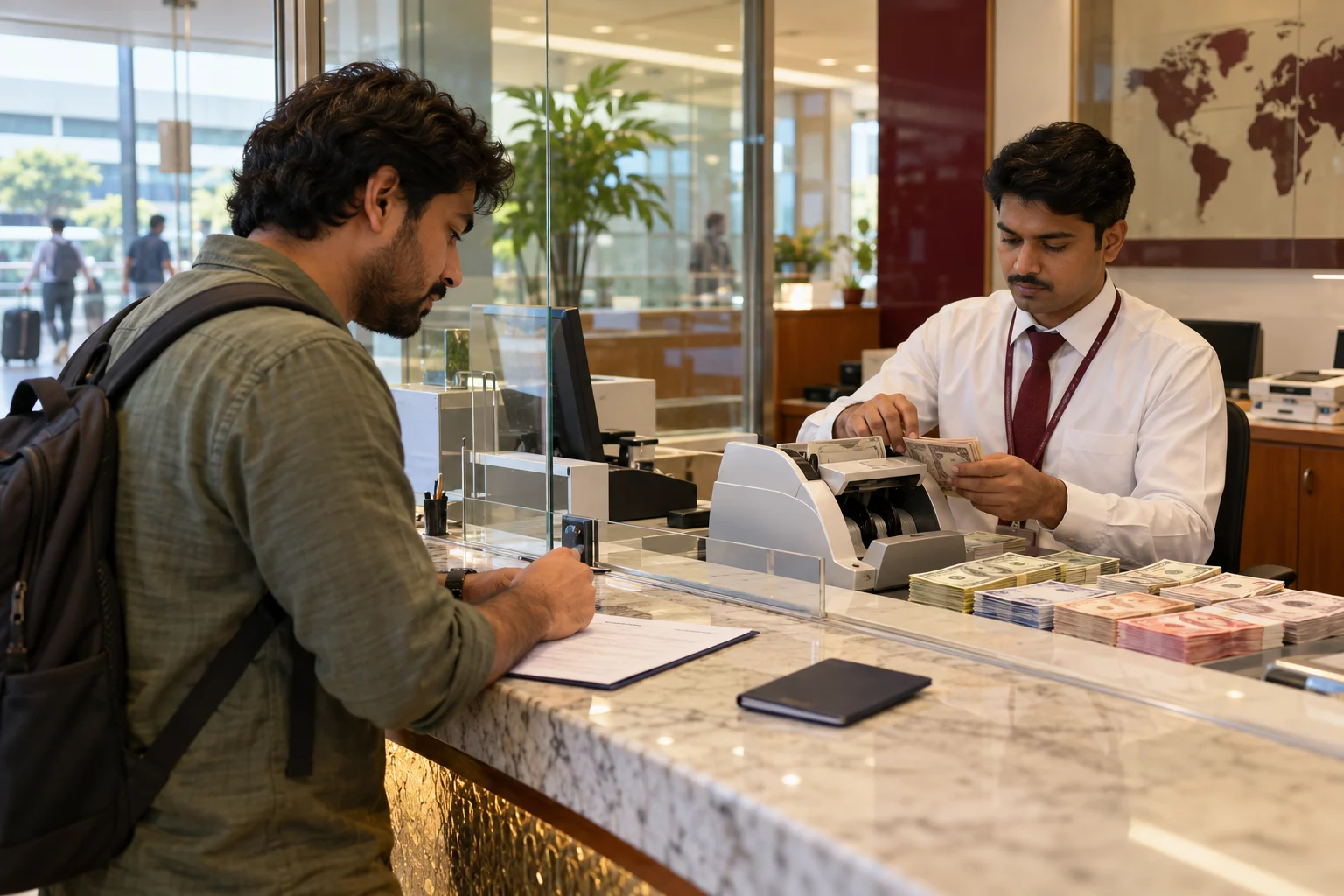
A person about to hand over cash looks for photographs of a real counter, a street address and reviews from recent customers. A thin listing looks like a risk. Add photographs of the counter and the way in.
“Airport and city outlets confuse the map”
A counter in a terminal, a branch near a college and an office in a market each need their own listing. A single merged profile sends people to the wrong place. Name each listing for its place, such as the terminal or the neighbourhood.
“Reviews carry the trust that the rate cannot”
A recent customer saying the staff explained the form is more persuasive than a better rate. Reviews that mention documents and clarity matter in this trade.
“Hours matter more than usual”
Travellers fly at all hours and students leave at short notice. A listing that is wrong about opening time sends a customer to a competitor with the cash in hand. Update special hours before a long weekend or festival.
What we do
What we deliver for forex and currency exchange dealers.
The work available for this need. We agree the deliverables and responsibilities for your engagement in writing.
A listing for every outlet
Own name, address, phone, hours and photographs for each counter.
Result: The map sends customers to the right door.
Photographs of the counter and signage
Your own pictures of the outlet and the display of authorisation, without any customer in frame.
Result: A nearby customer sees a real, visible dealer.
A review request at the counter
A short ask made when the transaction completes, with a link on a card or phone.
Result: Recent reviews come from real customers.
Replies to every review
Calm written answers to praise and complaints, never discussing a customer's details.
Result: A hesitant reader sees how you handle problems.
A check on name and details across the web
Your name, address and phone matched everywhere.
Result: Search engines trust one version of the outlet.
How the result is measured
- Map pack ranking
- Local search visibility
- Enquiries by locality
Recorded as a baseline before work starts, so every later report has an honest comparison.
Searches your buyers type
Nearby searches that decide which counter a customer visits.
- money changer near me
- A verified profile for each outlet with the real address, a phone that is answered and clear timings.
- forex card near the airport terminal
- An airport outlet profile that names the terminal and the way from arrivals, so a traveller does not search twice.
- currency exchange open on Sunday
- Timings entered for each day and each holiday, because travellers search for the open hour first.
- authorised dealer near the college
- A profile and page for the college-side counter, with the student document list.
- foreign currency for Hajj near me
- A page for pilgrim groups naming the outlet, the group desk and the contact for the organiser.
Who it is for
This is written for these forex and currency exchange dealers.
- Full-fledged money changers at airports and city centres
- Authorised dealers handling remittances and forex cards
- Student-focused forex advisers near colleges and consulting offices
- Travel agency forex desks
- Hajj, Umrah and pilgrim travel currency services
- Corporate forex desks for importers and exporters
- Medical travel and tourism currency exchange
- Bank-linked and co-operative forex counters
Before you decide
When this may not be the right fit.
- The outlets have inconsistent names and addresses across listings, and a new profile would add another version.
- No one at the outlet can answer reviews, and unanswered complaints would sit on the map.
- The airport outlet is run by a separate arrangement and the dealer does not control its listing.
Before you decide
Agree the work. Know how to judge it.
Local SEO for forex dealers: use these checks to prepare, choose the scope, and review what changes.
Bring the right evidence
Confirm the real business address, service area, contact details, and who controls the business listings. Keep examples of calls that came from the wrong location or asked for a service you do not provide.
Make the scope clear
Choose the locations you actually serve and the information each needs. Agree who approves listing changes, responds to enquiries, and keeps opening hours accurate.
Check the work in use
Check the journey from a local search to a call or enquiry on a phone. The address, service area, and description should agree across your website and listings.
Know when to change course
Do not create an office claim for a place where you only serve customers remotely. Clear service coverage is more useful than a misleading local presence.
These are discussion points, not a fixed package. GullySales confirms the deliverables, responsibilities, fee, and term in writing after reading your brief and speaking with you.
Before we start
What to have ready before the work starts.
The records, access and decisions this work needs from forex and currency exchange dealers. Anything missing is noted in the written scope, with who will supply it.
- Owner access to each map listing
- You or a manager must be able to sign in as the owner of every outlet's listing, or request ownership. Without owner rights we cannot correct hours, add photographs or reply to reviews. If a former employee holds a listing, we begin by recovering it, and the rest of the plan waits.
- A recent photograph set of each counter
- Photographs of the signboard, the counter and the entrance, taken in daylight, with staff faces left out or consented to. Phone pictures are acceptable. If none exist we take them on a visit, but an outlet that cannot be photographed honestly will not be added to the plan.
- A fixed list of opening hours
- Write down each outlet's hours, including the closing day of the week and the holiday pattern. Airport desks and city counters rarely match. A listing with hours that differ from the real ones draws the worst reviews, so a doubtful outlet is held back until the hours are settled.
- The name staff use on the phone
- Tell us how your staff answer the phone and how the signboard reads. Name mismatches between the listing, the board and the website make the outlet look doubtful. If the trade name has changed, we need the old name too, to find duplicates.
- A person to reply to reviews
- Someone at your end must post the replies we draft and watch for new reviews. Replies to anonymous complaints need a calm and honest tone, and sometimes your adviser. Without a named person, we set up the review request but hold off asking customers, since unanswered reviews hurt more than none.
How it works
How the local SEO work runs
The work itself, in order. How an engagement starts, from your brief to a written scope, is set out on our method page.
- 1
Walk the outlets and photograph the counters
We visit each outlet you want listed, or ask you to photograph it, and take pictures of the signboard, the entrance, the counter and the display of the authorisation. The pictures serve as proof that the outlet is genuine. You show us which outlets are staffed and open, and which are not ready to appear on a map.
- 2
Find every listing that already exists
We search the map for each address, your trade name and the old names the premises had. Duplicates, wrong pins and listings opened by former staff turn up here. You tell us who held the logins at the time, and we start claiming or merging, since a listing nobody controls cannot be corrected. We keep a note of every listing found, who opened it and whether it still carries a phone number that rings, because that note decides which ones are claimed and which are asked to be removed.
- 3
Set out the facts for your sign-off
For each outlet we write down name, address, landmark, hours, phone and services in one sheet. You check every line. Airport and city outlets with similar names get distinct descriptions. Nothing is typed into the listing until you have signed the sheet, since a wrong closing time sends customers to a shut door.
- 4
Agree what the listing may say about authorisation
We draft the description and the answers to common questions, then send them to your adviser. The listing may name your authorisation only in words your adviser has approved, and rates stay out of it. You decide whether the listing mentions services such as remittance and forex cards at all.
- 5
Put the review request at the counter
We make a small card or a link for the counter, with a line telling the customer they may leave a review. You choose who hands it over and at what moment. Your staff must not offer anything in return. Replies to reviews are written by us as drafts and posted by the person you name.
- 6
Compare calls and visits against the first count
After the listing is complete, we read the map profile figures for calls, direction requests and website taps, and set them against the numbers recorded before we touched anything. We also ask the counter how many new faces mentioned the map. You then decide whether to extend the work to another outlet.
Where this fits
Three pieces of sales work, in this order.
This work sits inside sales process design, at stage 1, prospecting and lead generation. The audit comes before it, and sales management keeps it running.
Step 1
Sales audit
Find where deals are being lost and what to fix first.
Start here if you cannot say where orders are lost.
Step 2 · you are here
Sales process design
One written way to sell, from first enquiry to repeat order.
Start here if every salesperson sells differently.
Step 3
Sales management
A target, a review routine and someone who owns the number.
Start here if the team has targets and no routine.
FAQ
Questions owners ask before they call.
Not here? More answers, or ask on WhatsApp.
Can we mention rates on the listing?
Is it fine to ask for reviews?
What if a competitor uses our name?
Can the listing say the dealer is authorised?
What if another business is using our name on the map?
Should the airport counter and the city outlet share one listing?
How much does it cost?
How long is the contract?
How soon will we see results?
Who will actually do the work?
More for forex and currency exchange dealers
Related work to consider.
Closest to this: search and visibility
Also for forex and currency exchange dealers
Or start from the overview: sales and marketing for forex and currency exchange dealers.
Your next practical step
Tell us what you are trying to grow, and we will read it before we call.
Eight short steps, mostly taps. Skip anything you would rather answer on the call.